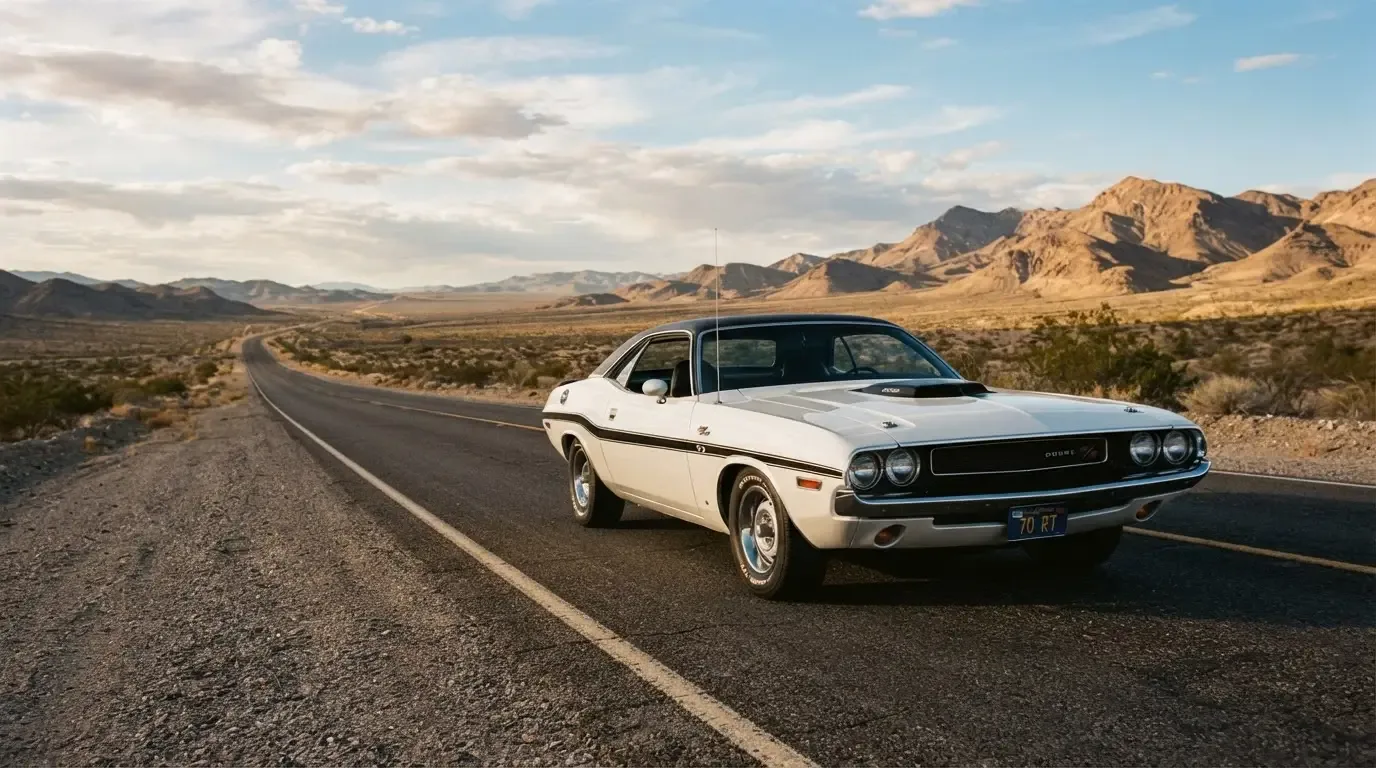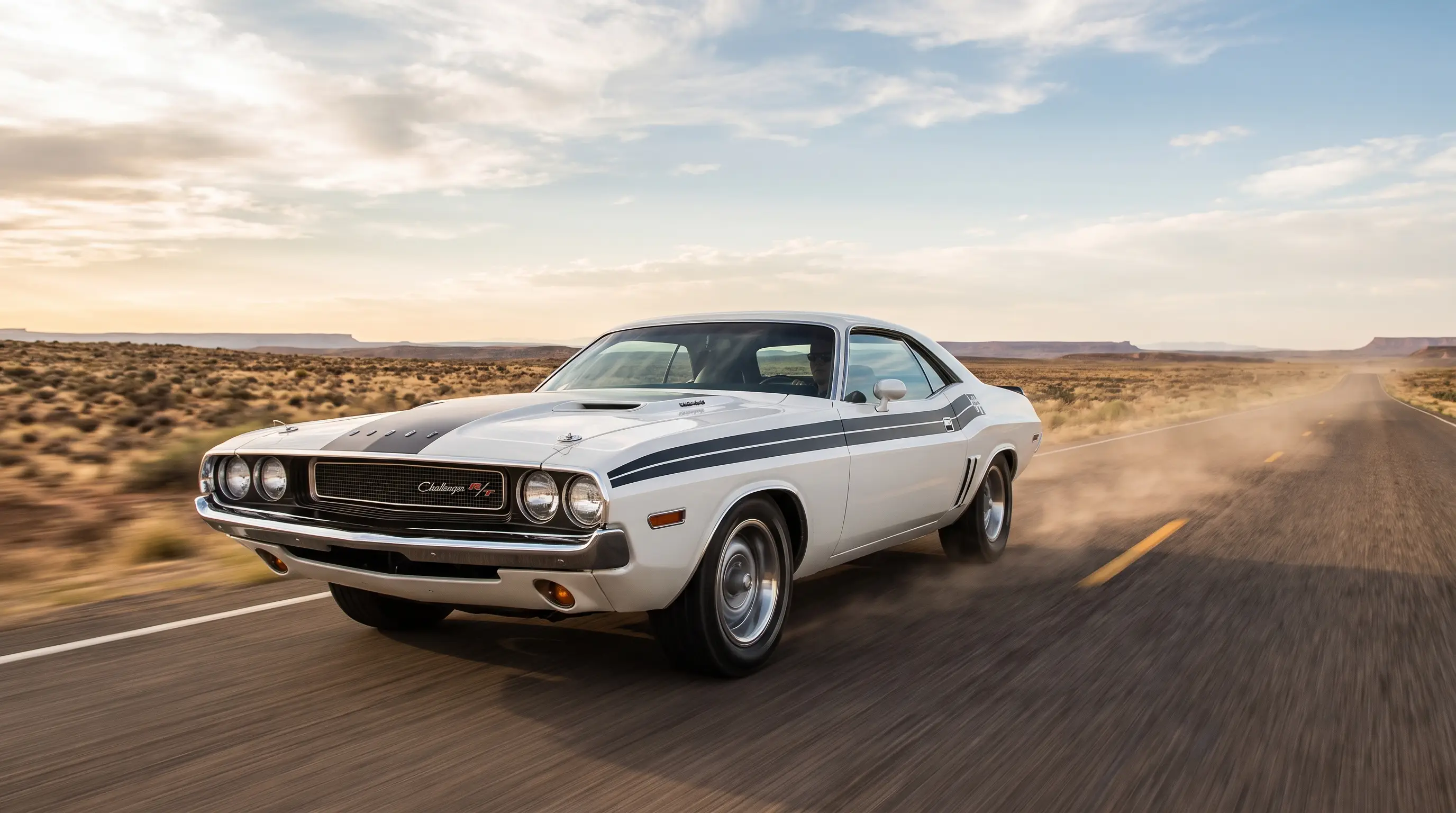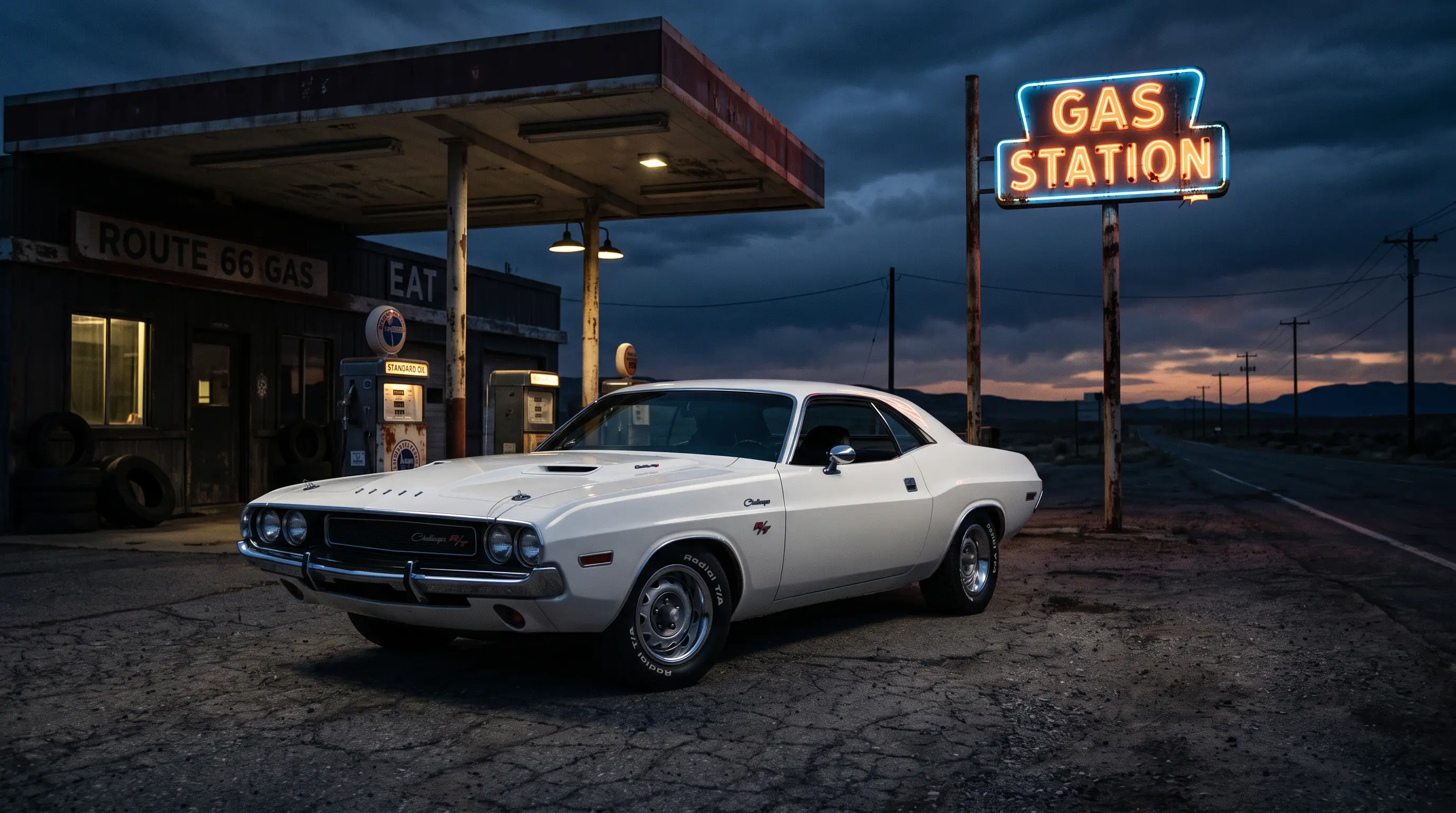
Quentin Tarantino does not do subtle homages, and the white 1970 Dodge Challenger that shows up in the back half of 2007's Death Proof is not one either. It is a direct, deliberate callback to Vanishing Point, right down to the paint and the stunt driving, dropped into a film that spends its entire runtime building toward a highway showdown between that Challenger and the villain's stalking 1969 Dodge Charger. For an entire generation who had never seen the 1971 original, this was their introduction to the car, and it worked.
A film built around a stunt, not a script
Death Proof was one half of the Grindhouse double feature, Tarantino's love letter to 1970s exploitation cinema, and its second half centers almost entirely on a group of women who work in the film industry and decide to take a Challenger out for a test drive on an empty rural road. What follows is one of the more purely physical sequences in Tarantino's filmography, built around real stunt work rather than digital effects, with stuntwoman Zoe Bell performing an unnervingly literal hood-riding stunt at highway speed.
The choice of car was not incidental. Tarantino has been open about his love of 1970s car culture and specifically named Vanishing Point as an influence on the film, and casting a white Challenger as the hero car of the final act was a way of putting that influence directly on screen rather than just referencing it in dialogue. The Dodge Charger driven by the film's villain in the final chase, a replacement for the Chevy Nova he drove earlier in the story after it was wrecked, plays the role of pursuer and menace, inverting some of the dynamics from the earlier film while keeping the essential shape of a highway confrontation between two American muscle cars.
Why the homage worked instead of feeling hollow
Plenty of films reference older movies without earning the comparison. Death Proof mostly earns it, because the sequence is not just visually similar to Vanishing Point, it is emotionally inverted in a way that makes the reference feel purposeful rather than decorative. Where the earlier film's Challenger disappears into an ambiguous, almost nihilistic ending, the Death Proof Challenger becomes an instrument of turnaround, a car that lets characters who spent the film as potential victims become the ones doing the chasing.
That reversal is what critics and fans latched onto. The car itself did not change, same body, same white paint, same basic muscle car silhouette that had defined it since 1970, but its role in the story flipped entirely. It went from a symbol of an ambiguous, doomed drive to a symbol of the drivers taking control.
A grindhouse aesthetic wrapped around a real muscle car
Death Proof leans hard into the visual language of 1970s exploitation cinema, complete with faux scratches on the film print, missing reels, and grainy color timing meant to evoke a movie that had been run through a projector too many times. That aesthetic choice matters for how the Challenger reads on screen. It is filmed less like a modern muscle car feature and more like a genuine artifact from the era it is imitating, which makes the white paint and the boxy 1970 body lines feel period-accurate even though the film itself was shot in 2006 with a contemporary crew and contemporary safety standards behind the stunt work.
That commitment to period feel extends to the way the chase itself is shot, favoring wide shots that let the audience track both cars clearly across the frame rather than the rapid-cut editing that had become standard in action filmmaking by the mid-2000s. It is a deliberate throwback, and it is part of why the sequence reads as an homage rather than a modern action scene wearing an old car as a costume.
The car's second life after the film
Death Proof did for a younger audience roughly what Vanishing Point had done decades earlier: it made the classic Challenger feel dangerous and specific rather than just another old muscle car. Enthusiasts who came to the platform through Tarantino's film often went looking for the earlier movie afterward, and the pipeline between the two has become a recognizable pattern in how new generations discover the classic Challenger's cultural footprint.
Blogger and collector circles noted the uptick in interest in white 1970 Challenger tribute builds in the years following the film's release, with some owners specifically replicating the Death Proof car's stance and paint rather than a factory R/T spec. That kind of tribute building, chasing a movie car's exact look rather than an original factory configuration, has become its own niche within the broader Challenger community.
"Tarantino did not just borrow a car, he borrowed the whole idea of what that car meant on screen. The Charger chasing the Challenger down an empty road is a direct conversation with a movie made thirty-six years earlier, and it is one of the more honest homages I have seen in a car movie."
- Patrick Walsh
Where Death Proof fits in the larger Challenger story
Neither Vanishing Point nor Death Proof are technically accurate portraits of the classic Challenger's engineering or production history. They are cultural artifacts that used the car as a symbol, first of ambiguous escape, later of reclaimed power, and both readings have stuck to the car's reputation in different ways. Understanding one without the other leaves out half the picture, since Death Proof simply does not function the way it does without an audience that already recognized, consciously or not, what a white Challenger on an open road was supposed to mean.
For the full arc connecting both films and everything in between, our complete history covers the Challenger's entire run through film and television. If Tarantino's film left you wanting the real thing rather than the movie prop, find a classic Challenger and see what is actually available today, no stunt driver required.
The reception among longtime muscle car enthusiasts was notably warmer than the reception among some mainstream film critics at the time, who were more mixed on Death Proof as a whole compared to its Grindhouse companion feature. Car culture publications specifically praised the authenticity of the stunt work and the clear affection the production had for the source material, treating the sequence almost as a standalone short film worth watching independent of the larger feature around it.
It is worth pointing out how unusual it is for a homage film to actually improve on the audience's understanding of the original rather than simply borrowing its imagery for nostalgia's sake. Death Proof does not just recreate a white Challenger on an empty road. It puts that image in direct conversation with a very different set of characters and a very different emotional payoff, which forces a viewer familiar with both films to actually think about what changed between 1971 and 2007, both in filmmaking and in what audiences wanted from a car chase. That kind of layered reference is rare, and it is a large part of why Death Proof holds up as more than a simple tribute act more than three decades after its inspiration first hit theaters.