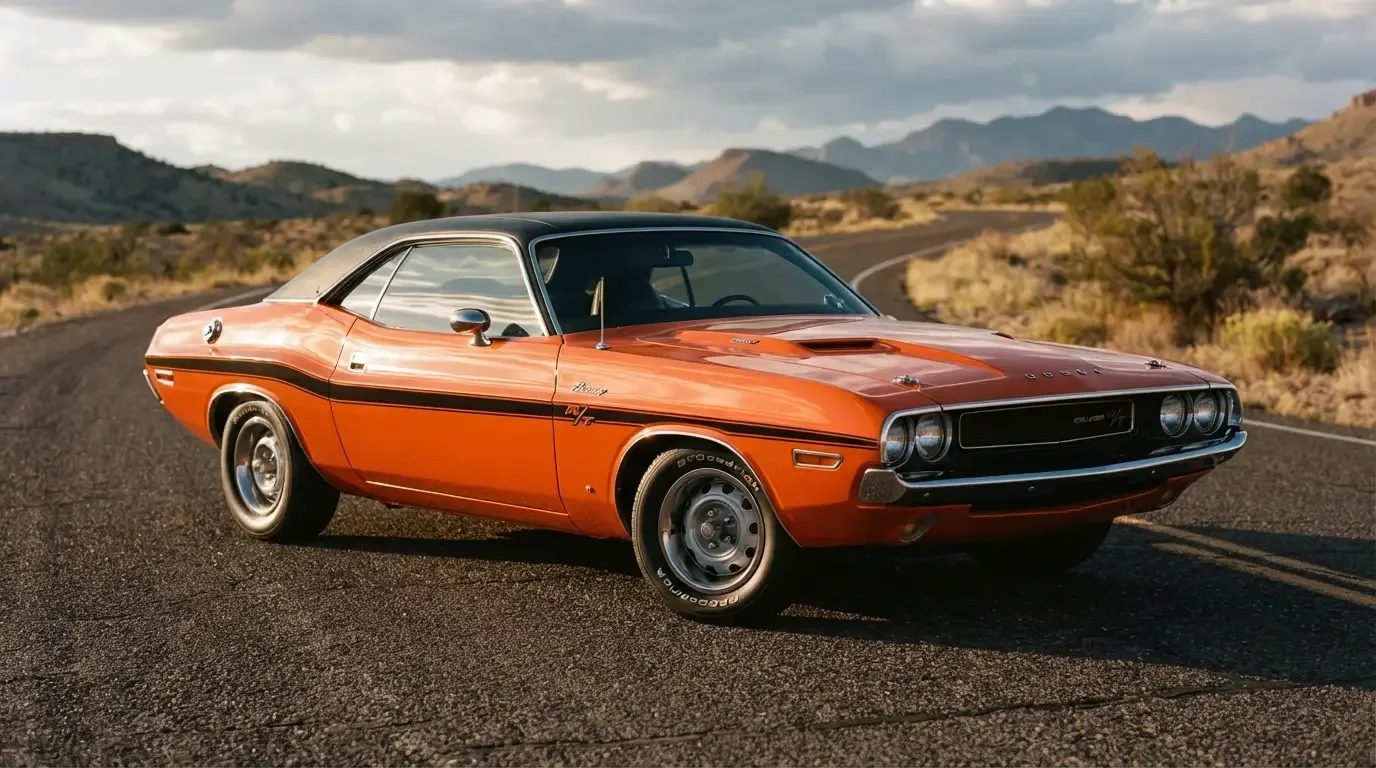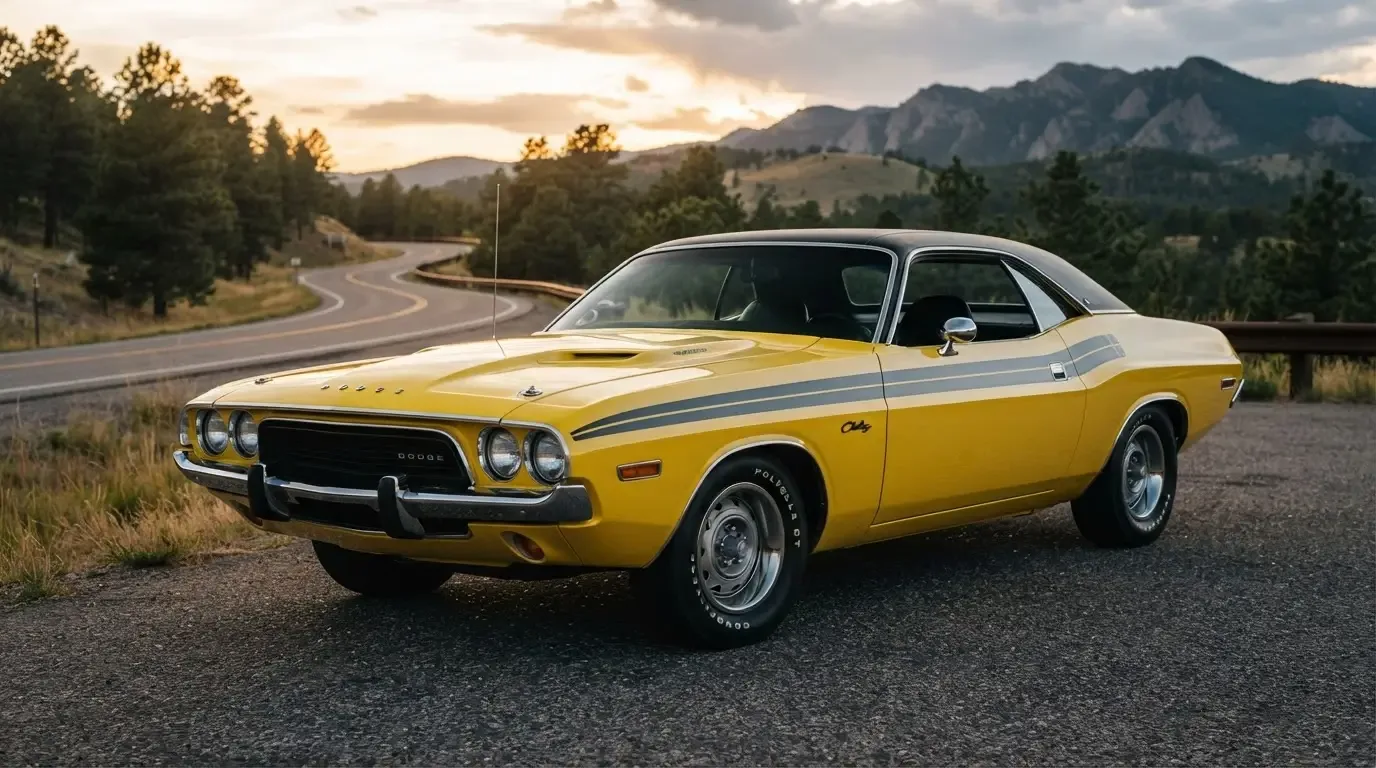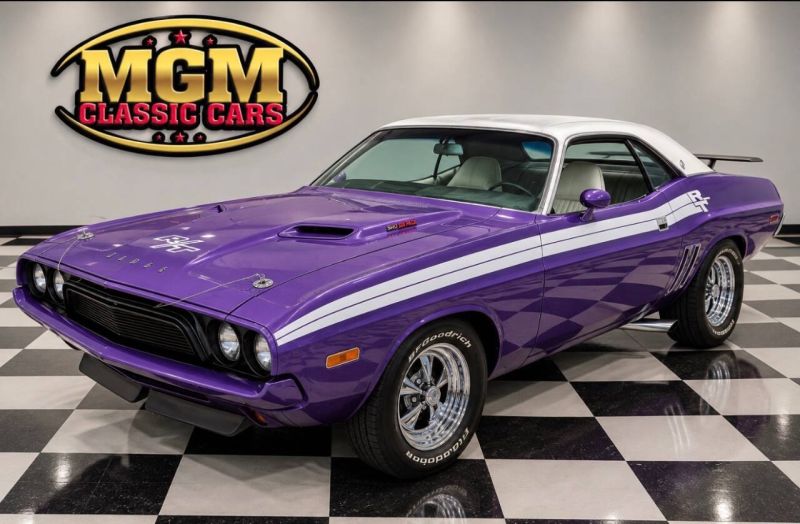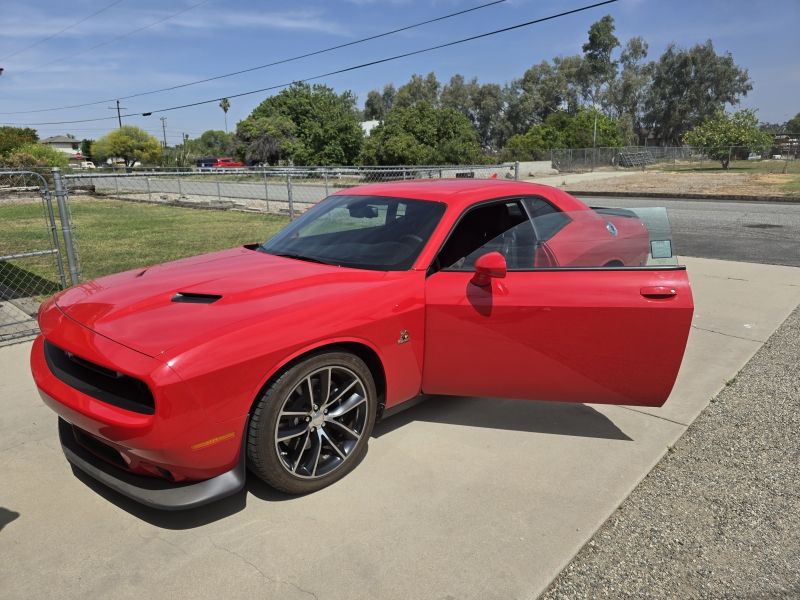
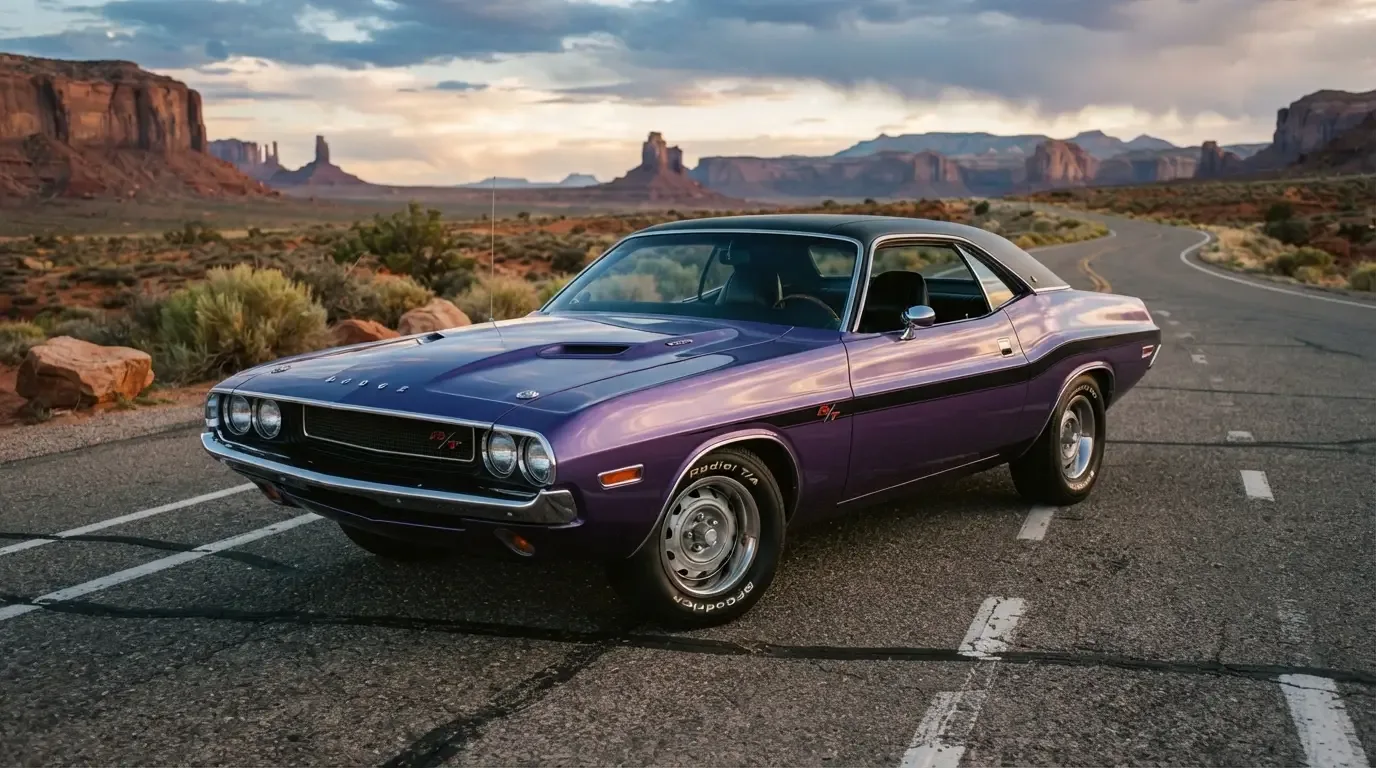
In the autumn of 1969, a Dodge salesman in Michigan watched a crowd form around a car that had not existed a month earlier. The Mustang had been on the road for five years. The Camaro for three. Detroit's pony car war was already a settled brawl, and here came Dodge, late and unbothered, wheeling a long-nosed coupe into the showroom like it owned the block. That car was the Dodge Challenger, and the story of how it arrived so late and hit so hard is one of the strangest good-timing accidents in American automotive history.
The Challenger was not early to anything. It reached buyers in the fall of 1969 as a 1970 model, near the very end of the muscle era, when insurance premiums were climbing and emissions rules were tightening. And yet the classic Challenger, the 1970 through 1974 cars, became one of the most coveted machines Chrysler ever built. Fifty years on, the good ones trade for the price of a house. This is how that happened.
A late arrival crashes the party
Ford invented the segment in 1964 with the Mustang. Chevrolet answered with the Camaro in 1967. Plymouth had the Barracuda, which technically beat the Mustang to market by a couple of weeks in 1964 but never caught the same fire. By the time Dodge got serious about a pony car of its own, the field was crowded and the buyers were spoiled for choice.
Chrysler's answer was to skip the compact route entirely. Instead of a cheap, sporty economy coupe, Dodge aimed the Challenger at the buyer who wanted the muscle and the swagger without stepping up to a full-size car. The pitch was simple. You could order a mild six-cylinder secretary's coupe or you could order something that would frighten the neighbors, and the sheet metal looked exactly the same either way. That flexibility, more than any single engine, is what made the car interesting. A Challenger could be almost anything you asked it to be.
Dodge already had the Charger for the personal-luxury muscle crowd and the Coronet and Super Bee for the budget street brawlers. The Challenger slotted underneath all of it as the brand's first true pony car, and it arrived with the kind of engine list that made the competition look timid.
The E-body and a shared secret
The Challenger rode on Chrysler's new E-body platform, and it did not ride there alone. The 1970 Plymouth Barracuda used the same underpinnings, redesigned from the ground up for that model year. The two cars were cousins built from a shared kit of parts, but Dodge insisted on its own proportions. The Challenger sat on a 110-inch wheelbase, two inches longer than the Barracuda's 108-inch wheelbase, and every exterior panel was unique to Dodge.
The design came out of Chrysler's studios under Carl Cameron, who had also shaped the 1966 Charger. Cameron gave the Challenger a long hood, a short deck, and a wide, confident stance that made it look planted even standing still. The car was longer and lower than a Mustang or a Camaro, and it wore that extra size well. Where the Mustang was athletic and the Camaro was tidy, the Challenger looked like it had shown up to start something.
The interior matched the ambition. Buyers could option a full-length center console, deep bucket seats, a Rallye instrument cluster with real gauges, and a pistol-grip shifter on the four-speed cars that remains one of the great tactile pleasures of the era. This was not a stripped economy car pretending to be sporty. When you ordered it right, it felt like an event.
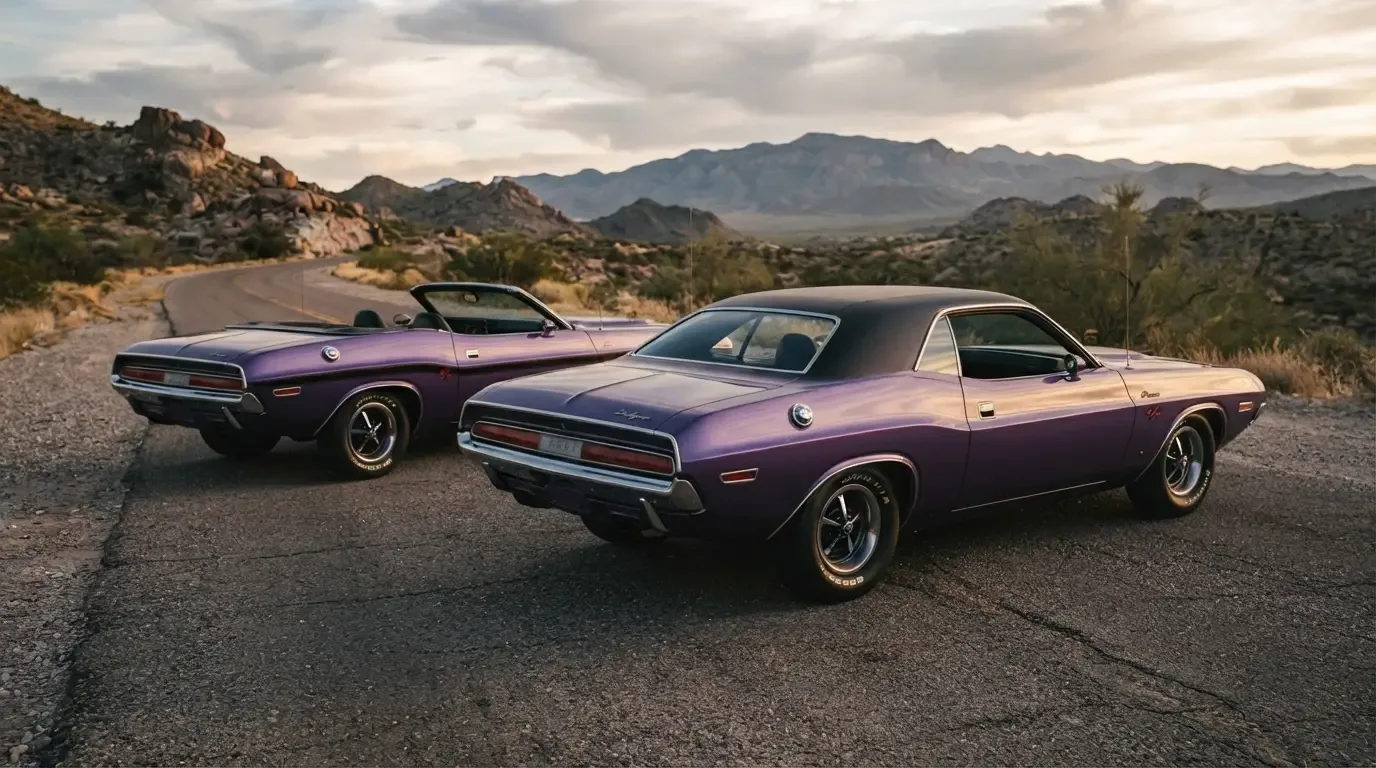
Body styles were straightforward. There was a two-door hardtop, which is the shape most people picture, and a convertible that Dodge offered in the first two years before the market turned. The convertible is now among the most sought-after classic Challengers of all, partly because Dodge built so few of them and partly because a drop-top Hemi or 440 car is about as pure a distillation of 1970 as the American car industry ever produced. Very few survive with their original drivetrains intact, and the ones that do are treated less like used cars and more like heirlooms.
| Attribute | Classic Dodge Challenger (1970-1974) |
|---|---|
| Body style | Two-door hardtop and convertible |
| Platform | Chrysler E-body (shared with Plymouth Barracuda) |
| Wheelbase | 110 inches |
| Introduced | Fall 1969, as a 1970 model |
| Production ended | 1974 |
| Base engine | 225 cubic inch slant six |
| Top engine | 426 cubic inch Hemi V8 |
| Designer | Carl Cameron, Chrysler studios |
The engines that became legend
The Challenger's engine roster in 1970 read like a menu written by someone who wanted to win arguments. At the bottom sat the 225 cubic inch slant six, the engine your aunt might have ordered, followed by the 318 and the excellent 340 small block. The 340 is the connoisseur's pick even now, a high-revving lightweight that could embarrass bigger engines through a set of corners.
Above the small blocks came the big-block artillery. The 383 in two-barrel and four-barrel forms. The 440 Magnum four-barrel. And then the two engines that turned the Challenger into an icon. The 440 Six Pack fed a big block through three two-barrel carburetors and made brutal, tire-shredding torque for a fraction of the price of the top option. That top option was the 426 Hemi, the elephant motor, rated at 425 horsepower and famous for making even more than the factory admitted.
The Hemi was expensive, thirsty, and temperamental in traffic, which is exactly why so few people ordered it and so many people worship it today. A Hemi Challenger was a special order in every sense. It cost real money on top of an already pricey car, and the take rate was tiny. That rarity is the whole reason a genuine Hemi car now sells for numbers that would have bought a city block in 1970.
What often gets lost in the Hemi worship is that most Challengers left the factory with something far more sensible under the hood. The slant six and the 318 did the daily work, hauling students to class and salesmen to appointments, and those cars are a real part of the story even if collectors ignore them. They are also, quietly, the reason the Challenger reached as many people as it did. A pony car that only came as a Hemi would have been a curiosity. A pony car you could buy for the price of a Coronet, then imagine into a Hemi every time you passed a mirror, was a phenomenon.
R/T, T/A, and the trim ladder
To keep all of this straight, Dodge sold the Challenger in a small stack of personalities. The base car was the base car, comfortable and ordinary. The R/T, short for Road and Track, was the performance line, and it came with the bigger engines, heavier-duty running gear, and the fake hood scoops and bumblebee stripes that told everyone at the light what they were dealing with. There was also an SE, the Special Edition, which leaned toward luxury with a smaller rear window, a vinyl roof, and leather.
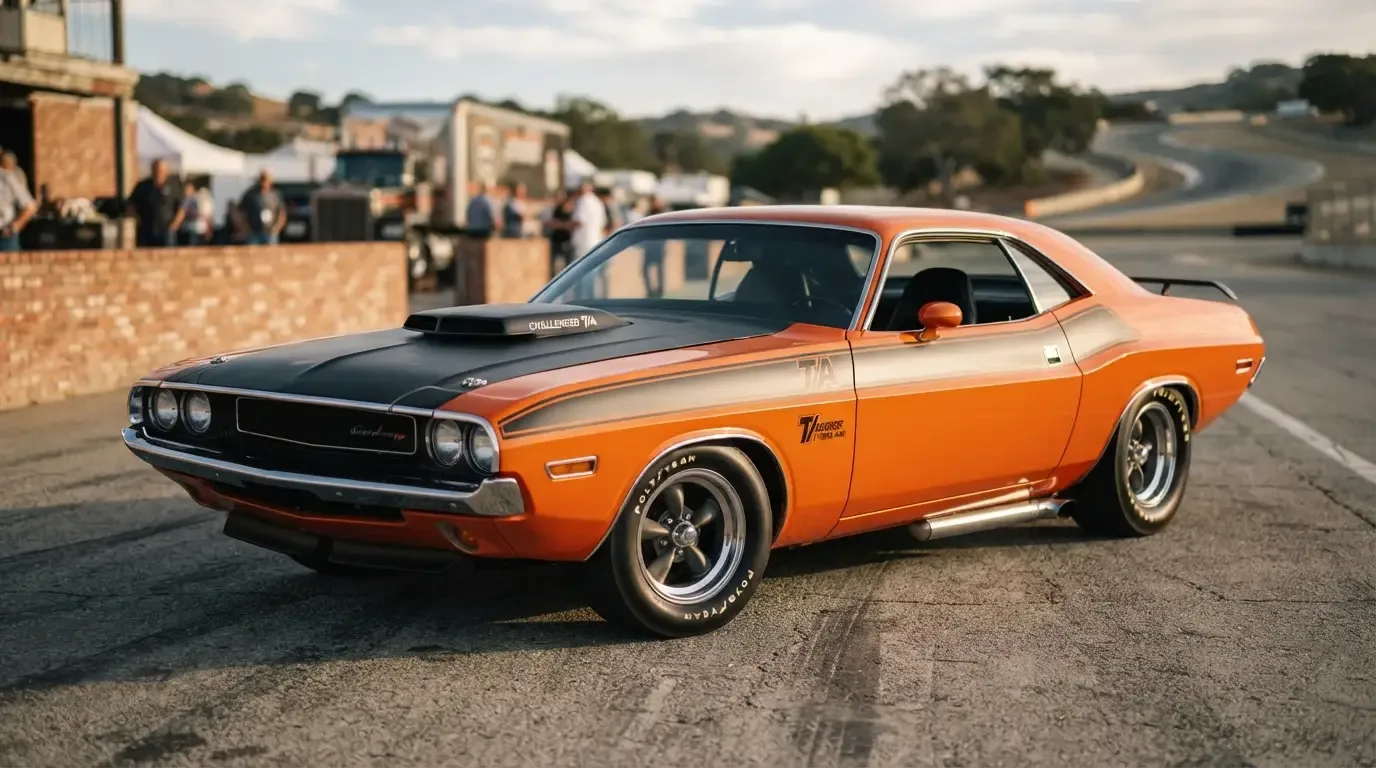
The car that collectors argue about most is the Challenger T/A. Dodge built it in 1970 only, as a homologation special to make the model legal for the Sports Car Club of America's Trans-Am racing series. The street T/A ran a 340 fed by three two-barrel carburetors, a fiberglass hood with a big scoop, side-exit exhaust, and a distinctly jacked-up rear stance to clear fatter tires out back. Production is usually cited at 2,399 units, and the racing effort itself was short-lived, but the street version has become one of the most collectible non-Hemi Challengers of all.
"People fixate on the Hemi, and I understand why, but the T/A is the car I chase. It was built for one season and one purpose, it looks like nothing else in the lineup, and it carries the whole story of why Detroit went racing in the first place. That is a lot of meaning packed into a two-year window."
- Patrick Walsh
High Impact colors and a culture of loud
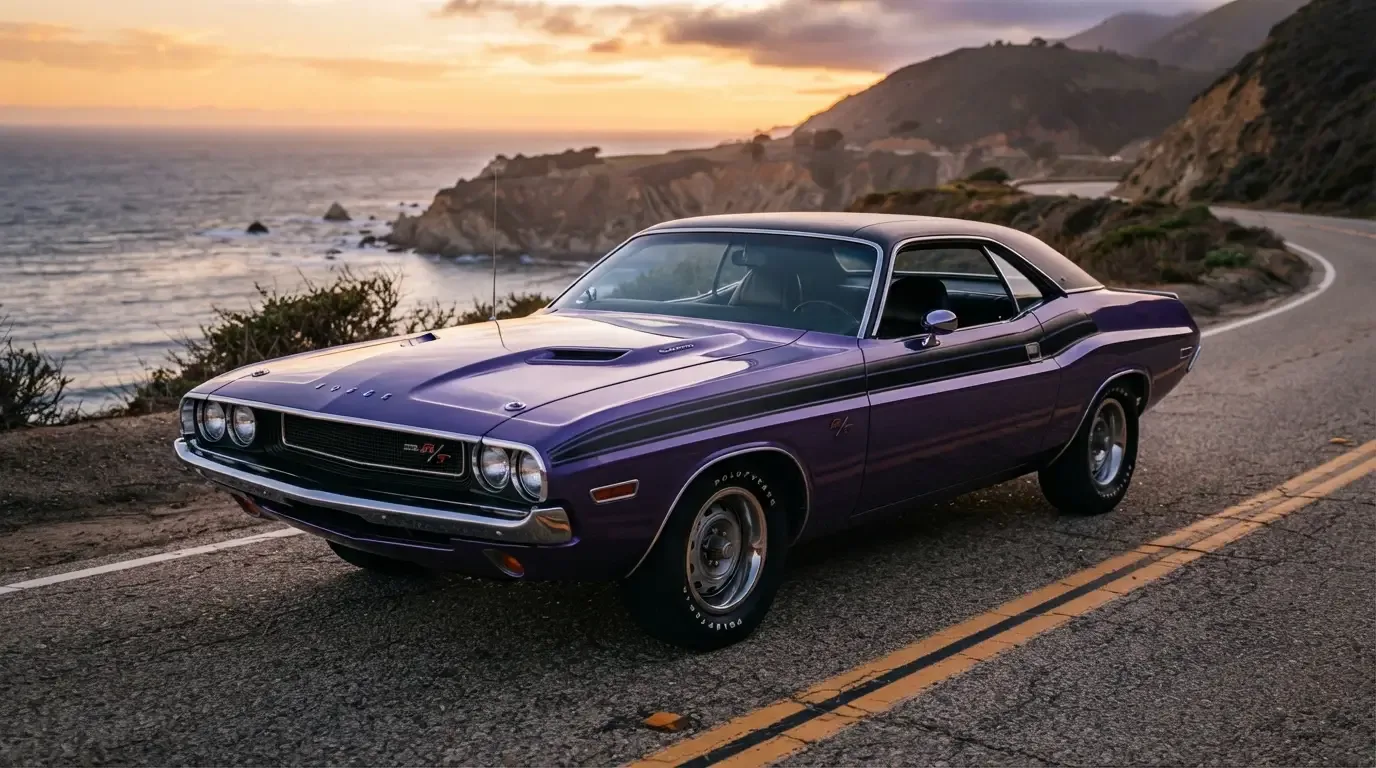
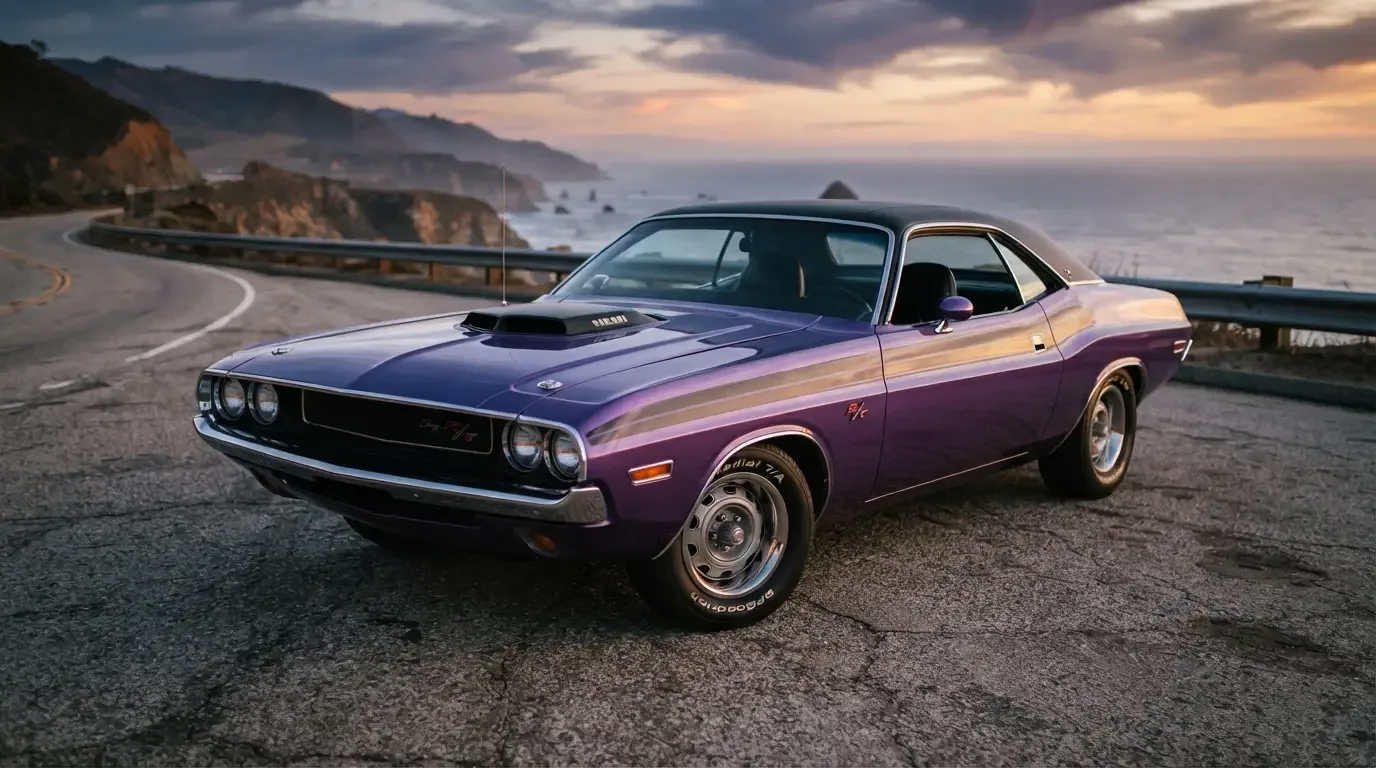
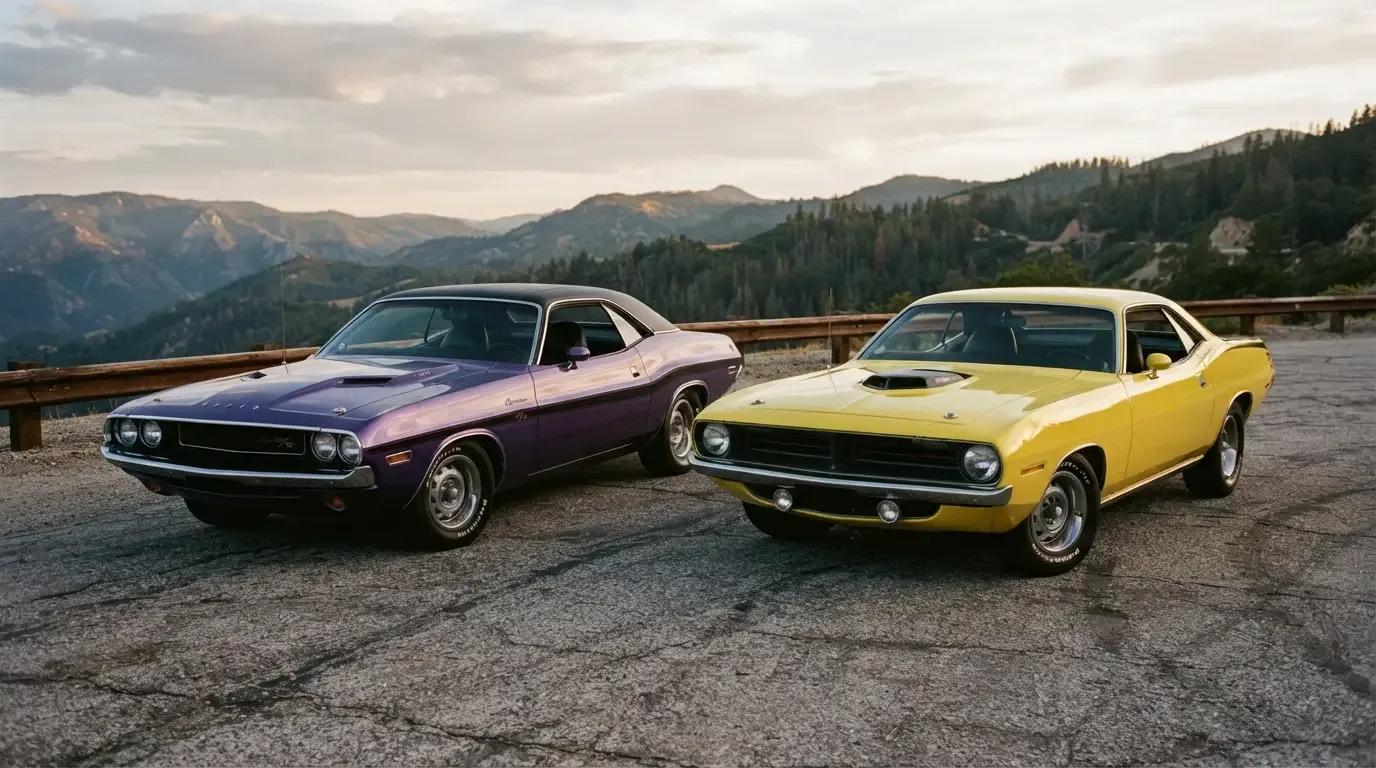
You cannot tell the Challenger story without the paint. Chrysler ran a palette it called High Impact colors, and the names alone tell you what the mood was in 1970. Plum Crazy purple. Sublime green. Go Mango orange. Panther Pink, which the marketing people also called Moulin Rouge when they got shy about it. TorRed. Hemi Orange. Top Banana. Lemon Twist. These were not subtle colors. They were dares.
The point was visibility, in every sense. A muscle car in 1970 was a social statement, and Dodge understood that the buyer wanted to be seen from three blocks away. The High Impact colors did that better than anything the competition offered. Today those same shades are the ones that add real money at auction. A Plum Crazy or Sublime car draws a bigger crowd and a stronger bid than the same car in white or black, because the color is inseparable from the era it came from.
Vanishing Point and a place in the culture
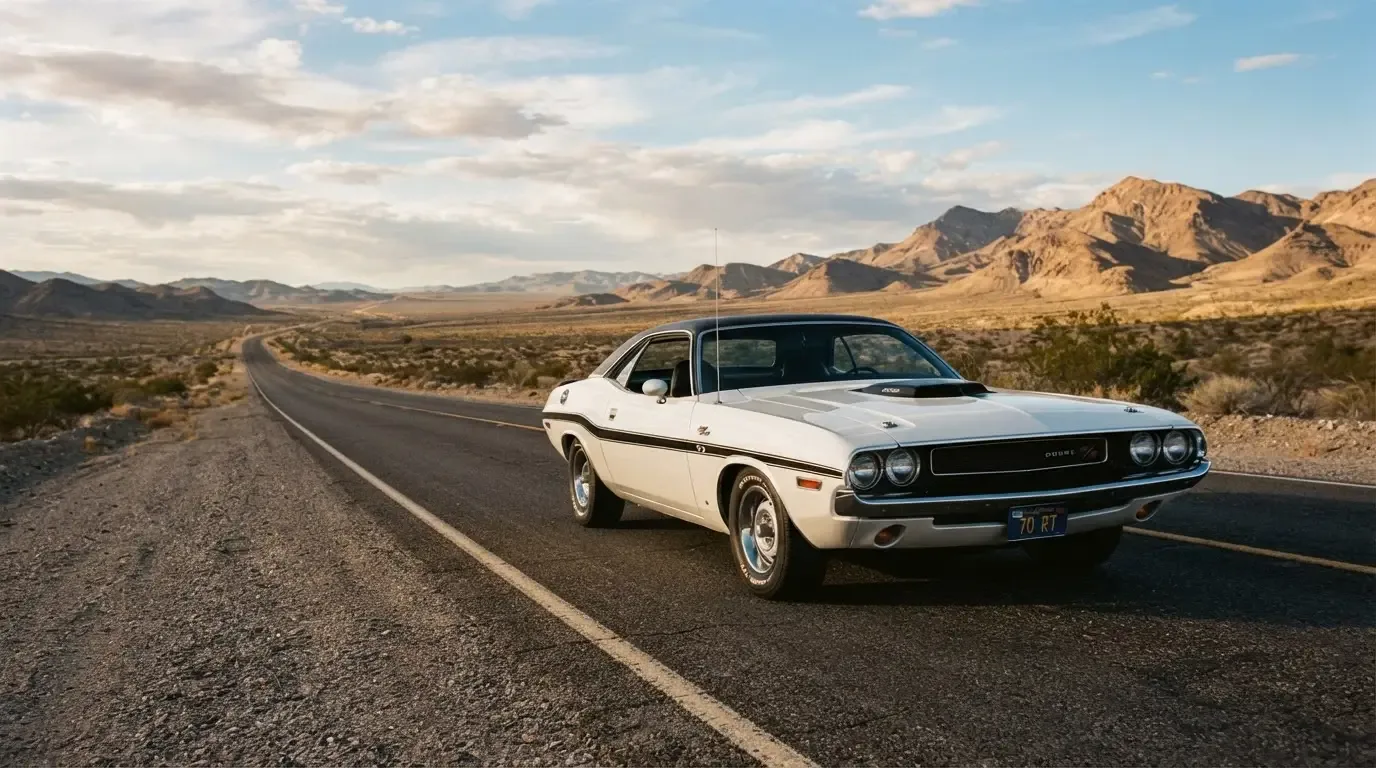
In 1971, a strange and beautiful road movie put the Challenger on screens around the world. "Vanishing Point" followed a car delivery driver named Kowalski racing a white 1970 Challenger R/T across the American West with the police in pursuit and no real reason for any of it beyond the driving itself. The film was a modest release that became a cult obsession, and the white Challenger became its true star.
That single movie did more for the car's mythology than any advertisement. It fixed the Challenger in the popular imagination as the loner's machine, fast and doomed and gorgeous. Decades later, filmmakers and musicians kept returning to that image, and the modern Challenger that Dodge revived in the 2000s leaned hard on the memory of Kowalski's car. The classic Challenger had become shorthand for a certain kind of American freedom, and it earned that status the honest way, by looking right at speed.
Production, the numbers, and the fall
The Challenger's commercial life was short and steep. The 1970 model year was the high-water mark, with total production near 76,935 units across all trims and engines. It was a strong debut, but it never repeated. The muscle car market was collapsing under the weight of insurance surcharges, rising fuel worries, and tightening emissions rules, and the Challenger fell with it.
For 1971, Dodge restyled the grille and trimmed some options, and sales dropped sharply. In 1972 the big blocks and the R/T disappeared from the lineup, replaced by a milder Rallye package, and the convertible was already gone after 1971. The 1973 and 1974 cars were softer still, aimed at buyers who wanted the look without the fury. Dodge ended Challenger production during the 1974 model year, and the nameplate went quiet for decades.
That short run is central to the car's appeal now. There simply were not that many built, the hot ones were rarer still, and a hard percentage of them were wrecked, raced to death, or rusted away in the years when nobody thought a used muscle car was worth saving. Scarcity was baked in from the start, and time only sharpened it.
"The thing that gets me about the classic Challenger is how badly the timing looked on paper and how perfect it turned out to be. Dodge showed up late to a party that was about to end, built a car for a market that was already dying, and accidentally created one of the most desirable American cars of the century. Sometimes the last one through the door is the one everybody remembers."
- Patrick Walsh
How it stacked up against Mustang and Camaro
By 1970 the pony car had a formula, and each of the big players interpreted it differently. The Mustang was the original, the everyman's sporty car that had sold in the millions and could be anything from a secretary's commuter to a Boss 429 street terror. The Camaro, freshly redesigned for 1970 into its long second generation, was the tidiest and most European-looking of the bunch, a car that took corners seriously. The Challenger arrived into that company as the biggest and boldest of the three, and it made no apology for it.
Where Ford and Chevrolet had years of refinement behind them, Dodge led with attitude and with that outrageous engine list. No rival could match the Challenger option sheet at the top end. Neither the Mustang nor the Camaro offered anything with the raw shock value of the 426 Hemi, and neither wore paint as loud as Plum Crazy or Panther Pink. What the Challenger gave up in polish it made back in presence. It was the car you noticed first in a parking lot full of pony cars, and for a certain kind of buyer that was the entire point.
The trade-off was weight and thirst. The Challenger was a heavier car than its rivals, and the big-block versions drank fuel at a rate that looked reckless even in 1970. In a straight line with the right engine it would humble almost anything, but it asked you to feed it. That character, all muscle and swagger with little restraint, is precisely what makes the classic Challenger feel like the last honest gasp of the era rather than a careful product of it. It was built to thrill, not to sip, and it never pretended otherwise.
History has been kinder to that excess than the sales charts of the early 1970s ever were. The very qualities that made the Challenger a hard sell when gas got expensive, the size, the appetite, the theatrical colors, are the qualities collectors prize most now. Restraint aged into anonymity. The Challenger's lack of it aged into legend.
Why the classic Challenger commands the money
Values for the good cars have climbed for years, and the logic behind it is not complicated. You have a short production run, a legendary engine list, unforgettable colors, a starring role in a cult film, and a modern revival that keeps the name in front of new buyers every year. Put all of that together and you get demand that comfortably outruns supply. A numbers-matching Hemi car with documentation sits near the top of the entire American collector market, and even a clean 340 or 383 car has become a serious purchase.
Condition and paperwork drive everything. A car with its original drivetrain, a legible fender tag, and a build sheet is worth far more than a good-looking driver with a swapped engine and a foggy history. The muscle car world is full of clones and tributes, cars dressed up to look like an R/T or a T/A that left the factory as something plainer, and telling the real ones apart is where the money is won or lost. Anyone shopping for a classic Dodge Challenger for sale should learn to read the tags and demand the documentation before falling for the paint.
For the buyer who does the homework, though, the reward is one of the definitive muscle cars of its generation. The classic Challenger is not the fastest, the rarest, or the most sophisticated car of its era, but it might be the one that packs the most story into a single silhouette. It arrived late, it sold in modest numbers, and it left the market almost as quickly as it entered. Then it spent the next fifty years becoming a legend, which is a trick that only the very best cars ever manage.