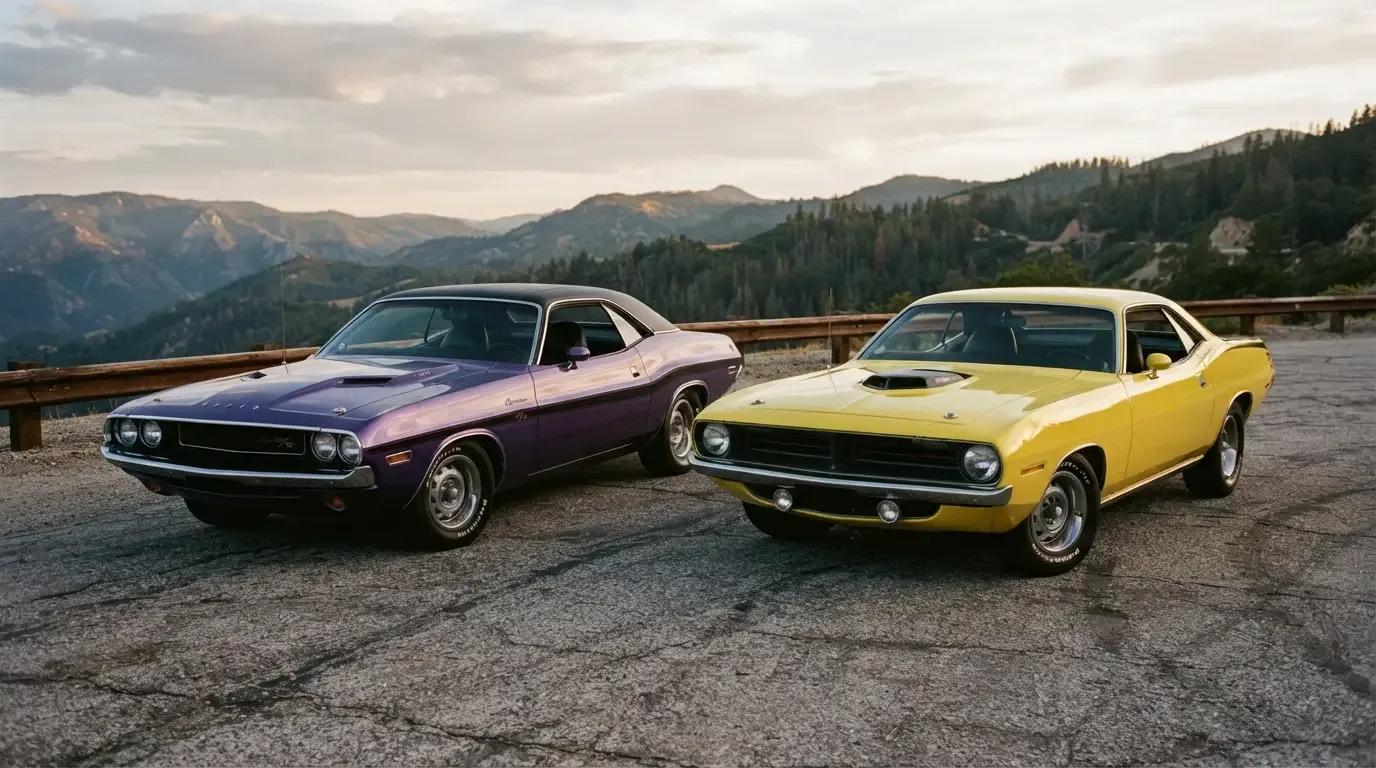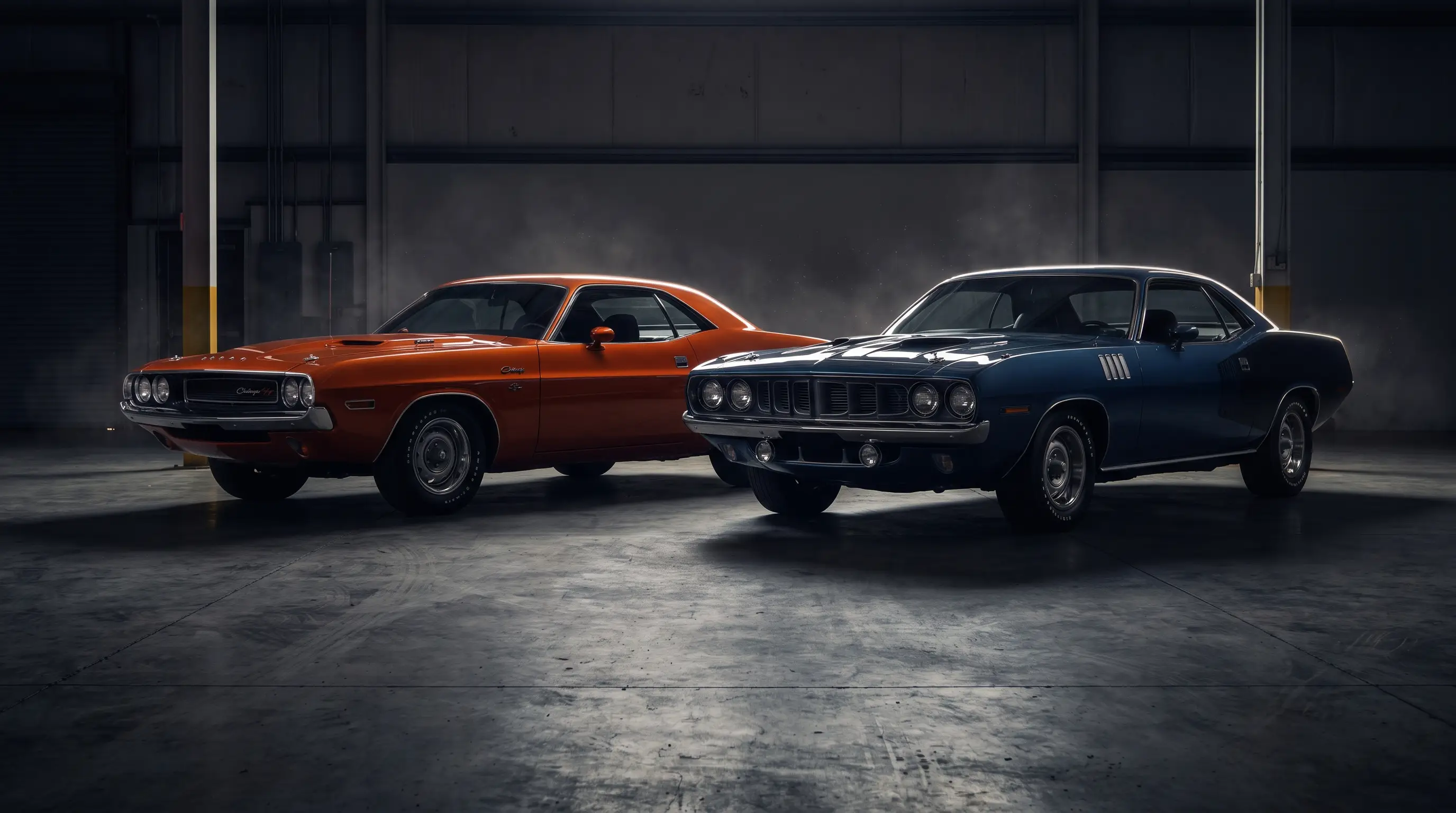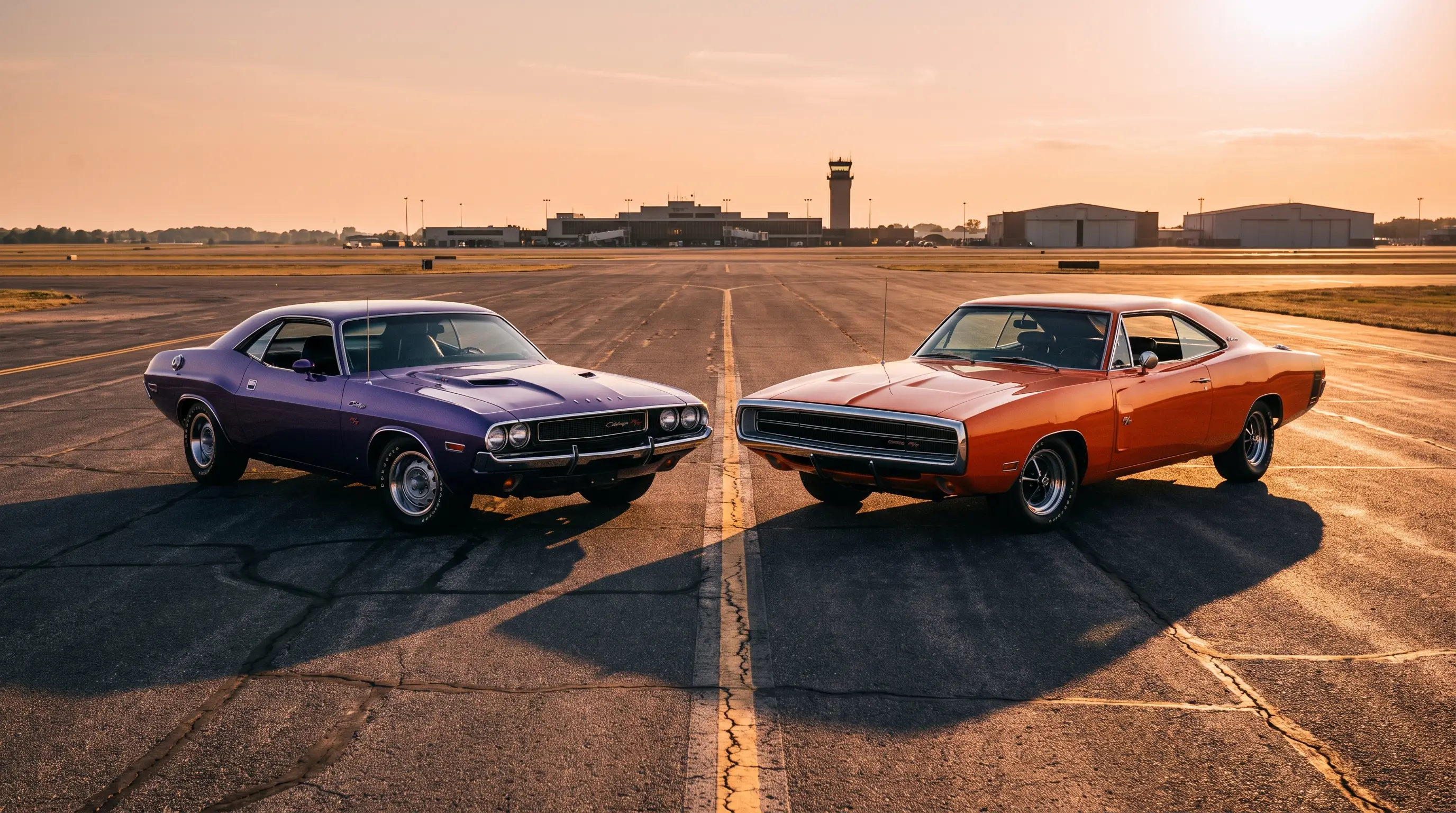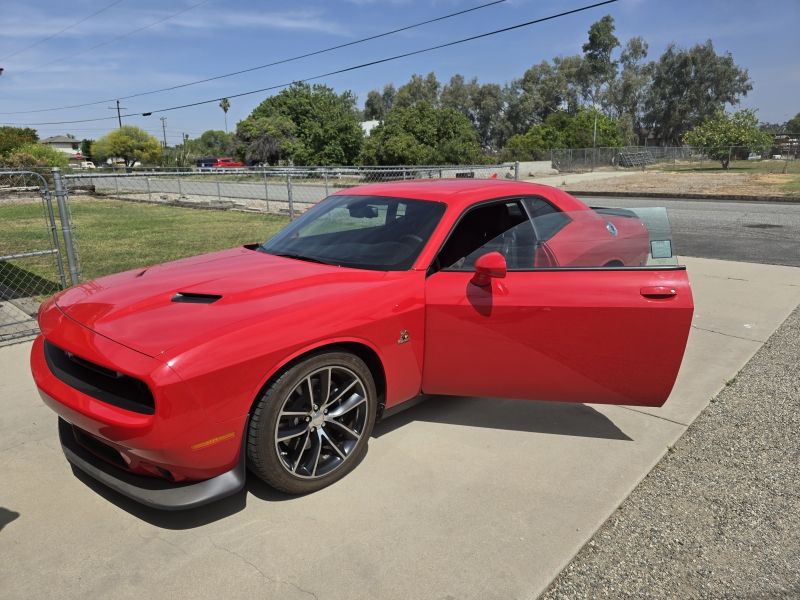
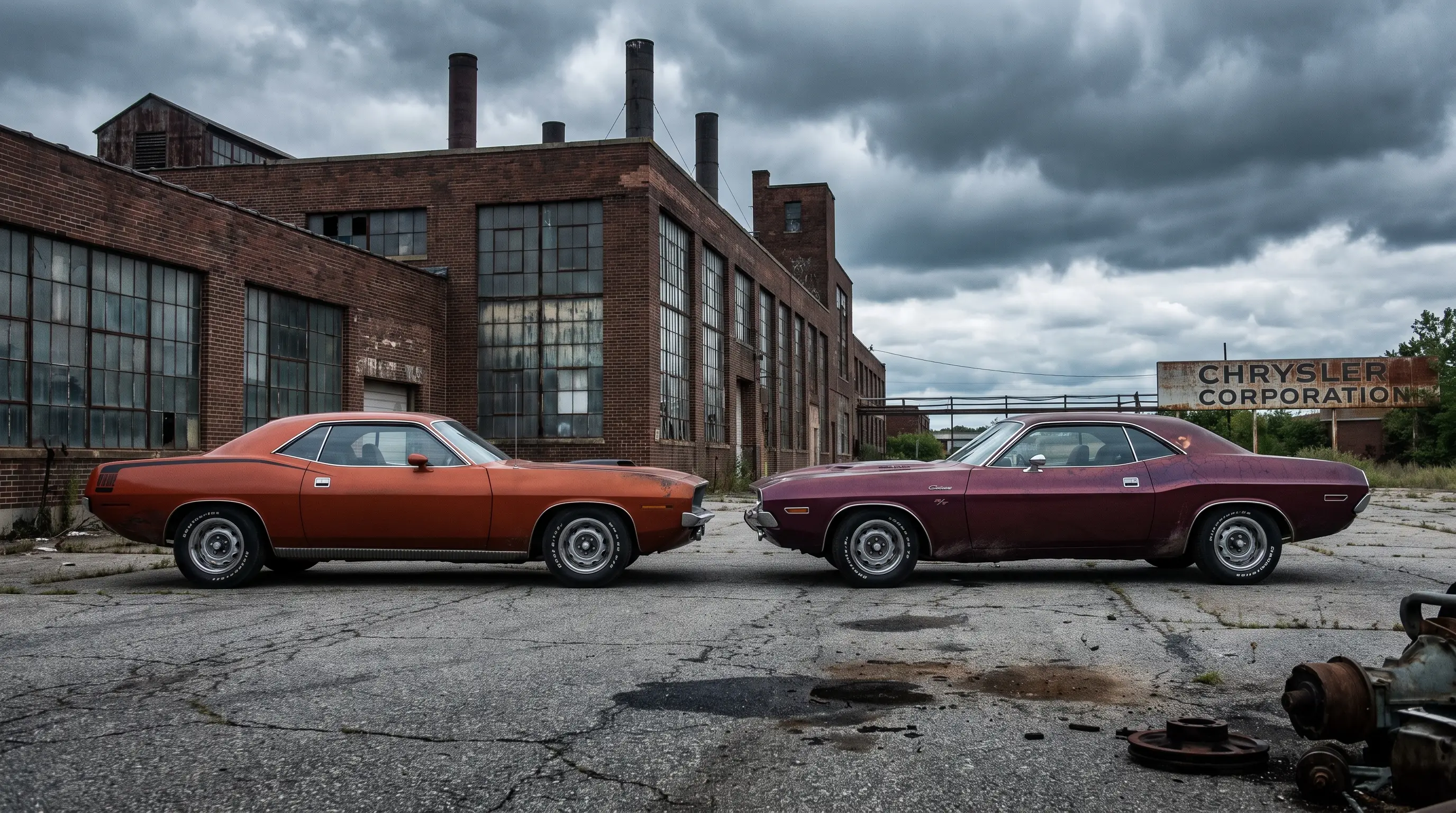
Sit at any Mopar show long enough and you'll hear somebody explain, at length, everything that makes the Challenger different from the Cuda. Fair enough, there's plenty to say there. But nobody spends as much time on what the challenger cuda e-body twins actually shared, and that's a shame, because the common ground between them is just as interesting as the rivalry, maybe more so once you understand how deliberately Chrysler engineered that overlap.
One platform, born out of necessity
Chrysler didn't build the E-body platform on a whim. Ford's Mustang and Chevrolet's Camaro had already carved out the pony car segment years earlier, and by the late 1960s Chrysler's engineers were playing catch-up with a corporate mandate to get something competitive into showrooms fast. The answer was a shared platform that both Dodge and Plymouth could build on, splitting engineering costs across two divisions while letting each brand dress the result differently. That's the practical, unglamorous truth behind two of the most beloved muscle cars ever built. They exist because sharing a chassis was cheaper than each division inventing its own from scratch.
The unibody structure underneath both cars came from the same stamping dies and the same basic engineering, front subframe, rear leaf spring suspension, firewall structure, floor pan. A mechanic who learned to work on one could climb under the other and recognize almost everything he was looking at. That shared bones, more than anything, is why parts interchangeability between Challenger and Cuda remains one of the best-known open secrets in the Mopar restoration world.
The engine bay tells the real story
Both cars could be optioned with the exact same engine lineup, straight out of the same Chrysler parts bin. The slant six for economy-minded buyers, the small block V8s for a middle ground of performance and affordability, and at the top end, the same big block options up through the 440 and the legendary 426 Hemi. None of these engines were exclusive to one badge. A buyer walking into a Dodge dealer or a Plymouth dealer in 1970 could order essentially identical mechanical firepower, just wrapped in different sheet metal.
Transmission choices matched too. Both cars offered the same three-speed manual, four-speed manual, and TorqueFlite automatic options, sourced from the same supplier lines. Rear axle ratios, brake components, and even a good portion of the suspension hardware carried Chrysler part numbers that fit either car without modification. This is why so many restoration shops today keep a single parts catalog that covers both models rather than maintaining separate inventories.
"I've had guys bring me a Cuda fender to match against a Challenger they're restoring, just to prove a point at the local show. Half the time it bolts right up. That's not an accident, that's Chrysler being smart with a tight budget."
- Wayne Coburn
Shared racing ambitions
Both nameplates chased the same Trans-Am racing series, and Chrysler homologated performance variants of each car for exactly that purpose. The Challenger T/A and the Cuda AAR emerged from the same corporate racing push, built to meet the same rules with similar aerodynamic thinking even though the styling execution differed between the two. Underneath the trim differences, both cars wore functional hood scoops, side exhaust exits, and suspension tuning aimed at the same competitive target.
That shared racing DNA means the two cars' performance heritage is really one heritage told through two brand voices. The engineers working on Trans-Am homologation weren't building two separate racing programs, they were solving one problem twice, in parallel, because corporate structure demanded two nameplates get the benefit of the same engineering work.
Why the shared story matters at a club meeting
Understanding what these cars had in common changes how you talk about them at any gathering of serious owners. The rivalry angle gets all the attention because it's more fun to argue about, but the shared platform is the real reason both cars survive in such strong numbers today. Parts availability for one directly benefits the other, and a restoration community that had to support two completely separate parts ecosystems would be a much smaller, much poorer community than the one that exists now.
If you want our complete history covering how the rivalry between the two played out on top of this shared foundation, that piece goes deeper into the differences. But don't skip past the common ground covered here, because it's the reason parts, knowledge, and restoration expertise flow so freely between owners of either badge.
Assembly plants that built both
It gets even more direct at the factory floor level. Chrysler built Challengers and Cudas at the same Hamtramck assembly plant, on lines that ran both cars through in sequence rather than dedicating separate facilities to each nameplate. A worker on the line one shift might be bolting a fender to a Challenger and the next shift doing the identical job on a Cuda, using the same tooling, the same torque specs, the same basic process. That's about as shared as two different badges can get without literally being the same car.
This shared production history explains a lot about quality and build consistency between the two. Complaints about fit and finish, or praise for a particularly well-assembled example, tend to apply equally to both nameplates from any given production period, because the workforce, the tooling, and the quality control standards were identical. Serious restorers know this and use documented Cuda build quality issues to anticipate what to check for on a Challenger from the same era, and vice versa.
Finding a car that carries this legacy forward
Whichever nameplate you end up chasing, the mechanical foundation underneath is the same story, refined by two divisions competing to dress it best. That shared engineering is part of why both cars have aged into such respected classics rather than one outshining the other into obscurity.
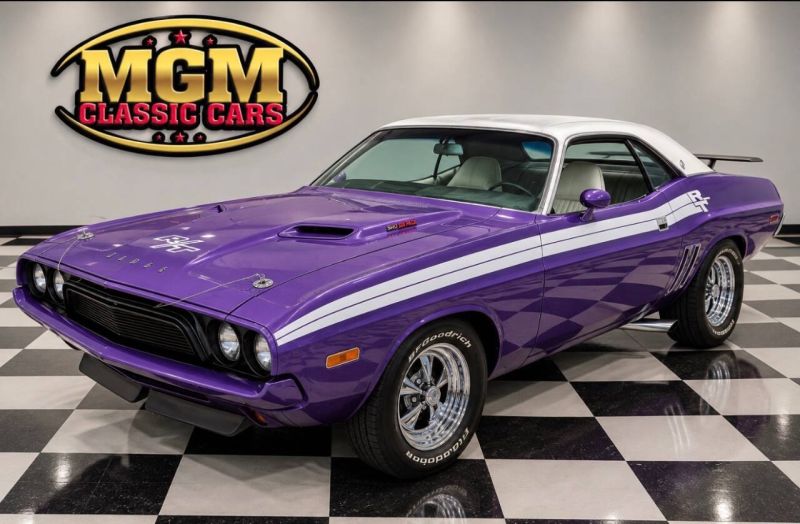
If you're ready to put some of this history in your own garage, you can find a classic Challenger and see what condition, engine option, and documentation are available right now. Whatever you choose, you're buying into a platform story that's bigger than either badge alone, and that's worth remembering the next time somebody at a show tries to tell you the two cars have nothing in common.