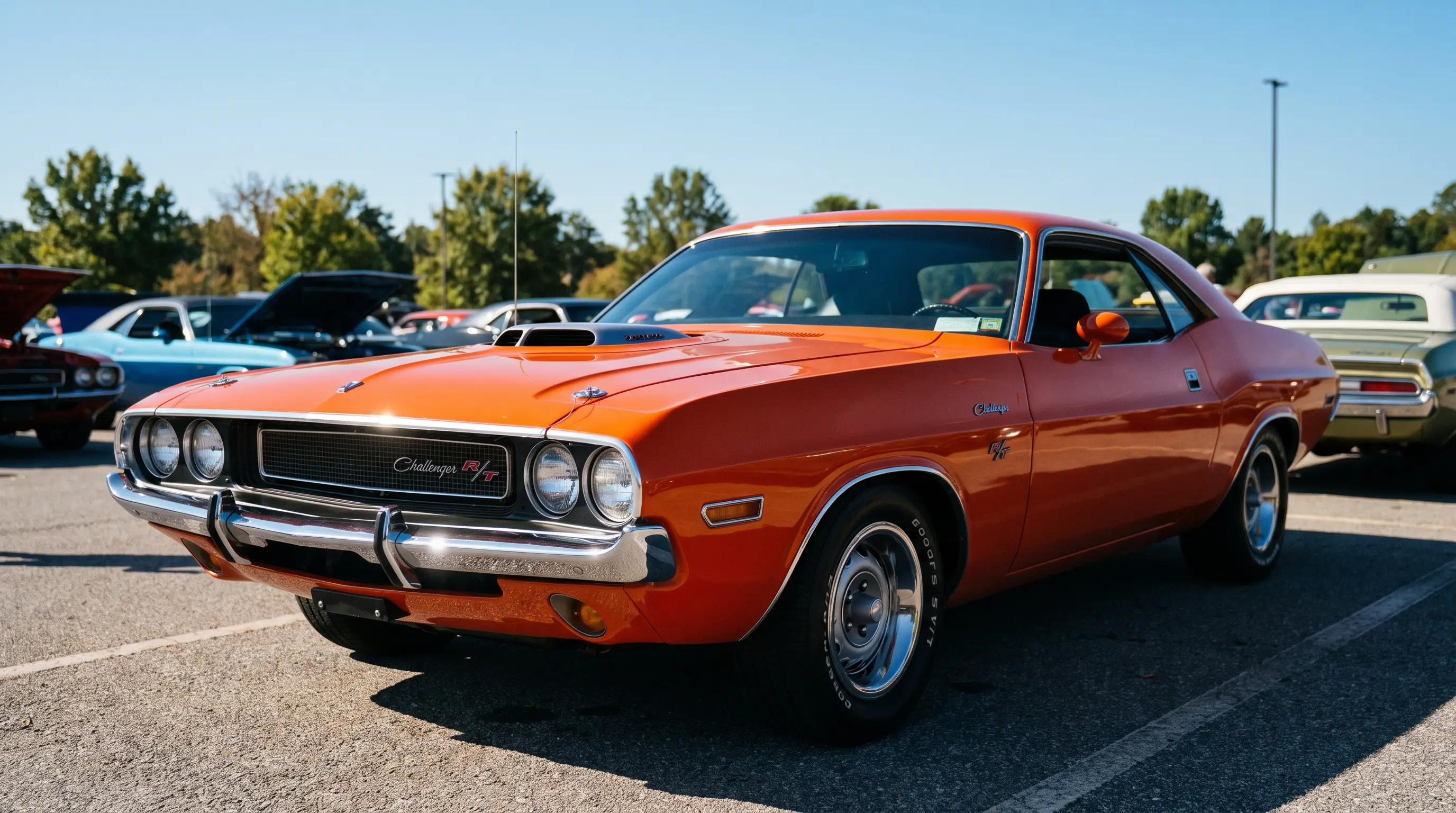
Every color in the High Impact lineup has its fans, but Go Mango is the one I get the most calls about when somebody finds an orange Challenger in a barn and wants to know if they hit the jackpot. Most of the time it is a repaint. Every once in a while it is the real thing, and that is when the phone conversation gets a lot more interesting. The go mango challenger story is one of the harder ones to verify, and that is exactly why it is worth understanding before you spend a dollar on one.
What Go Mango actually is
Go Mango is a bright orange, closer to a deep tangerine than the fire orange some other manufacturers used in the same era. Chrysler introduced it as part of the High Impact palette for 1970, sold on both Dodge and Plymouth E-bodies with slightly different marketing names depending on the brand. On the Challenger, it showed up on order sheets as one of the standout options alongside Plum Crazy, Sublime, and the rest of the loud lineup Dodge was pushing that year to grab attention from younger buyers.
Production numbers for Go Mango Challengers are genuinely low, lower than some of the more commonly discussed High Impact colors, though no single documented factory tally for the color across 1970 and 1971 has survived. That scarcity is real, not marketing spin, and it is part of why I get so many calls asking me to verify a car before somebody writes a check.
How I actually check one in the shop
First thing I do with any claimed Go Mango car is pull the fender tag and match the paint code against what is on the body. If those two things do not agree, the conversation is over before it starts, no matter how good the paint looks. Second thing, I check the door jambs, trunk gutter, and under the dash pad for any trace of the original color peeking through. A factory car should show consistent Go Mango in every one of those hidden spots. A repaint often shows a different original color in at least one of them, because painters miss spots nobody thinks to check.
Third, and this is the part a lot of buyers skip, I look at the actual texture and depth of the paint itself. Factory lacquer from 1970 lays down with a specific kind of shallow orange peel and a certain depth under direct light that modern basecoat clearcoat just does not replicate, no matter how skilled the painter is. I have caught more than one nice looking fake this way, cars that would have fooled somebody without a trained eye and a flashlight.
| Check point | What a genuine factory car shows | Common red flag |
|---|---|---|
| Fender tag paint code | Matches visible body color exactly | Code lists a different factory color entirely |
| Door jambs and trunk gutter | Consistent Go Mango throughout | Original color visible in hidden areas |
| Paint texture | Lacquer depth and period-correct orange peel | Flat, glossy modern basecoat sheen |
| Broadcast sheet | Confirms color code if it survived with the car | No documentation, seller cannot explain gaps |
Why the low numbers matter to buyers
Rarity by itself does not make a car valuable. Rarity backed by documentation does. I have seen plenty of Go Mango Challengers get passed over at auction because the paperwork trail was thin, while a documented car with a matching broadcast sheet and a clean fender tag brought real money in the same room the same weekend. Buyers who care about this stuff have learned to ask the hard questions before they get emotionally attached to a color they always wanted.
That is the honest advice I give every caller. Fall in love with the paperwork first, then fall in love with the paint. Do it backward and you end up owning a nice looking orange car with none of the story that actually makes a Go Mango Challenger worth what people pay for the real thing.
"An orange Challenger is not automatically a Go Mango Challenger. It is an orange Challenger until the fender tag and the broadcast sheet agree with each other, and a lot of sellers hope you never ask to see both."
- Jim Vasquez
Where this fits in the bigger color story
Go Mango does not exist in a vacuum. It sat on the same order sheet as Plum Crazy, Panther Pink, and Sublime, all part of a single marketing push that reshaped how Dodge sold performance cars to a younger audience starting in 1970. If you want to read the background on how that whole program came together and how each color fits into the bigger collectibility picture, that piece connects the dots across the full palette rather than just this one shade. The Sublime green story is worth a look too if you are trying to decide between two of the rarer High Impact shades.
Whatever color eventually pulls you in, the fundamentals do not change. Check the fender tag. Check the hidden panels. Trust the paperwork over the paint job in front of you. When you are ready to see what is actually out there with real documentation attached, you can shop classic Challenger listings and start asking sellers the same questions I ask before I put my own name on any restoration.
A story from the shop floor
A customer once brought me an orange Challenger he had bought sight unseen off a photo listing, convinced he had landed a genuine Go Mango car for well under market value. The seller had described it that way, and the price reflected a documented factory car rather than a repaint. Within twenty minutes of the car arriving on my lift, I had the fender tag out and a flashlight in the door jamb, and neither one told the story he had been sold on the phone.
The fender tag listed a completely different factory color code, one that did not correspond to anything close to Go Mango. The door jamb showed a hint of the original color underneath, a plain metallic green, nothing rare at all. Somebody along the way had decided an orange respray would move the car faster and for more money than the original color ever would have, and it worked, at least until it landed in my shop.
That customer took the loss, learned an expensive lesson about buying sight unseen from a photo listing, and ended up keeping the car anyway because he genuinely liked how it drove regardless of the paint code. That is not always how these stories end. Plenty of buyers walk away angry, some pursue refunds, some just eat the loss quietly and never mention it to anyone outside their own garage. The lesson stays the same no matter how the story resolves. Verify before you buy, not after the money has already changed hands.