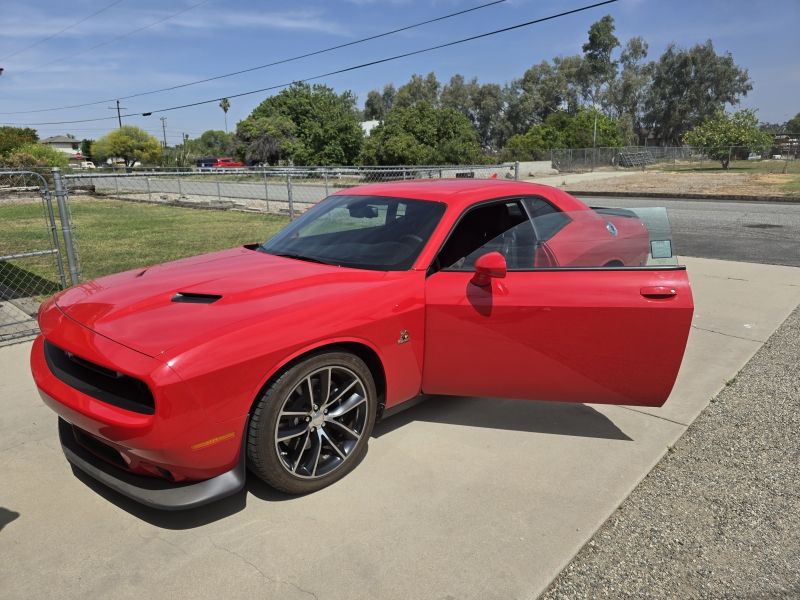
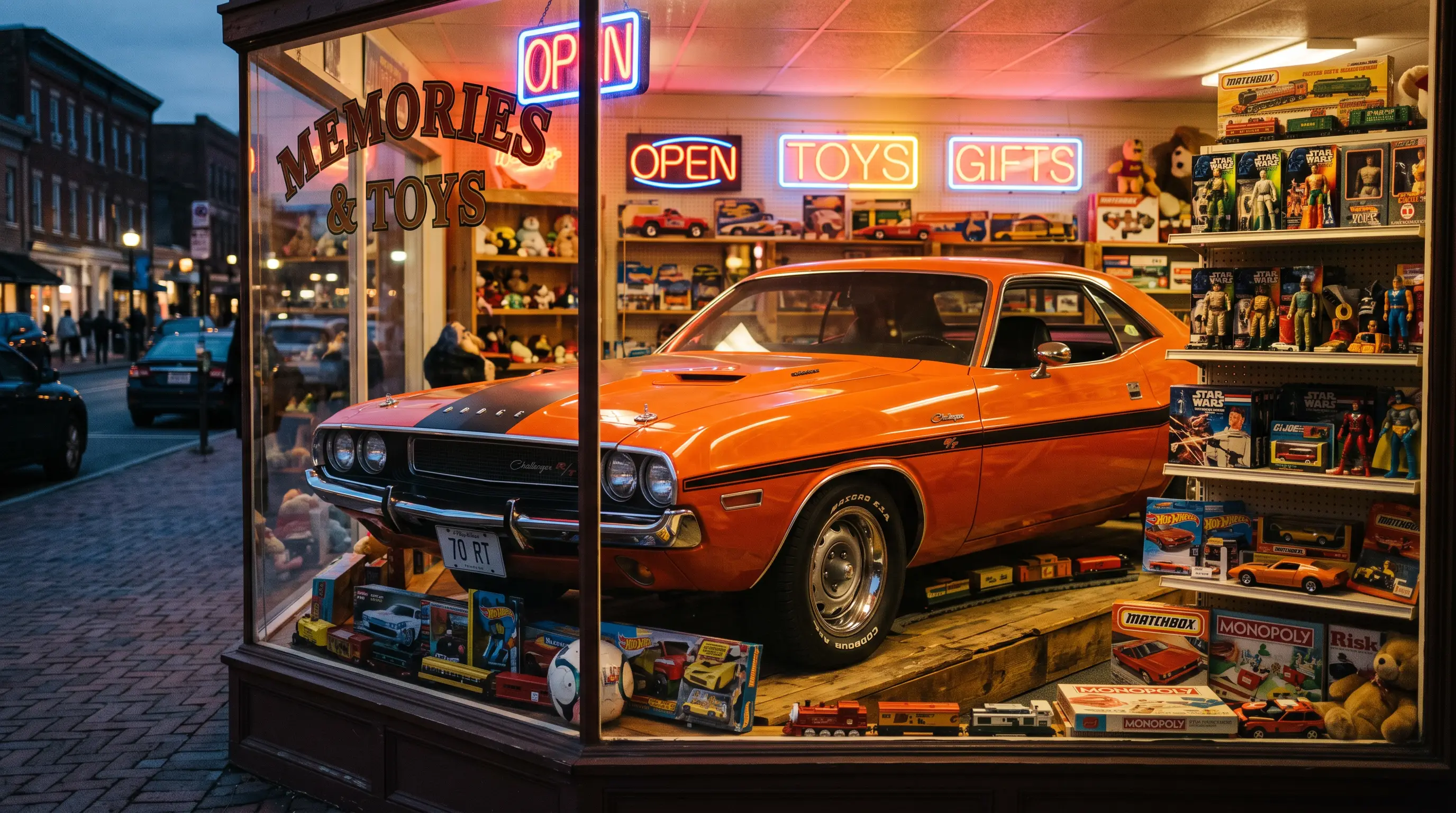
Somewhere in a shoebox in a lot of American garages sits a small orange or purple die cast car, three inches long, wheels a little loose from decades of handling, and a body shape that a lot of grown adults can still identify faster than they can name their own license plate. The hot wheels dodge challenger has been part of that toy line's lineup for decades, and for a surprising number of collectors today, it was the first version of this car they ever owned, years before they could drive a real one.
A toy that taught a generation the shape
Hot Wheels launched in 1968, and the Dodge Challenger arrived on dealership shelves as a 1970 model year car, so the toy line and the real car share a birthday within a couple of years of each other, even though a dedicated Challenger casting took a while longer to show up on pegs. A '70 Dodge Challenger R/T casting debuted in a 30th anniversary muscle car set around 2000, and Mattel followed it with the now well known '70 Dodge Hemi Challenger casting in the 2006 First Editions lineup, designed by Phil Riehlman. Mattel's design team has returned to the Challenger body repeatedly since, releasing it in dozens of colorways, some faithful to the factory paint chart, some purely fantastical, part of the wider Hot Wheels tradition of reimagining real cars in colors no factory ever offered.
For a kid growing up any time from the early 2000s onward, when a dedicated Challenger casting was finally a fixture on pegs, a die cast Challenger was often the closest thing to ownership they were going to get for a very long time. That gap between the toy and the real car did something interesting to brand memory. Decades later, adults with disposable income and a driver's license go looking for the full sized version of a car they first held in their hand as a kid, small enough to race across a kitchen floor.
The colors that made the toy line memorable
Hot Wheels versions of the Challenger have leaned hard into the factory's own high impact color lineup over the years, plum crazy purple and hemi orange chief among them, because those colors already photographed and sold well on real cars and translate just as well to a three inch casting under fluorescent store lighting. Limited runs and convention exclusive Challenger castings have become their own small collector market inside the larger Hot Wheels hobby, with certain years and certain colorways trading for considerably more than their original retail price among serious diecast collectors.
Why the die cast hobby and the full sized hobby overlap
Talk to enough people at a car show and a pattern starts to emerge. A meaningful share of Challenger owners can trace their interest in the car back to a childhood toy, not a movie, not a magazine ad, just a small metal casting that stuck with them longer than most toys do. That overlap between die cast collecting and full sized car ownership is not unique to the Challenger, plenty of muscle cars share the same pipeline, but the Challenger's long run in the Hot Wheels lineup gives it an unusually deep bench of former kids now shopping the real thing.
The whole picture of how this car built its cultural footprint includes plenty of screen appearances and music placements, but the toy shelf deserves its own credit, because it reached kids who were nowhere near a movie theater showing an R rated chase film.
"Ask a room full of Challenger owners how they first fell for the shape, and more of them than you would expect start the story with a toy, not a movie."
- Nora Beckett
Collecting the toy version today
The secondary market for vintage Hot Wheels Challengers has grown into a genuine hobby of its own, with dedicated online communities tracking casting variations, wheel types, and packaging changes across decades of production. A carded example from the earliest years of the line, still sealed in its original blister pack, can command a price that would surprise anyone who assumes a toy car cannot be worth serious money. That market runs on the same instincts as the full sized collector world, condition matters enormously, original packaging adds a premium, and certain years simply produced fewer examples than others, driving scarcity based value the same way a rare factory paint code does on the real car.
None of this is a suggestion that die cast collecting is a substitute for the real thing. It is a parallel hobby that happens to share a fan base, and for a lot of people, it was the doorway that came first.
From the toy shelf to the driveway
The jump from collecting die cast Challengers to owning a real one is a bigger leap than most hobbies require, but the emotional throughline is the same. A collector who has spent years chasing a rare Hot Wheels colorway understands, on some instinctive level, why a numbers matching R/T in an unusual factory color commands a premium over a more common configuration. Rarity, condition, and a good story all matter in both hobbies, just at wildly different price points.
For anyone whose interest started with a toy on a shelf and has finally turned into a serious search for the real thing, people who shop classic Challenger listings today are chasing the same instinct that made a three inch casting worth holding onto for forty years. The scale is different. The pull is not.
The scale model side of the same coin
Hot Wheels is the entry point most people remember, but it is not the only small scale version of the Challenger that has shaped the car's reputation. Larger, more detailed scale model kits and diecast replicas, built for older hobbyists rather than kids racing toys across a floor, have long treated the Challenger as a staple subject, right alongside the Camaro and the Mustang. These more detailed models cater to a different kind of buyer, one interested in accurate badging, correct interior colors, and factory specific trim details, but they draw from the same well of affection that Hot Wheels tapped into decades earlier.
What connects the cheap toy and the expensive scale replica is the same underlying appeal, a shape recognizable enough that a manufacturer can shrink it down to a few inches and still have it read instantly as a Challenger. Not every muscle car survives that kind of miniaturization with its identity intact. The Challenger, with its flat planes and simple proportions, translates unusually well to small scale, which is probably part of why toy and model makers have returned to it so consistently across the decades.
A small object with a long reach
It is easy to dismiss a toy car as a footnote in a much bigger cultural story built by films, magazines, and racetracks. The Hot Wheels Challenger deserves better than a footnote. It reached more households, more consistently, over more decades, than any single movie or television appearance managed on its own, and it planted the shape in the memory of people who would not sit behind the wheel of a real one for another twenty years. That is a quiet kind of legacy, but it is a real one, and it keeps renewing itself every time a new colorway lands on a store shelf and catches some kid's eye for the first time.