A director scouting locations for a music video has about three minutes to make a viewer feel something before the song ends, and a classic Dodge Challenger parked in frame does a lot of that work without a single edit. The challenger music video has become its own small subgenre inside the larger world of car obsessed music culture, showing up in rock videos, hip hop videos, and the occasional country crossover where a muscle car does the job a horse used to do. This is a look at why directors keep reaching for the same shape.
The visual shorthand of a muscle car in a music video
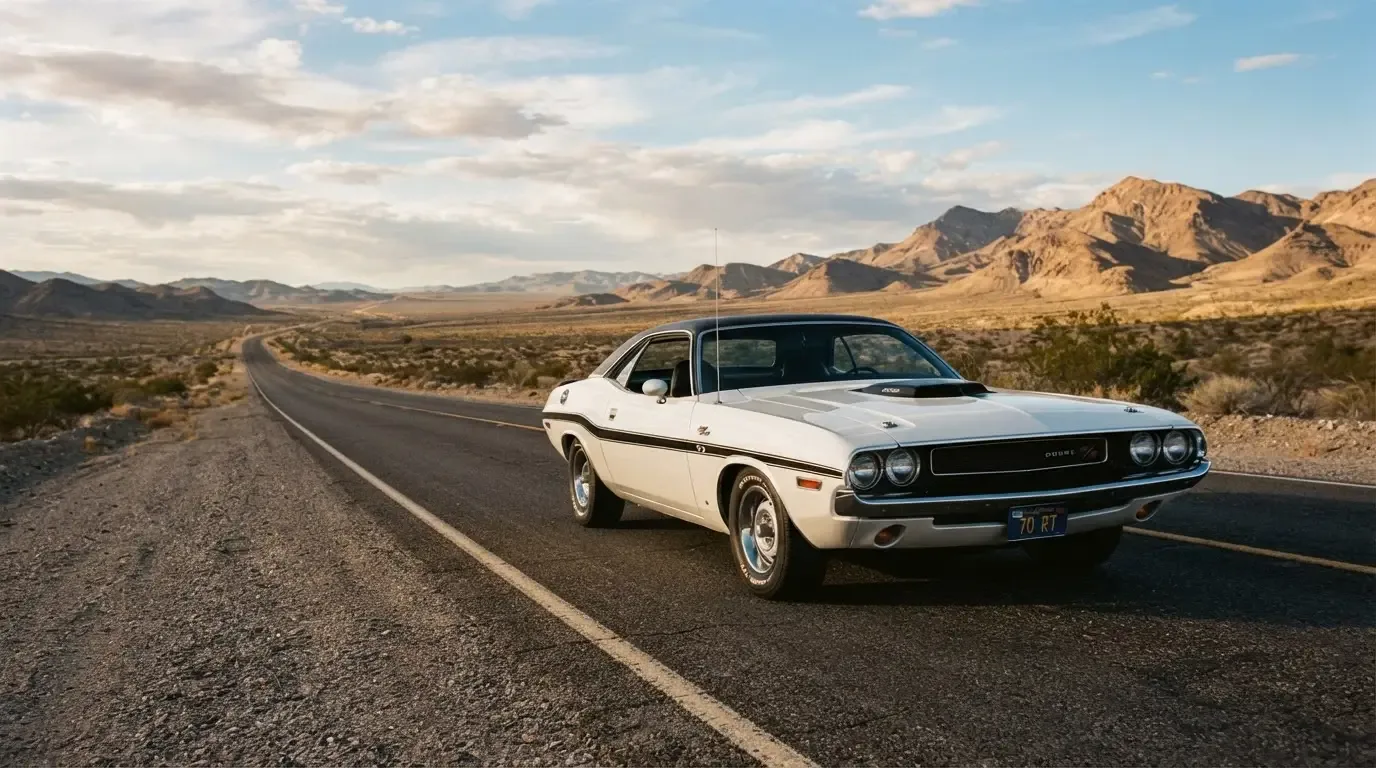
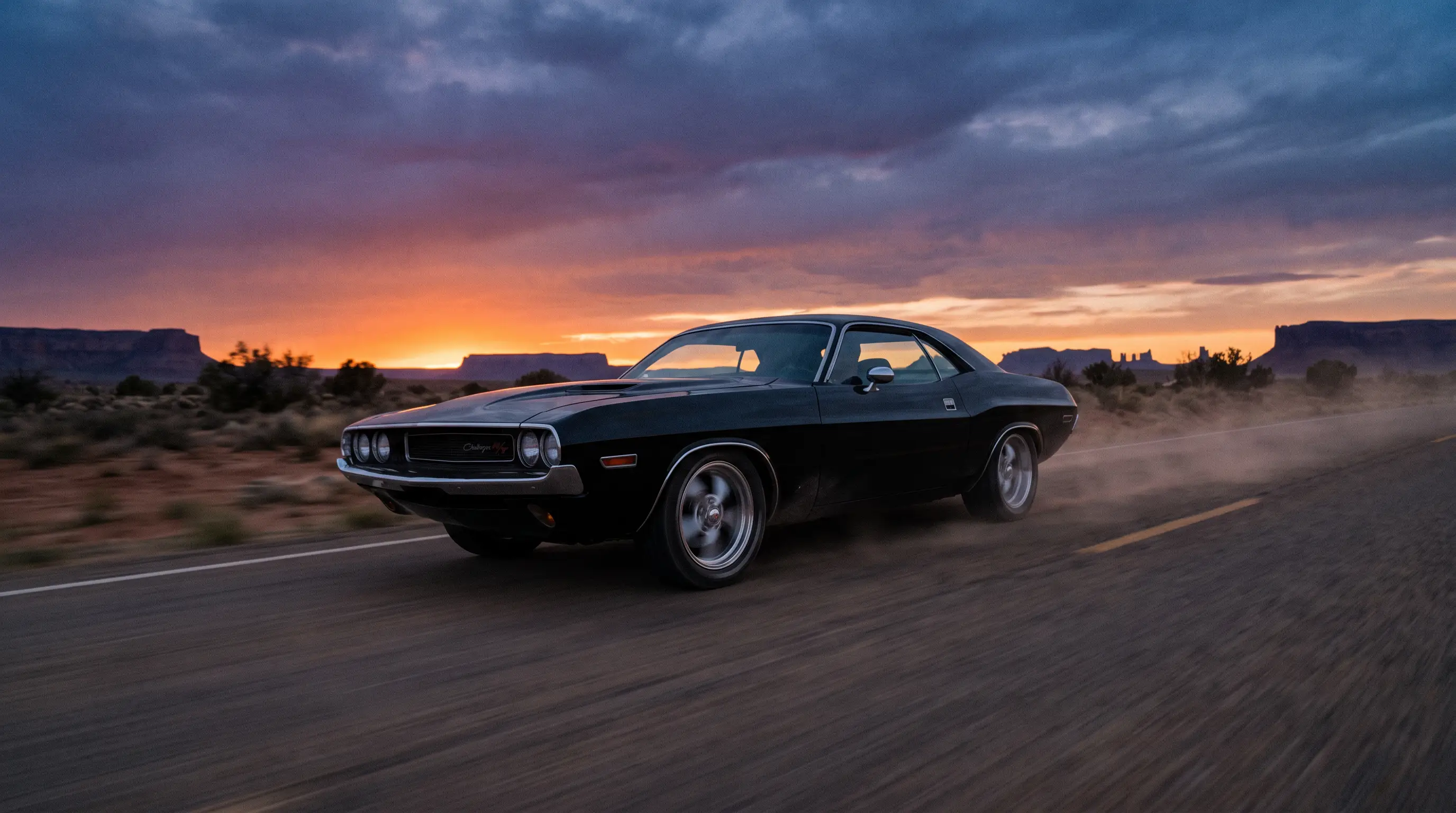
Music videos run on symbols more than plot. A few seconds of a 1970 Challenger idling under a streetlight tells an audience more about a song's mood than a page of lyrics could. Rock and hard rock artists have leaned on the car's aggressive stance for decades, using it as a stand in for rebellion, freedom, or straightforward American nostalgia depending on the era and the genre. The clearest example is Audioslave's 2003 video for "Show Me How to Live," which intercuts frontman Chris Cornell driving a replica 1970 Challenger through the desert with actual footage from Vanishing Point, an explicit homage rather than a coincidence of casting; Cornell had been a fan of the film since childhood. The car does not need choreography. It just needs to sit there, engine running, looking like trouble.
Hip hop videos found a different use for the same car. Where rock videos often frame the Challenger as an outlaw's ride, hip hop artists have more often used the classic muscle car as a status symbol, parked alongside other collector cars in a garage shot meant to signal taste and money in the same breath. Both uses draw on the same underlying reputation, a car built to look expensive and dangerous at the same time, which is a hard combination to fake with a newer vehicle.
Why the classic body works better than the modern one
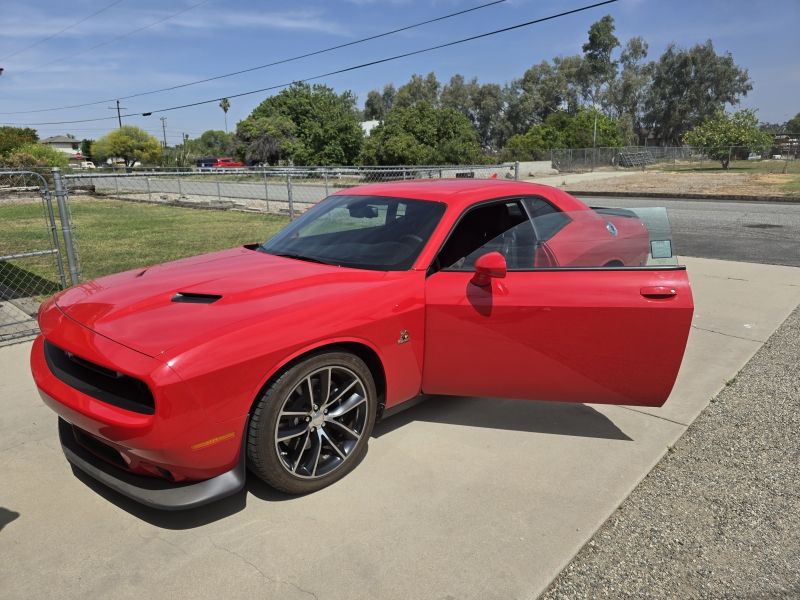
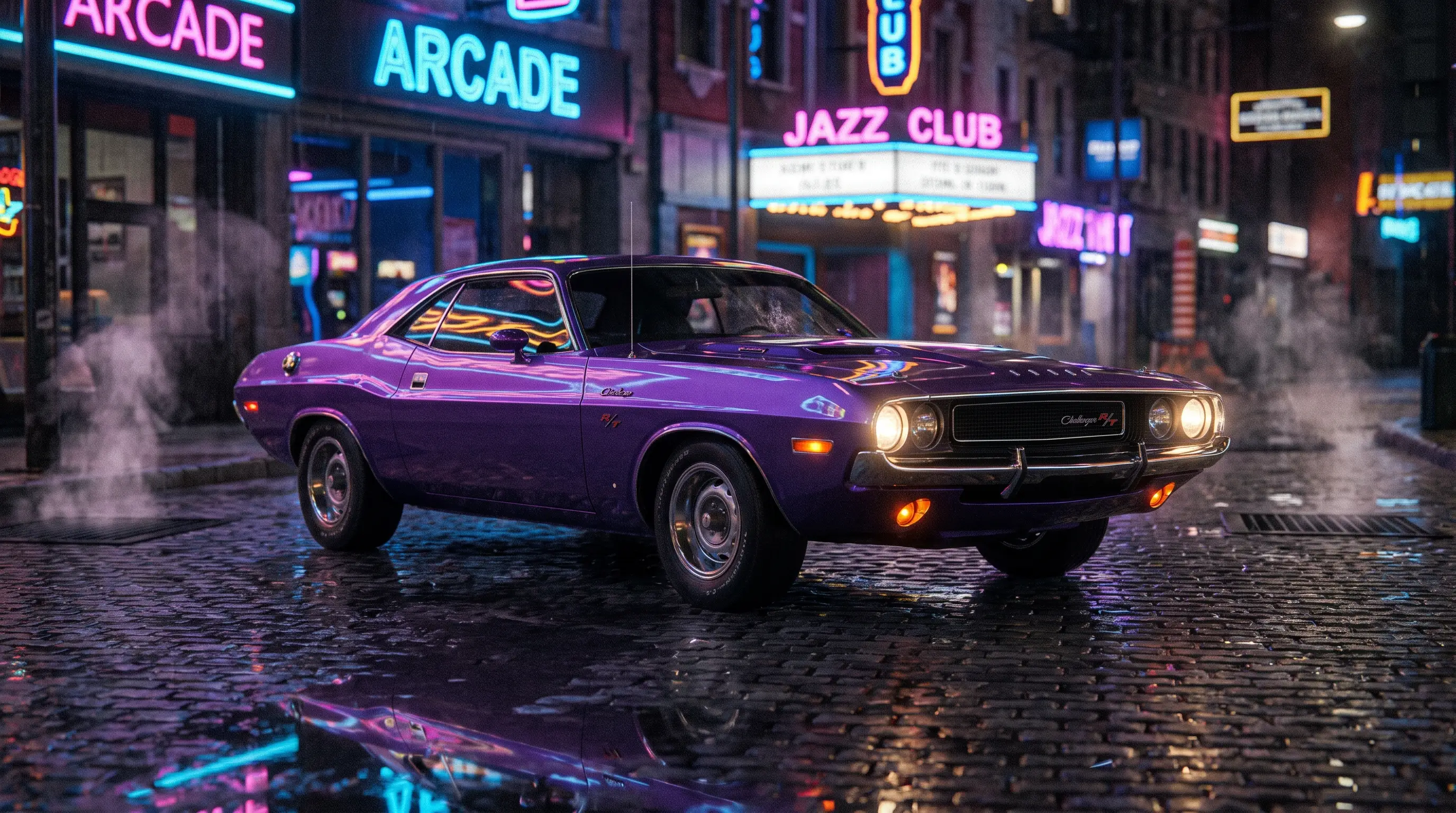
The reboot Challenger, in production since the mid 2000s, is a genuinely fast car, but it reads on camera as a modern product, all sharp creases and LED lighting. The original 1970 through 1974 body has none of that. It has a flat hood, round headlights, and a stance that looks like it belongs to an older, meaner era of American car building. For a director trying to sell nostalgia or menace in a three minute window, that difference matters. You can read the background on how this same silhouette has been used across film for decades, and the pattern in music video casting starts to make sense as an extension of the same visual language.
The color choices directors keep making
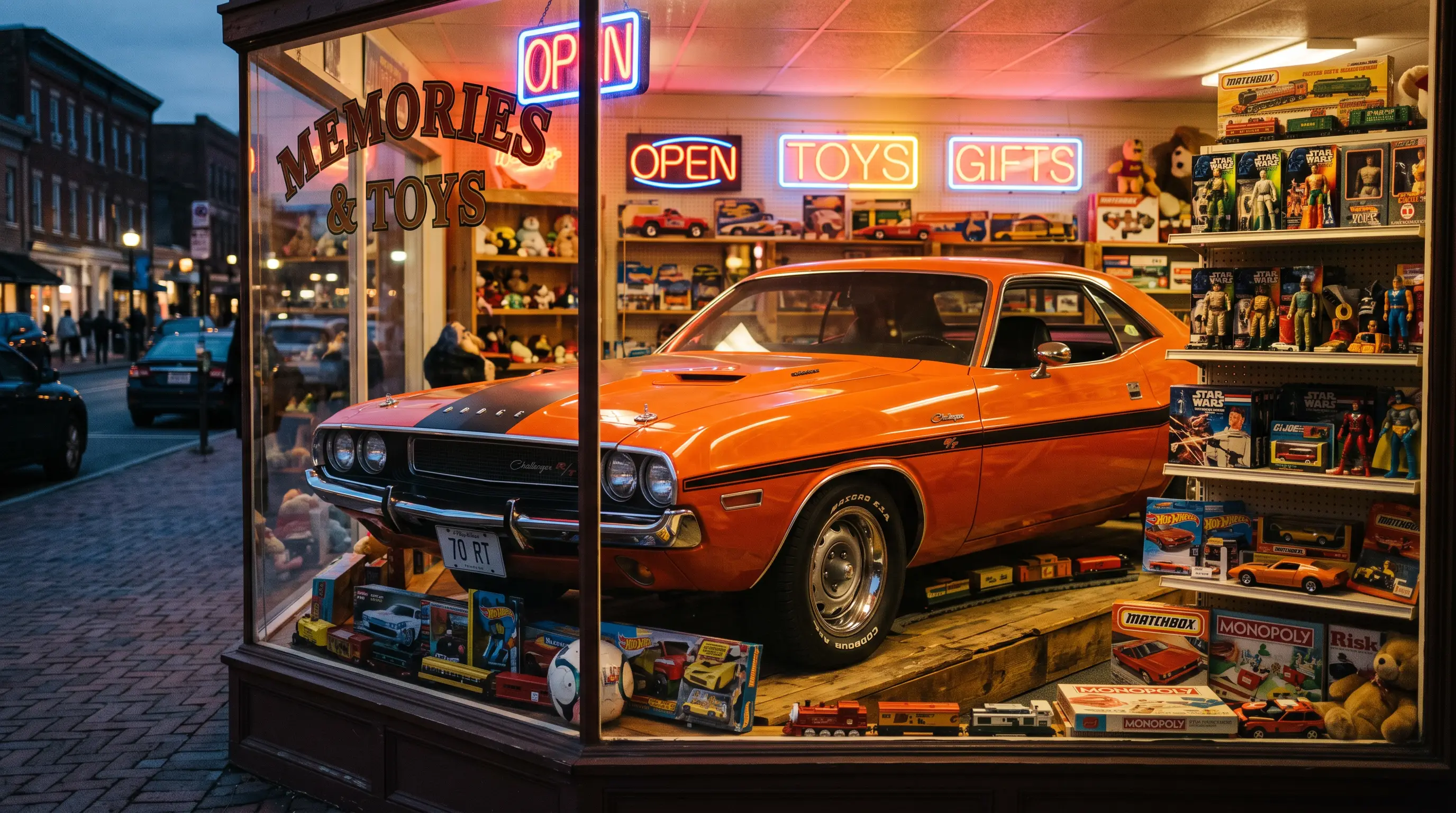
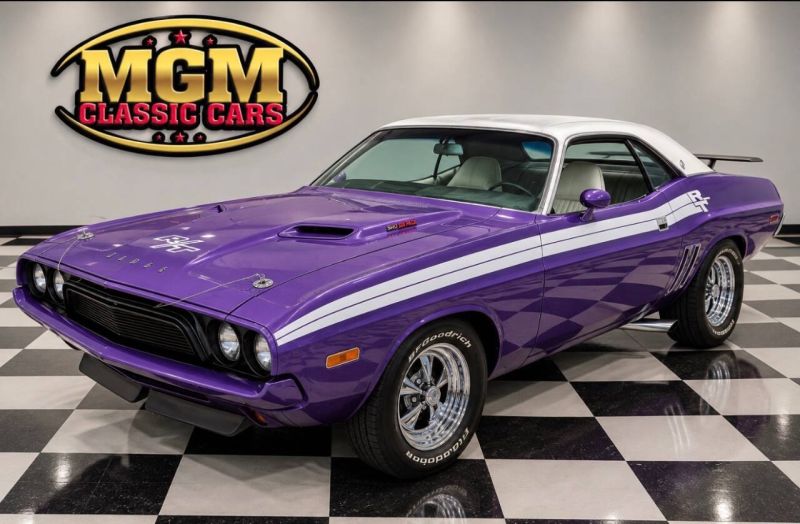
Plum crazy purple, hemi orange, and top banana yellow show up disproportionately often in music video Challenger casting compared to their actual production numbers on the factory floor. These were always attention grabbing colors, part of Chrysler's high impact paint lineup from the early 1970s, and they photograph well against almost any background, day or night. A director does not need a color theory degree to notice that a plum crazy Challenger against a gray city backdrop is going to pull every eye in the frame straight to the car.
Black and white Challengers get their own kind of screen time too, usually in videos going for a more restrained or moody aesthetic, letting the car's shape do the work instead of its paint. Both approaches show up often enough that neither one has become a cliche exactly, more a set of tools a director reaches for depending on the song.
"You do not cast a Challenger in a music video because it is fast. You cast it because it looks like it has a story, and most of the time you never find out what that story is."
- Patrick Walsh
What this does for the car's reputation off screen
Every music video appearance adds a small layer of contemporary relevance to a car that would otherwise live entirely in the classic car world, seen mostly at shows and in magazine features aimed at people who already know its history. A viewer who has never set foot at a car show can still recognize the shape from a video they streamed last week, and that kind of casual familiarity keeps the car culturally alive in a way pure enthusiast coverage cannot manage on its own.
That crossover exposure does not change what the car is worth on paper, a numbers matching R/T is still valued the same way regardless of how many videos it has appeared in, but it does widen the pool of people who might find a classic Challenger and understand what they are looking at, whether they can name the year or not. For anyone who wants to find a classic Challenger after watching one do its job on screen, the shopping experience still comes down to the same fundamentals, condition, documentation, and an honest inspection before money changes hands.
Behind the scenes of a car heavy shoot
Getting a classic Challenger into a music video is rarely as simple as calling a rental agency. Most productions work through private owners or small collector networks, negotiating a day rate, insurance terms, and a strict list of what the car will and will not be asked to do. A serious collector will allow a car to be driven and filmed but will draw a hard line at anything resembling a stunt, no burnouts on camera unless the car is specifically built and insured for it, no close contact shots that risk paint or trim. That negotiation happens off camera, and it shapes what a director can actually plan for on the day.
Production crews also learn quickly that a fifty year old car does not behave like a modern one on set. Carburetors need attention between takes, older cooling systems do not love sitting and idling under studio lights for hours, and a crew unfamiliar with points and condenser ignition systems can lose an entire afternoon to a car that simply will not restart. The videos that look effortless on release often required a mechanic on set the whole day, quietly keeping the Challenger running between every single take.
A shape that keeps getting cast
Trends in music video production change fast, new artists, new genres, new visual styles every few years, but the classic Challenger has kept its place in the rotation longer than most props manage. That staying power says less about any single video and more about a body style that photographs like it means something, whether the crew shooting it knows the full history or not. Directors keep coming back to it because it keeps working, and a shape that keeps working eventually stops being a trend and starts being a fixture, one that shows no sign of aging out of the visual vocabulary any time soon.