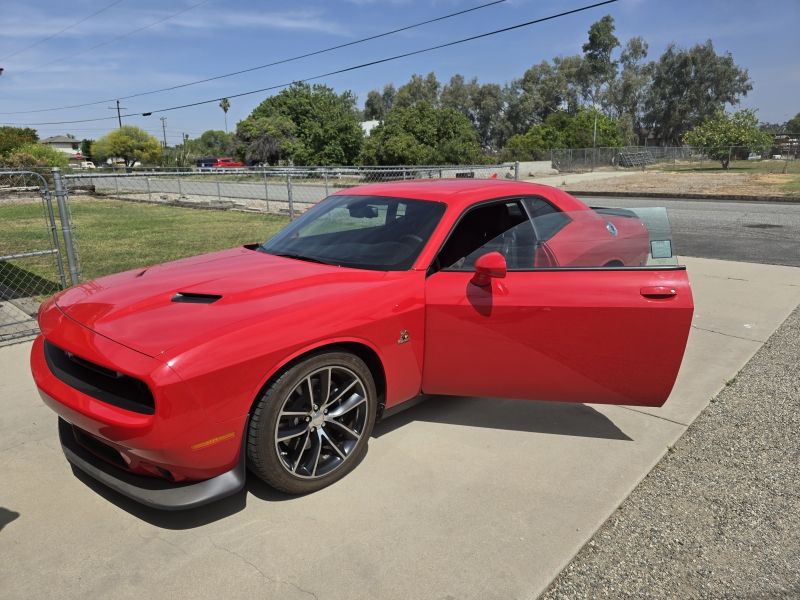
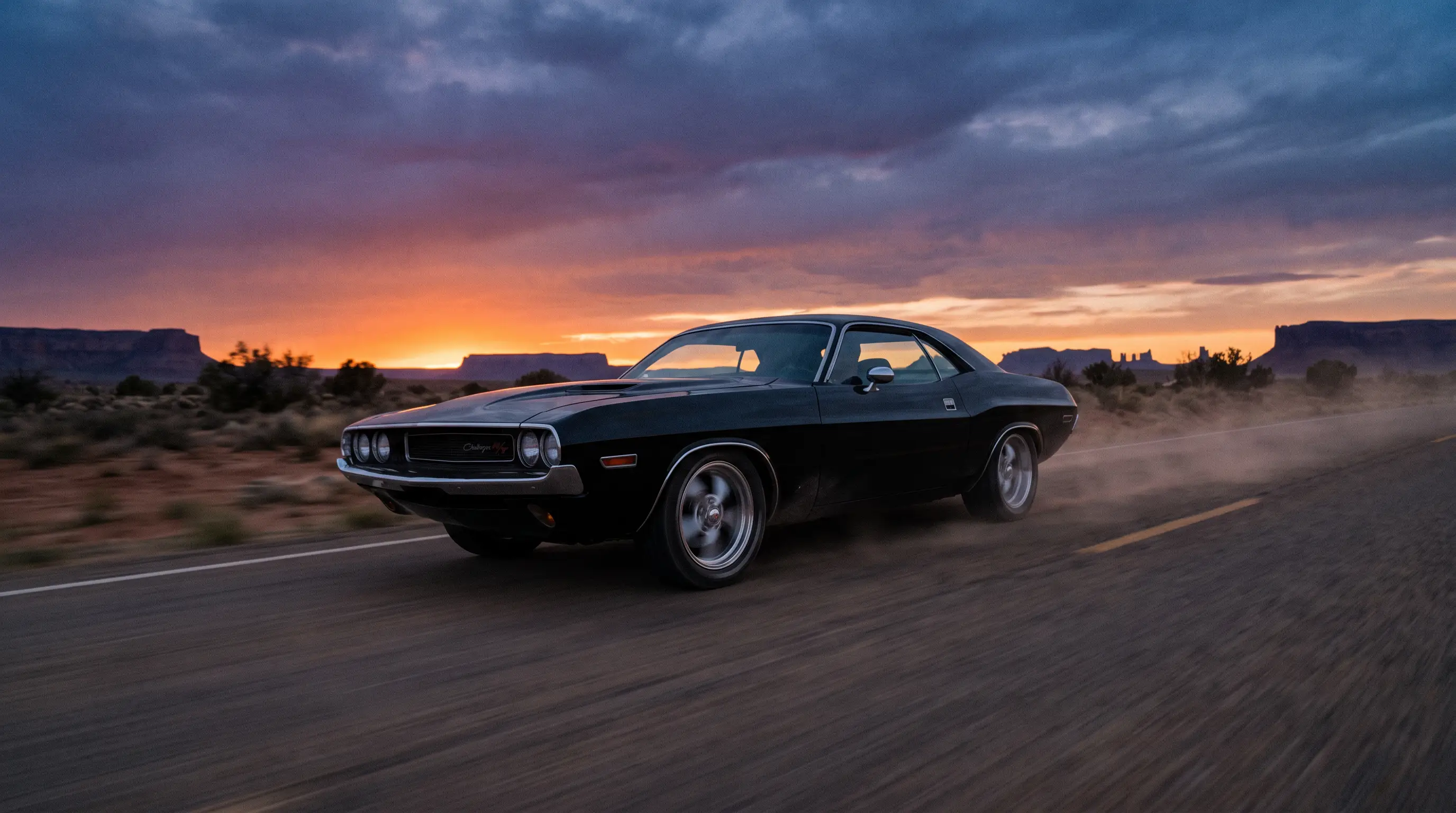
There is a particular kind of silence in a movie theater when a car finally gets its own close up, the kind that happens right before it does something no sensible driver would attempt. The dodge challenger in movies has earned that silence more than once, going back to a lonely stretch of Colorado highway in 1970 and running forward through drive-ins, muscle car chase pictures, and the occasional television guest spot that fans still trade clips of decades later. This is the short version of a long relationship between one car and the camera.
Where it started, on a road that goes nowhere
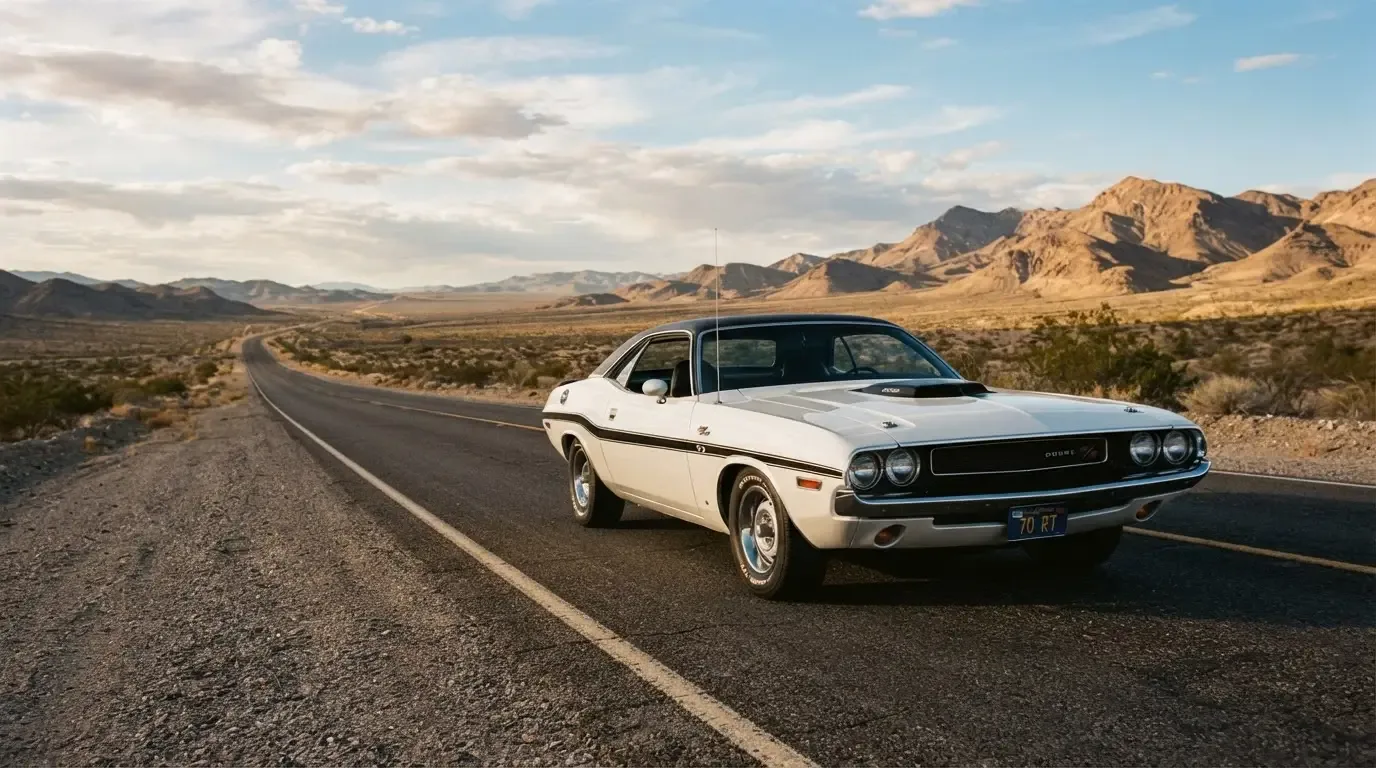
Vanishing Point put a white 1970 Challenger R/T in front of audiences as the vehicle for a man named Kowalski who is delivering a car cross country and, somewhere along the way, decides the drive itself is the point. The film was not a box office giant on release, but it became a touchstone, the kind of movie that critics rediscovered years later and called an existentialist road picture disguised as a chase film. The Challenger in it barely gets a line of backstory. It does not need one. Our vanishing point challenger retrospective covers the full arc of that story, including what happened to the actual cars used in filming.
What Vanishing Point did for the Challenger's screen reputation, no amount of advertising could have bought. A car company cannot manufacture the kind of authenticity that comes from a low budget film where the car genuinely looks like it is being driven to its limit by someone who has stopped caring what happens next.
The Death Proof detour
By 2007, Quentin Tarantino built an entire back half of Death Proof around a white Challenger, dressed to read as a 1970 model on screen though the actual movie car was a 1971, driven, in the film's own reality, by a character who has clearly seen Vanishing Point and wants her car to be that car. It is a rare bit of self aware casting, a movie car that knows it is a movie car, chasing down a villain played by Kurt Russell in his own menacing Chevrolet. Stunt driver Tracy Keehn-Dashnaw and newcomer Chrissy Weathersby handled the high speed driving for actress Tracie Thoms in that sequence, while stuntwoman Zoe Bell famously rode the hood herself for the most dangerous shots, without a double or visible harness, at speeds reported up to 80 to 100 mph.
Scattered appearances that add up
Beyond the two films most fans name first, the classic Challenger has turned up in smaller roles across decades of chase pictures, television crime dramas, and the occasional music video, which is a related story worth its own read. The car's full pop culture footprint stretches well beyond any single film or clip. A lot of these appearances are blink and you miss it, a Challenger parked in a background lot shot, a quick pursuit sequence in a forgotten action picture, a single episode guest appearance in a cop show from the 1970s. None of these individually built the car's reputation. Together they kept the shape in circulation long enough for later generations of filmmakers to keep reaching for it.
Television gave the Challenger less glamorous work than film did, mostly stunt cars in period set procedurals, but even brief screen time in front of a national broadcast audience does something for a car's cultural footprint that a magazine feature cannot replicate.
Why filmmakers keep coming back to this shape
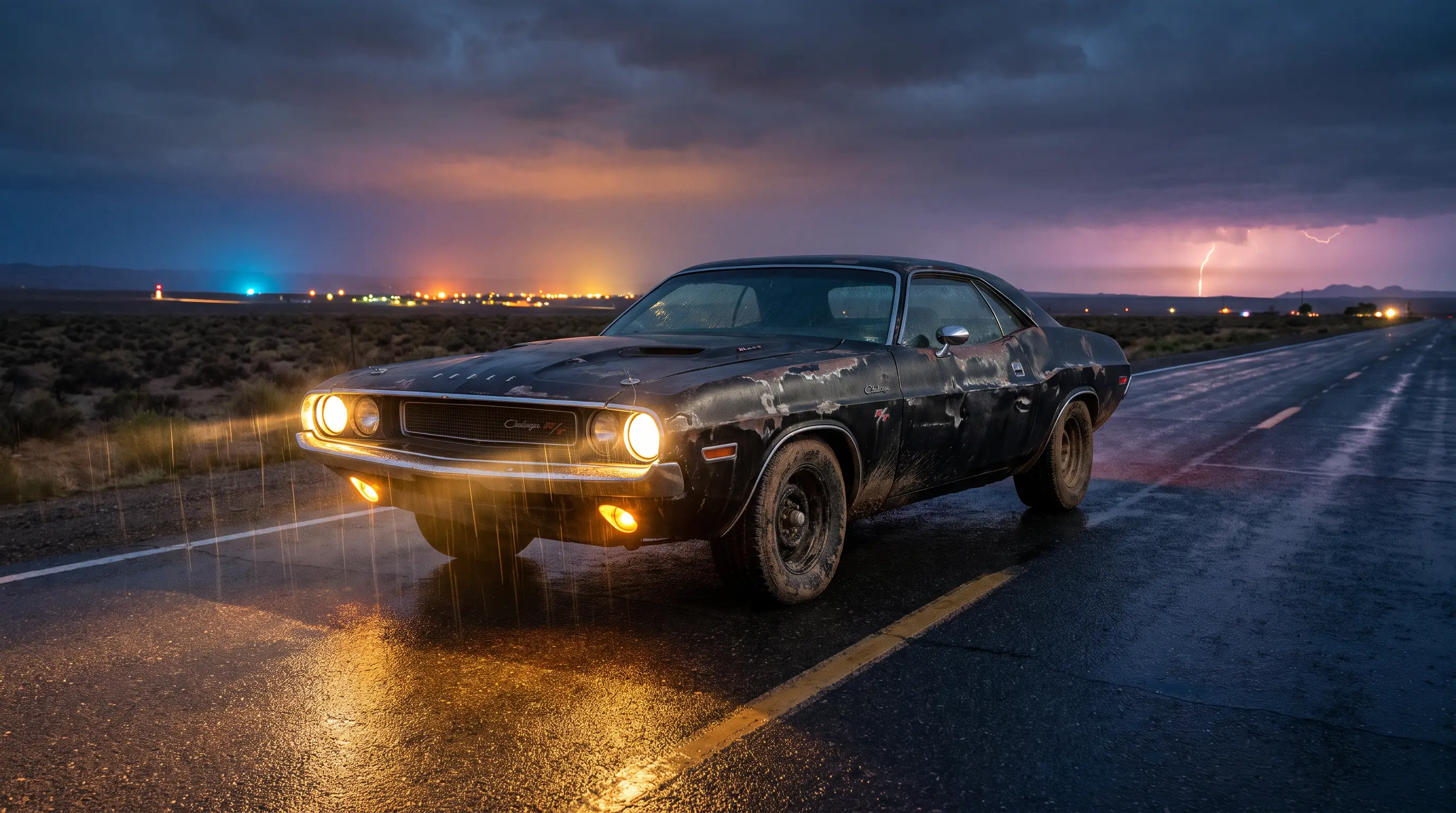
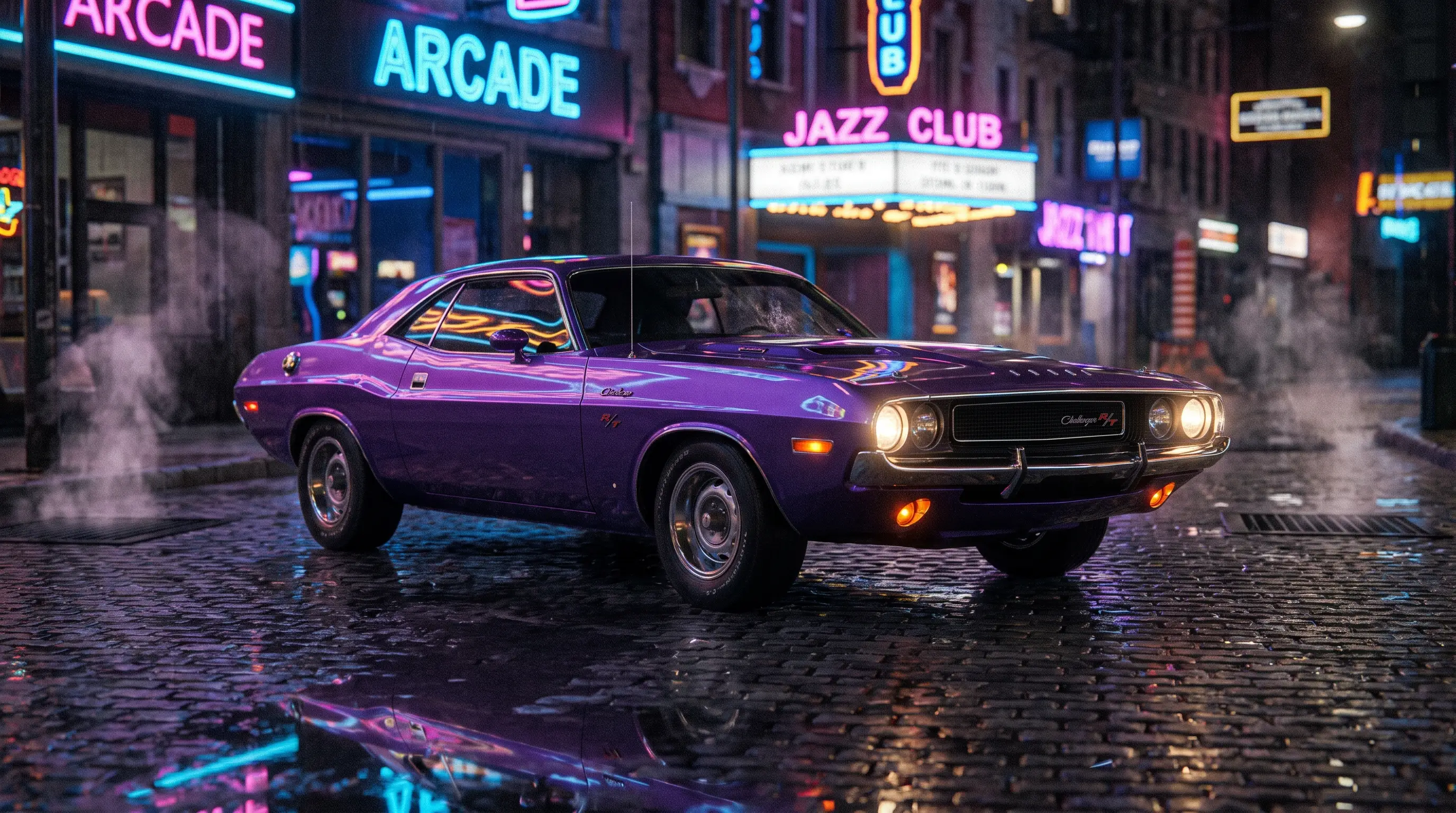
Directors who want a car to communicate danger or defiance without a line of dialogue reach for the 1970 through 1974 body more often than almost any other muscle car. Part of that is the flat hood and low nose, which reads as aggressive from nearly any camera angle. Part of it is the shared cultural memory built by Vanishing Point itself, a kind of inherited meaning that later films get to borrow.
"A camera does not care about horsepower figures. It cares about silhouette, and the 1970 Challenger has one of the great silhouettes in American film."
- Nora Beckett
The character actors of the muscle car world
Not every Challenger on screen gets a starring credit, and that is worth acknowledging on its own. Plenty of these cars show up as the villain's ride in a low budget action film nobody remembers the title of, or as a background extra parked outside a diner in a period piece set in 1972. Casting directors and prop coordinators reach for the shape because audiences read it instantly, without needing a line of dialogue to explain what kind of person drives one. That kind of visual shorthand is its own form of legacy, quieter than a leading role but no less real over the span of five decades.
A few of these smaller appearances have become collector trivia in their own right. Fans of a particular crime drama from the 1970s can tell you which episode features a Challenger in the getaway sequence, the same way film buffs can quote the exact stretch of highway used in Vanishing Point. That kind of granular fan knowledge does not happen for cars that only ever got one big moment. It happens for cars that kept showing up, film after film, decade after decade, until the accumulation itself became the story.
What it means for the cars still on the road
Every film appearance, prominent or barely noticed, adds a small layer to how buyers and sellers talk about these cars today. A seller listing a 1970 Challenger will often mention Vanishing Point in the same paragraph as the numbers matching drivetrain, because both facts matter to the right buyer. For anyone drawn in by the screen history first and the mechanical specifics second, Challengers for sale now include cars in every condition from driver quality to full concours builds, and the film pedigree of the body style does not change what a pre purchase inspection needs to cover.
The car on screen and the car in a driveway are not the same object, but the reputation built by one genuinely shapes how the other gets bought, sold, and talked about at a cars and coffee meet decades later. That is a longer legacy than most films, or most cars, manage to build on their own.
Watching for it now
Streaming services have made the back catalog of films featuring a classic Challenger easier to find than it has been in years, and that accessibility is quietly feeding a new wave of interest. A viewer who stumbles onto Vanishing Point on a random weeknight, decades after its original release, is having roughly the same reaction audiences had in 1971, minus the drive in setting. The car does the same work it always did. It does not explain itself, it does not apologize for the noise it makes, and it leaves the frame the same way it entered it, at speed.