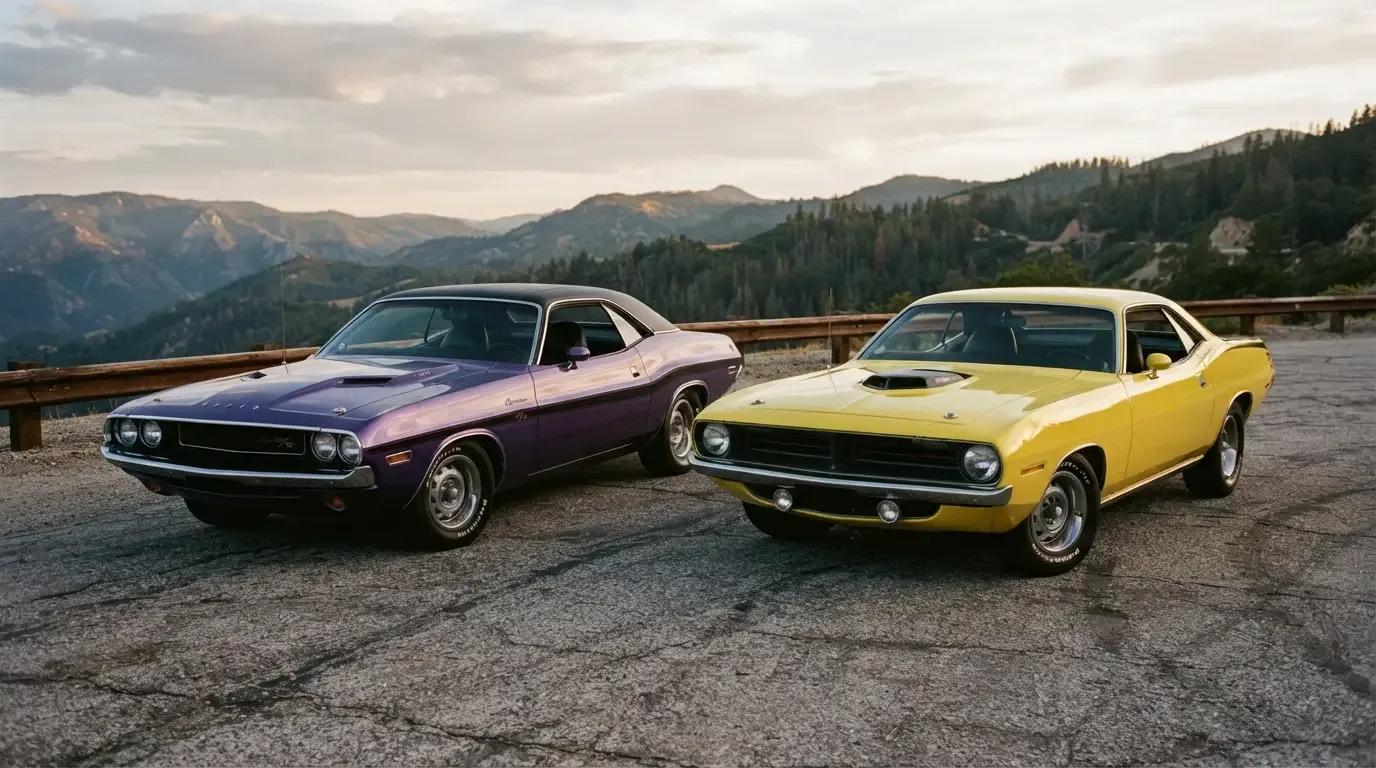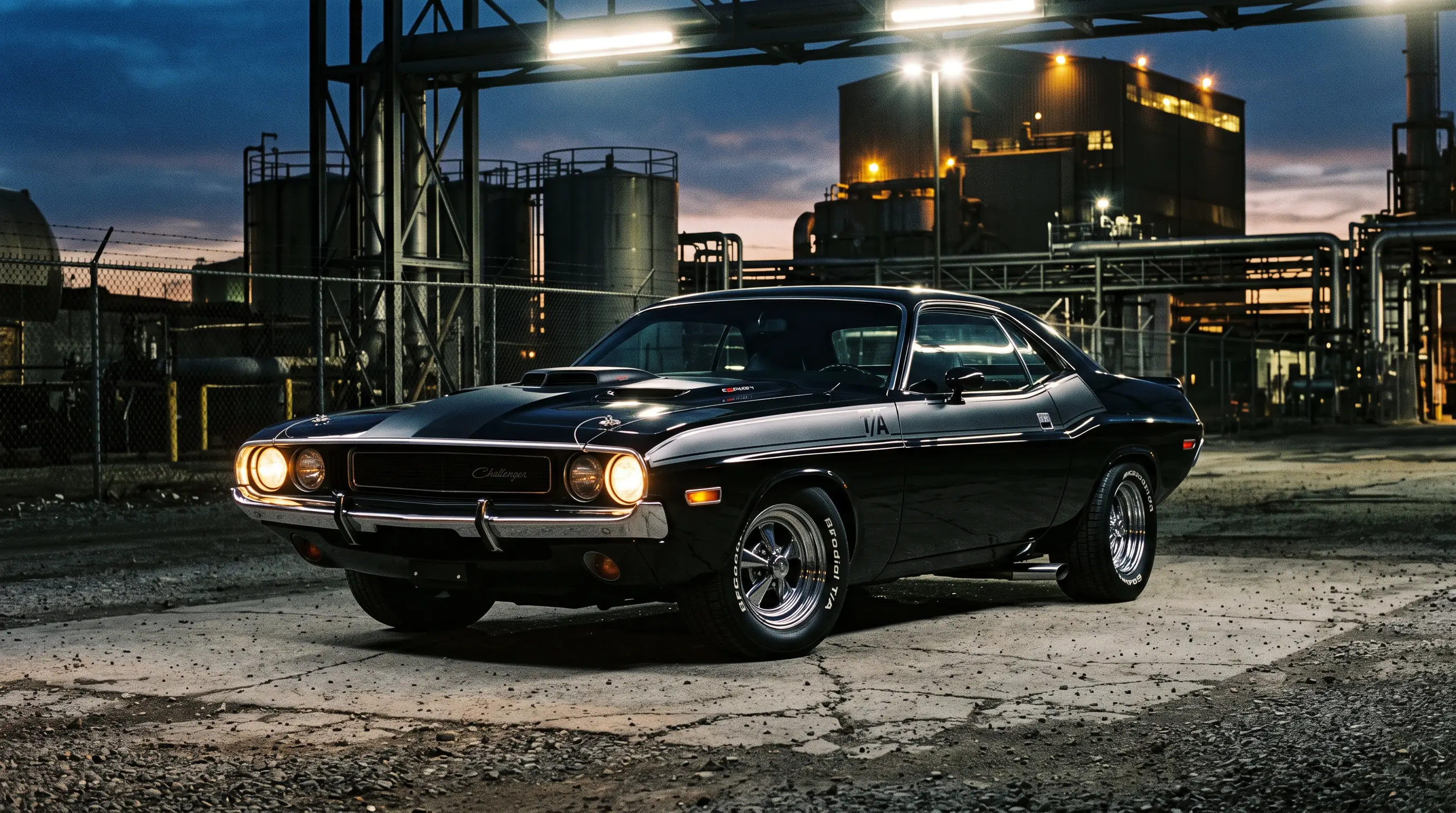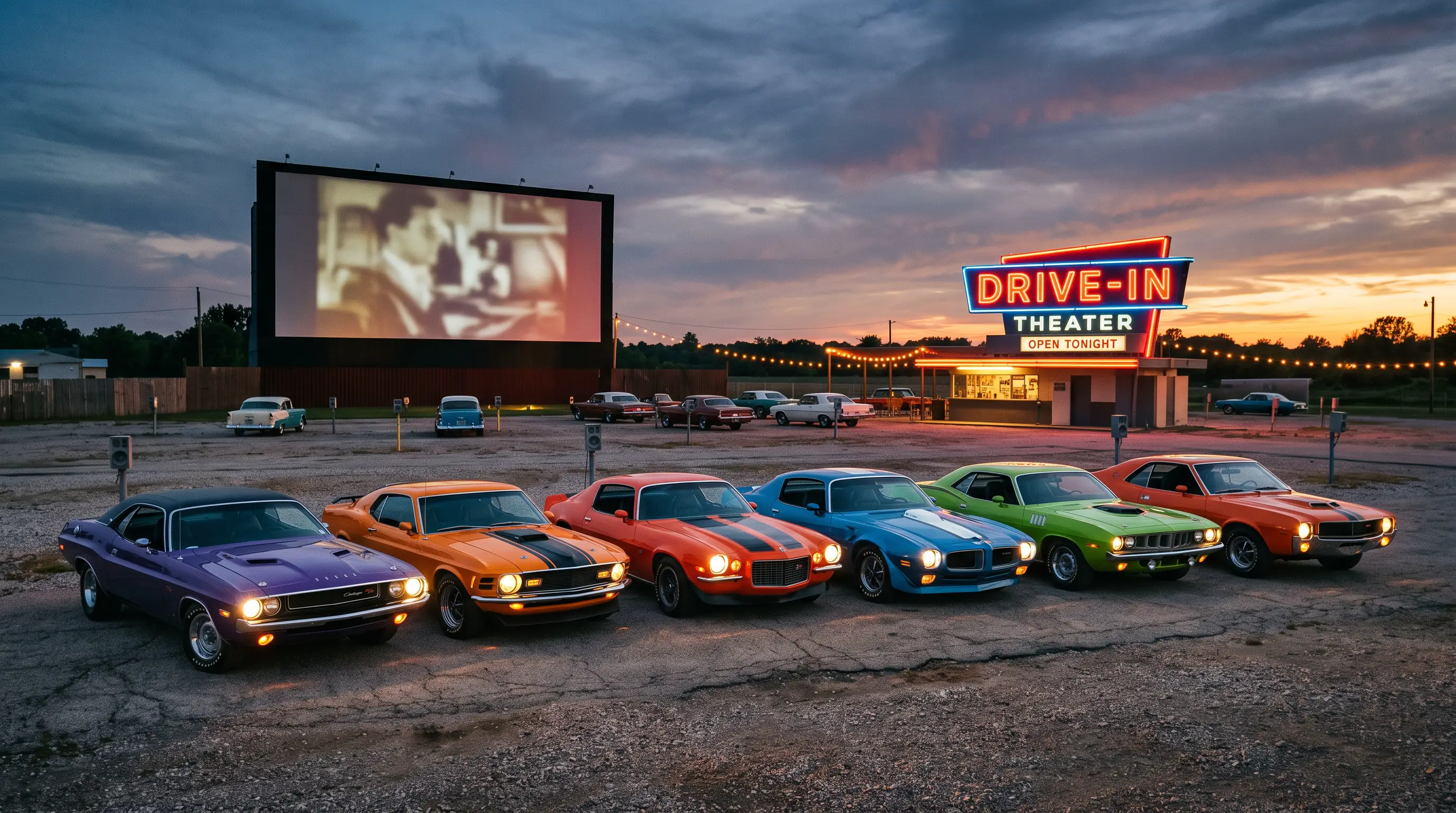
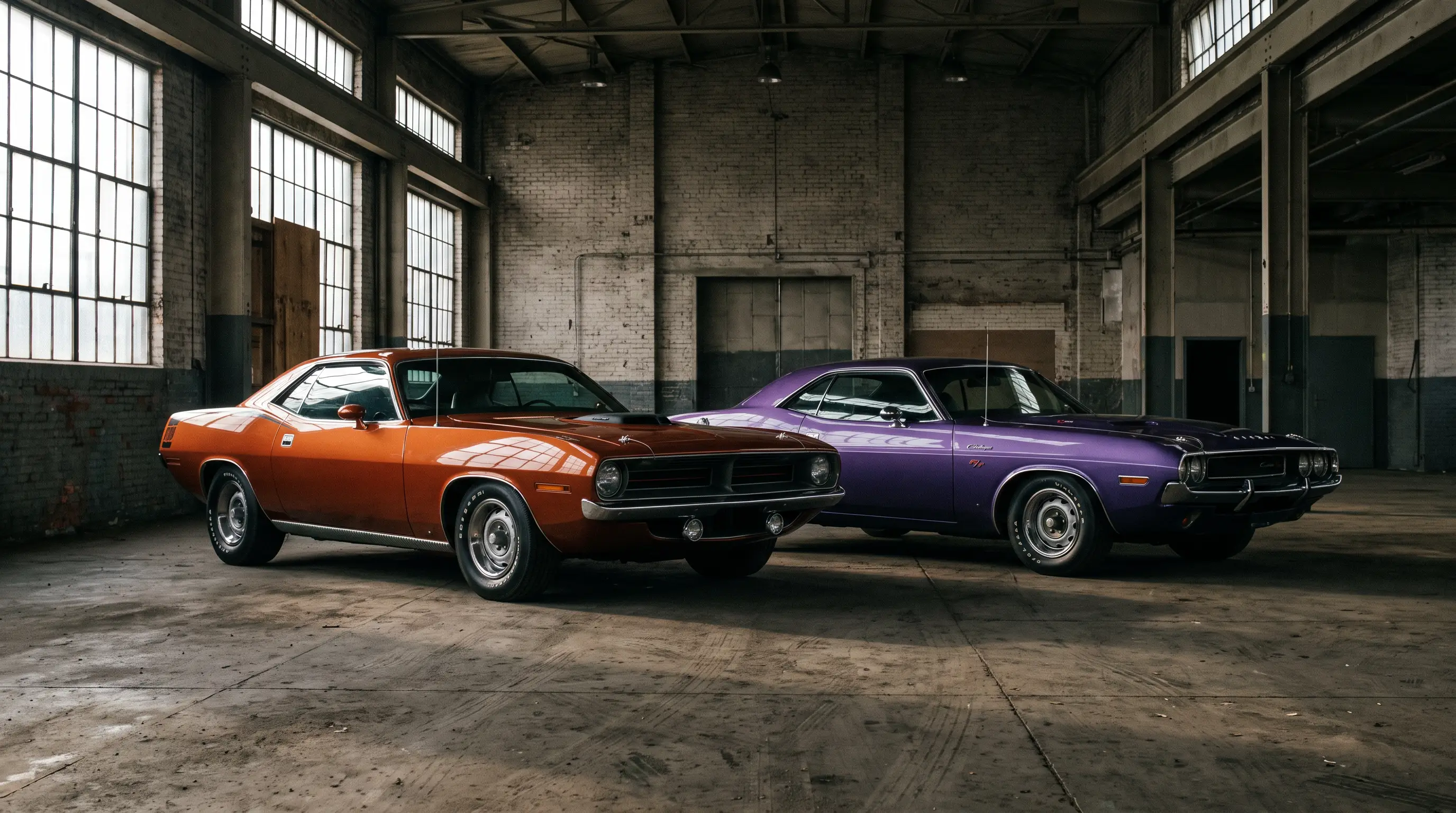
Every family has a pair of siblings who look alike, grew up in the same house, and still ended up completely different people. Dodge and Plymouth had exactly that arrangement with the Challenger and the Barracuda, two cars sharing a birth certificate but raised to appeal to different crowds under the same corporate roof. I have sat at plenty of swap meets listening to owners argue about which one is the "real" E-body, and the honest answer is that Chrysler built both on purpose, aimed at different customers, and expected them to compete with each other almost as much as they competed with Ford.
One platform, two assignments
The E-body architecture underneath both cars debuted for the 1970 model year, replacing Plymouth's earlier Valiant-based Barracuda with a purpose-built pony car chassis shared across both divisions. Chrysler was not being lazy by sharing a platform. Every manufacturer in Detroit did this, spreading tooling costs across multiple nameplates to make the economics work. What mattered was how each division dressed that shared foundation, and Chrysler gave Plymouth and Dodge genuinely different marching orders.
Dodge got the longer wheelbase, stretched by roughly two inches over the Barracuda, along with styling that leaned toward a more substantial, slightly upmarket presence. Plymouth kept the Barracuda tighter and closer to the ground, a car built to feel scrappier and more overtly aggressive in its stance. Both approaches worked. Both approaches also guaranteed that Dodge and Plymouth dealers down the street from each other were, in effect, fishing in the same pond.
Marketing drew the real dividing line
Dodge marketed the Challenger toward a buyer who wanted something closer to a personal luxury coupe with genuine muscle underneath, cross-shopped against cars like the Mercury Cougar as much as the base Mustang. Plymouth leaned harder into the Barracuda's connection to drag racing and street performance, especially once the Cuda and AAR Cuda variants arrived with their own dedicated racing pedigree tied to Trans Am competition. Same corporate parent, same engineering department, but two distinctly different pitches to two distinctly different customers who both wanted a fast Chrysler product and did not necessarily want the same one.
"Dodge and Plymouth salesmen were competing against each other for the same customer walking down the same street, and corporate knew it, and let it happen anyway because both cars kept selling."
- Wayne Coburn
Engines were shared, personalities were not
Both cars could be ordered with the same engine range, from a mild slant six through the 340, the 383, the 440, and the 426 Hemi at the top. That shared engine bay is exactly why the challenger vs cuda comparison always comes down to details rather than raw specification sheets, because on paper a Hemi Challenger and a Hemi Cuda are putting the same numbers to the pavement. What differed was chassis tuning, weight distribution from the shorter Barracuda wheelbase, and the character each division's engineers dialed into the suspension. Enthusiasts who have driven both back to back consistently describe the Barracuda as feeling slightly more tossable, while the Challenger feels a touch more planted and composed at speed, differences owed almost entirely to that wheelbase split.
Why the sibling rivalry still shapes collector culture
Decades later, that internal competition between Dodge and Plymouth still defines how these cars get talked about, bought, and sold. Owners clubs for each nameplate maintain their own identities, their own judging standards at shows, and their own strong opinions about which sibling did it better. That rivalry is not manufactured nostalgia. It is a direct inheritance from a corporate strategy that put two closely related products in showrooms across the street from each other and let the customers sort out the winner. For the deeper generational history behind how that sibling dynamic played out over the whole E-body run, the full story covers the relationship between both cars in detail.
What it means for buyers today
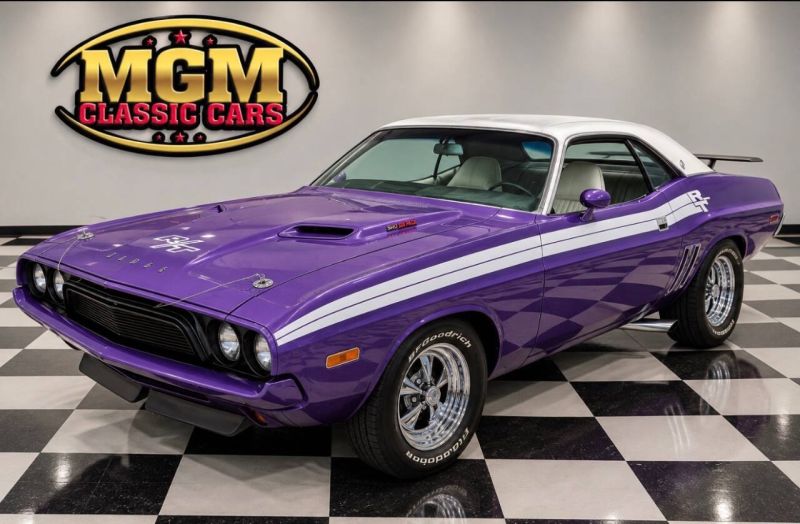
If you are shopping either badge, understanding the sibling relationship helps set realistic expectations. A Barracuda will generally feel slightly quicker to turn in. A Challenger will generally feel a touch more substantial and stable at highway speed. Neither is objectively correct, and the right choice mostly comes down to which flavor of E-body speaks to you, plus whichever example has the stronger documentation and condition when you actually go look at it in person. There are classic Challenger for sale listings worth cross-shopping if the Dodge side of this family split is the one calling to you.
Dealer networks kept the siblings from competing too hard
Chrysler's corporate structure at the time meant Dodge and Plymouth largely operated through separate dealer franchises, which softened what could have been an outright destructive rivalry between two nearly identical products. A shopper loyal to a particular Plymouth dealership because of years of family service history was never going to walk across town to a Dodge lot just because the Challenger offered a two-inch longer wheelbase. That dealership loyalty, built up over years of routine maintenance and trade-ins on earlier Chrysler products, did as much to separate the two customer bases as any styling decision made in Detroit.
This mattered enormously for how each car actually sold. Plymouth's existing customer base, built around cars like the Road Runner and the GTX, tended to gravitate toward the Barracuda's scrappier positioning almost by habit. Dodge's customer base, coming out of Coronet and Charger ownership, found the Challenger's slightly more substantial presence a natural fit. The sibling rivalry was real at the engineering and marketing level, but at the street level, existing brand loyalty within Chrysler's own dealer network did a lot of the sorting before a single buyer ever compared the two cars side by side.
How the split reads in today's ownership community
That original dealer-driven separation still echoes through how owners talk about their cars decades later. Plymouth Barracuda owners often describe an inherited connection to a family history of Mopar performance cars stretching back before the E-body even existed. Dodge Challenger owners more often describe being drawn to the car on its own individual merits, discovered fresh rather than inherited from an existing brand loyalty. Neither path to ownership is more legitimate than the other, but the difference in how people describe finding their car says something honest about how deliberately Chrysler built these two siblings to reach different people in the first place.
Club culture reflects this split too. Barracuda and Cuda owner organizations often trace their roots to informal groups that formed around existing Plymouth performance car clubs from the 1960s, giving them a longer institutional memory. Challenger clubs tend to be younger organizations built specifically around the nameplate itself, without that inherited lineage from an earlier Dodge performance car club. Neither structure is better for an owner today, but understanding which community you are joining, and what that community already knows collectively about parts sourcing and correct restoration detail, is worth factoring in before you commit to either badge.