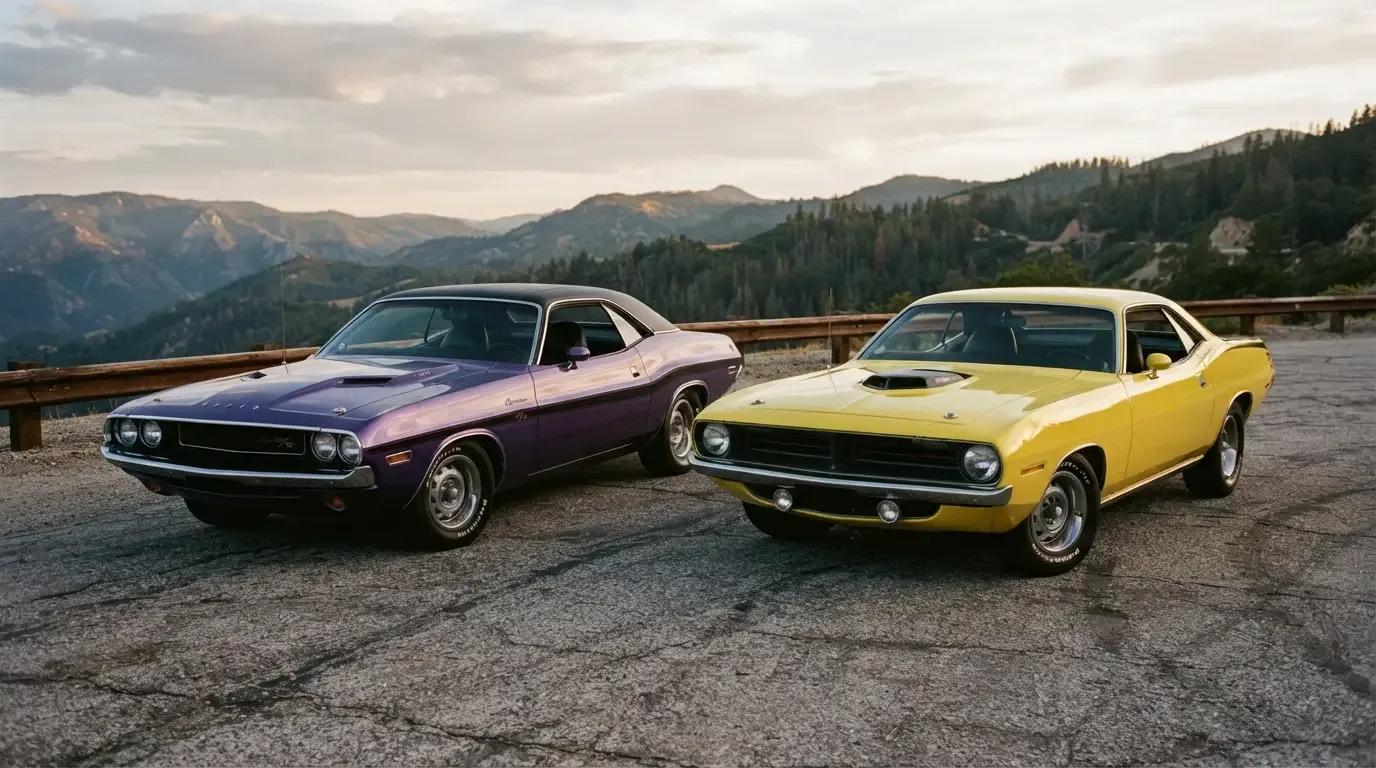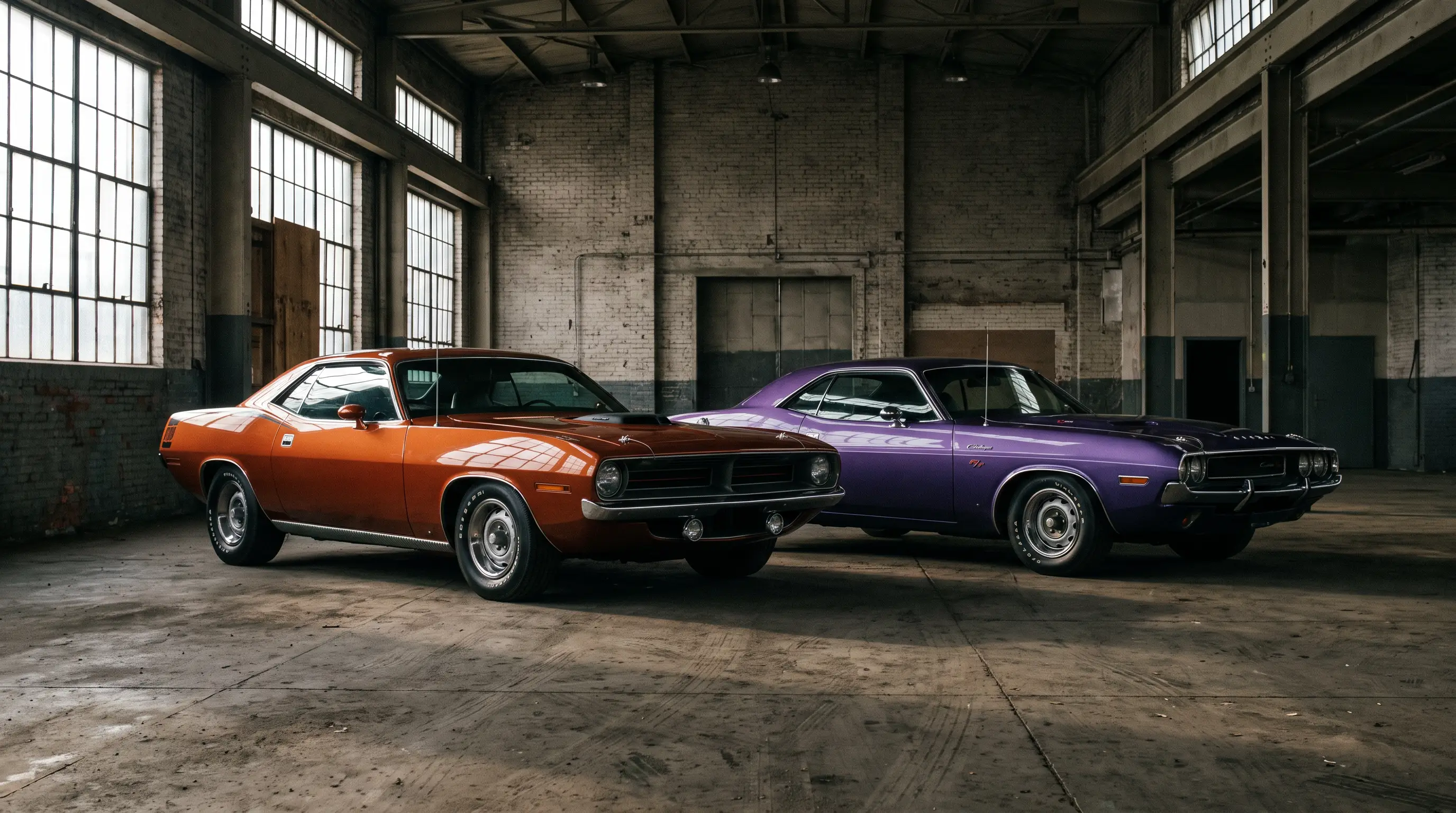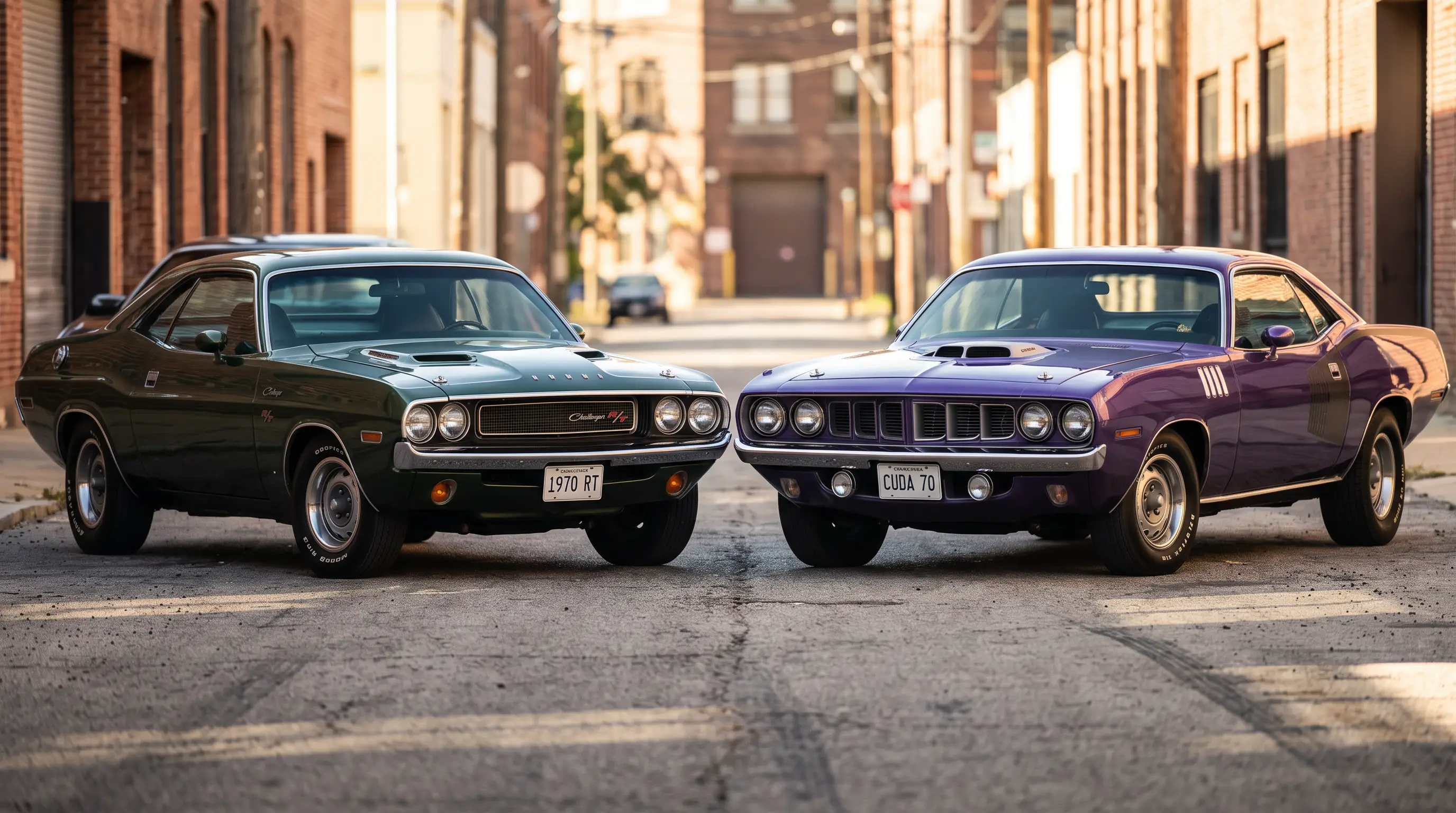
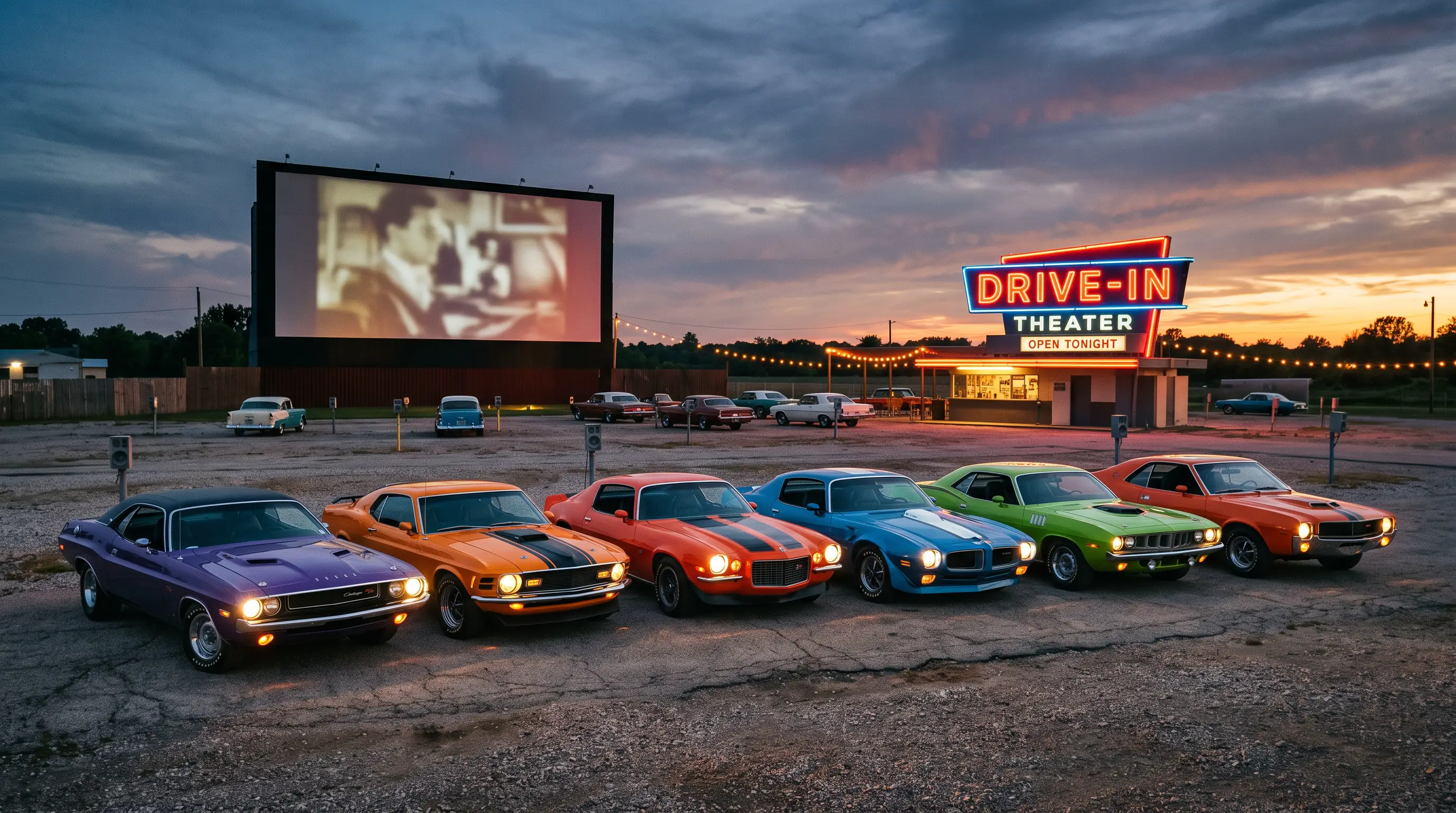
Walk into any archive of period road tests from 1970 and you find a pony car field so crowded it is genuinely hard to keep track of who was competing against whom. The Dodge Challenger arrived that year into a market already occupied by the Mustang, the Camaro, the Firebird, the Barracuda, and the Javelin, all fighting for the same buyer's attention in the same handful of months. A 1970 pony car comparison is not really one contest. It is five or six overlapping contests happening at once, each brand making a different bet about what that buyer actually wanted.
The field as it stood that year
Ford's Mustang entered 1970 in its third generation since 1964, larger and heavier than the original but still the sales benchmark every rival measured itself against. Chevrolet's Camaro and Pontiac's Firebird, both redesigned for 1970 on GM's second-generation F-body, arrived with genuinely striking new styling that period road testers praised heavily. Plymouth's Barracuda, sharing its new E-body architecture with the Challenger, launched alongside its Dodge sibling as Chrysler's long-delayed answer to the segment. American Motors kept its Javelin in the fight too, smaller in budget but not in ambition, backed by a factory-supported Trans Am racing program that punched well above the company's size.
Into that field stepped the Challenger, distinguished by its slightly longer wheelbase compared to the Barracuda and an engine range that ran from an economical slant six all the way to the 426 Hemi at the top. Dodge positioned the car to compete not only against the other pony cars but against slightly larger personal coupes like the Mercury Cougar, giving the Challenger a dual identity that some of its direct rivals did not bother with.
Performance numbers told a mixed story
Straight-line performance in top trim favored the biggest engines regardless of badge, and the Challenger's Hemi and 440 Six Pack variants sat comfortably among the quickest cars in the entire field. The Camaro's Z28 and the Firebird's Trans Am variant leaned toward a more balanced, road-course-oriented setup rather than outright drag strip supremacy, reflecting GM's focus on the SCCA Trans Am racing series that both cars were built to homologate. The Javelin, competing in that same Trans Am series through AMC's factory-backed team, proved that raw manufacturer size did not determine competitiveness on a road course, a lesson Detroit's bigger players learned the hard way more than once that season.
"Nineteen seventy is the year you point to if someone asks when the pony car segment peaked. Every brand had a genuine current-generation entry on sale at the same time, something that never happened again."
- Sarah Whitfield
Styling philosophies diverged sharply
Each manufacturer took a distinct approach to the redesigns that defined 1970. GM's F-body twins embraced a more European-influenced, long-hood shape with rounded surfacing. Chrysler's E-body twins went aggressive and muscular, with the Challenger's wider stance and more substantial front clip giving it a heavier, more dominant road presence than the Barracuda's tighter proportions. Ford, further along in the Mustang's lifecycle, offered a car that had grown considerably from the original 1964 concept, trading some of that early nimbleness for size and presence. None of these were wrong choices. They were simply different bets on what a buyer walking into a showroom in 1970 actually wanted to look at.
Why this single year still anchors collector conversations
Because so many of these nameplates changed dramatically or disappeared within just a few years, whether through corporate restructuring, emissions regulation, or simple market contraction, 1970 remains the reference point for comparing the entire pony car era at its most competitive. A Challenger from that year is judged not only against later Challengers but against everything else that shared a showroom floor with it that single season, and that context matters enormously to anyone doing serious research on the car. For the full generational arc of how the Challenger specifically related to its closest corporate cousin within that field, our complete history traces that relationship from the ground up.
What it means for buyers researching this era
Anyone shopping a 1970 pony car today benefits from understanding just how crowded and competitive that single model year actually was. Documentation, original engine configuration, and surviving condition matter even more for cars from a year this contested, because so many examples across every badge were driven hard, raced, or modified in period. If the Challenger's particular take on that crowded field appeals to you, you can browse classic Challenger listings and see how the survivors from that single remarkable year compare today.
Pricing at the time reveals how buyers actually chose
Sticker prices across the 1970 field sat closer together than the marketing suggested, and a well-optioned example of any nameplate could climb well past the base price of a comparable rival once a buyer checked enough boxes on the order sheet. The Challenger's option list, running from basic trim through the R/T package and up to the top engine choices, gave a shopper enormous room to build a car that competed directly with a similarly equipped Mustang or Camaro at nearly identical money. That flexibility meant the real competition happened less at the sticker price and more in the finance office, where a buyer decided exactly how much engine and trim they were willing to carry a payment on.
Trade-in values from period newspaper classifieds show buyers moving fluidly between badges depending on what deal a local dealer could put together that week, which tells researchers today that brand loyalty in 1970 was softer than nostalgia now makes it sound. A family that traded in a Mustang for a Challenger, or the reverse, was making a practical decision based on financing and dealer incentives as much as any deep emotional attachment to a particular badge.
Surviving examples from 1970 carry outsized research value
Because this single year sits at the exact intersection of every major nameplate's redesign cycle, cars from 1970 specifically get scrutinized harder by researchers and judges than examples from adjacent years. A 1970 Challenger's build sheet, trim codes, and factory options get cross-referenced against a wider body of comparative material than a 1972 or 1973 car might, simply because so much period documentation exists comparing this exact model year across every competing badge. That extra scrutiny is generally good news for owners with well-documented cars, since it gives a genuine, verifiable 1970 example more supporting context to prove its authenticity than almost any other year in the segment's history.
Judges at major concours events routinely reference this crowded field when scoring cars, comparing a 1970 Challenger's factory-correct details against not only other Challengers but against surviving period literature covering the entire segment that model year. A restorer working on a 1970 car benefits from that abundance of comparative reference material in a way owners of earlier or later model years simply do not, since fewer competing nameplates existed to document alongside a Challenger built in, say, 1968 or 1973.