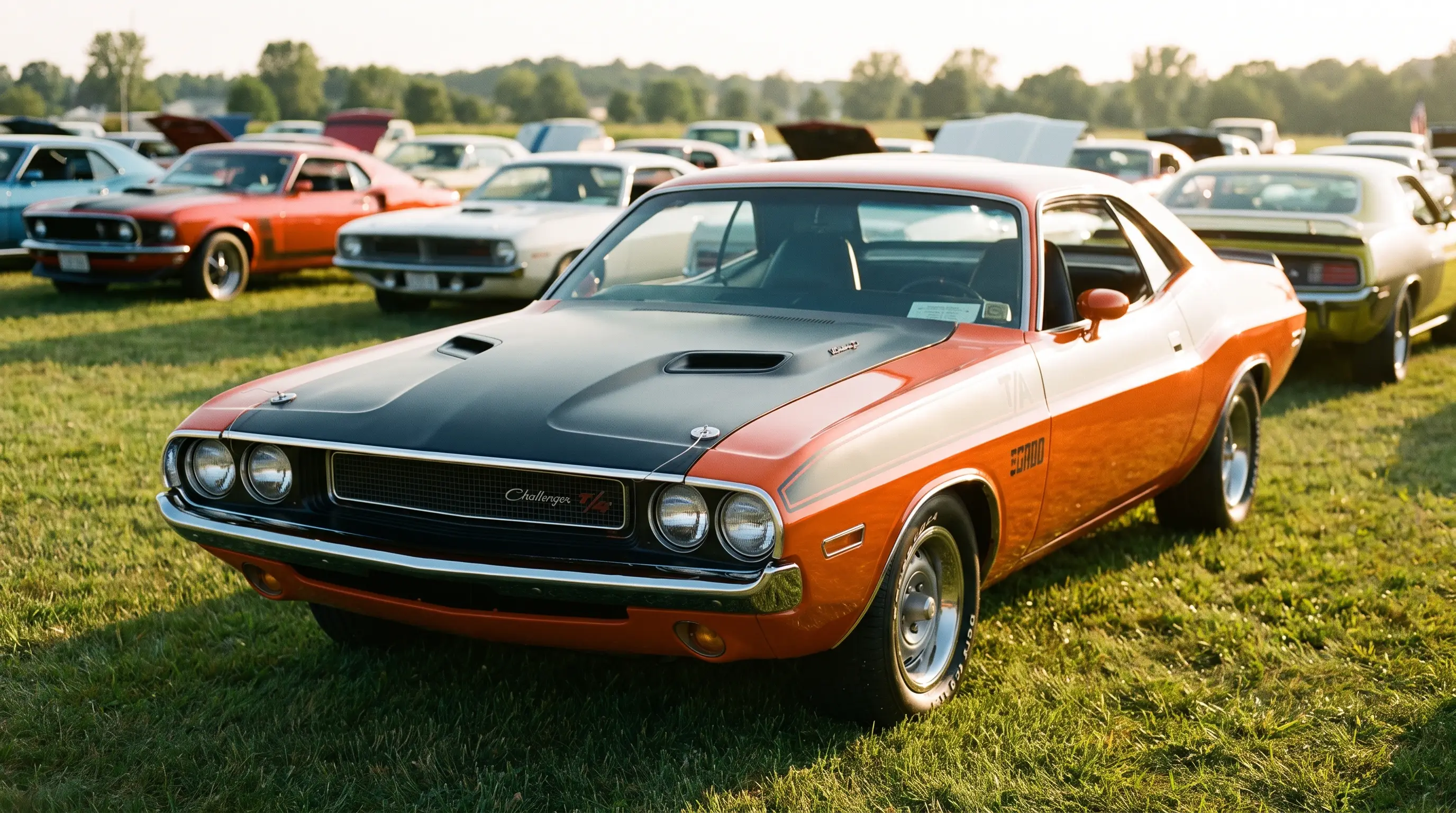
I was maybe nine years old, sitting on an overturned milk crate at my uncle's garage in Ohio, when a Dodge Challenger R/T rolled in for a tune and a Mustang Mach 1 pulled up right behind it looking for the same bay. Neither owner said a word to the other, but the air in that garage changed. That is the pony car war in one memory: not a boardroom strategy, but two guys who would not look at each other's car and would not stop looking at it either. The Challenger arrived late to that fight, in 1970, but it arrived loud, and understanding the pony car war means understanding why Dodge waited as long as it did to swing.
Ford threw the first punch in 1964
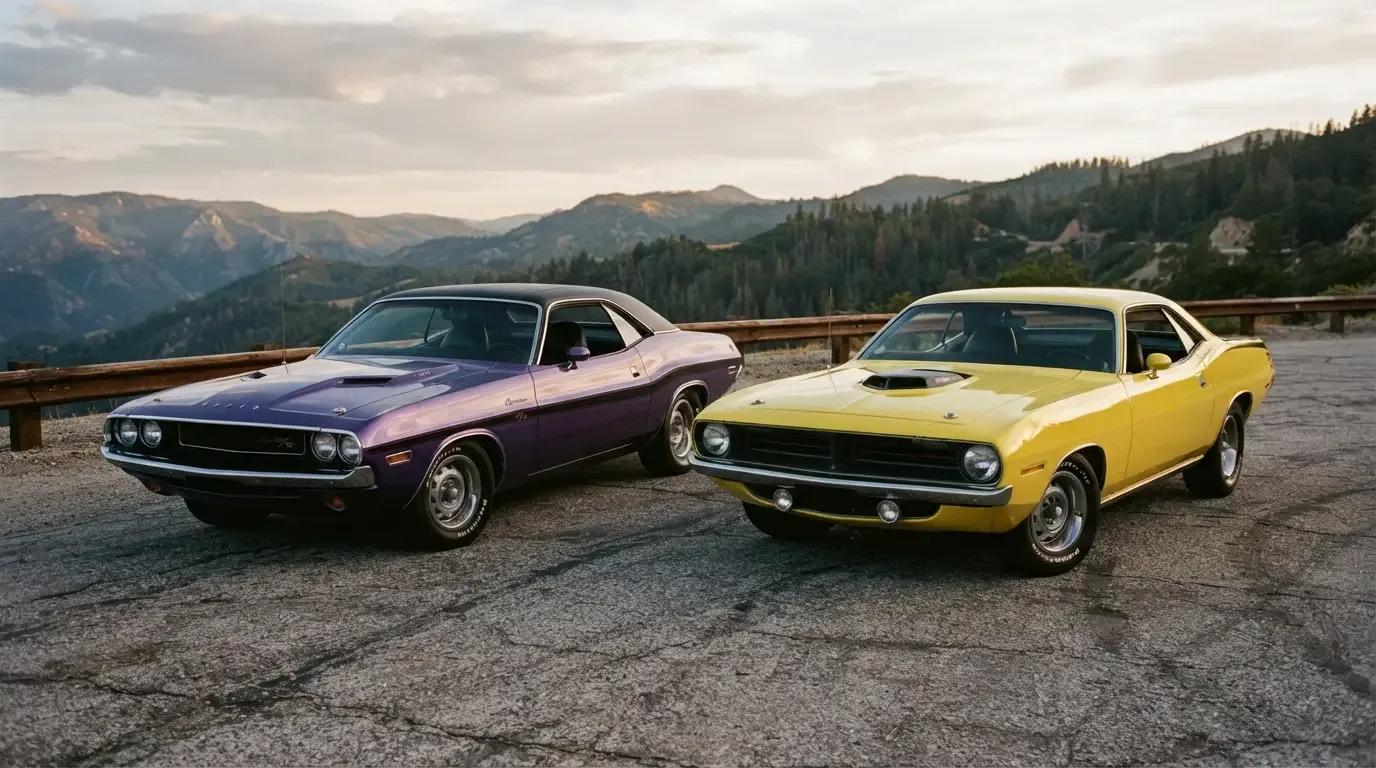
The Mustang launched in April 1964 and caught every other Detroit brand flat-footed. Chevrolet answered with the Camaro for 1967, and Pontiac followed with the Firebird the same year. Dodge and Plymouth, both under Chrysler, watched two full model years go by before their own entries showed up for 1970 as the Challenger and Barracuda respectively, riding the new E-body platform built specifically to compete in this class. That gap matters. By the time the Challenger hit dealer lots, the pony car war already had an established pecking order, established buyers, and established loyalties that Dodge had to break rather than build.
What Dodge brought to that late fight was engine choice. Where a base Mustang buyer might settle for a six-cylinder, the Challenger offered a spread running from a mild six all the way to the 426 Hemi, with the 440 Magnum and 440 Six Pack filling in between. That breadth let Dodge sell the same body to a commuter and a strip racer, and it gave the Challenger a reputation for outright muscle that the Mustang, increasingly softened by 1970 emissions and insurance pressure, could not always match on paper.
Insurance companies became the real opponent
By 1970 and 1971, the pony car war was not only fought between brands. It was fought against insurance underwriters who had started slapping punishing surcharges on anything with a big-block engine and a young owner behind the wheel. That pressure hit the Challenger's highest-output variants hard, and it is a big part of why Hemi and 440-powered cars from this era became rare almost immediately. Buyers wanted the badge and the reputation, but fewer of them could afford to insure the engine that earned it. Production numbers on the top-tier Challengers dropped fast between 1970 and 1971, and that scarcity, born out of an economic fight nobody remembers as fondly as the horsepower numbers, is a big reason those cars are valuable today.
AMC crashed the party from the outside
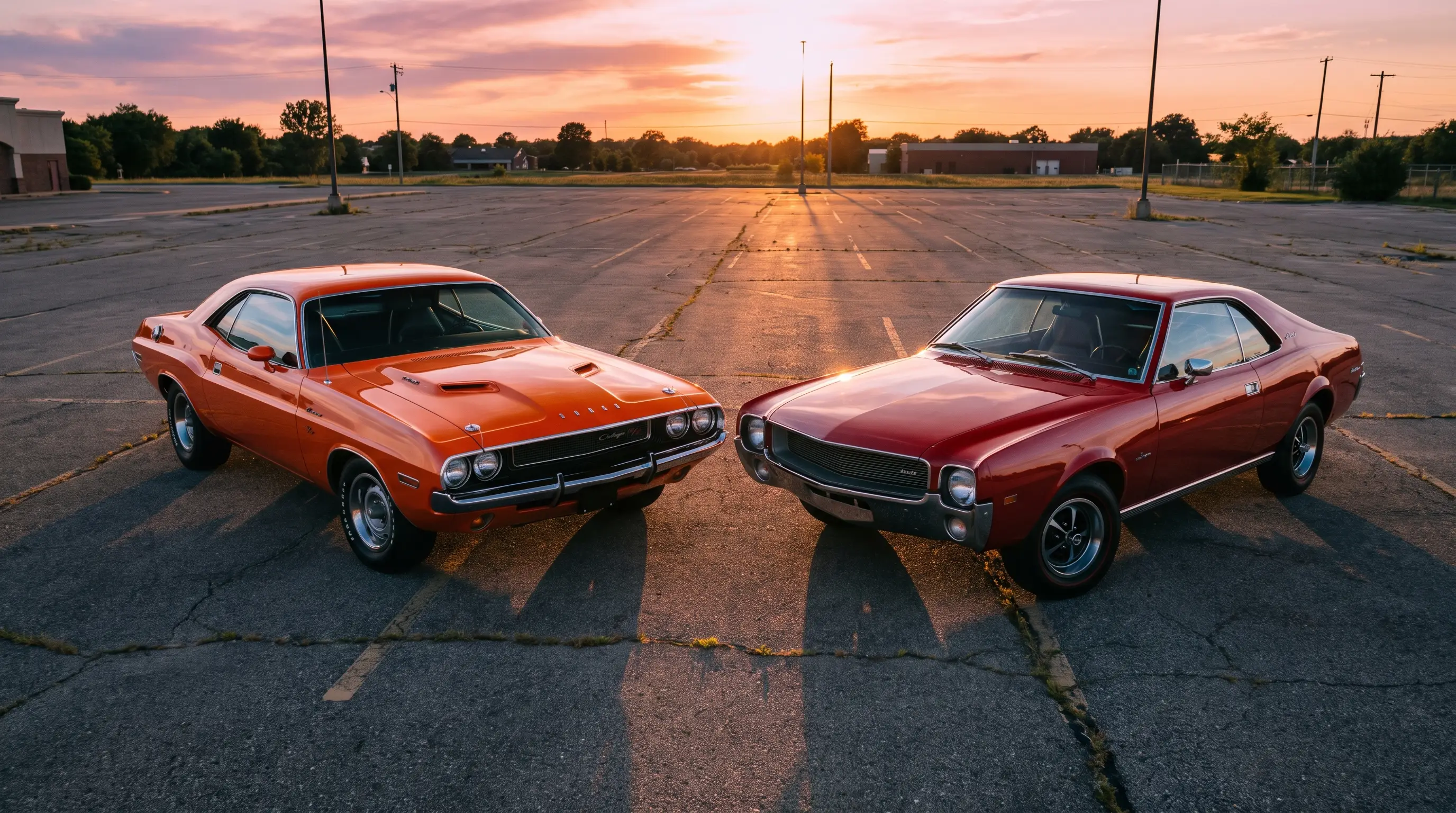
It is easy to forget that Ford, Chevrolet, Pontiac, Dodge, and Plymouth were not the only combatants. American Motors, a company with a fraction of Detroit's marketing budget, fielded the Javelin starting in 1968 and kept swinging through the whole era with genuine racing success in the Trans Am series. The Challenger's competitors were not just the household names. AMC proved a smaller company could build a credible pony car on a shoestring, and that scrappy presence kept every larger manufacturer honest on price and performance.
"Nobody at the dealership called it a war back then. They called it Tuesday. You sold the car in front of you and hoped the fella down the street was having a worse week."
- Wayne Coburn
Why the Challenger's timing still shapes its value
Because the Challenger showed up late and left early, essentially gone in its original form after 1974, its production window is short compared to the Mustang's uninterrupted run. Short production windows compress supply, and compressed supply is a big part of why a clean early Challenger R/T commands the money it does today. The car spent barely five years on the original battlefield, but those five years produced some of the most collected muscle cars to come out of Detroit, precisely because Dodge had to make every one of them count against rivals who had already been fighting the war for years.
Readers curious about how the Challenger stacked up specifically against its closest corporate cousin can read the background on that particular rivalry, which was arguably fiercer inside Chrysler than anything happening at the Ford or GM dealerships across town.
What survives from that era still matters
Walk any big car show today and you will still see the old lines drawn: Mustang guys, Camaro guys, Challenger guys, and the smaller but proud club of Javelin owners who will happily explain why their car deserved more credit than history gave it. The pony car war never really ended. It just moved from showroom floors to show fields, and the cars that fought it hardest, the Challenger among them, are the ones that command a crowd wherever they park.
If that history has you wanting to see what is actually available today, you can find a classic Challenger and decide for yourself whether the car that showed up late to the fight was worth the wait.
The magazines fanned the flames every month
Part of what made the pony car war feel so personal was the monthly ritual of the enthusiast magazines lining up cars for a comparison test and printing quarter-mile times right there on the cover. A young man in 1970 could walk to the drugstore, grab the latest issue, and find out exactly how his Challenger stacked up against a neighbor's Camaro down to a tenth of a second. Those numbers got repeated at gas stations and drive-ins with the same certainty people quote sports statistics today. Dodge knew this and leaned into it, timing engine option announcements and press cars around those magazine test cycles so the Challenger would show up favorably whenever a comparison ran.
That media pressure had a real effect on how manufacturers built these cars. Options that tested well in print sold well on the lot, and options that tested poorly got quietly discontinued within a model year or two. The Challenger's engine lineup shuffled meaningfully between 1970 and 1974 partly in response to exactly this kind of feedback loop, with certain combinations disappearing once magazines and dealers alike decided they were not earning their keep against the competition.
Dealers fought a quieter version of the same war
Behind the showroom glass, Dodge dealers were waging their own version of the pony car war against Ford and Chevrolet dealers often located just blocks away. Floor plan financing, factory incentives, and regional sales contests all pushed dealership staff to move Challengers aggressively, sometimes discounting hard on slower-selling six-cylinder cars just to keep the lot turning over. That dealer-level competition is part of why so many Challengers left the factory with unusual, seemingly random option combinations. Salesmen were building deals to move inventory, not necessarily building the car a purist would order from a catalog, and that history still shows up on broadcast sheets that appraisers and restorers pore over today.