
The 1971 Challenger R/T rarely gets the attention its 1970 predecessor does, and the production numbers explain exactly why. Dodge built far fewer R/Ts in 1971 than in the model's debut year, a drop that reflected a muscle car market already cooling under the weight of rising insurance premiums and tightening emissions rules. For anyone researching the Challenger's early history, the 1971 R/T is the year the story gets quieter but not less important.
Car Features
7 min read
The 1971 Challenger R/T: The Rarer Second Year
Fewer 1971 Challenger R/Ts were built than the 1970 debut year, and the twin-headlight styling makes them instantly identifiable, yet the second model year rarely gets the credit its scarcity deserves.
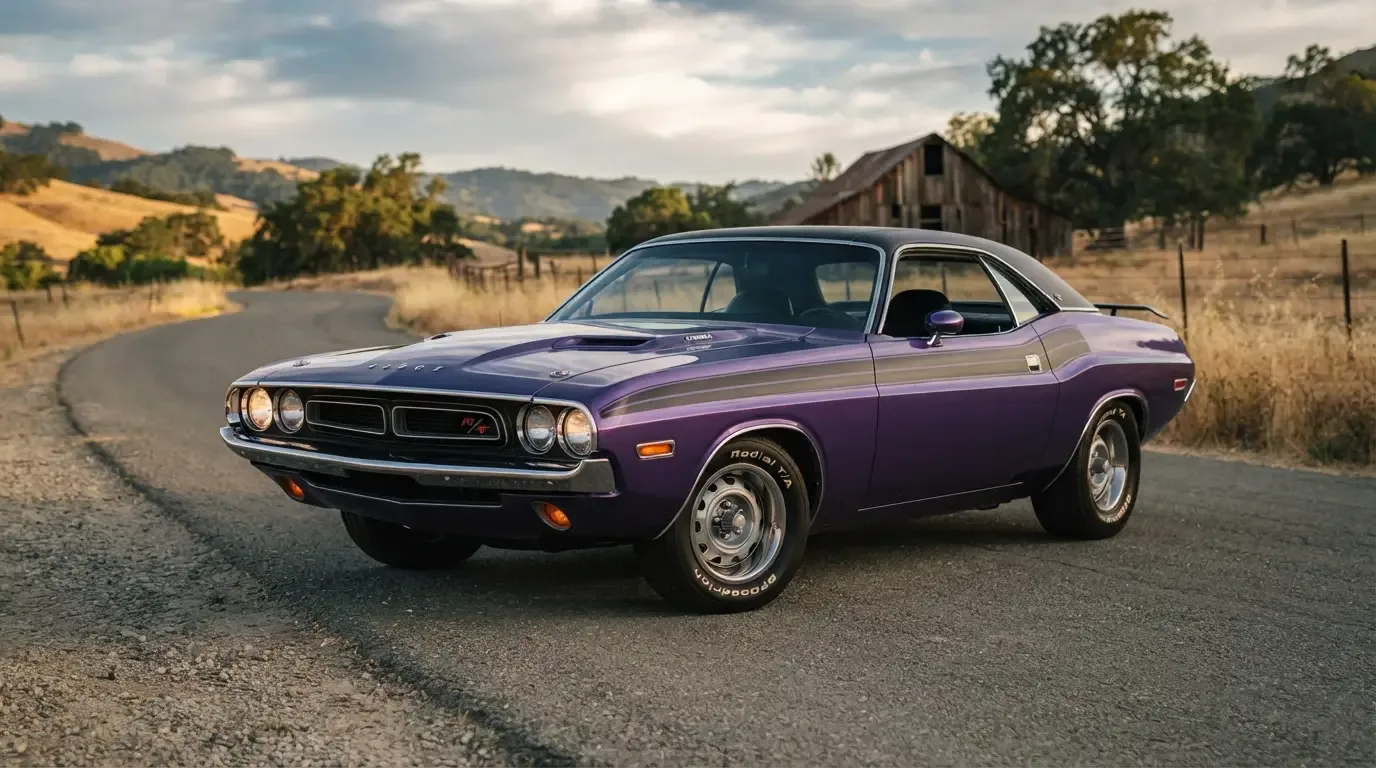
What changed for 1971
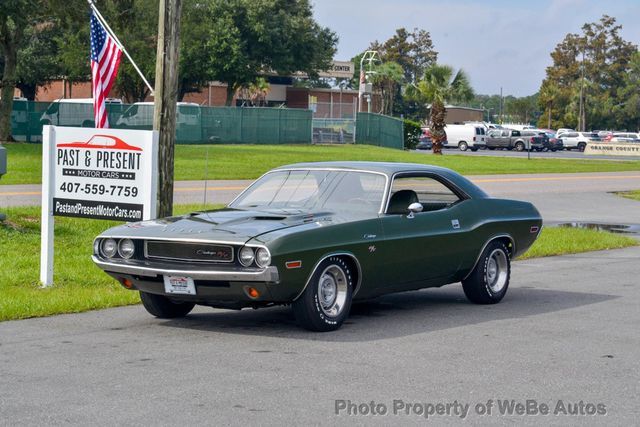
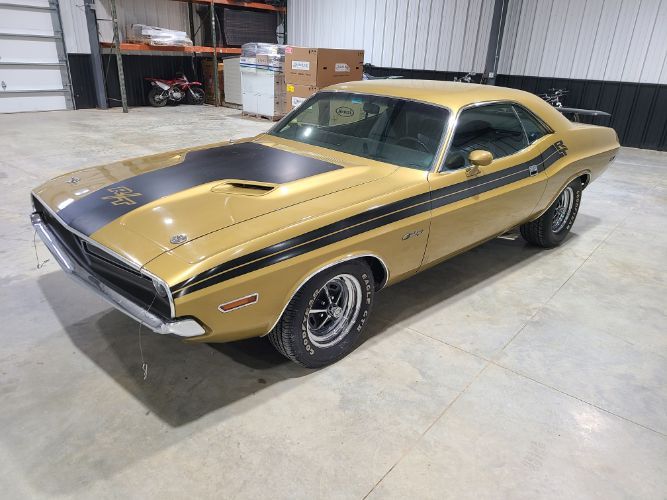
Dodge gave the Challenger a facelift for its second model year rather than a wholesale redesign. The single round headlights of 1970 gave way to a twin-headlight arrangement on the R/T, tucked behind a revised grille that gave the front end a more aggressive, slightly menacing look. The taillights changed too, moving to a wider single-lens design across the rear panel in place of 1970's segmented units.
Under the hood, the 1971 R/T kept the same core engine lineup, the 383 Magnum as standard with the 440 Magnum, 440 Six Pack, and 426 Hemi available above it, though the industry-wide move toward lower compression ratios ahead of unleaded fuel had already begun nudging output figures downward across the board. The standard 383 dropped from 335 to 300 horsepower and from 425 to 410 lb-ft, and the 440 Six Pack fell from 390 to 330 horsepower that year. Buyers in 1971 were still getting genuine muscle car performance, but the writing on the wall for the era was becoming legible even in a single model year's changes.
Why production dropped so sharply
Insurance surcharges on high-horsepower cars had grown steep enough by 1971 that they meaningfully changed buying decisions, especially for the younger buyers who made up a large share of the muscle car market. Add in tightening federal emissions standards that were already reshaping what engines manufacturers could profitably build, and Dodge saw R/T orders fall well short of the 1970 debut year's numbers.
The Hemi option in particular became rarer still in 1971, with only 71 Challenger R/Ts built with the 426 Hemi that year, a figure that makes surviving examples some of the most sought after Challengers from any year of the body style. Total R/T production for 1971 came in around 4,892 units, a steep drop from the 1970 debut year, and the 440 Six Pack settled to about 250 cars. The 440 Magnum and 440 Six Pack held on as more attainable performance options, but even those saw softer demand than the year before.
Why the second year deserves more credit
Because 1970 gets remembered as the debut and the high point of Challenger R/T production, 1971 often gets treated as an afterthought, the year the numbers went down. That framing misses what makes 1971 genuinely interesting to a serious collector. Fewer cars survive in original condition, the twin-headlight styling is unique to the single model year, and the cars that do turn up with solid documentation carry a rarity that raw production figures alone do not fully capture.
For readers who want the full arc of the R/T model, from its 1970 launch through every year of the badge's use, our dodge challenger rt retrospective covers the complete history rather than a single model year. The 1971 chapter is a smaller piece of that story, but it is not a lesser one.
| Feature | 1971 R/T |
|---|---|
| Front end styling | Twin headlights, revised grille |
| Rear styling | Wide single-lens taillight panel |
| Standard engine | 383 Magnum |
| Available engines | 440 Magnum, 440 Six Pack, 426 Hemi |
| Production trend | Notably lower than 1970 across all engine options |
"Every original build sheet I have found for a 1971 R/T tells the same story the sales figures do. The market was already changing, and Dodge's own paperwork from that single year shows it more clearly than any retrospective ever could."
- Tom Ramirez
A related chapter worth reading
The gap between genuine documented cars and later recreations widened as the muscle car era wound down and enthusiasm for these models resurged decades later, which is why questions of authenticity matter as much for 1971 cars as for any other year. Readers interested in how that authenticity question plays out across the model can check a related story that goes deeper into telling real cars from tributes.
For anyone hoping to add a genuine 1971 R/T to a collection, the smaller production run means patience is often required, and the search benefits from checking Challengers for sale now regularly rather than expecting the right car to appear on demand.
Reading a fender tag from the second model year
Identifying a genuine 1971 R/T starts with the same fender tag research that applies to any Challenger, but the details a researcher checks shift slightly for the second model year. The engine code, transmission code, and axle ratio all still appear in the same locations as 1970, but the trim codes tied to the revised front and rear styling are unique to the single year, which means a tag showing 1971-specific codes paired with 1970-style bodywork is an immediate red flag worth investigating further.
Broadcast sheets, when they survive tucked under a seat or in a trunk, remain the gold standard for confirming a car's original configuration. For 1971 specifically, these sheets sometimes reference running production changes that were implemented mid-year as Dodge adjusted output figures for the new compression standards, which means two 1971 R/Ts built months apart on the same engine option can show meaningfully different documentation even though the fender tag codes look identical at a glance. A careful researcher treats the broadcast sheet as the primary source and the fender tag as confirmation, not the other way around.
Why 1971 matters to the full Challenger story
The 1971 Challenger R/T represents a moment when Dodge was still building a genuine muscle car even as the market around it was shifting underneath the company's feet. Lower production numbers make these cars scarcer, the styling changes make them instantly identifiable, and the history behind the drop in sales tells a broader story about where the muscle car era was headed. That combination makes 1971 worth more attention than it usually gets.
Talk to enough owners of these cars and a pattern emerges: the ones who own a 1971 R/T tend to know exactly why they chose that year over 1970, whether it is the twin-headlight styling, the relative rarity, or simply a family connection to a car bought new during that specific model year. That kind of intentional ownership, rather than a car picked because it was simply the most available year, tends to produce better-documented examples overall, since an owner who chose the year on purpose is more likely to have researched and preserved the paperwork that came with it.
None of that changes the basic economics of scarcity. Fewer 1971 R/Ts were built than 1970 R/Ts to begin with, and fewer still survive today in unmodified, well-documented condition. Every serious researcher of the Challenger's early years eventually has to reckon with the same fact, that the second model year is not a footnote to the first, it is a distinct chapter with its own production story, its own styling identity, and its own claim on a place in the Challenger's history.
Sources and notes
- Over-Drive Magazine: 1971 Dodge Challenger Fact Sheet
- SlashGear: All About the Engines That Powered the 1971 Dodge Challenger
- Automobile Catalog: 1971 Challenger R/T 440 Six Pack specs
- autoevolution: 1971 Challenger R/T, one family since new
- Challenger Talk forum: 1971 Hemi Challenger convertible discussion
- Wikipedia: Dodge Challenger
Related Reading
#muscle car rarity
#mopar history
#dodge challenger
#1971 Challenger R/T
#Challenger production numbers

About the author
Tom Ramirez
Corvette researcher and historian based in Bowling Green, Kentucky. Two decades documenting Corvette production history from original factory records.
Related Listings - Dodge Challenger

Comments
Be the first to comment on this article.