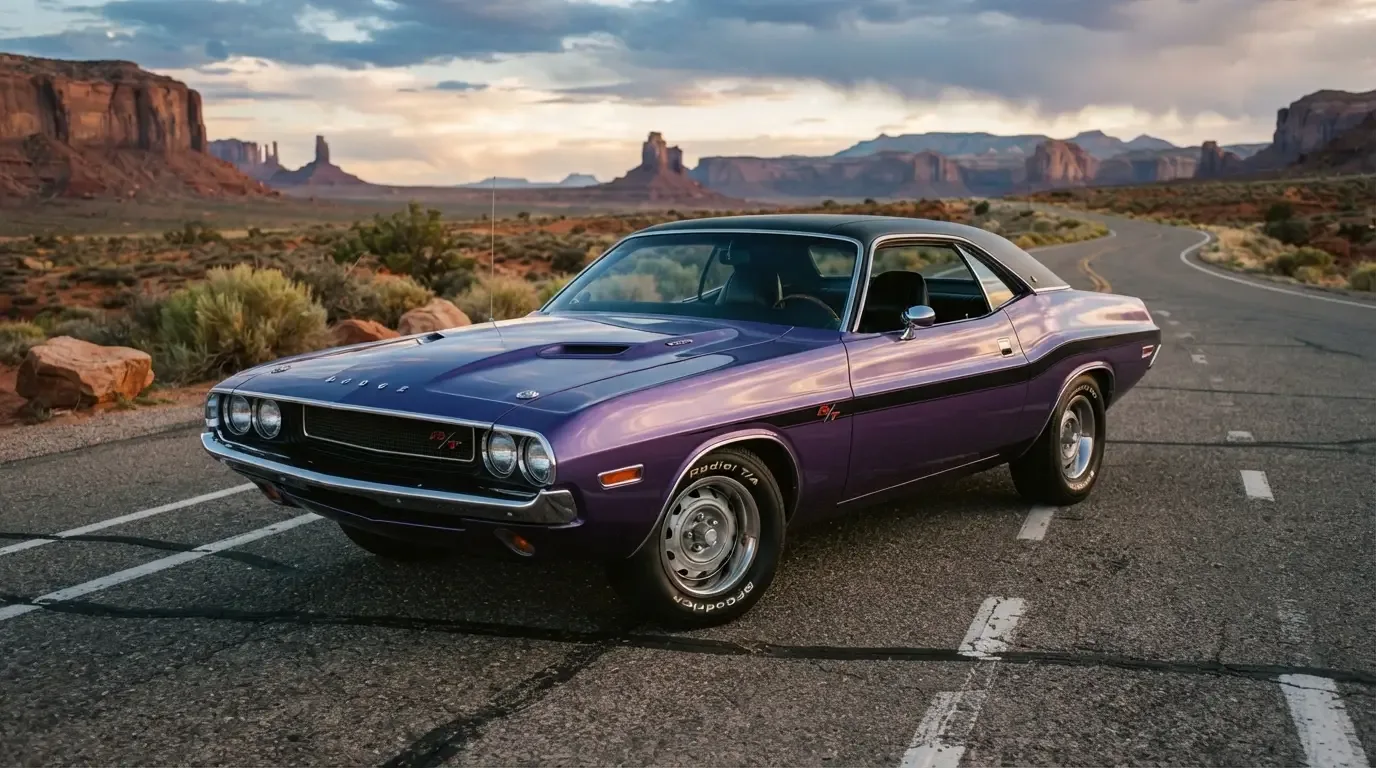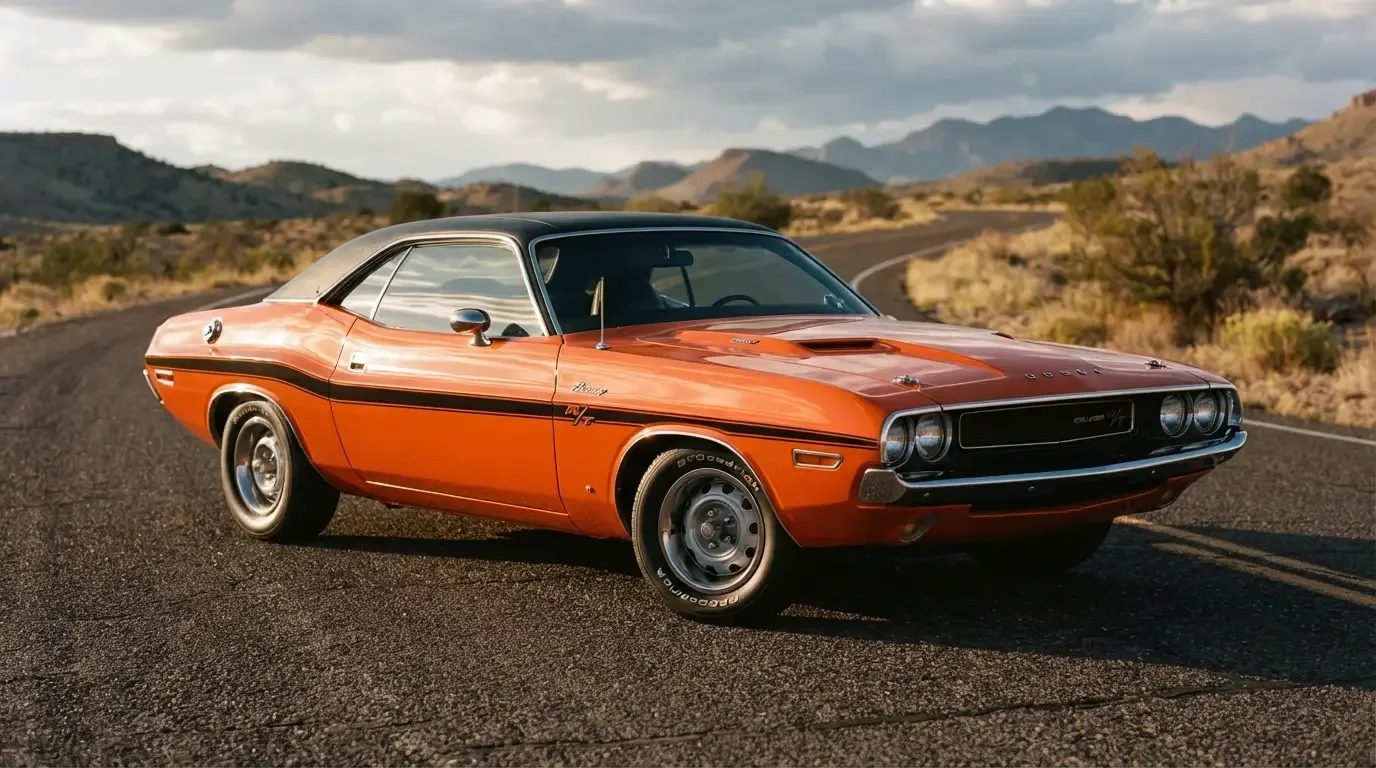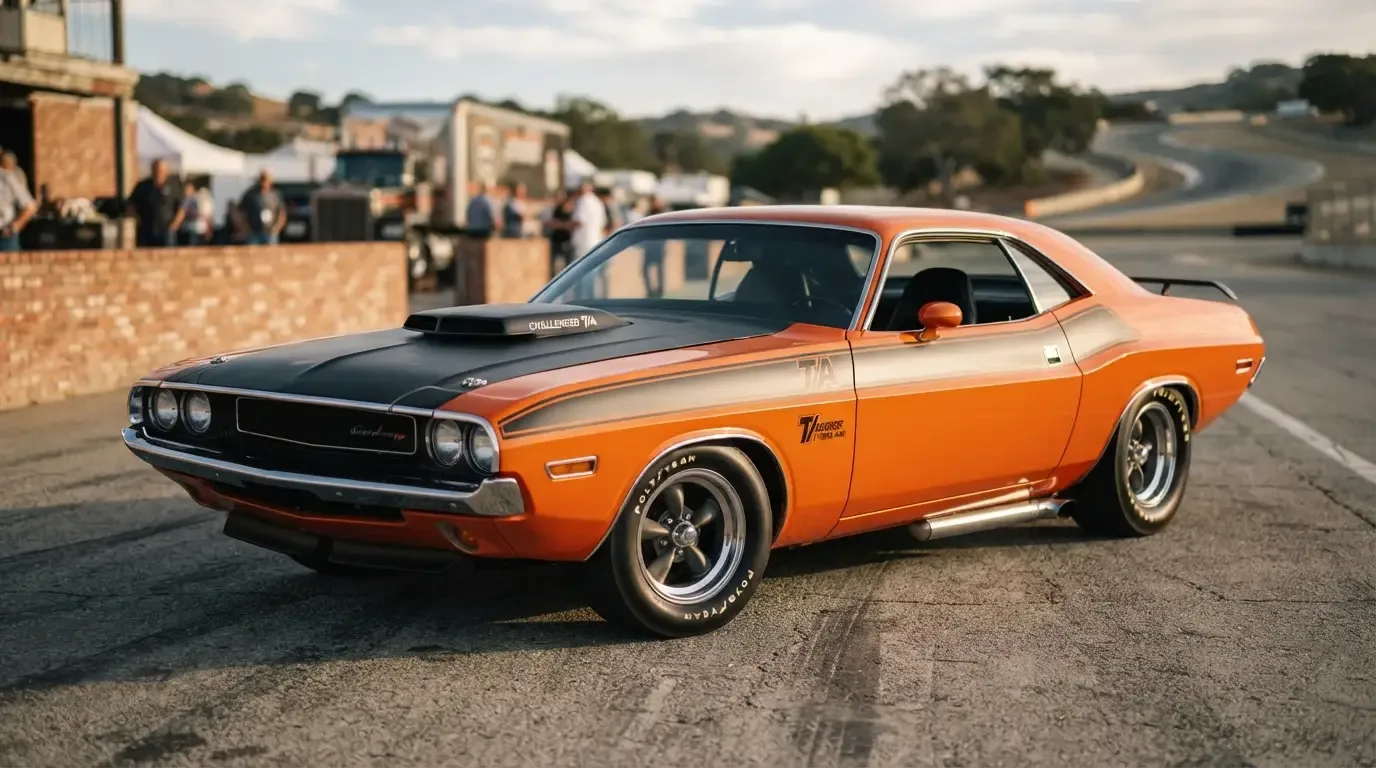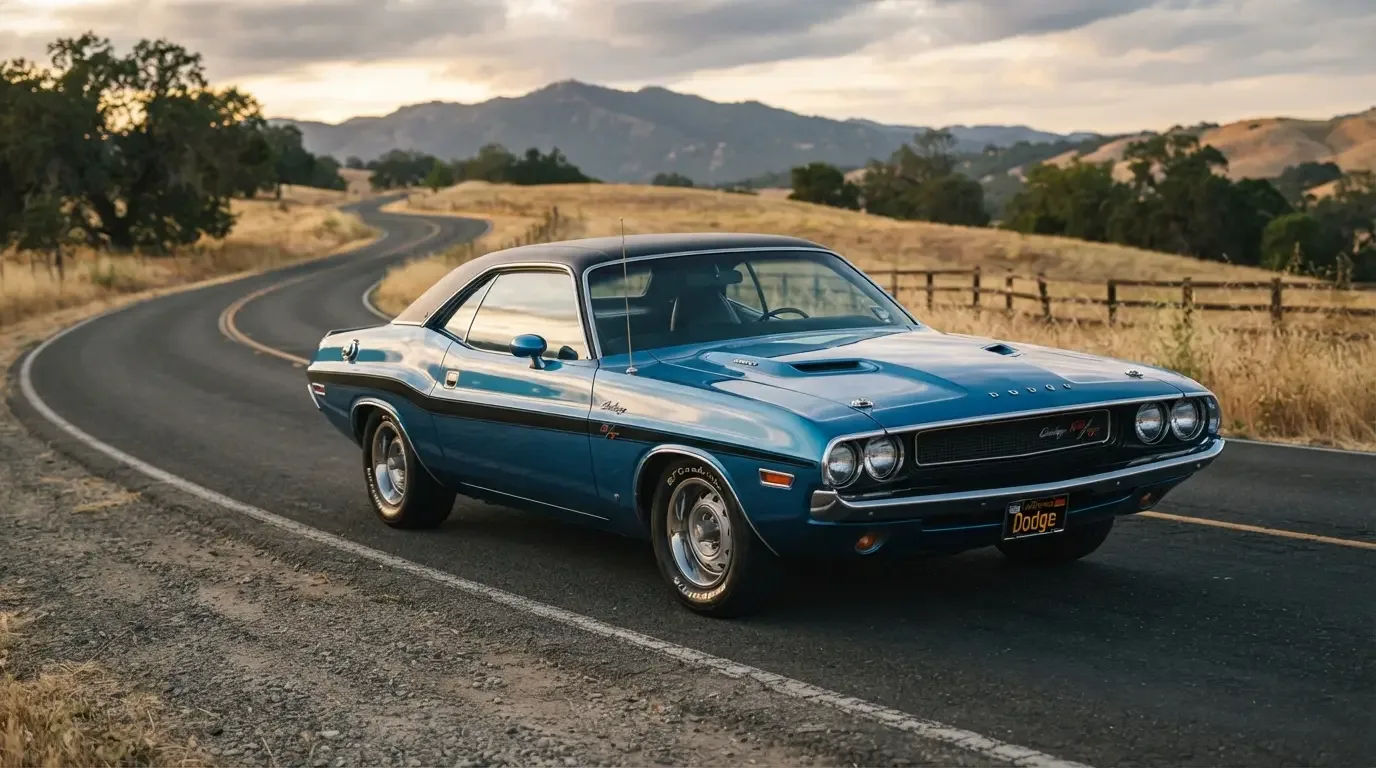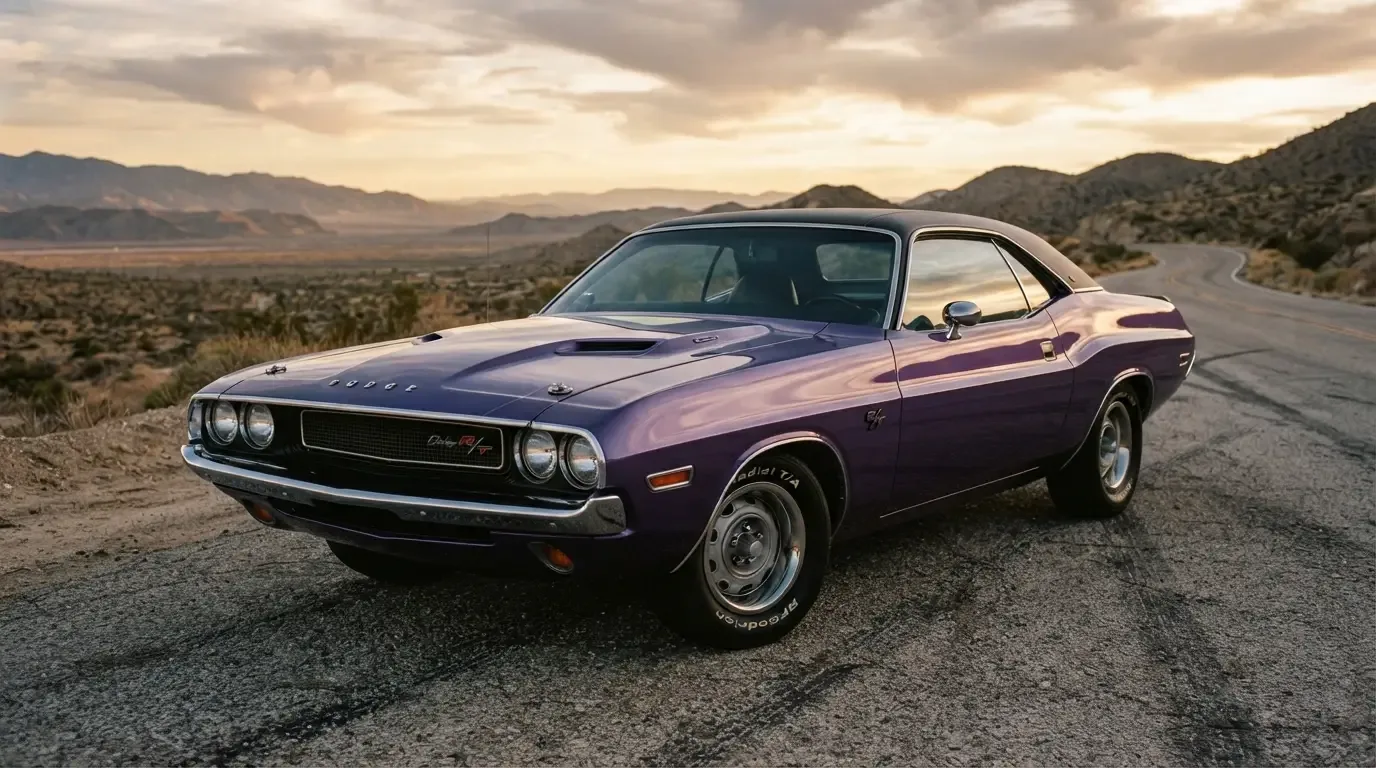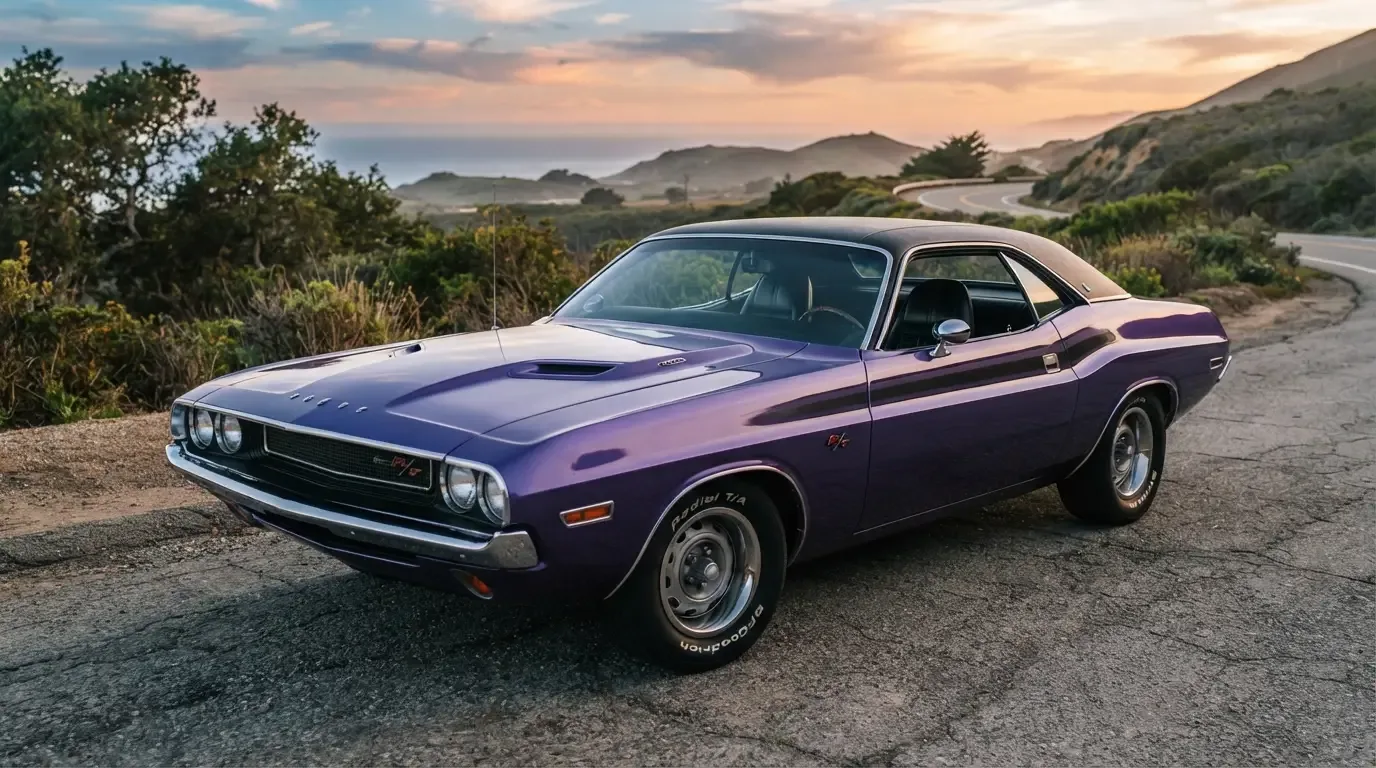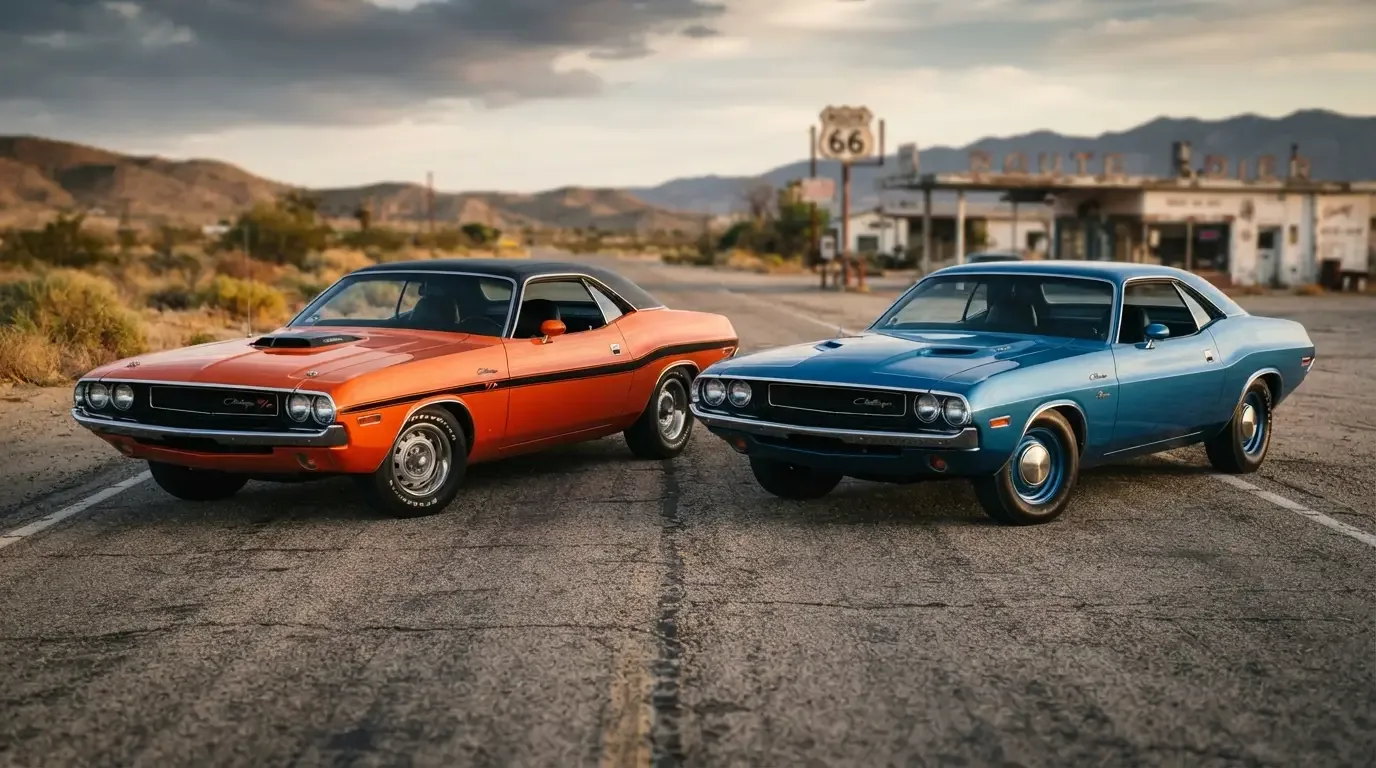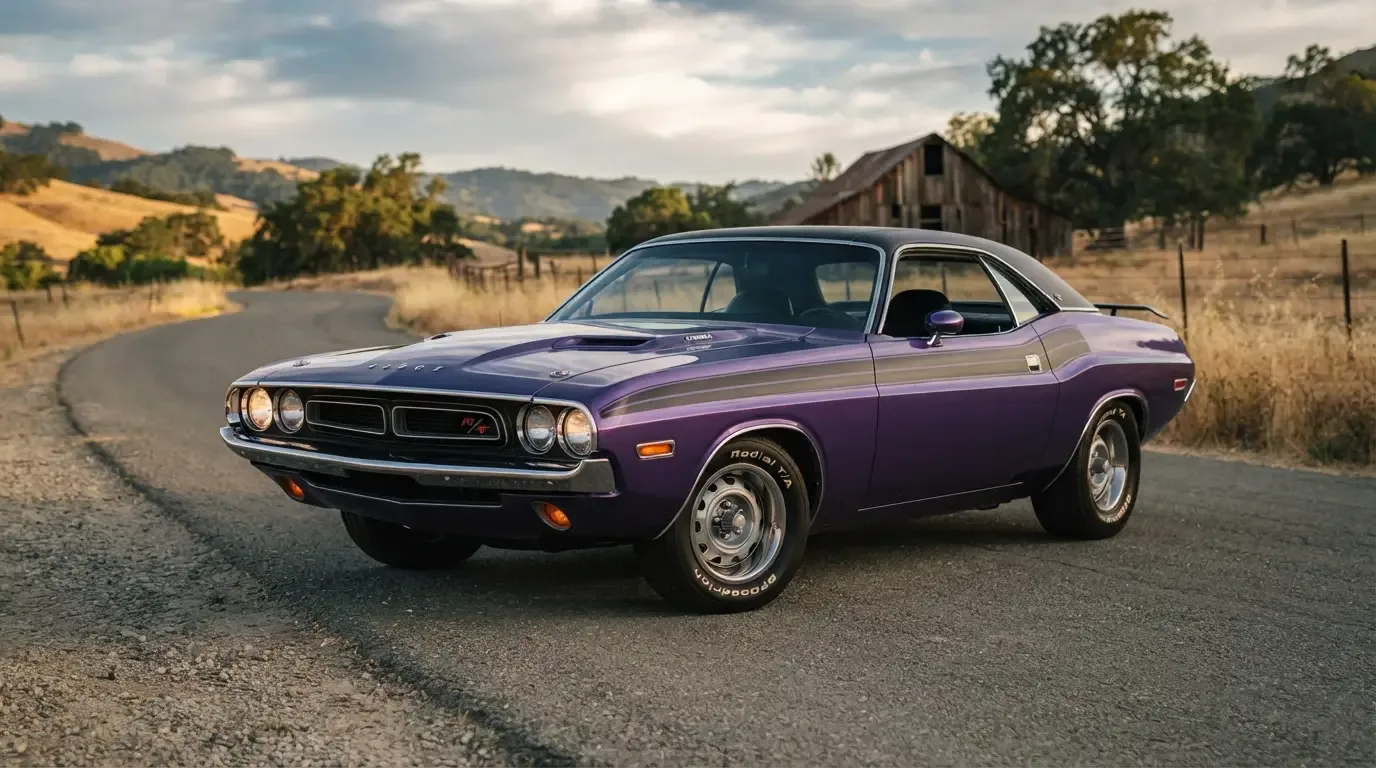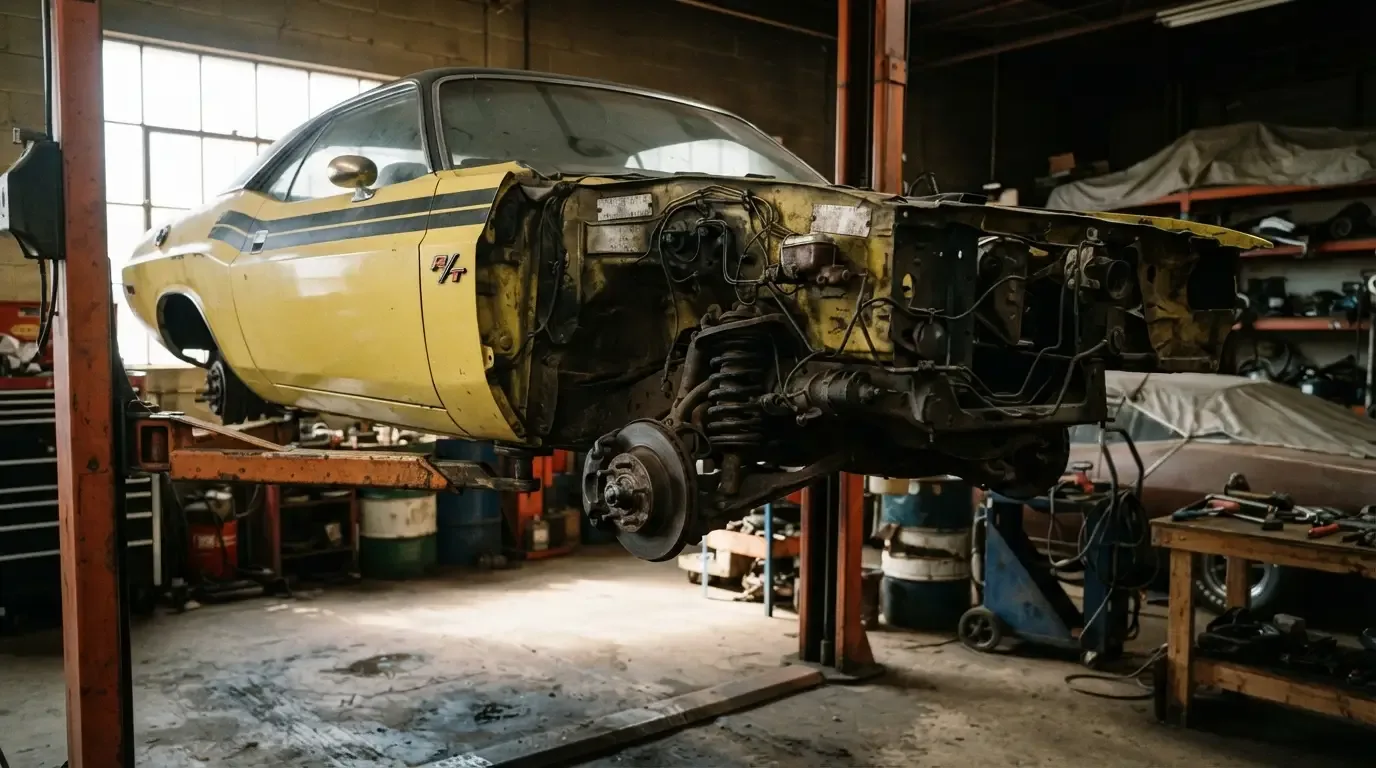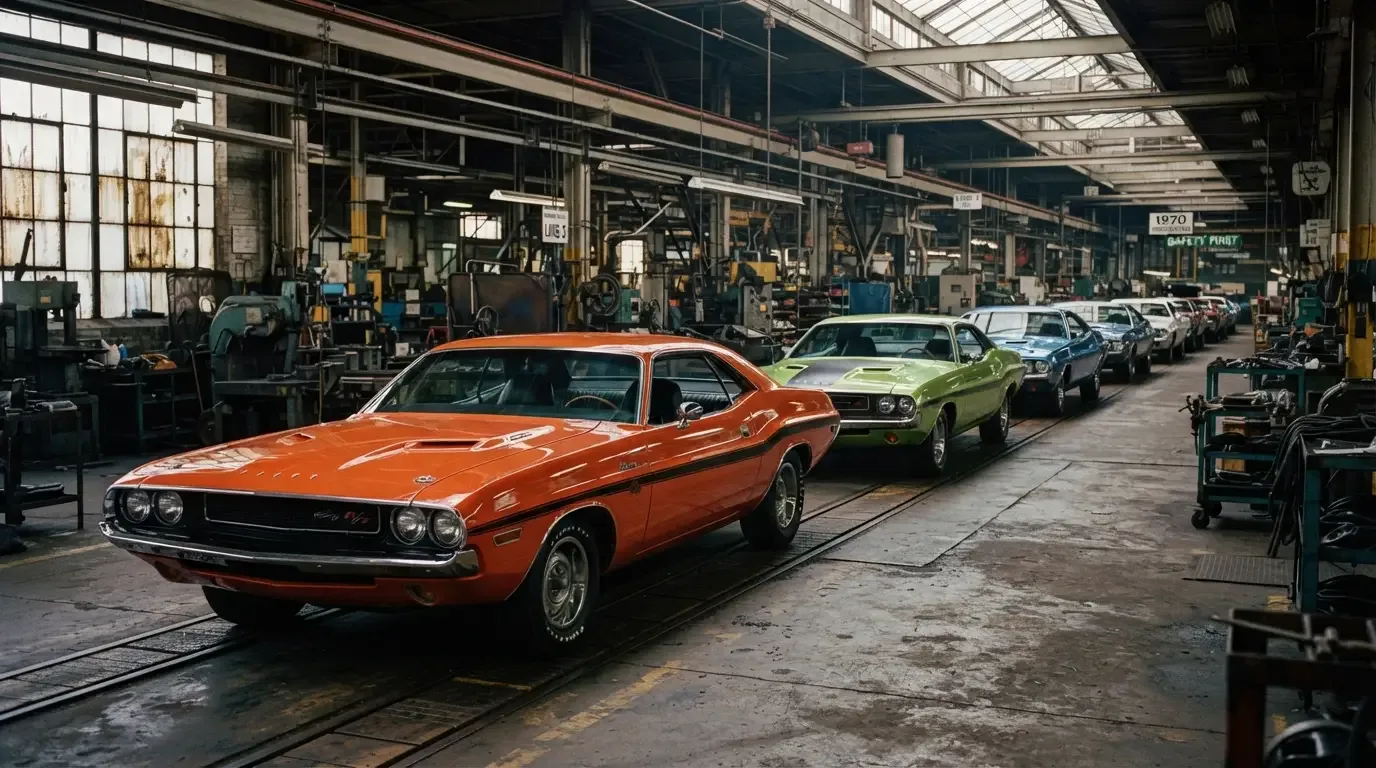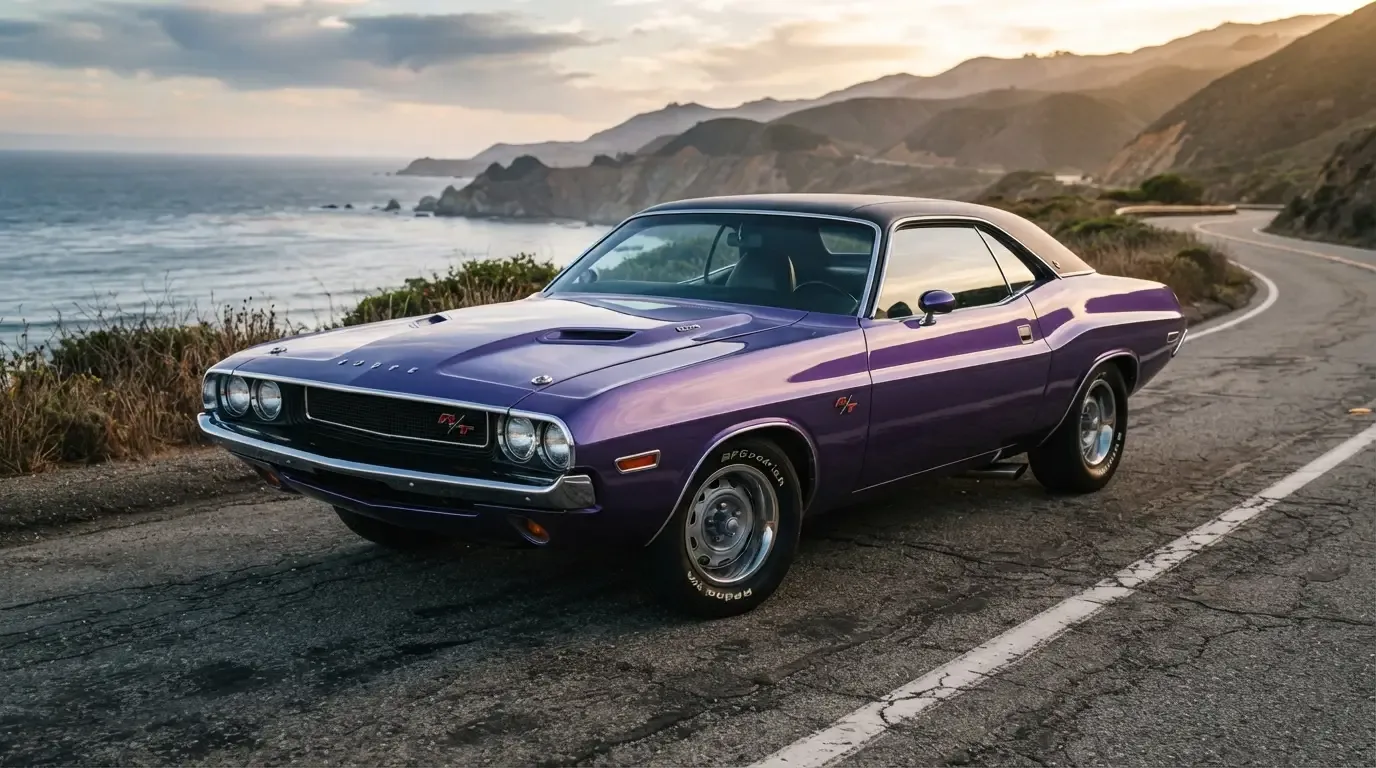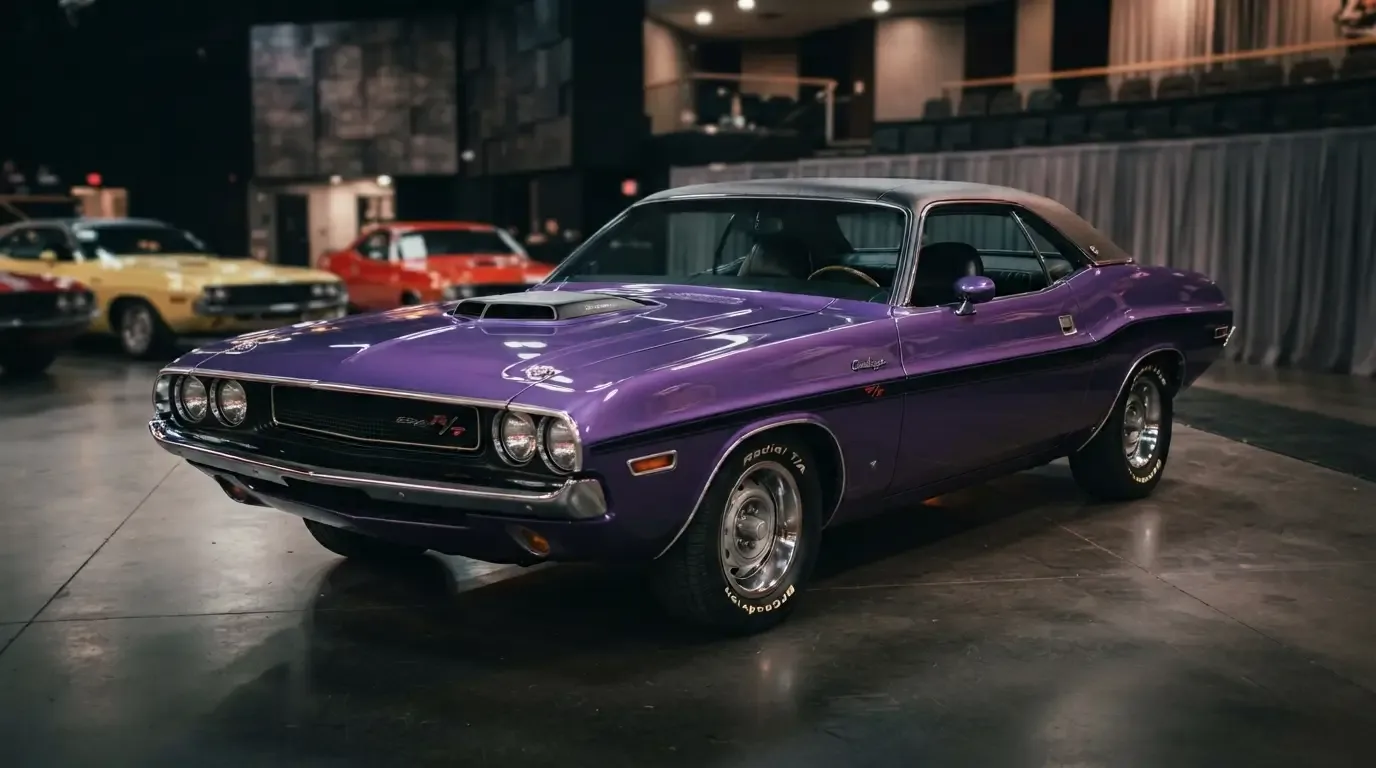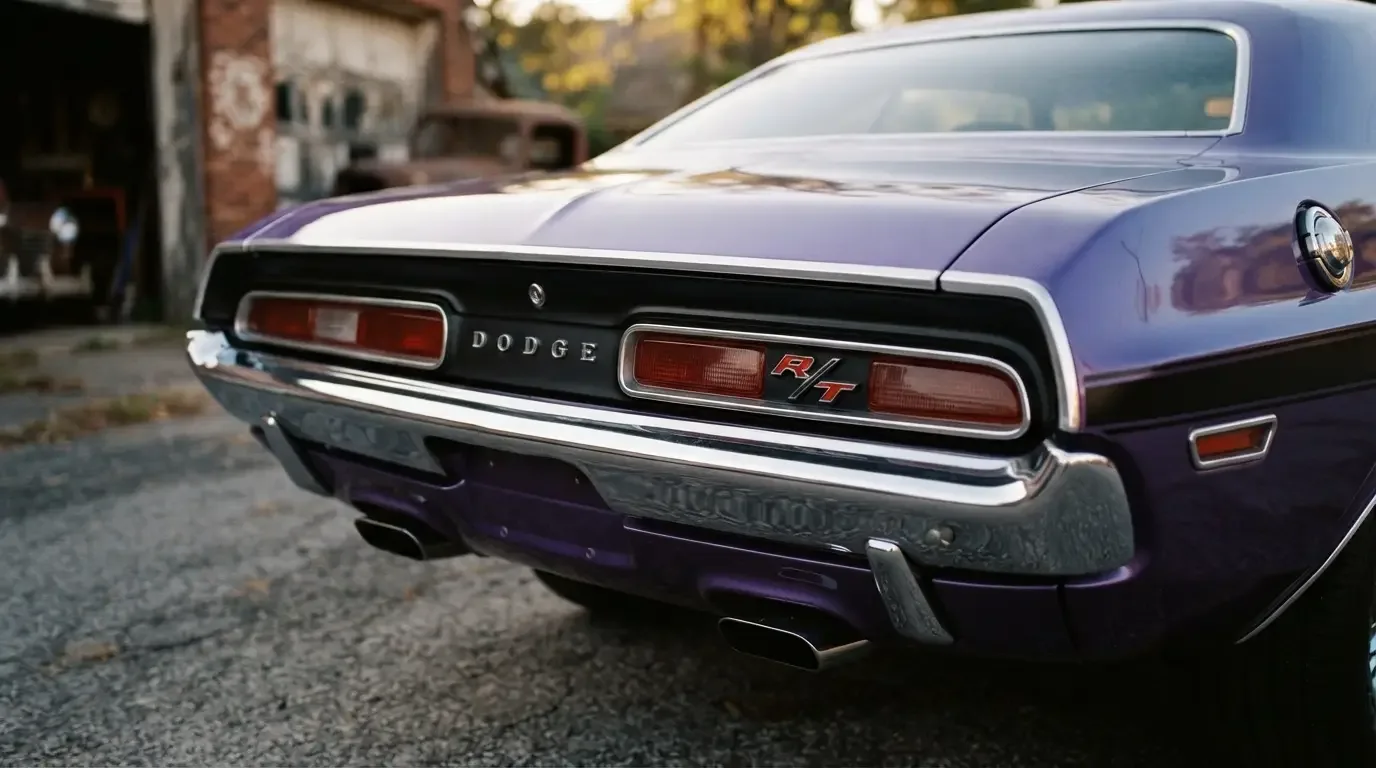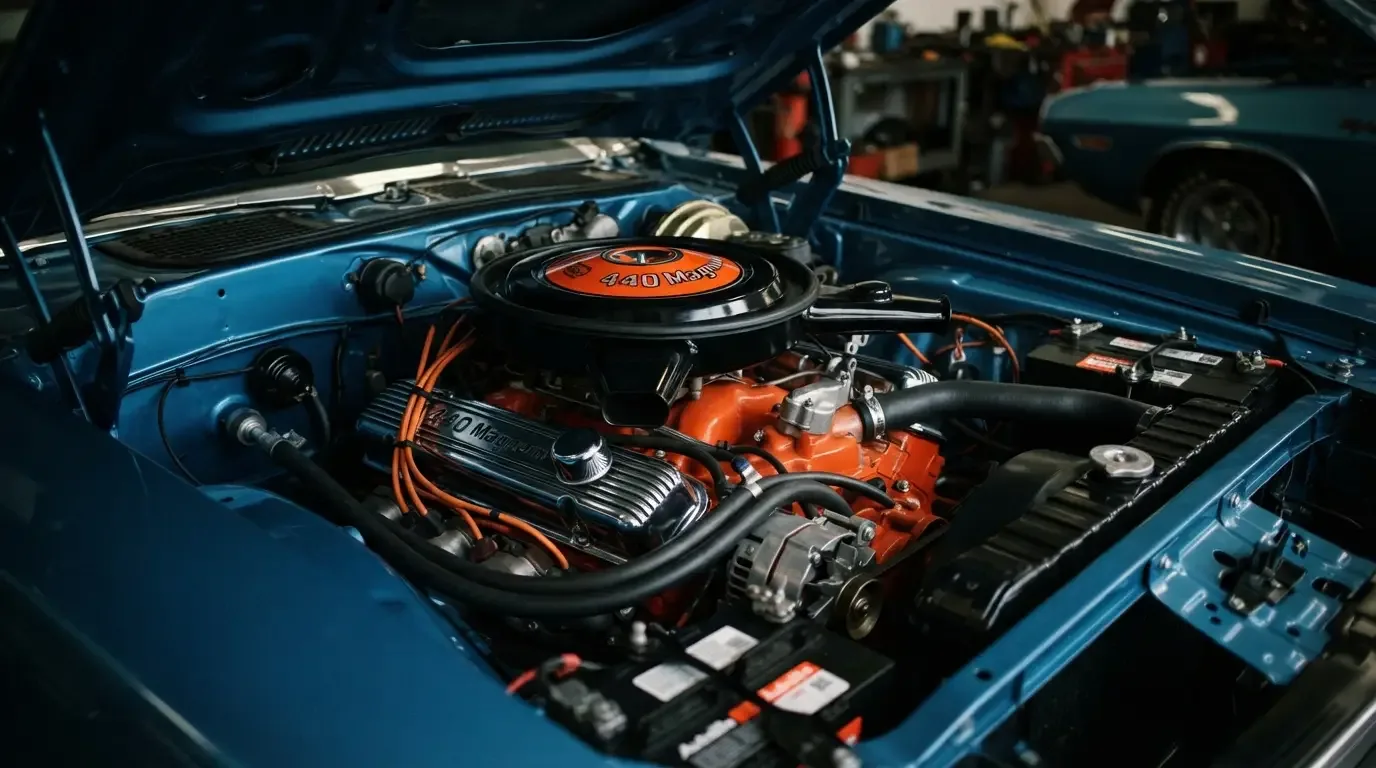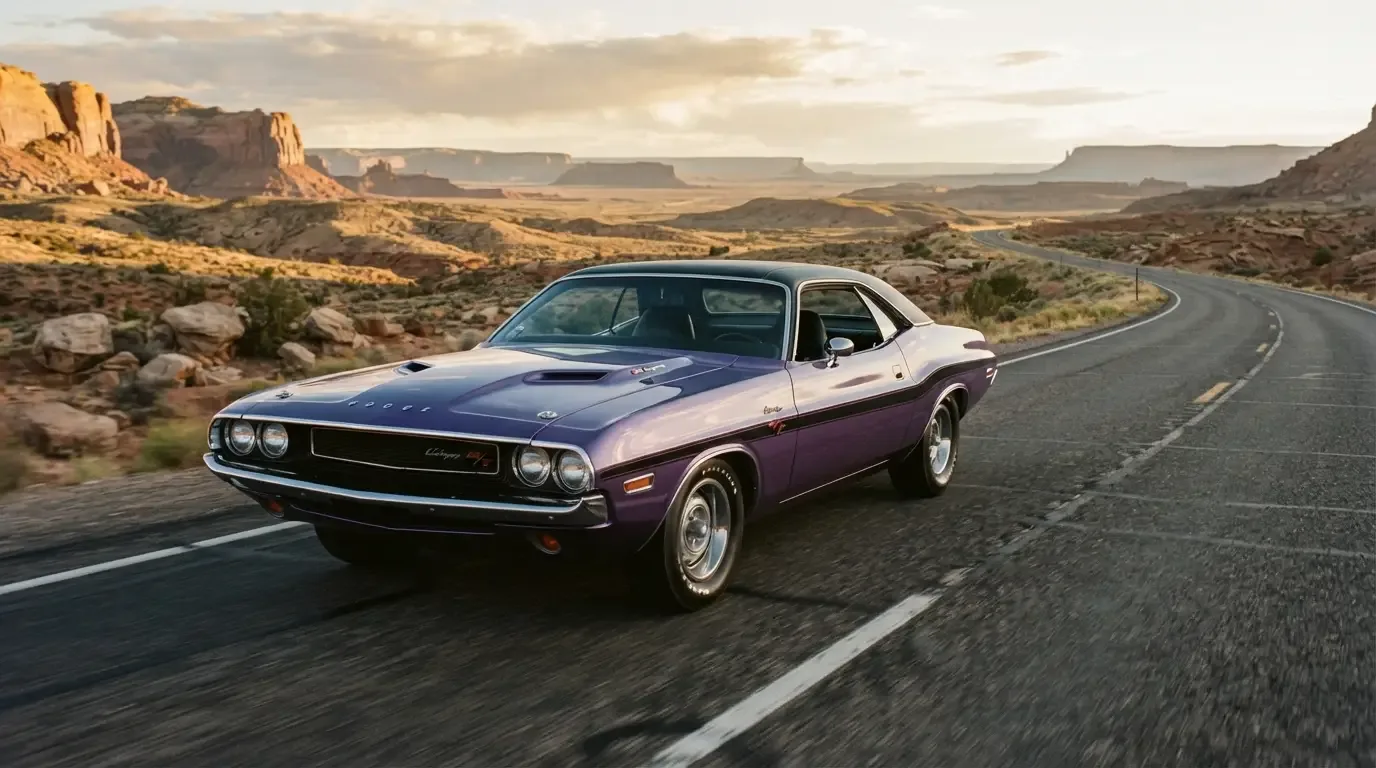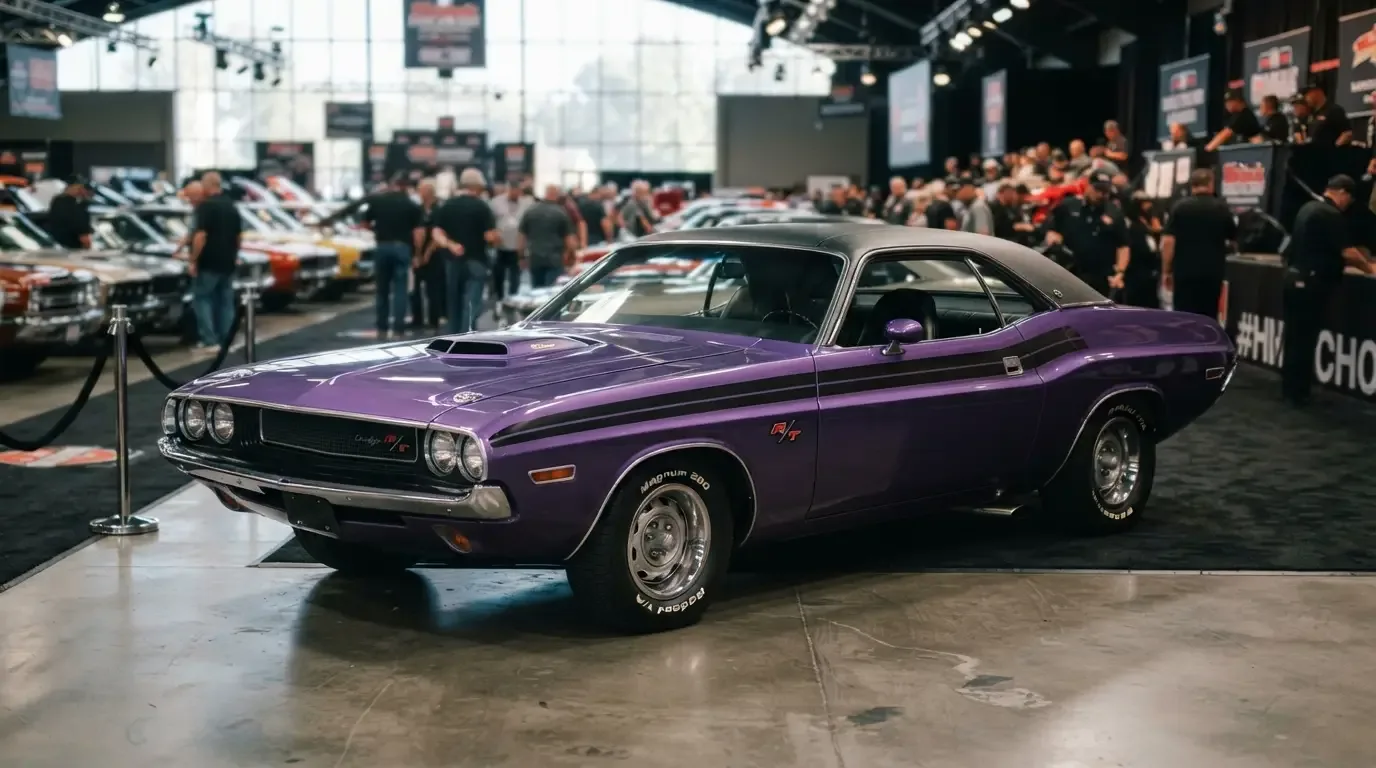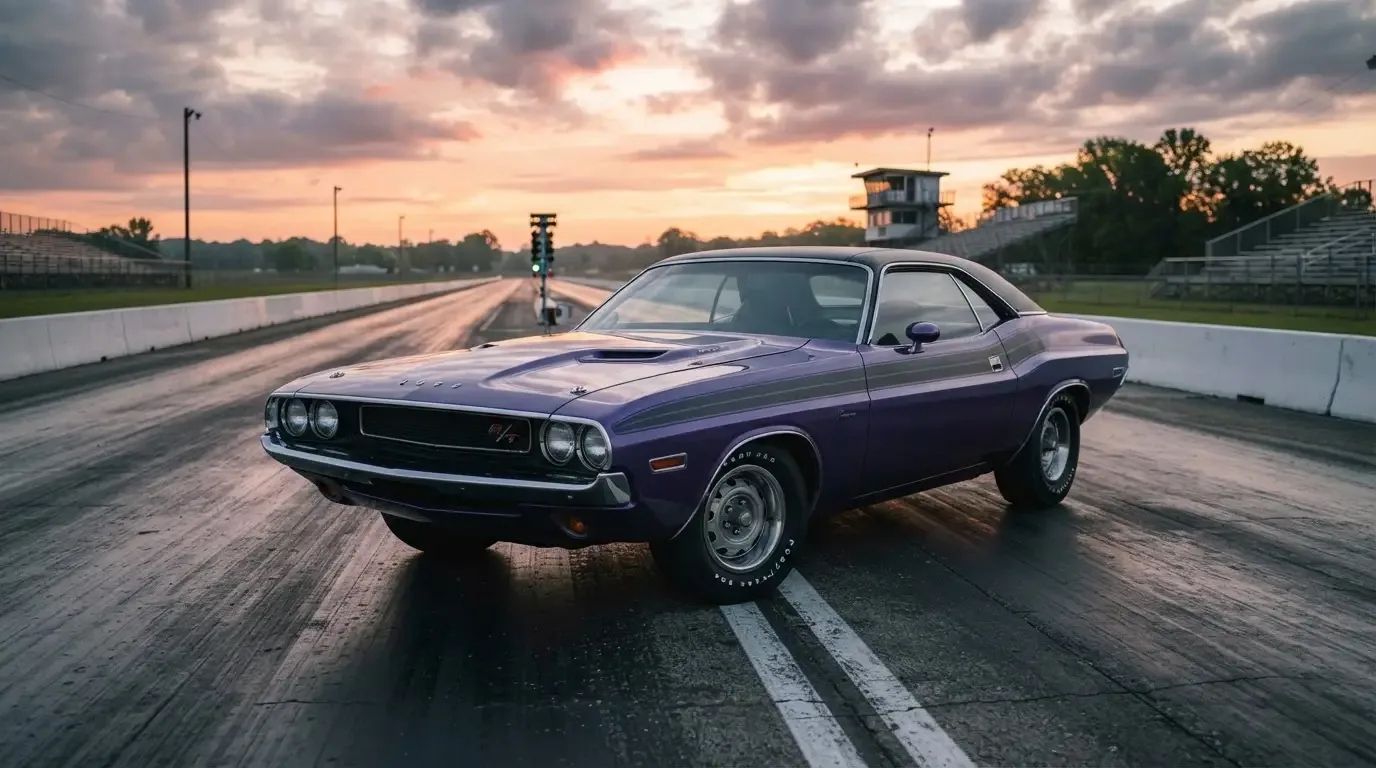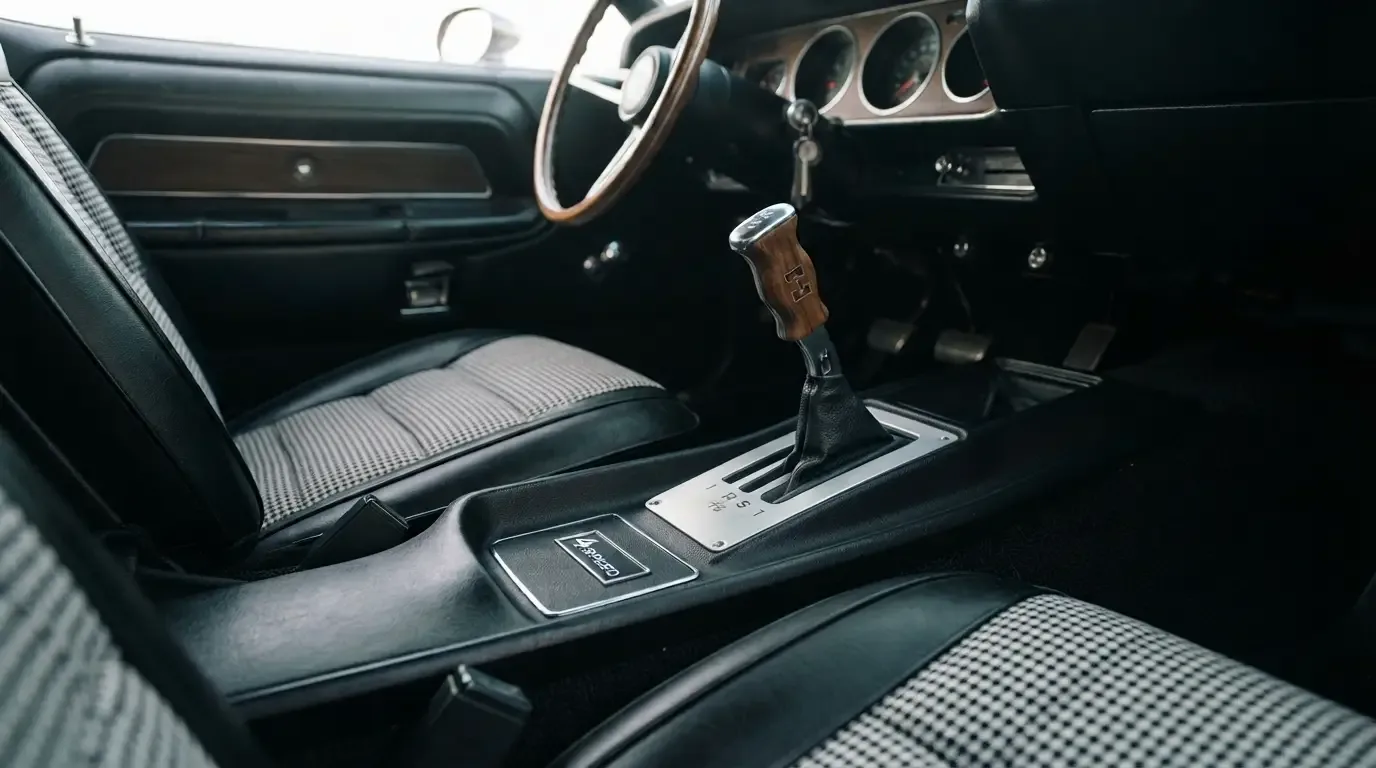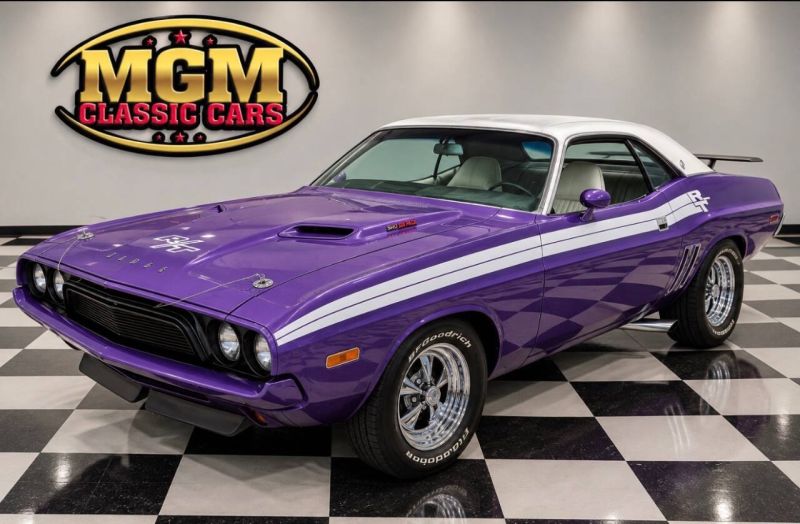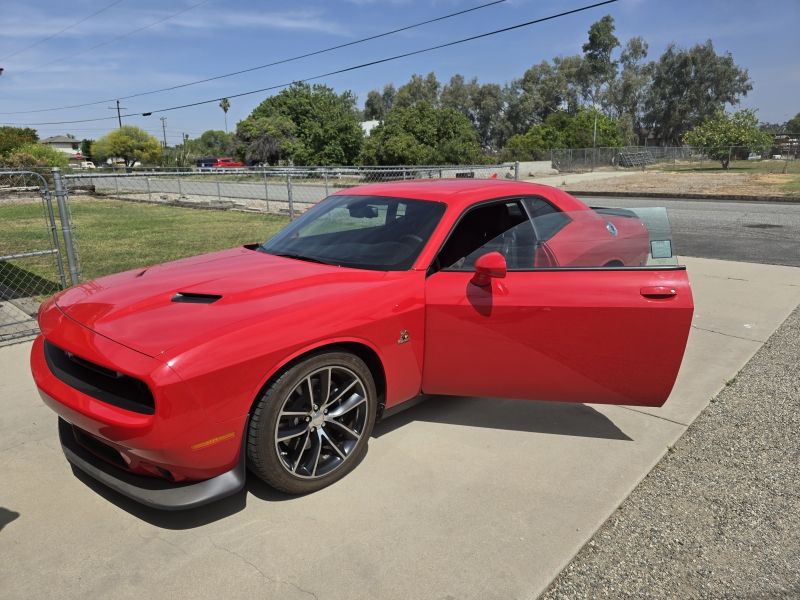
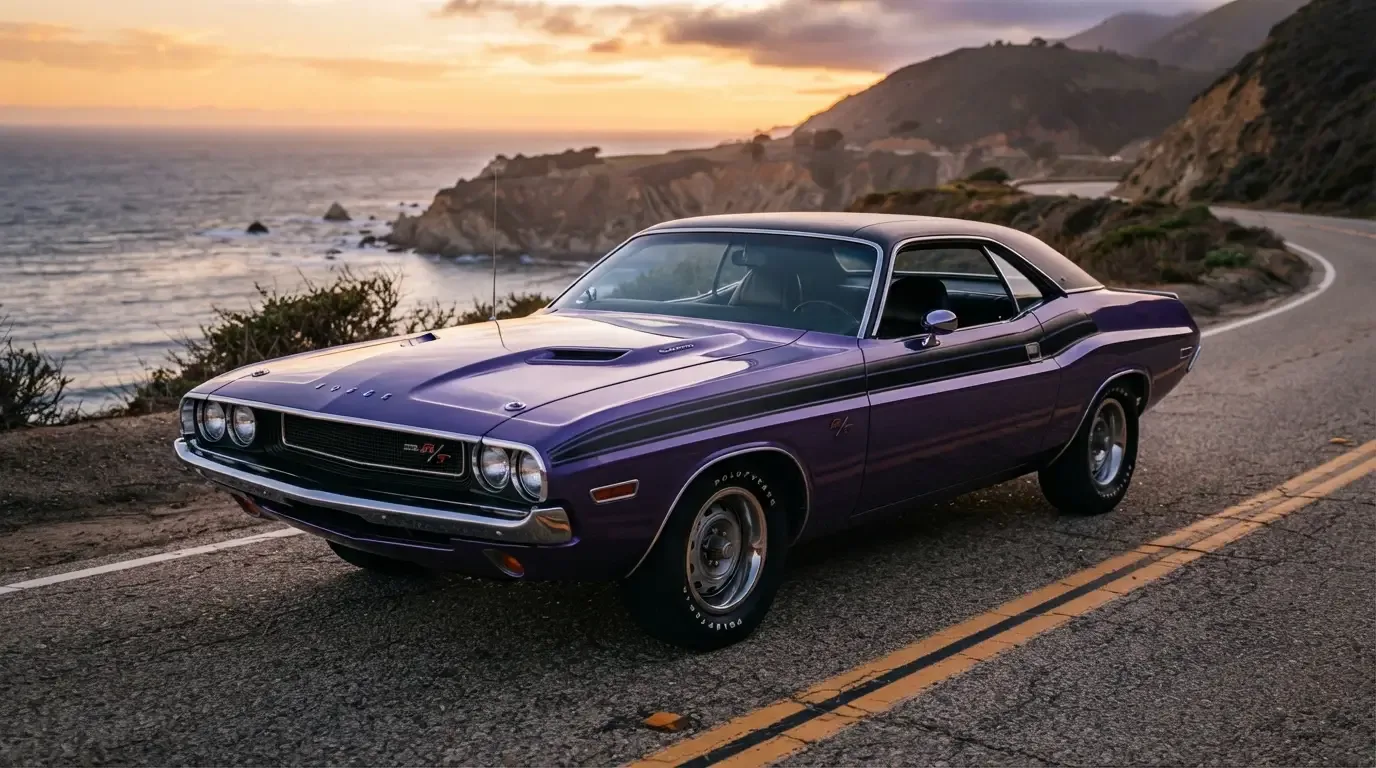
The Dodge Challenger R/T is the version that matters. Strip away the base sixes and the vinyl-roof cruisers and you get to the point of the whole E-body program. R/T stood for Road and Track, and on a Challenger it meant a real performance package, not a stripe kit. You will see it written both ways in the classifieds, Dodge Challenger RT and R/T, but they point at the same car. It launched with the car in 1970 and it is the badge that made the Challenger a muscle car instead of just a good-looking one.
What R/T actually bought you
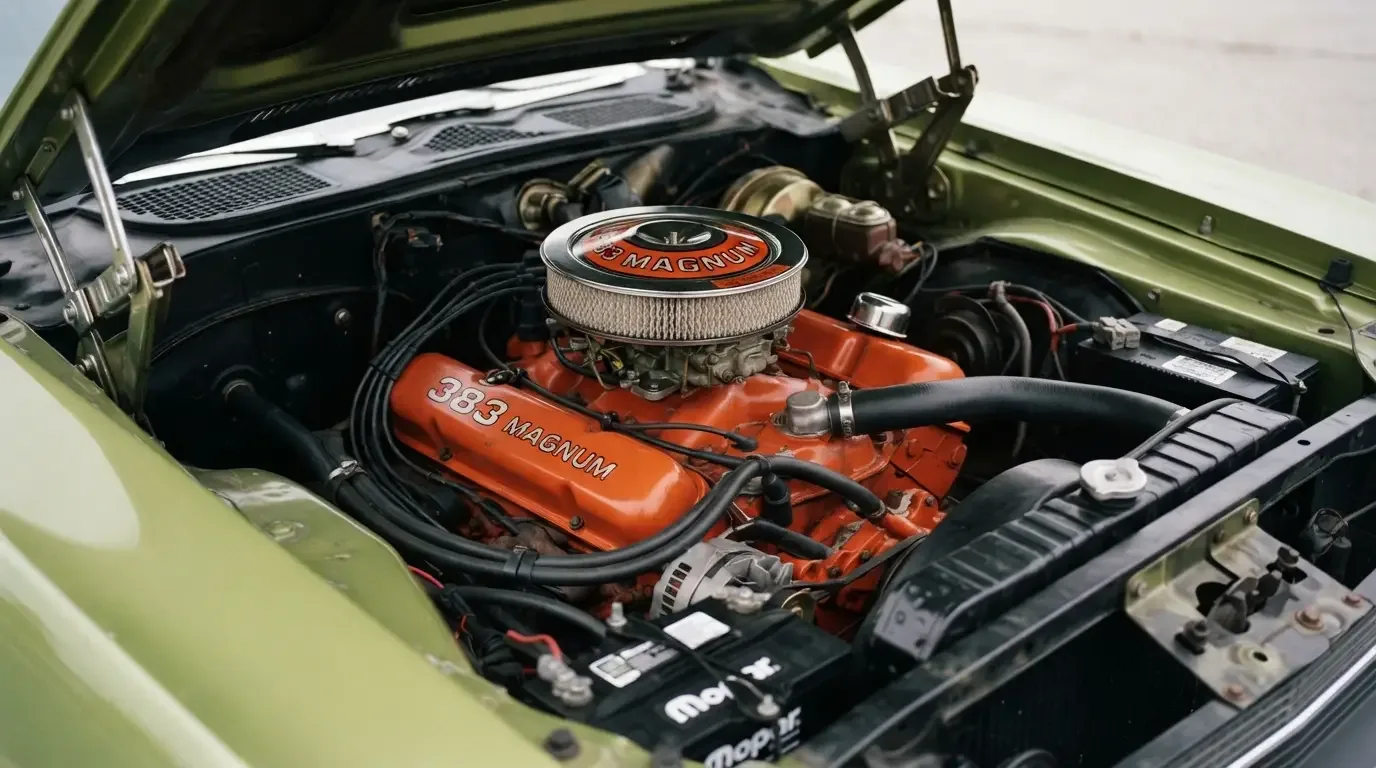
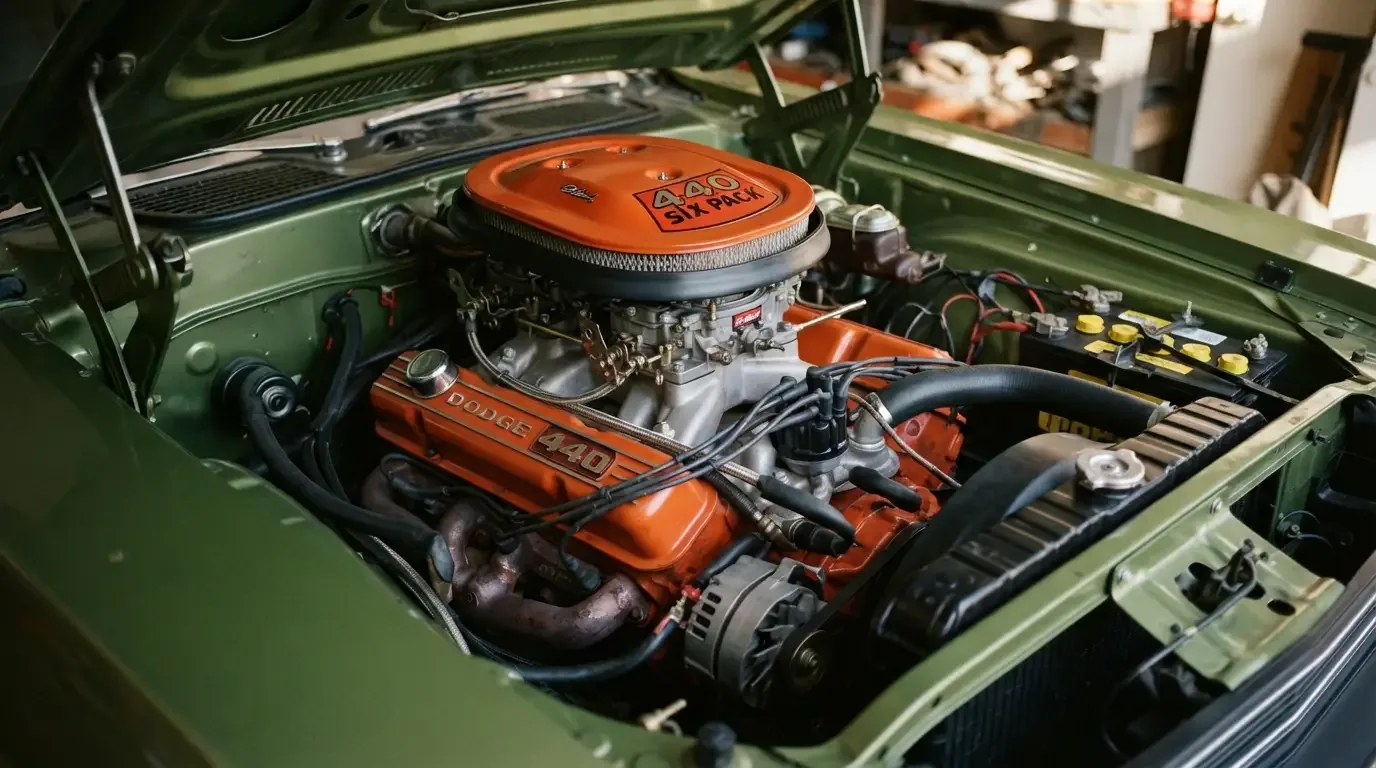
The R/T was a package, and it was specific. The standard engine was the 383 Magnum V8, rated at 335 horsepower. That was the floor, not the ceiling. From there the option sheet climbed to the 440 four-barrel, the 440 Six Pack with three two-barrel carburetors, and the 426 Hemi at the top. So an R/T could be a strong street car or a genuine monster, and the price gap between those two outcomes is enormous today.
The package also brought heavier-duty suspension, better brakes, and R/T identification inside and out. It was the car built to be driven hard. If you want the full arc of how the model came to be, read the the dodge challenger story for the platform background. This piece is about the fast one.
The number that defines it: the Hemi count
Here is the figure that puncures most of the hype around E-body Challengers. Hemi R/T production was tiny. Across the 1970 model year, Dodge built only 356 Hemi Challengers of all body styles combined. Convertibles were a rounding error inside that, with just nine Hemi R/T convertibles built for the year. So when someone tells you every red Challenger at a show is a Hemi car, the math says otherwise. The rare ones are rare because they were expensive and hard to insure when new. Most buyers took the 383 and went home.
R/T versus the poser
The trap with R/T cars is simple. The badge is easy to add. A base 318 Challenger with an R/T emblem screwed on is not an R/T, and the market knows it. What separates the real thing from the tribute is the fender tag and the engine code stamped into the block. The paperwork is the whole ballgame. A documented 440 Six Pack R/T is worth multiples of a clone that looks identical from ten feet away.
This matters more on the Challenger than on almost any rival, because the E-body gap between a base car and a top R/T is so wide. On a Mustang or a Camaro the spread from a plain coupe to the hot version is real but narrower. On a Challenger it can be the difference between a twenty thousand dollar driver and a car worth ten times that. That enormous range is exactly what makes cloning tempting, and it is why an experienced buyer trusts the stampings over the seller's story every single time.
None of this means a clone is worthless or dishonest. A well-built tribute R/T can be a fine car to drive, and many are sold openly as what they are. The problem only appears when a clone is priced as an original. The market has a clear language for this. A real R/T with matching numbers is one thing, a nicely done recreation is another, and the value gap between the two labels is permanent. Buying with your eyes open means knowing which label you are actually paying for.
This is not snobbery. It is value. Two cars, same paint, same stripes, and one is worth three times the other because of what the code says. The badge is decoration. The documentation is the asset.
The SE angle
You could stack the R/T with the SE, the Special Edition trim. That got you the performance package plus the plusher cabin, the smaller "formal" rear window, and a vinyl roof. An R/T SE is a specific and desirable combination because it pairs the muscle with the luxury options, and those cars were not common. It is another case where the option boxes, not the shape, set the value.
| R/T detail | Spec |
|---|---|
| Meaning | Road and Track performance package |
| Standard engine | 383 Magnum V8 |
| Standard rating | 335 hp |
| Top engine | 426 Hemi |
| Signature option | 440 Six Pack, triple two-barrel carbs |
| Luxury pairing | R/T SE with formal roof |
| First year | 1970 |
What it was like when it was new
The R/T was not a precision instrument. It was a straight-line car with a big engine over the front wheels and a chassis that did its best to keep up. The period road tests praised the thrust and were honest about the handling. A 440 or Hemi R/T carried a lot of weight up front, and the drum brakes on early cars were the weak point everyone noted. This was normal for the class. Muscle cars of 1970 were built to accelerate, not to stop or corner, and the R/T was true to type.
What set it apart was attitude. The heavy-duty suspension gave it a firmer feel than a base Challenger, the exhaust had a voice, and the optional shaker hood put the engine's motion on display through the hood. It was a car that announced itself. That theater is a large part of why people wanted one then and why they want one now. The R/T was designed to feel like an event, and it delivered on that even when the numbers on a stopwatch had limits.
The R/T against its rivals
Lined up against the competition, the R/T's advantage was the top of its engine range. A Chevrolet Camaro SS or a Ford Mustang Mach 1 was a strong car, but neither could be ordered with anything like the 426 Hemi in the same body. The R/T's ceiling was simply higher. Its floor, the 383 Magnum, was competitive with the mainstream muscle of the day, and its option sheet let a buyer climb from there to territory the pony car rivals could not reach. That range is the R/T's signature. It could be a sensible fast car or an outright weapon, and the buyer chose which.
The trade was size and weight. The Challenger was the biggest car in the class, and the R/T carried the heaviest engines, so it was never the nimblest thing on the road. Buyers who wanted the Hemi did not care. They wanted the most engine available in a pony car, and the R/T was the only way to get it from Dodge.
How the R/T changed after 1970
The R/T did not last long. For 1971 the Challenger got a mild facelift and the R/T carried on, but the big engines were already thinning. The 1971 R/T lost some of the top powertrains as the muscle era ran into insurance surcharges and tightening rules. After 1971 the R/T badge was gone from the Challenger entirely. So the R/T story is really a two-year story, 1970 and 1971, and 1970 is the deeper one. That short window is exactly why the good cars are scarce.
The engineering did not fail. The market did. By 1972 the whole muscle segment was collapsing under regulation and gas prices, and Dodge pulled the high-performance options rather than keep building cars nobody could insure. The R/T was a casualty of timing, not a lack of demand. Buyers still wanted the fast Challenger when it was taken away, which is precisely why the surviving cars from those two peak seasons command the attention and the money they do today.
"People pay for the badge. They should pay for the code. An R/T is only worth R/T money if the fender tag and the block agree. Everything else is a good-looking 318."
- Dan Reeves
What the R/T is worth today, in plain terms
The range is wide and it tracks the engine directly. A 383 R/T in solid driver condition sits at the accessible end of the E-body market. A documented 440 Six Pack climbs sharply from there. A verified Hemi R/T, especially a convertible, is in six-figure territory and can go far higher for the right car with the right paper. The spread inside a single model badge is one of the largest in the muscle world, and it exists entirely because of how few of the top cars were built.
That is the useful takeaway for a buyer. Do not shop the badge. Shop the documentation. The difference between a fair deal and an expensive mistake on an R/T is a single line on the fender tag, and it is worth learning to read that line before you write a check.
There is a second layer to the money, which is originality of finish. Two documented 440 R/T cars can sit far apart on price because one wears its born-with high-impact color and correct interior while the other has been repainted a generic shade and retrimmed. Collectors pay for a car that still tells the truth about how it left the factory. A restoration can be beautiful and still cost value if it strays from the original specification, because at this level the buyer is purchasing history, not just a fast coupe. The closer a car stays to what the paperwork describes, the stronger the number it commands.
Why the R/T is the one people remember
The Challenger sold plenty of base cars, and those keep the survivor count healthy. But the reason the model has a legend at all is the R/T. It gave the car credibility when it was new and it gives the car its value now. The shape was Carl Cameron's. The muscle was the R/T package. Take that package away and the Challenger is a handsome coupe. Add it back and you have one of the defining muscle cars of the era.
The Challenger built more than one performance story in 1970, and the R/T sat at the center of them. There is another one worth knowing, a purpose-built homologation special that ran for a single season, and it is worth reading as a companion. It is another one worth knowing once you have the R/T straight in your head. When you are ready to see what the real cars trade for, browse classic Challenger listings and start comparing the fender tags. That is where the R/T stops being a badge and becomes a number.
Sources and notes
- Dodge Challenger (1970) - Wikipedia
- 1970 Dodge Challenger Base - Hagerty Valuation Tools
- 1970 Dodge Challenger R/T Hemi Convertible - Sports Car Market
- Rare Rides: The 1970 Dodge Challenger R/T Hemi Convertible - Street Muscle
- 1970 Dodge Challenger R/T - Supercars.net
- 1970 Dodge Challenger R/T Hemi - Cars of Dreams Museum