
Our club had a running joke for years about the guy who showed up to every meet insisting his car was a real Hemi R/T, until a longtime member finally sat him down with a copy of the fender tag decoding guide and the conversation got quiet real fast. Nobody was cruel about it. That is just what happens in this hobby once you have been around long enough to see how many Challenger R/Ts on the road today started life as something else entirely.
Car Features
7 min read
Real Challenger R/T vs Clone: The Story of Tributes
Club stories, fender tags, and the honest mistakes that turn a real Challenger R/T into a clone over five decades, plus the questions any buyer should ask before writing a check.
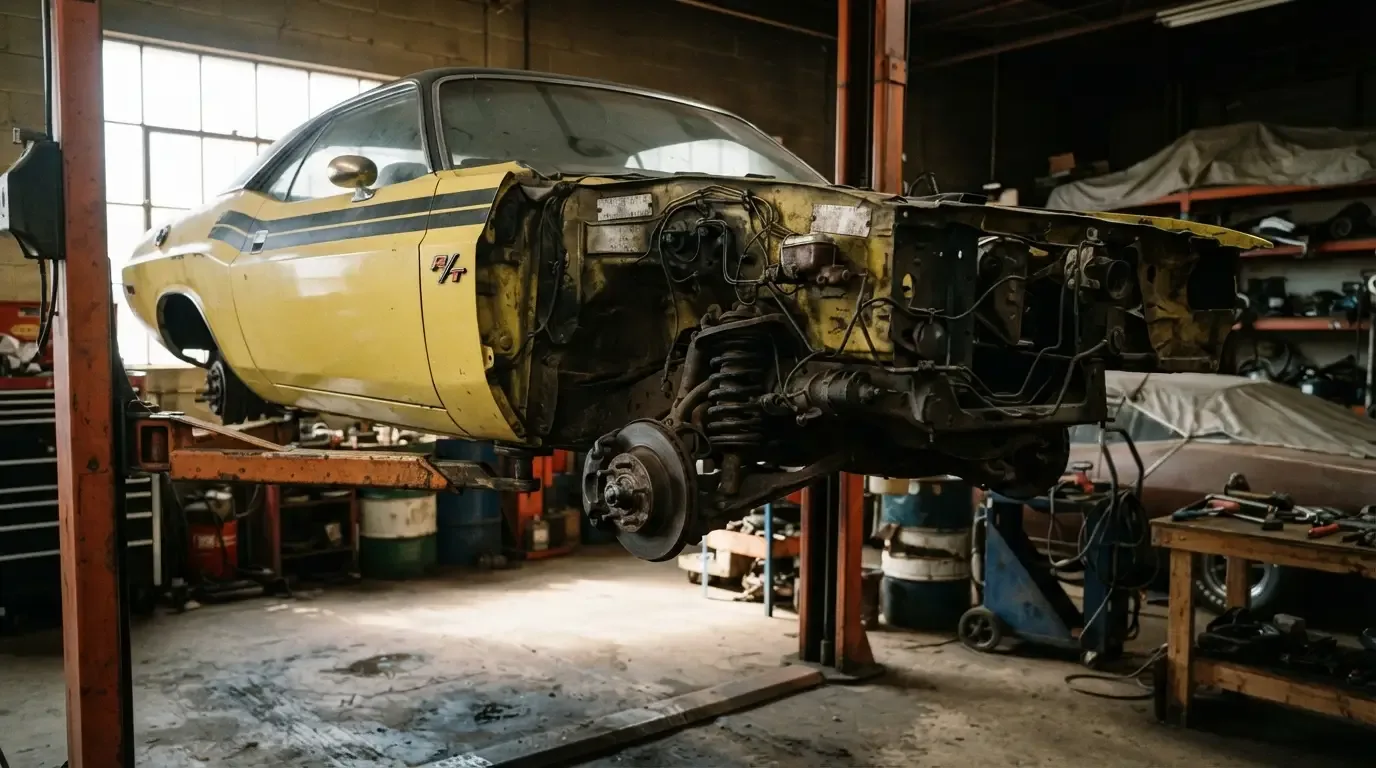
Why clones exist and why that is not automatically a bad thing
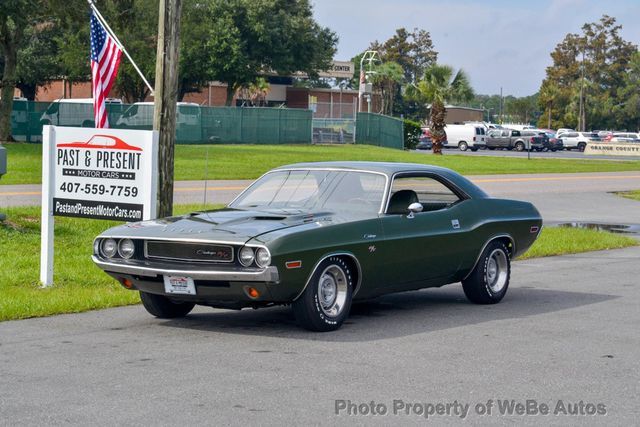
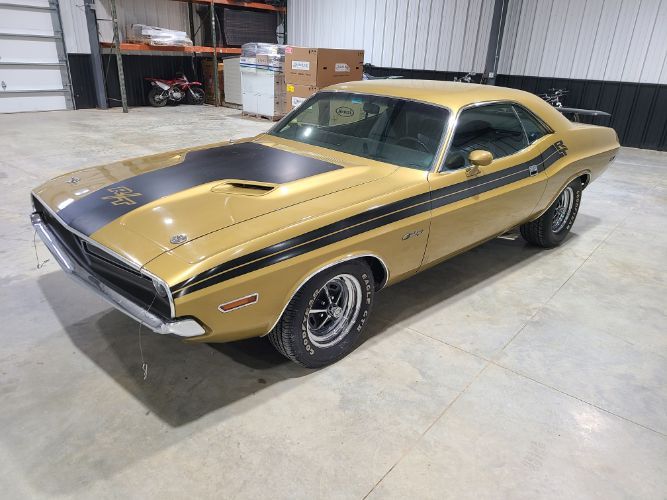
A clone, in club terms, is a Challenger built to look like an R/T, often with a specific engine and trim combination replicated, but without the factory paperwork to back up the claim. Most clones started life as a base Challenger, sometimes with a six cylinder or small block engine, and got upgraded over the decades by owners chasing the look and feel of the real thing without paying real R/T prices.
There is nothing dishonest about owning a well-built clone as long as the owner and any future buyer both know what it is. Plenty of club members drive tribute cars proudly, and some of the best-built clones on the road ride better and run more reliably than an untouched original because the builder had the freedom to fix what Chrysler's 1970 engineering left imperfect. The trouble starts when a clone gets sold, or represented, as a genuine numbers-matching car.
The paperwork trail that tells the real story
A genuine, documented R/T carries several layers of confirmation that a clone simply cannot replicate without forgery. The fender tag lists the trim code, engine code, and other build details stamped at the factory. The broadcast sheet, when it survives, gives an even more detailed snapshot of exactly how the car left the assembly line. Matching numbers on the engine block, and ideally the transmission and rear axle, tie the physical car to that paperwork.
Clone builders can replicate the visual cues, the stripes, the badges, even a correct-looking engine, but reproducing an authentic fender tag or forging a broadcast sheet is a different level of dishonesty than most sellers are willing to attempt, which means careful buyers who know what to check rarely get fooled for long. The real risk sits with buyers who never ask for this documentation at all and simply trust what a seller tells them.
Stories from the club that make the point better than any checklist
One of our longest-standing members bought what he thought was a real 440 Six Pack car at an estate sale, priced fairly for a genuine example, only to discover after pulling the intake that the manifold casting numbers did not match the factory Six Pack part. The seller was not lying on purpose. He had inherited the car from a relative who made the swap decades earlier and never mentioned it to anyone, including his own family. That story gets told at nearly every meet because it captures how easily good intentions and lost history turn into an honest mistake rather than a scam.
Another member spent three years tracking down the original owner of his R/T through old registration records just to confirm the story his seller told him was true. When it checked out, completely, he said it was worth every hour of digging, because now he owns a car with a documented history nobody in the club can dispute. That kind of legwork is not required to enjoy owning a Challenger, but it is what separates a documented investment from an educated guess.
| Verification step | What it confirms |
|---|---|
| Fender tag | Original engine code, trim level, options |
| Broadcast sheet | Detailed factory build configuration |
| Matching numbers | Engine block ties to the car's original build |
| Registration history | Chain of ownership and continuity of the car's story |
"Our club has seen every version of this story. The honest sellers tell you upfront what they know and do not know. The ones to worry about are the ones who get defensive the moment you ask to see a fender tag."
- Wayne Coburn
Where this fits into the bigger R/T picture
The real versus clone question touches every corner of Challenger R/T ownership, not just this one article, and readers wanting the fuller context on how the R/T model and its various engines came together should read the background before deciding what level of documentation matters to them personally. Some buyers are happy with a great-driving tribute car. Others want every number to match. Both are valid as long as everyone involved is honest about which one they are buying or selling.
If you are in the market yourself, take the time to ask sellers for paperwork before you fall for a great paint job, and remember that a documented real R/T and a well-built clone are priced very differently for good reason. You can find a classic Challenger listed for sale and use the same verification steps our club relies on before you commit to either kind of purchase.
Questions worth asking before you write a check
The real Challenger R/T vs clone question comes down to a handful of concrete questions any buyer can ask, and any honest seller should be able to answer without hesitation. Does the fender tag's engine code match what is currently under the hood. Does a broadcast sheet exist, and if not, is there any other period documentation, window sticker, original invoice, early registration, that supports the car's story. Has the seller had the car appraised by someone with genuine Mopar experience, or is the asking price based purely on what similar cars have sold for online.
None of these questions require confrontation. Our club has found that framing them as simple curiosity, wanting to understand a car's history rather than accusing anyone of dishonesty, gets better answers and better cooperation from sellers than treating the conversation like an interrogation. Most people who own a real, documented R/T are proud of that fact and happy to show the paperwork. The sellers who bristle at the request are telling you something too, even if they never say it directly.
What thirty years in this club has taught me
The line between a real R/T and a well-built clone is not always about honesty on anyone's part. Sometimes it is just decades of history getting muddled along the way. What matters is asking the right questions before money changes hands, because the paperwork tells a story the paint never can.
Every member of our club who has been burned once tells the same version of this advice to newcomers: slow down, ask for documentation, and treat a beautiful paint job as a reason for more scrutiny rather than less. The cars that deserve real R/T prices earn them through paperwork, not presentation, and the ones that cannot produce that paperwork deserve honest pricing as tributes instead of getting passed off as something they are not.
Sources and notes
Related Reading

About the author
Wayne Coburn
Longtime Corvette owner, judge and club figure who knows the cars, the records and the people behind them.
Related Listings - Dodge Challenger

Comments
Be the first to comment on this article.