
I have had both a base Challenger and an R/T on my lift at different points, and the difference is not just an engine and a badge. Once you get underneath these cars, the R/T tells you it was built for a harder job. The base Challenger was never a bad car, it just was not the same car, and anybody shopping today needs to understand what separates them before they pay R/T money for a base car wearing borrowed stripes.
Car Features
7 min read
Challenger R/T vs the Base Challenger
Bolt-on stripes do not make a base Challenger an R/T. The real difference is in the axle, the brakes, and the suspension, and a look on the lift tells the truth a badge cannot.

The engine gap is the obvious part
A base Challenger came standard with a slant six or a small block V8, options that got a buyer decent daily transportation without asking much of the driver or the checkbook. The R/T started where the base car's option list ended, with the 383 Magnum as its standard engine and the 440 Magnum, 440 Six Pack, and 426 Hemi available above that. Nobody cross-shopped a slant six Challenger against a 440 Magnum R/T expecting the same experience, and they should not have, because the two cars were built for different jobs from the ground up.
What surprises people is how much of the difference sits below the engine bay, in parts most buyers never think to check before they sign the check.
What is different in the chassis, not just the engine bay
The R/T package brought heavier duty suspension components, a stiffer torsion bar rate up front, and better rear leaf springs than a base Challenger with a small block. Brakes stepped up too, with larger drums standard and front discs available as an option that most R/T buyers checked given the extra weight and power they were carrying around. A base Challenger with a small block did not need any of that, and Chrysler did not put it there, because building it in would have added cost for a buyer who was never going to use it.
The R/T also carried a stronger driveshaft and, depending on engine and transmission combination, a Dana 60 rear axle in place of the lighter 8.75 inch unit found in most base cars. That is not a cosmetic difference. It is the part of the car that has to survive the torque the bigger engines put through it, and a base Challenger axle bolted under a big block engine by someone chasing a cheap R/T look will not hold up the way a real R/T's drivetrain does.
Spotting a real R/T versus a dressed-up base car
Because R/T stripes, hood pins, and badging bolt on easily, plenty of base Challengers have picked up R/T looks over the decades without the drivetrain and chassis hardware underneath to back it up. The fender tag is where the truth lives. It lists the actual engine code, the axle code, and the trim level the car left the factory with, and none of that can be faked without forging documentation, which a competent inspection catches.
On the lift, the tell is usually the rear axle housing and the front disc brake calipers, if the car has them. A genuine R/T shows the heavier components even after fifty years of parts swaps and repairs, because the mounting points and brackets are different from a base car, not just the badge on the fender. If someone tries to sell you a "R/T" without matching documentation, get it on a lift before you get out your checkbook.
| Component | Base Challenger | R/T |
|---|---|---|
| Standard engine | Slant six or small block V8 | 383 Magnum |
| Available engines above standard | Small block options | 440 Magnum, 440 Six Pack, 426 Hemi |
| Rear axle | 8.75 inch, lighter duty | Dana 60 available with big block engines |
| Brakes | Standard drums | Larger drums standard, front discs optional |
"You can bolt R/T stripes onto anything with four wheels. You cannot bolt on the axle, the brakes, and the suspension that actually came with the package. That is where I look first, every time."
- Mike Sullivan
Why the price gap between the two is not just badge snobbery
A genuine R/T commands a real premium over a comparable base Challenger, and that premium is not just collectors chasing a letter combination on a fender. The R/T's underlying hardware, the axle, the brakes, the suspension, is measurably more capable and more durable under hard use, and buyers who plan to actually drive their car rather than trailer it to shows are paying for real function, not just prestige.
For the complete story of how the R/T package came together as a model, from its debut through every engine and trim variation across the run, the full story covers the ground this piece only touches on from the mechanical angle. If you are shopping and want to compare real R/Ts against base cars side by side, you can browse classic Challenger listings and check fender tags before you fall for a good paint job.
Interior and trim differences that get overlooked
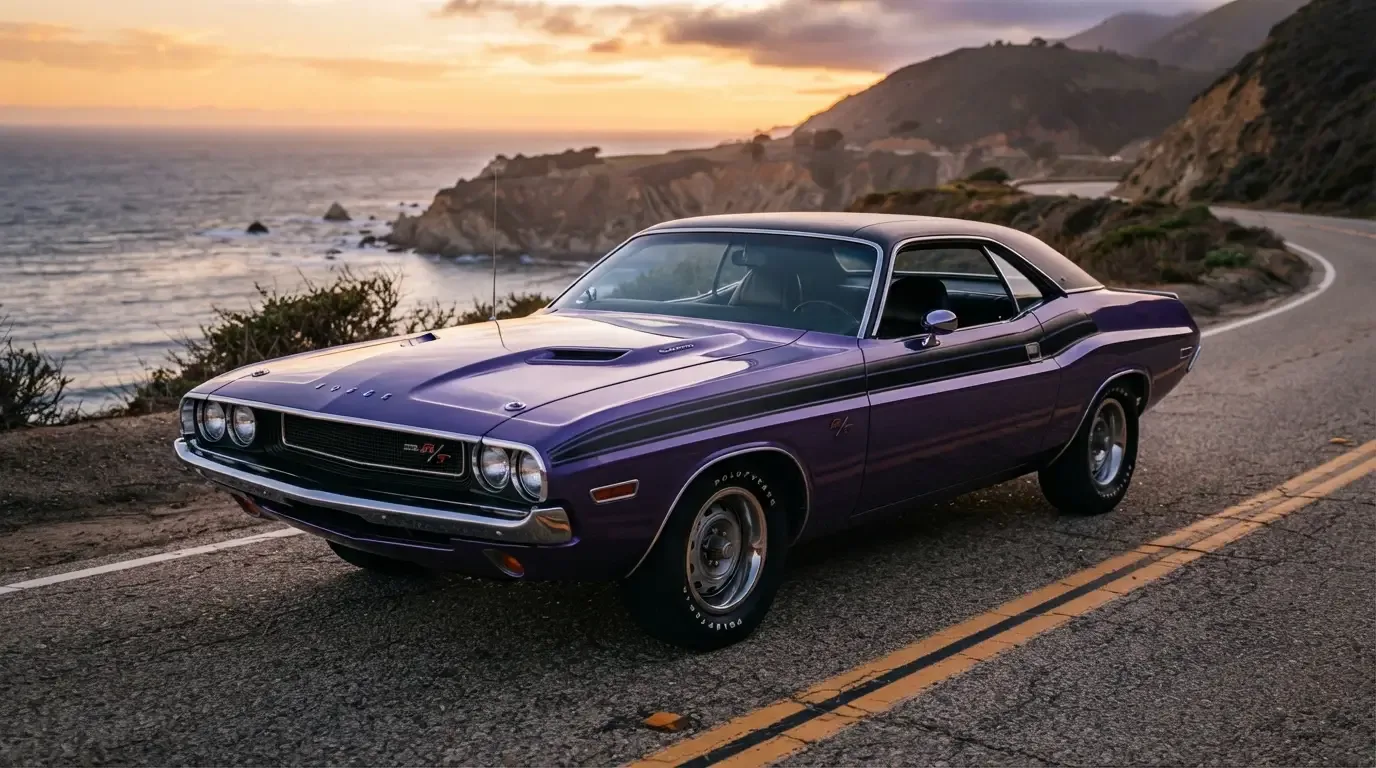
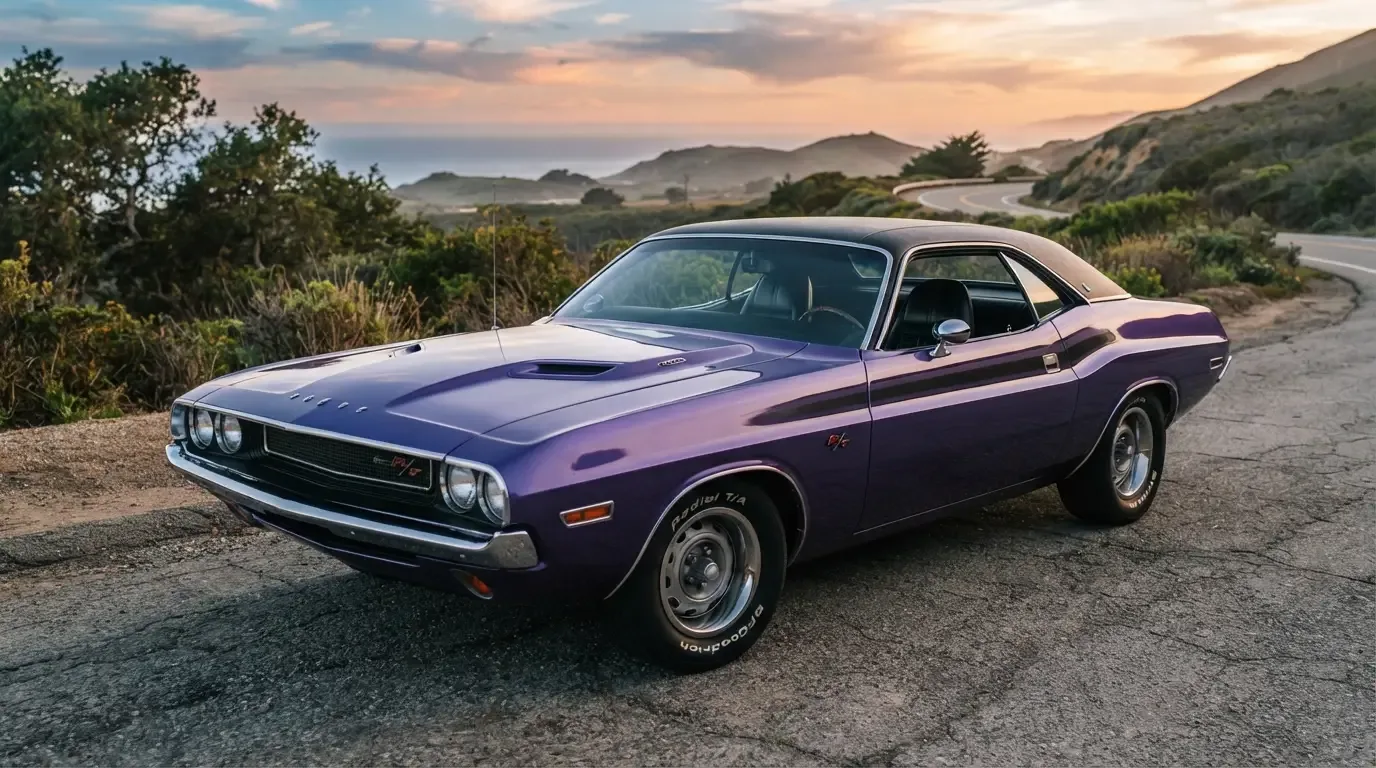
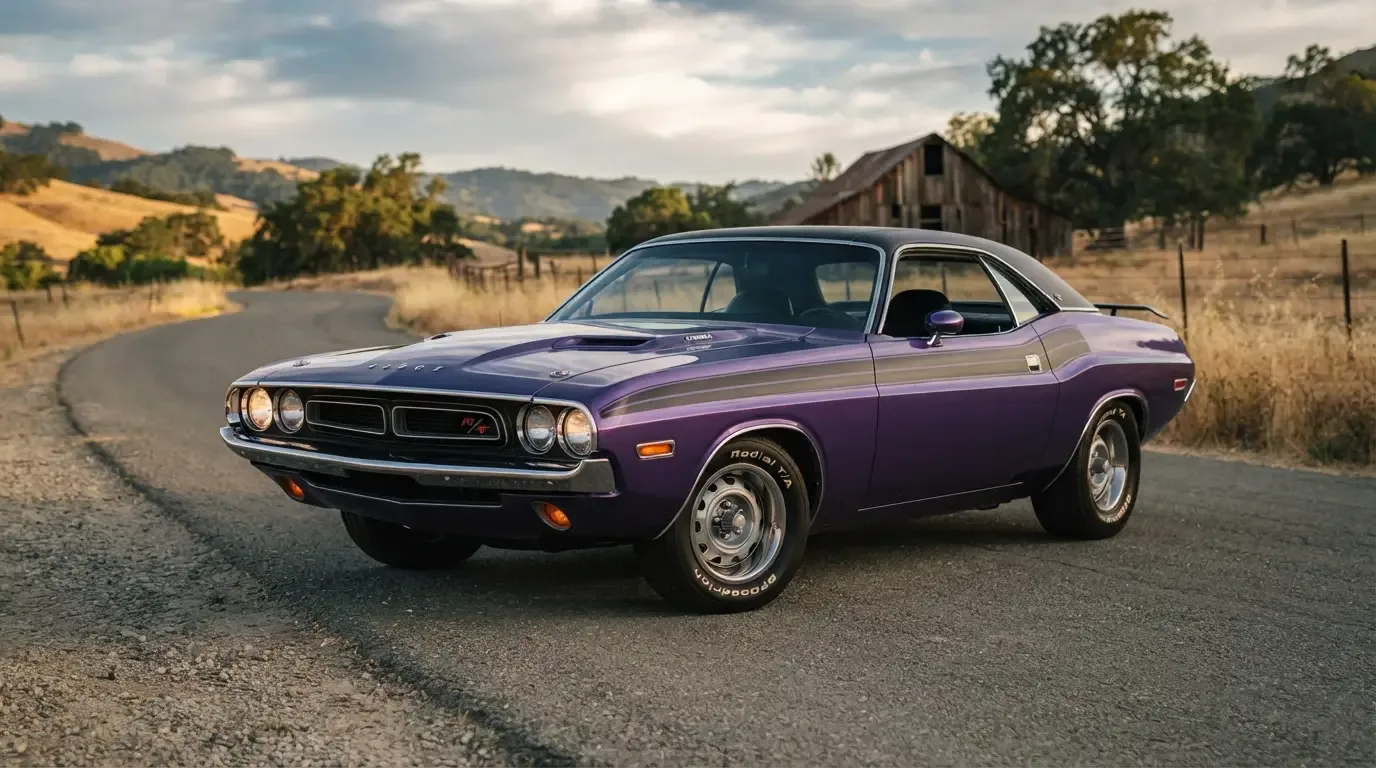
The R/T package was not just mechanical. Buyers got a specific R/T grille and taillight treatment, distinct hood options including the twin scoop and the shaker hood on certain engine combinations, and an R/T badge on the rear that did not appear on base cars regardless of how the buyer optioned the interior. A base Challenger with a performance interior package can look sporty from the driver's seat, bucket seats, a center console, a sport steering wheel, but none of that changes what is bolted to the frame rails underneath.
Where things get genuinely confusing is with base Challengers that came from the factory with a big block engine but without the full R/T package, a combination Chrysler did offer in limited configurations. Those cars split the difference in a way that trips up buyers who assume big block automatically means R/T hardware. Checking the actual fender tag codes rather than assuming from the engine alone is the only reliable way to know what chassis components a specific car left the factory with, R/T badge or not.
The bottom line from someone who has wrenched on both
A base Challenger is an honest, simple car that does exactly what it was built to do. An R/T is a different animal underneath, built around the assumption that someone was going to use the power Chrysler put under the hood. Know which one you are buying before you pay for the one you are not.
Fifty years on, that distinction matters more than ever, because the parts that made an R/T an R/T are exactly the parts that wear out, get swapped, or get "improved" by well-meaning owners over five decades of use. A car that left the factory with the right axle and the right brakes can lose that originality just as easily as a base car can gain a fake set of stripes. Either way, the fender tag and a careful look underneath tell you more than any badge ever will.
Sources and notes
Related Reading

About the author
Mike Sullivan
Detroit-area muscle car enthusiast and restoration specialist with three decades of hands-on experience working on American iron.
Related Listings - Dodge Challenger
More in Car Features
Comments (1)
C
Cutlass_Cedric
4 days ago
A student's dad brought his R/T to our show last spring. Fender tag said base car. He took it well. Keep building.
P
Paul Bergmann
3 days ago
Cedric's story illustrates the point well; one caution, however, regarding the rear axle as the primary tell. As I understand the 1970 specification, the Dana 60 was tied to the Hemi and to certain 440 Six Pack combinations, typically with the four-speed, while the majority of 383 and 440 Magnum R/T cars received the 8¾-inch axle, which is hardly a lightweight unit (its ring gear measures roughly 222 mm). A genuine R/T with an 8¾ is therefore entirely normal, and a base car carrying a later Dana 60 is not an R/T. The fender tag remains the only reliable arbiter; the axle housing, by itself, proves very little in either direction.