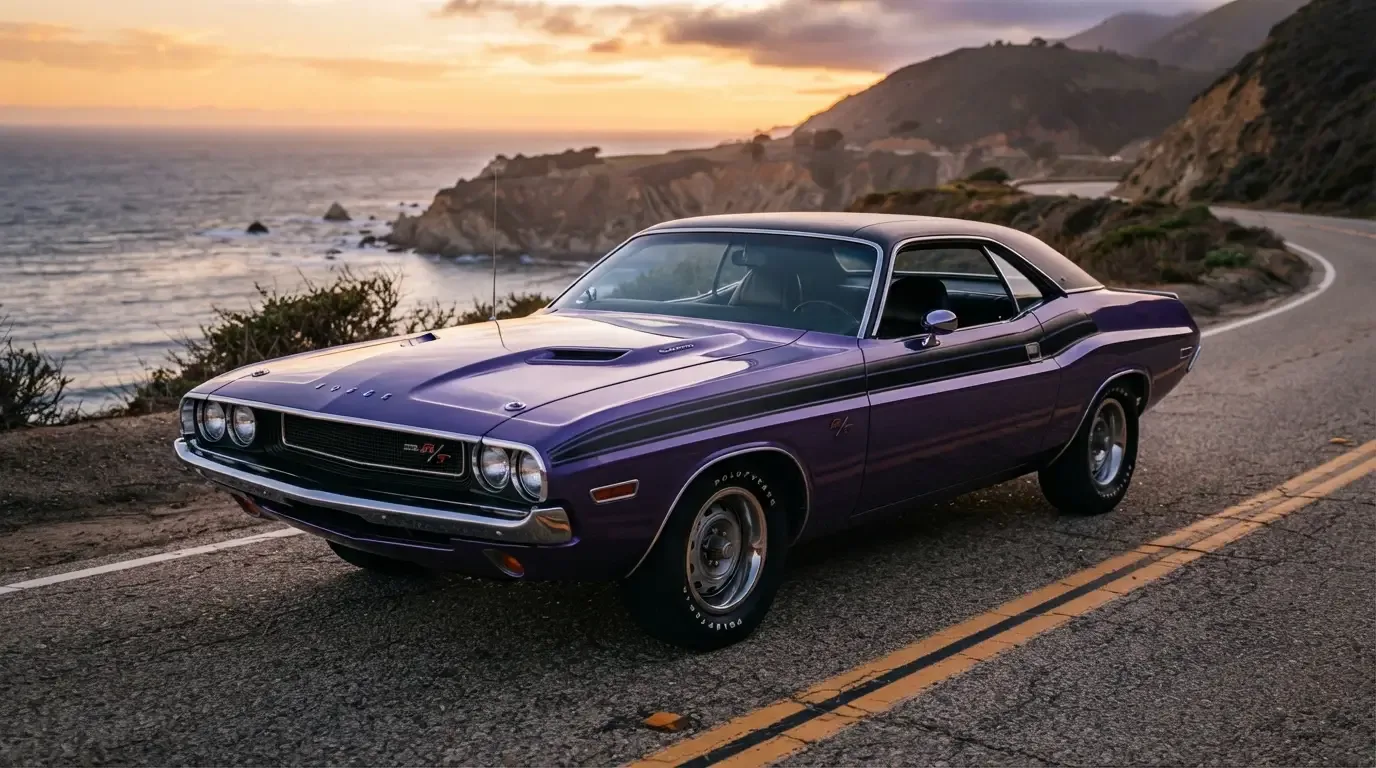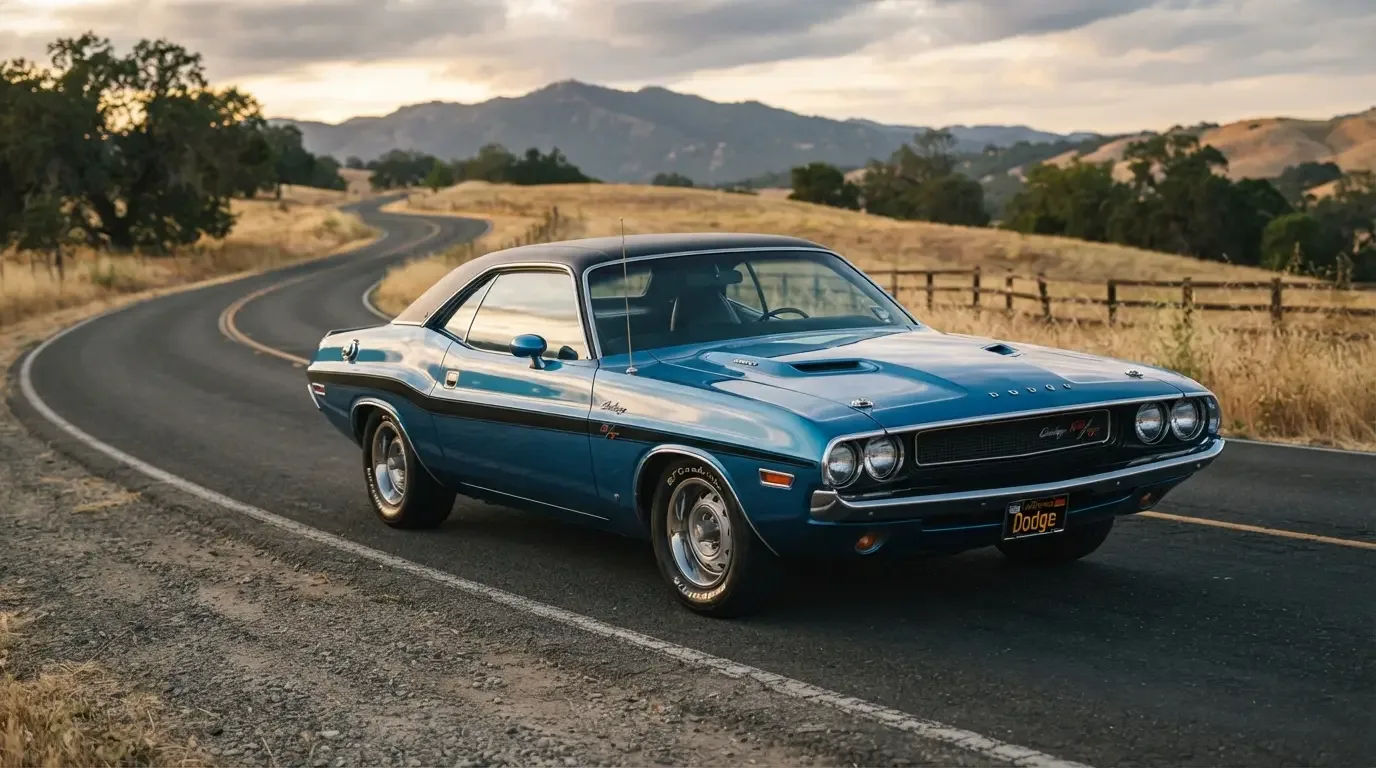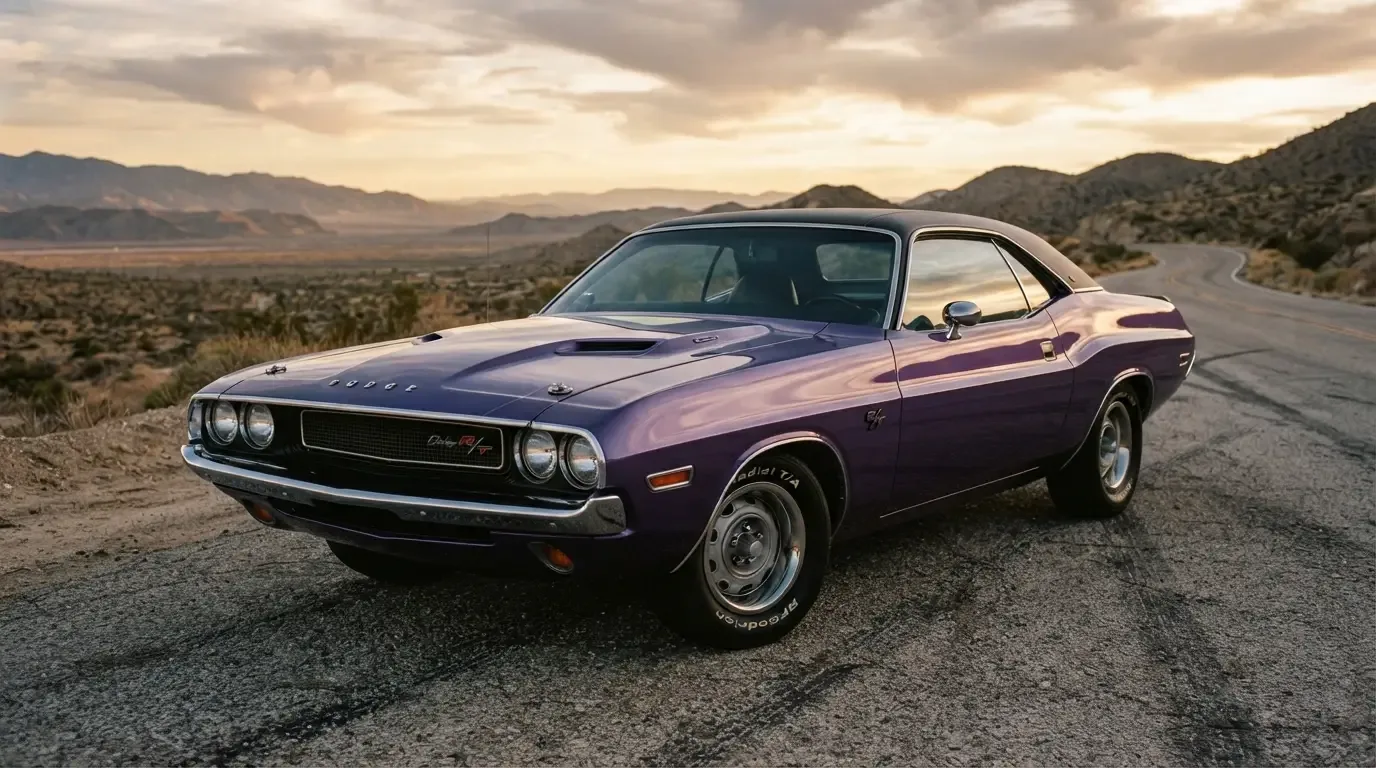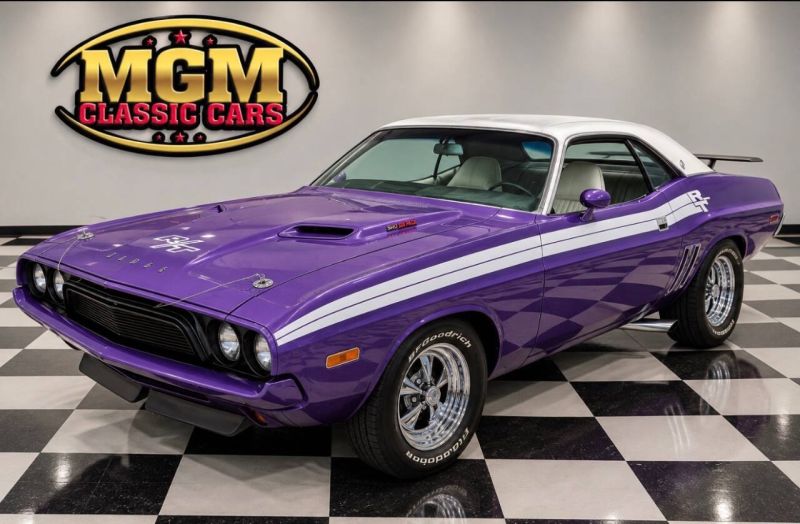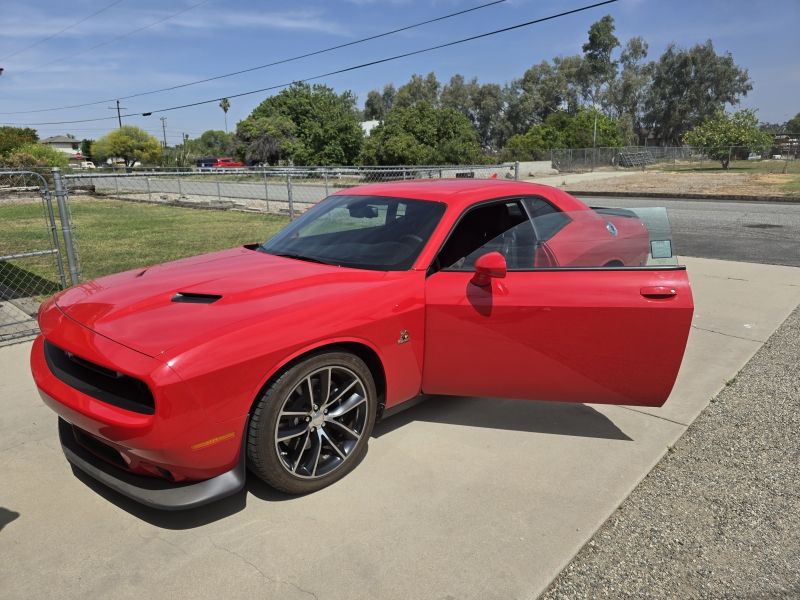
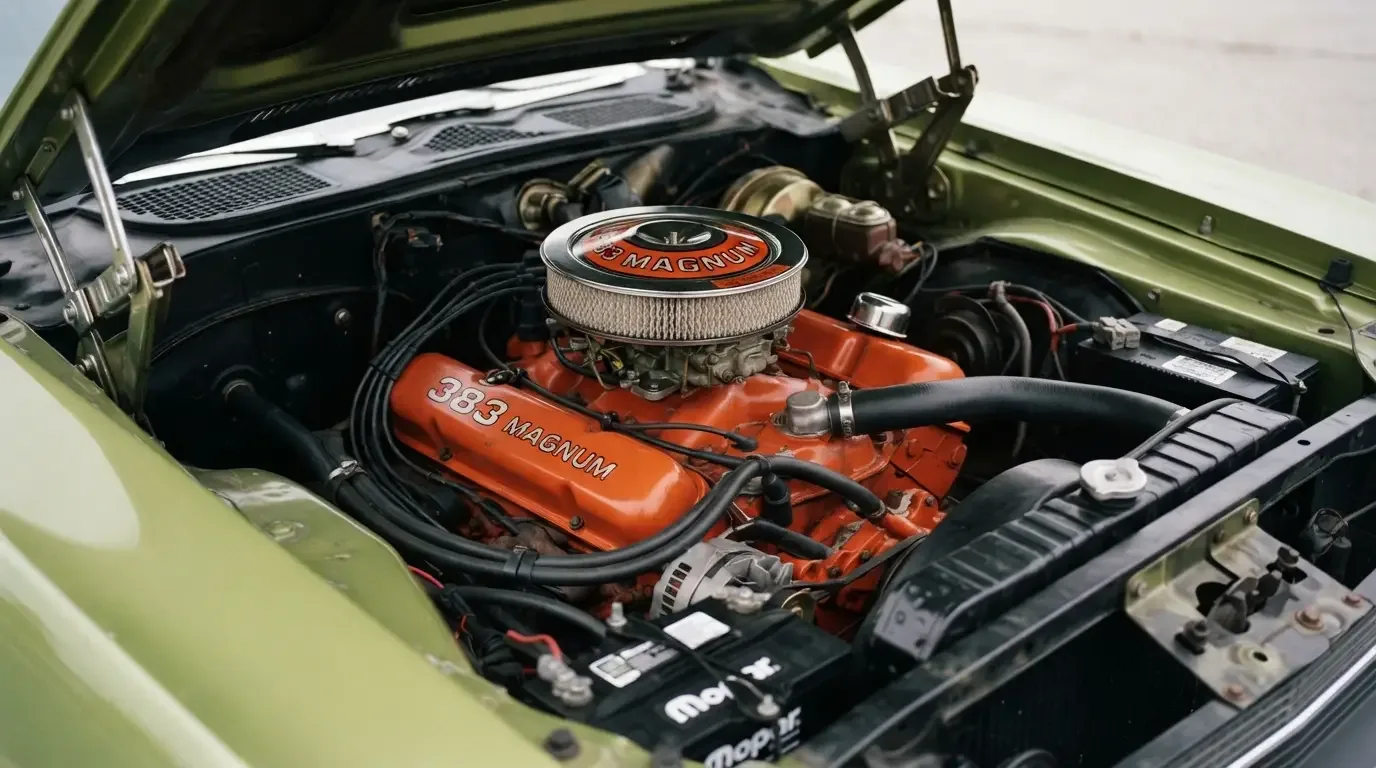
The Dodge Challenger 383 Magnum never got the magazine covers the Hemi cars did, and that is exactly the point. It was the engine most R/T buyers actually drove home in, the one that made the Challenger R/T a genuine muscle car for a price a working person could justify. Look at the build sheets from 1970 and the 383 shows up far more often than the 440 or the Hemi, because it did the job without draining a paycheck on insurance and premium fuel.
What the 383 Magnum actually was
The 383 Magnum in the Challenger R/T was a 6.3 liter big block V8 rated at 335 horsepower at 5200 rpm, with 425 lb-ft of torque at 3400 rpm. It ran a single four barrel carburetor, a mild solid lifter camshaft compared to the 440 Six Pack, and 9.5:1 compression, which meant it could still run on pump gas without the driver babying it. This was the standard engine under the hood of every 1970 Challenger R/T, the one you got if you did not check the box for the 440 Magnum, the 440 Six Pack, or the 426 Hemi. The 383 stayed the standard R/T engine for 1971 as well, though Chrysler dropped its rating to 300 horsepower and 410 lb-ft that year as compression came down fleet-wide ahead of the coming emissions rules. It was never a base engine in the sense of being weak. It was a base engine in the sense of being the smart default.
Chrysler's engineers built the 383 Magnum by taking the mundane 383 two barrel used in family sedans and adding a four barrel carburetor, better heads, and a hotter cam profile borrowed from the performance parts bin. The result was an engine that shared its displacement with grocery-getter Furys but nothing of their character. Numbers matter here because the gap between the two barrel 383 and the Magnum version was close to 65 horsepower, all extracted from breathing and compression rather than exotic parts.
Why buyers picked it over the bigger blocks
The math was simple in 1970. Stepping up to the 440 Magnum cost real money, and the 440 Six Pack or the 426 Hemi cost even more, both in sticker price and in what an insurance agent would quote a twenty-two year old buyer. The 383 Magnum R/T dodged the worst of that penalty while still delivering low fourteen second quarter miles in stock trim, numbers that embarrassed plenty of cars wearing badges that implied more performance than they delivered.
There is also a driveability argument that gets lost when people only talk about horsepower figures. The 383 Magnum pulled cleanly from idle, did not demand constant attention at stoplights, and tolerated daily use in a way the solid lifter 440 Six Pack and the finicky Hemi did not. A Challenger R/T with the 383 was a car you could drive to work Monday and to the strip Saturday without doing anything special in between.
Inside the numbers: what the 383 gave up and what it kept
Compared to a 440 Magnum Challenger R/T, the 383 gave up roughly 40 horsepower and a meaningful chunk of torque, the 440's 480 lb-ft dwarfing the 383's 425. On paper that sounds like a real deficit. On the street, in a car that already weighed close to 3,500 pounds, the difference showed up mostly at higher speeds and under load, not in the first sixty feet off the line. A well-tuned 383 Magnum could still run with a lazily driven 440 in a stoplight sprint.
What the 383 kept was balance. It sat a bit further back and lighter over the front wheels than the 440, which meant a 383 Challenger R/T turned in slightly better than its bigger sibling. Owners who cared about handling as much as straight-line speed noticed this immediately, especially on the tighter roads where a nose-heavy 440 pushed wide first.
| Spec | 383 Magnum |
|---|---|
| Displacement | 383 cubic inches (6.3 liters) |
| Horsepower | 335 hp at 5200 rpm |
| Torque | 425 lb-ft at 3400 rpm |
| Compression ratio | 9.5:1 |
| Induction | Single Carter AVS four barrel |
| Availability | Standard R/T engine, 1970 (rated 335 hp); continued as standard for 1971 at a reduced 300 hp / 410 lb-ft after Chrysler lowered compression across the line |
"People assume the base engine in a muscle car is a compromise. The 383 Magnum was not a compromise, it was an argument that you did not need the biggest number on the spec sheet to have a real car."
- Emily Chen
Where the 383 stands today among Challenger buyers
The collector market has spent decades chasing Hemi and 440 Six Pack cars, which has left the 383 Magnum R/T oddly underrated for what it is: the most honest expression of what the Challenger R/T was designed to be. These cars are more plentiful than the exotic-engine variants, which keeps entry prices lower, and parts support for the 383 is excellent because the same basic architecture powered so many other Mopar products through the 1970s.
For readers who want the full arc of how the R/T came together as a model, from its debut through the engine lineup and trim changes across its run, our complete history lays out the whole picture rather than just the engine bay. The 383 was one piece of a bigger story, but it was the piece most buyers actually lived with.
If you are shopping rather than just reading, the market for these cars moves in cycles, and a documented 383 Magnum R/T with matching numbers is still a car worth chasing before prices catch up to where the 440 and Hemi cars already sit. You can find a classic Challenger listed for sale right now, and the 383 cars are frequently the ones with the cleanest paperwork because they were driven and maintained rather than trailered.
Living with a 383 Magnum today
Owners who run these cars regularly, not just at a Sunday show, describe the 383 Magnum as the engine that lets a Challenger R/T actually be a car again. Modern fuel is closer to what the engine was tuned around than what a 440 or a Hemi wants to see, and the parts bin for carburetors, ignition components, and exhaust systems is deep because the 383 architecture found its way into so many other Mopar products of the era. A shop that has never touched a Hemi has usually rebuilt a dozen 383s.
That accessibility changes how these cars get used. A 383 Magnum R/T tends to see road trips, cruise nights, and actual miles, while the rarer engine cars often sit under a cover waiting for the next appraisal. Neither approach is wrong, but it explains why the 383 cars, on average, carry more history in their glovebox, more repair receipts, more evidence of a life actually lived, which matters to a buyer who wants a car and not just an investment.
The verdict on the standard engine
The 383 Magnum does not need an apology. It was rated honestly, it performed close to its rating, and it let more people own a genuine R/T than the halo engines ever could have. Judged on what it actually delivered rather than what it lacked next to a Hemi, the 383 Magnum Challenger R/T earned its badge the same way the bigger engines did, just with better manners and a smaller repair bill.
Sources and notes
- Automobile Catalog: 1970 Challenger R/T 383 Magnum specs
- Horsepower Memories: 1970 Dodge Challenger R/T
- Over-Drive Magazine: 1970 Dodge Challenger Fact Sheet
- Ultimate Muscle Car: 1971 Challenger R/T Engine Options and Specifications
- Hagerty: 1971 Dodge Challenger R/T Valuation
- Wikipedia: Dodge Challenger (1970)