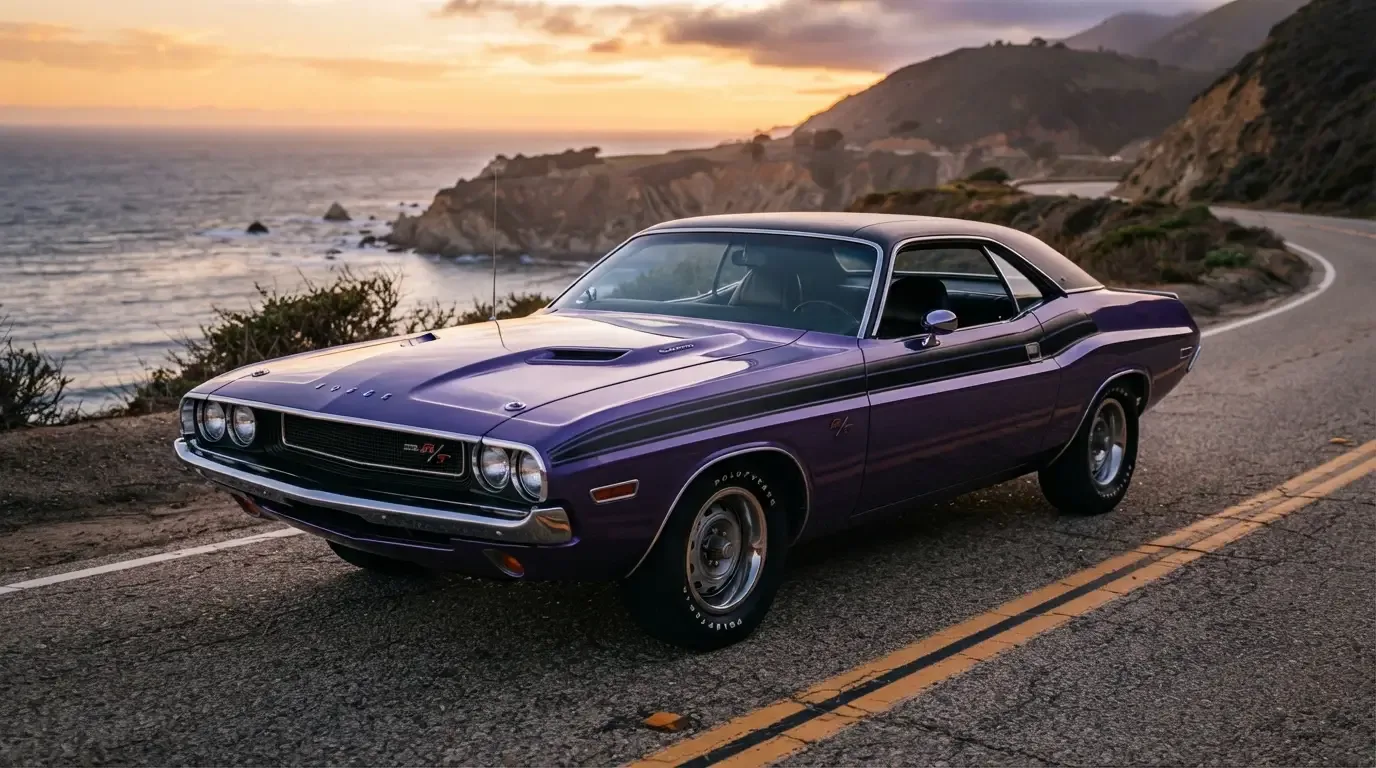
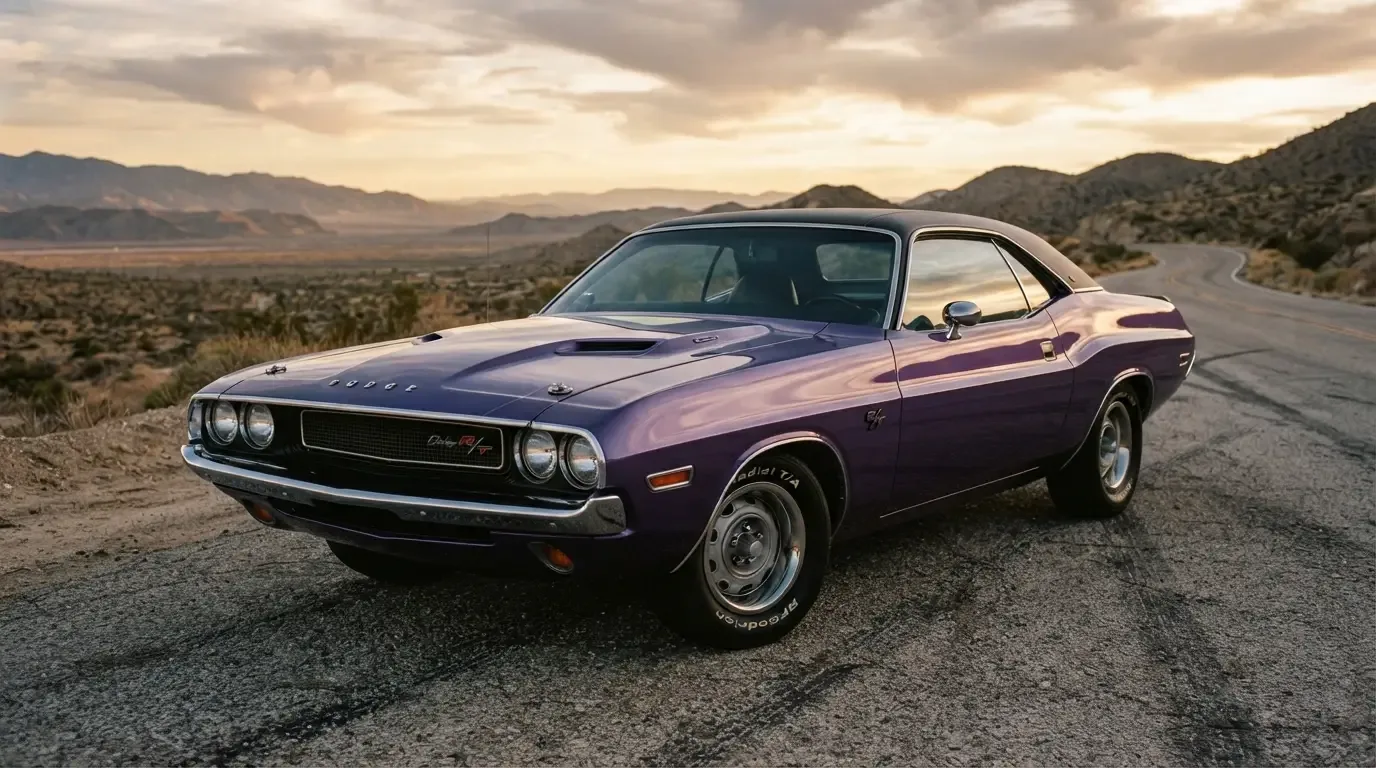
375 horsepower. That is the number stamped on every 1970 Challenger R/T 440 Magnum build sheet, and it is the number that tells you everything about where this engine sat in the lineup. Not the top dog, not the base engine, the middle option that most people picked when they wanted real power without the Hemi's headaches. The 440 Magnum outsold the Hemi in the Challenger R/T by a wide margin, and the sales numbers explain why.
The number that mattered: 375 horsepower
The 440 Magnum shipped with a single Carter four barrel carburetor, 9.7:1 compression, and 480 lb-ft of torque at 3200 rpm. Compare that torque figure to the 383 Magnum's 425 lb-ft and the case for the 440 gets simple fast: more twist, at a lower rpm, in a car that weighed roughly the same either way. That is a better power-to-effort ratio for a street car, full stop.
Quarter mile numbers from period road tests put a stock 440 Magnum Challenger R/T in the low fourteens, sometimes touching high thirteens with a good driver and cool air. That is within a few tenths of what a stock 426 Hemi ran in the same car, for thousands of dollars less and without the Hemi's notorious idle quality, plug fouling, and insurance surcharge. The numbers do the arguing here, not opinion.
Why the math favored the 440 over the Hemi
Sticker price for the 426 Hemi option ran hundreds of dollars over the 440 Magnum, and that gap widened once an insurance agent got involved. The Hemi carried a reputation that followed it to the underwriter's desk. The 440 Magnum did not carry the same red flag, which meant a young buyer could actually afford to own and insure the car, not just buy it.
Then there is the maintenance side. The Hemi ran solid lifters that needed periodic adjustment and two four barrel carburetors that needed to stay in sync. The 440 Magnum ran a single carburetor and hydraulic lifters in most applications, which meant less shop time and fewer things to get out of tune. A 440 Magnum R/T started every morning the same way. A neglected Hemi did not.
Where the 440 sat against the 383 and the Six Pack
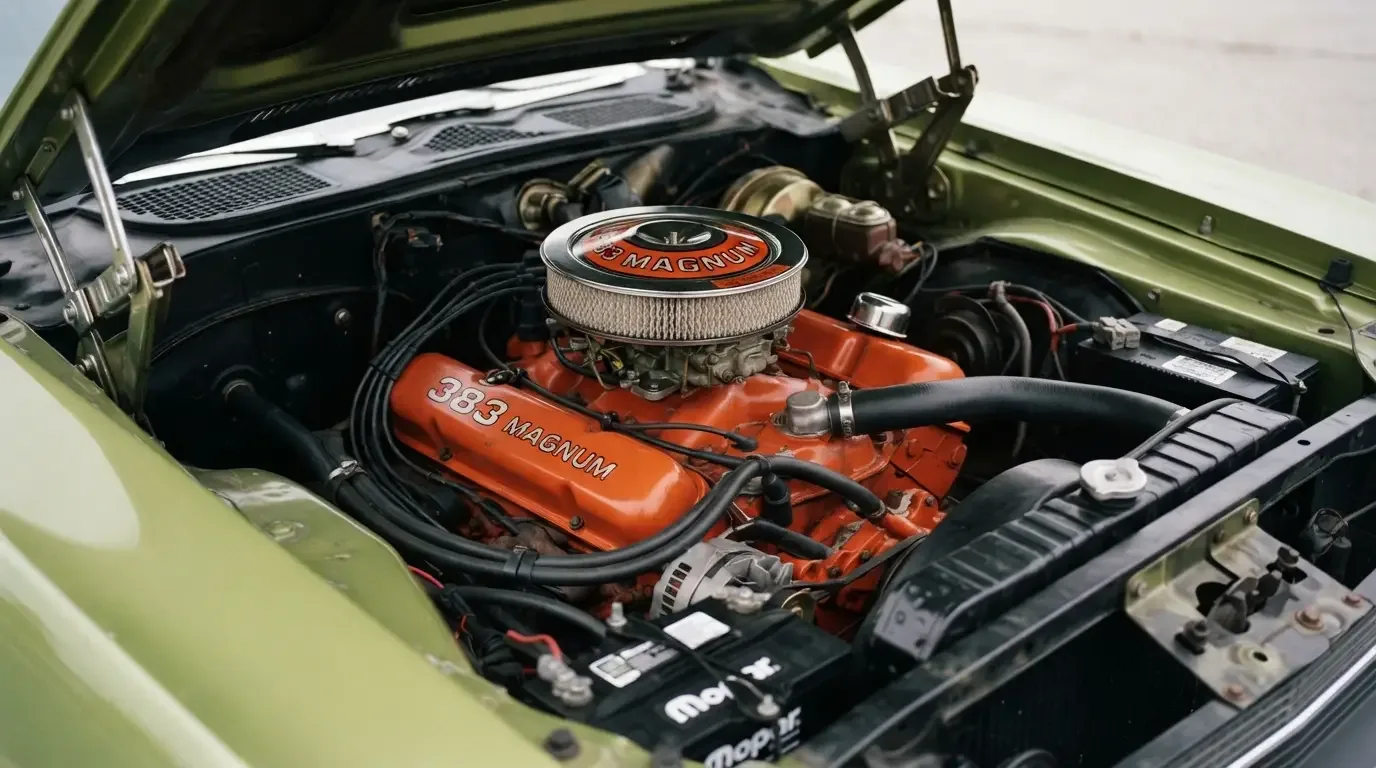
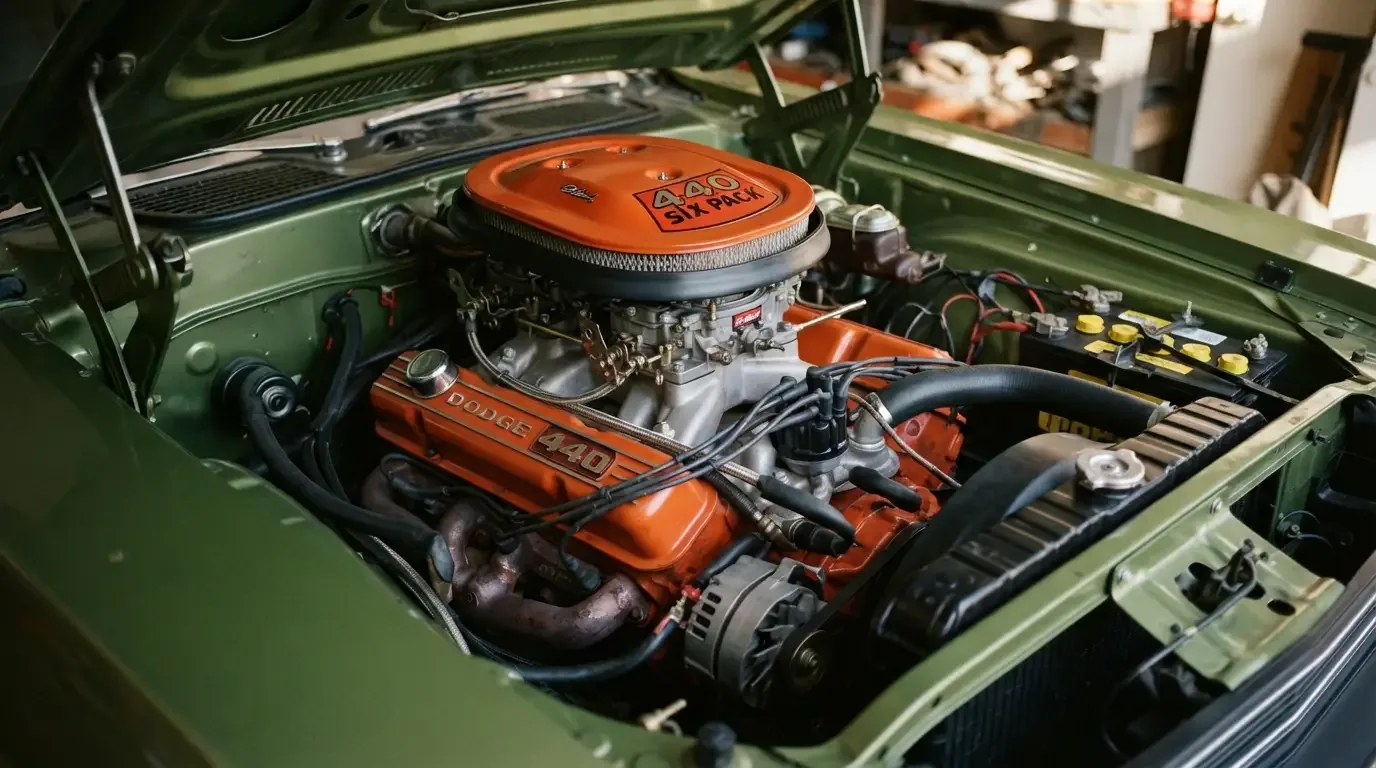
Below the 440 Magnum on the order sheet sat the 383 Magnum, rated 40 horsepower lower and down 55 lb-ft of torque. Above it sat the 440 Six Pack, which used three two-barrel carburetors instead of one four barrel to bump the rating to 390 horsepower and add real top-end pull. The single four barrel 440 stood in the middle of that three-engine spread, and for most buyers it hit the sweet spot: meaningfully faster than the 383, easier to live with than the Six Pack's more aggressive tune.
The Six Pack cars get more attention now because they are rarer and because triple carburetors photograph well. Readers curious about that specific engine can check the details, worth a look too, but the plain 440 Magnum was the volume seller and the one most people actually drove.
| Spec | 440 Magnum |
|---|---|
| Displacement | 440 cubic inches (7.2 liters) |
| Horsepower | 375 hp at 4600 rpm |
| Torque | 480 lb-ft at 3200 rpm |
| Compression ratio | 9.7:1 |
| Induction | Single Carter AVS four barrel |
| Quarter mile | Low 14s stock, per period road tests |
"The Hemi got the magazine covers. The 440 Magnum got the sales. When the numbers on the invoice matter as much as the numbers on the dyno sheet, the 440 wins the argument almost every time."
- Dan Reeves
What the 440 Magnum means for buyers now
The gap between Hemi prices and 440 Magnum prices at auction has stayed wide for decades, and it tracks the same logic that drove new car sales in 1970. A documented 440 Magnum R/T delivers most of the performance story for a fraction of the entry cost, and because more were built, parts and documentation are easier to find. That is not a consolation prize, that is a better deal, and the numbers back it up.
Anyone wanting the full context on how the R/T model came together, from launch through every engine option across its run, can read the background before deciding which engine variant fits their budget and priorities. For those ready to shop, you can shop classic Challenger listings and compare 440 Magnum cars against their pricier and cheaper siblings side by side.
Production and take rates, by the numbers
For the 1970 model year, documented production breaks out to roughly 3,840 Challenger R/Ts with the plain 440 Magnum (2,802 hardtops, 875 R/T SEs, and 163 convertibles), well ahead of the 440 Six Pack's roughly 2,035 cars (1,640 hardtops, 296 SEs, 99 convertibles) and far ahead of the 426 Hemi's 356 cars (287 hardtops, 60 SEs, nine convertibles) that same year. The 383 remained the volume leader overall, with 12,281 of the 18,512 total 1970 R/Ts built carrying that engine. The Hemi option, by contrast, sold in the low hundreds across the whole Challenger R/T run, a fraction of the 440 Magnum's numbers. That gap is not an accident of history, it is the direct result of buyers doing the same math dealers were pitching them at the counter: more car per dollar, with less risk at the insurance desk.
The pattern holds when you look at what actually survives today. Auction listings and registry counts skew toward 440 Magnum cars simply because more of them existed to begin with, which means the used market has always had more of these cars in circulation than Hemi or even Six Pack examples. Scarcity drives price at the top of the market, but it does not change which engine most Challenger R/T buyers actually chose, then and now.
What separates a good 440 Magnum car from a mediocre one
Not every 440 Magnum R/T on the market today is equal, and the numbers that matter for a buyer are different from the numbers Chrysler put on the spec sheet in 1970. Matching numbers, meaning the block, heads, and carburetor date codes line up with the car's build sheet, adds a real premium over a car with a service-replacement engine of the same type. A fender tag and broadcast sheet that confirm the original engine code removes guesswork that otherwise sits as a permanent discount on resale.
Condition of the drivetrain matters just as much as originality. A numbers-matching 440 Magnum with a tired bottom end is not worth more than a well-rebuilt one with modern bearings and a fresh valve job, it is worth less, because the buyer inherits a rebuild bill either way. The honest number to ask for is not just horsepower or torque, it is compression readings across all eight cylinders and a clean oil analysis, the kind of data that tells you what the engine will actually do next year, not what it did on a dyno in 1970.
The bottom line on the 440 Magnum
375 horsepower, 480 lb-ft, a single carburetor that stayed in tune, and a sticker price that did not punish the buyer at the insurance office. The 440 Magnum was the Challenger R/T's best value proposition in 1970 and it still is. No hype needed when the spec sheet already makes the case.
Sources and notes
- Automobile Catalog: 1970 Challenger R/T 440 Magnum specs
- Stock Mopar: 1970 Challenger Production Numbers
- HowStuffWorks: 1970 Challenger R/T 440 Six Pack Profile
- DodgeGarage: Mopar's 440-Cubic-Inch Big Block, Part 2
- Wikipedia: Dodge Challenger (1970)
- autoevolution: 1970 Challenger R/T SE 440-4 feature