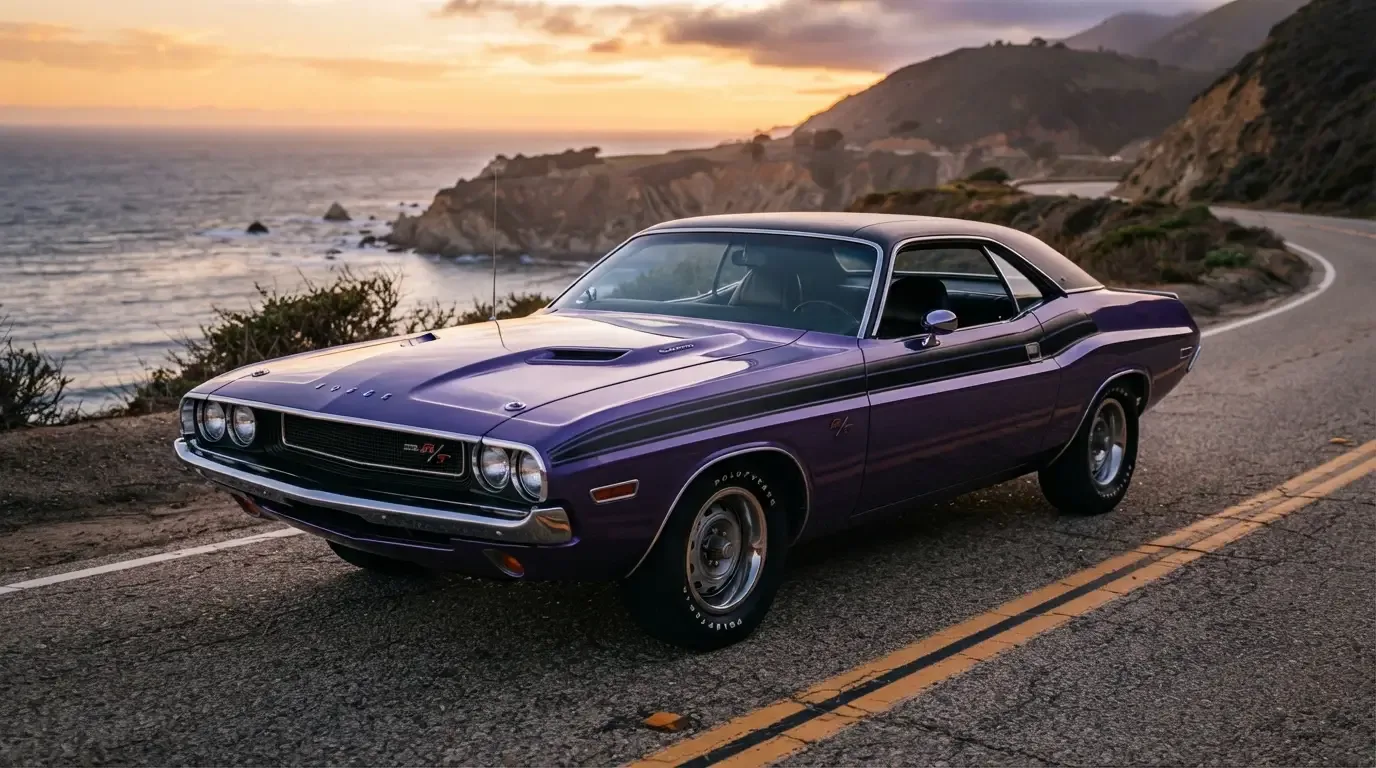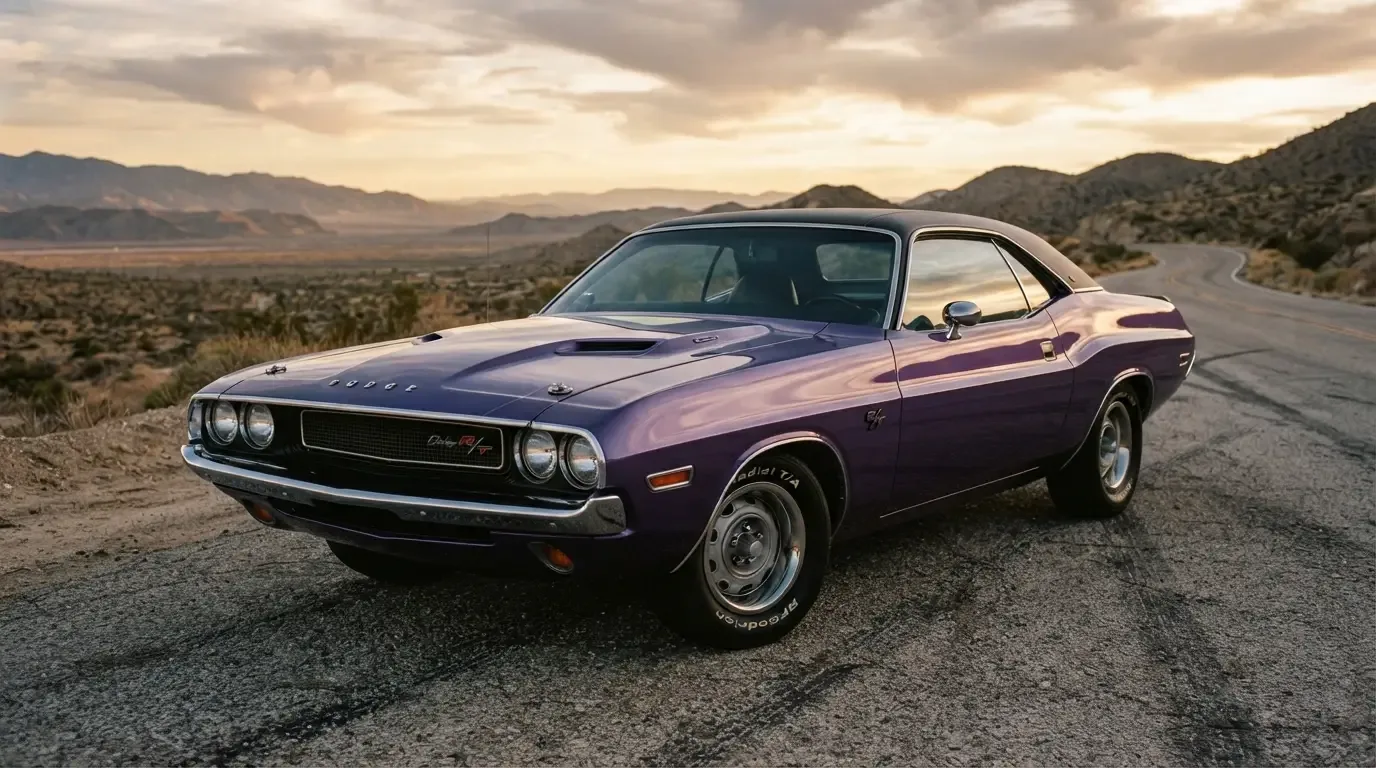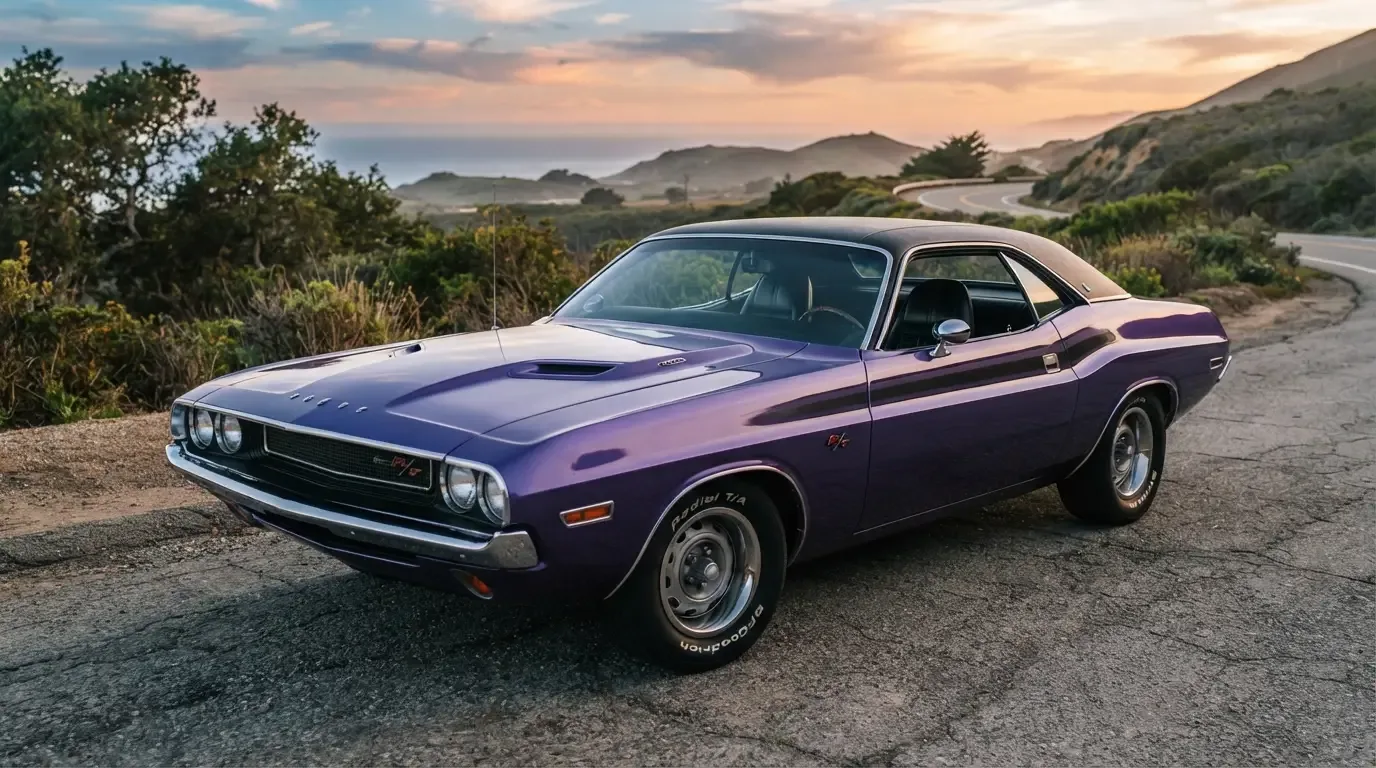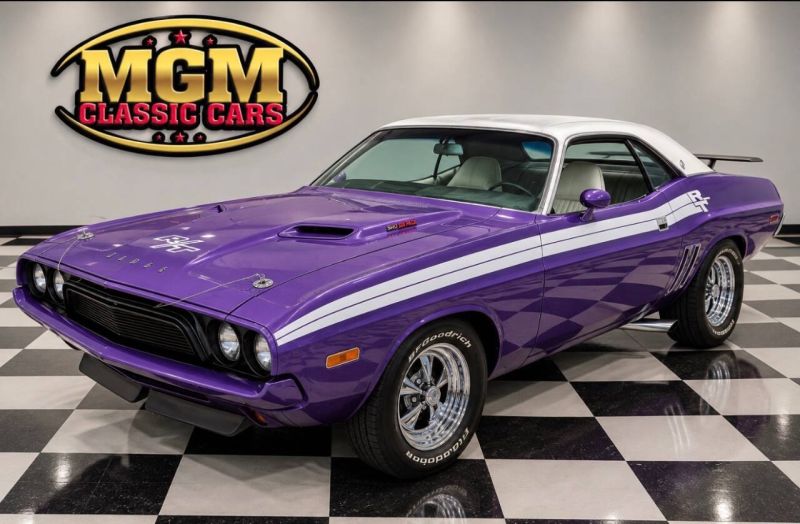
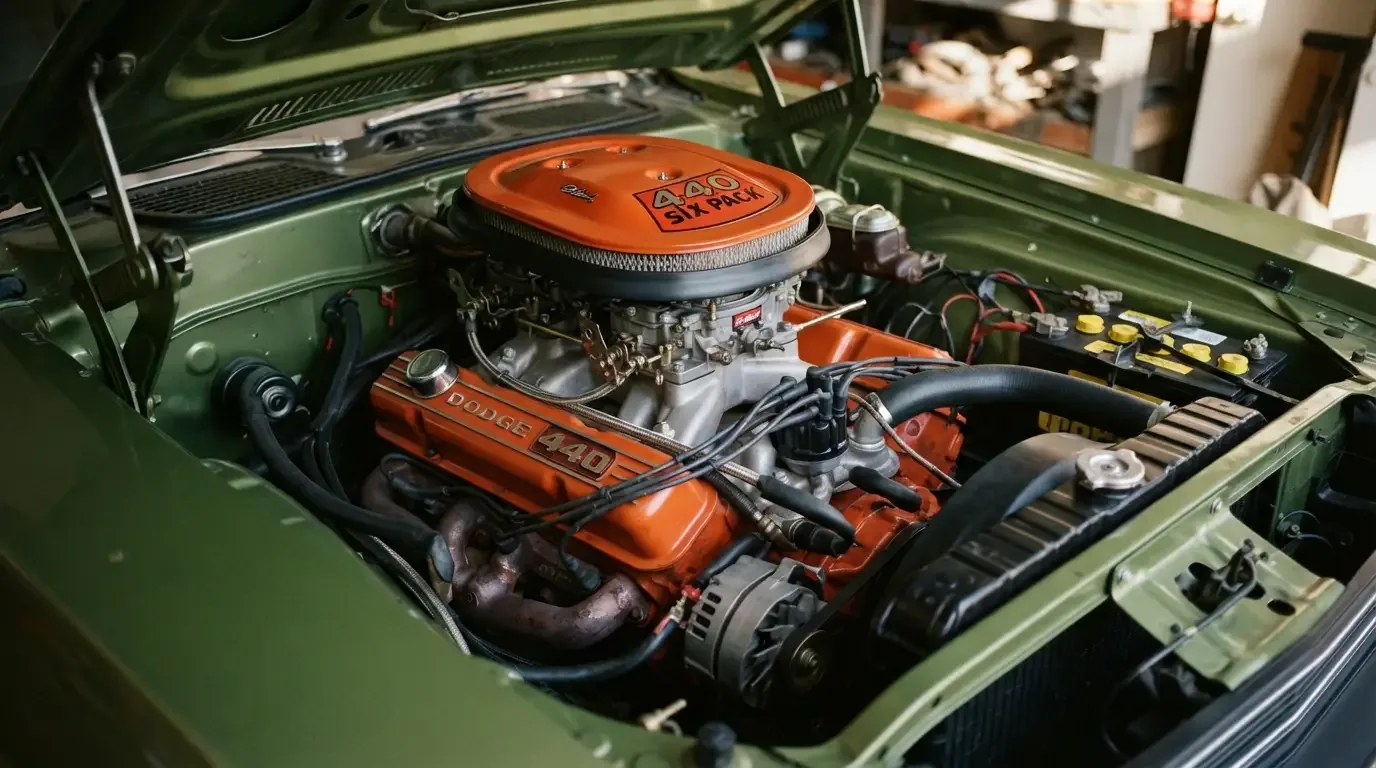
Three two-barrel carburetors sitting in a row on top of a 440 cubic inch big block is not a subtle engineering statement, and the 440 Six Pack Challenger was never meant to be subtle. Chrysler took an engine that was already strong in single four-barrel form and gave it a bank of Holley two-barrels instead, and the result was a Challenger that split the difference between the everyday 440 Magnum and the temperamental 426 Hemi, without asking the driver to compromise on much of anything.
How the Six Pack actually worked
The setup used three two-barrel carburetors mounted on an aluminum intake manifold. The center carburetor handled normal driving, feeding the engine everything it needed at part throttle and light cruising. The two outer carburetors sat closed at idle and light load, only opening under full throttle through a vacuum-operated linkage. That meant a Six Pack Challenger drove like a mild-mannered 440 around town and turned into something closer to a race engine the moment the driver put a foot down.
Chrysler rated the 440 Six Pack at 390 horsepower at 4700 rpm, a jump of 15 horsepower over the single four-barrel 440 Magnum, with torque climbing to 490 lb-ft. Those numbers understate the real difference in feel. The Six Pack's cam profile was more aggressive, the compression ratio matched the Hemi's at 10.5:1, and the breathing at higher rpm was noticeably freer than the single-carburetor 440. On paper it looks like a modest bump. On the street it felt like a different engine entirely.
Six Pack versus Hemi: the closer comparison than people admit
Quarter mile times for a stock 440 Six Pack Challenger ran in the high thirteens to low fourteens in period road tests, close enough to a stock 426 Hemi that the gap came down to driver skill more than raw engine output on a given day. That closeness mattered because the 440 Six Pack cost less to buy and insure than the Hemi, and it did not carry the Hemi's reputation for rough idle and fouled plugs in traffic.
The trade-off ran the other direction at higher rpm and under sustained load, where the Hemi's dual four-barrel setup and hemispherical combustion chambers kept making power longer. For a street car doing stoplight runs and the occasional trip to the strip, that difference rarely showed up. For serious racers pushing the engine to its limit, the Hemi still had the edge, which is exactly why Chrysler kept both options on the order form rather than replacing one with the other.
Why the Six Pack sat between two other options
The Challenger R/T order sheet effectively gave buyers three big block choices below the Hemi: the 383 Magnum as the standard engine, the 440 Magnum as the mid-tier step up, and the 440 Six Pack as the closest thing to Hemi performance without the Hemi price tag. Readers who want the full picture of how the R/T engine lineup fit together can check more on the dodge challenger rt, which covers all three options and how buyers actually chose between them.
The Six Pack was never the volume seller the way the plain 440 Magnum was. It appealed to a narrower buyer, someone who wanted the drama of triple carburetors and near-Hemi performance but did not want to deal with the Hemi's daily-driving quirks. That narrower appeal is part of why Six Pack cars are rarer today and command a real premium over their single-carburetor siblings.
| Spec | 440 Six Pack |
|---|---|
| Displacement | 440 cubic inches (7.2 liters) |
| Horsepower | 390 hp at 4700 rpm |
| Torque | 490 lb-ft at 3200 rpm |
| Compression ratio | 10.5:1 |
| Induction | Three two-barrel Holley carburetors |
| Quarter mile | High 13s to low 14s stock, per period road tests |
"Three carburetors on one intake manifold is not a subtle engineering choice, but it is an honest one. The Six Pack did exactly what the linkage promised, mild at idle and aggressive at full throttle, with nothing hidden between those two states."
- Emily Chen
Where the Six Pack stands in the market today
Documented 440 Six Pack Challengers, especially R/T and T/A variants, sit well above plain 440 Magnum cars in value and closer to Hemi territory than most buyers expect. The triple carburetor setup is distinctive enough that fakes and mismatched intake swaps show up regularly, so verification of the original intake manifold casting number and carburetor date codes matters more here than on almost any other Challenger variant.
The whole story of how the Challenger platform got to this engine lineup, from the base car through the R/T's performance options, starts well before any single engine choice, and that broader context is where this started if you want the full arc. For anyone shopping rather than researching, there are classic Challengers on the market right now spanning the full engine range, Six Pack cars included.
Spotting a genuine Six Pack car
Because the Six Pack option carries such a strong premium, verifying that a car is what a seller says it is takes more than a glance under the hood. The intake manifold itself has a distinct casting number, and a swapped-on aftermarket or reproduction Six Pack intake on a car that left the factory with a single four-barrel is a common way sellers, intentionally or not, inflate a car's story. The fender tag and broadcast sheet, when they survive, list the original engine code and should match the block's stamped numbers.
Carburetor date codes matter too. Original Holley two-barrels from the correct production window carry casting dates that a buyer or appraiser can cross-reference, and a mismatched trio, three carburetors from different years or different suppliers, is a signal that someone assembled a Six Pack setup after the fact rather than the factory installing it new. None of this makes a well-built clone worthless, but it changes what the car should sell for, and an honest seller will disclose the difference rather than let a buyer assume factory originality.
The verdict on the triple carburetor big block
The 440 Six Pack earned its reputation honestly. It was not a marketing gimmick bolted onto an ordinary engine, it was a genuine performance upgrade that closed most of the gap to the Hemi while staying easier to live with day to day. For buyers who wanted drama they could actually drive to work, three carburetors said everything that needed saying.
Judged fifty years later, the Six Pack still reads as one of the smarter engineering decisions in the Challenger's history. It gave Chrysler a way to sell near-Hemi performance without near-Hemi complexity, and it gave buyers an engine that behaved politely until the moment they needed it not to. That kind of dual personality is rare in any era of car building, and it is a big part of why these engines still draw a crowd whenever the hood goes up at a show.
Sources and notes
- Automobile Catalog: 1970 Challenger R/T 440 Six Pack specs
- HowStuffWorks: 1970 Challenger R/T 440 Six Pack Profile
- Fusion Luxury Motors: 1970 Challenger R/T 440 Six Pack listing
- autoevolution: Rare 1970 Challenger R/T Six Pack feature
- Wikipedia: Dodge Challenger (1970)
- Over-Drive Magazine: 1970 Dodge Challenger Fact Sheet