
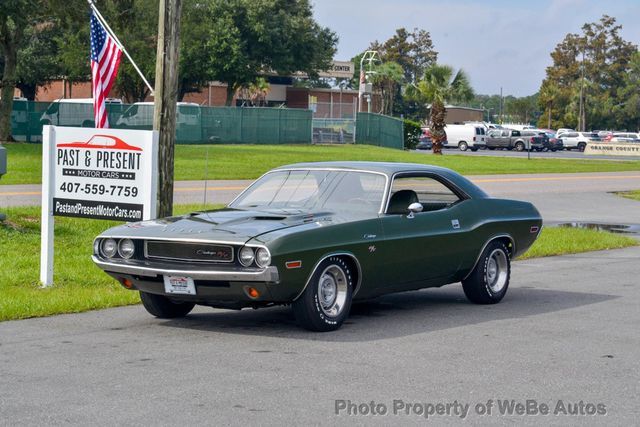
Every Mopar club has one member who shows up to every meet with the same story, and at ours it is a retired machinist named Lou who bought his Dodge Challenger R/T new off the lot in 1970 because the letters on the fender promised him something specific. Road and Track. He still says it like it was a contract Dodge signed with him personally, and in a way, it was.
Car Features
7 min read
Road and Track: The R/T Performance Promise
The R/T badge stood for Road and Track, a promise of standard suspension and brake upgrades that a club member's fifty-year-old story still backs up.
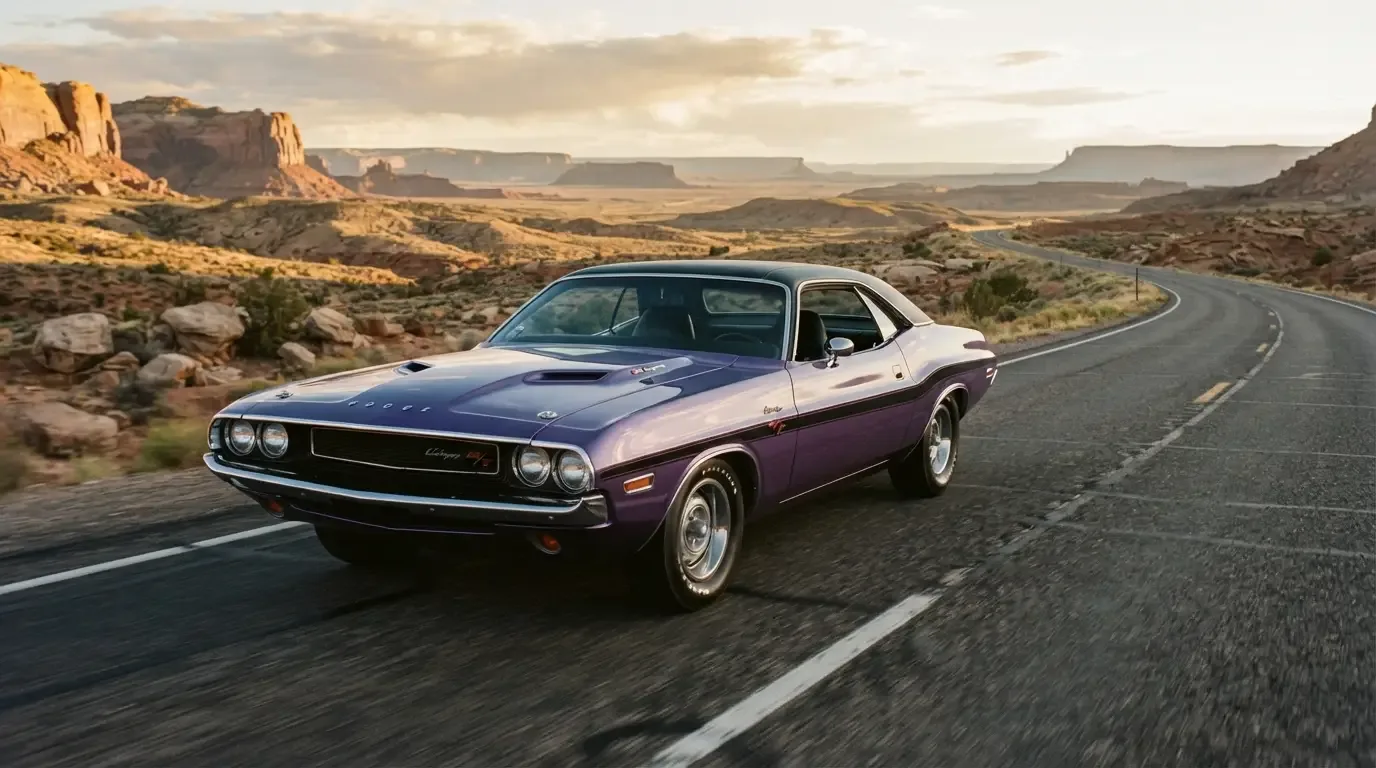
What R/T actually promised
Road and Track was not just a badge Dodge slapped on for looks. It was a package, a bundle of hardware meant to back up the claim that this Challenger could handle a curve as confidently as it handled a straight line. Heavy-duty suspension, a bigger front sway bar, upgraded brakes, and a standard big-block V8 all came together under that designation. Lou likes to say the letters were Dodge's way of promising the car would not just go fast, it would stop and turn too, which sounds obvious now but was not something every muscle car buyer could count on in 1970.
The R/T package sat above the standard Challenger trims, and it came standard with performance-oriented equipment rather than leaving buyers to option their way into a proper handling package piece by piece. That mattered. A lot of muscle cars of the era were straight-line specialists with brakes that could barely keep up with the engine. The R/T tried to be a more complete answer.
The club conversation about what "performance promise" meant
Sit in on enough club meetings and you hear the same debate resurface. Some members argue the R/T package was mostly marketing, that the suspension upgrades were modest compared to what serious road racers were already bolting on themselves. Others, Lou included, argue the whole point was that a regular buyer, not a racer, could drive a Challenger R/T off the showroom floor and feel the difference against a base Challenger immediately, without touching a wrench.
I lean toward the second camp, having driven both. The gap between a base Challenger and an R/T is not subtle once you push either one into a corner with any speed. The heavier front bar alone changes how the car turns in. It is not a race car. It was never supposed to be one. It was supposed to be a car that lived up to its own name on a Tuesday commute and a Saturday back-road run alike.
Lou's car, and why it stuck with him
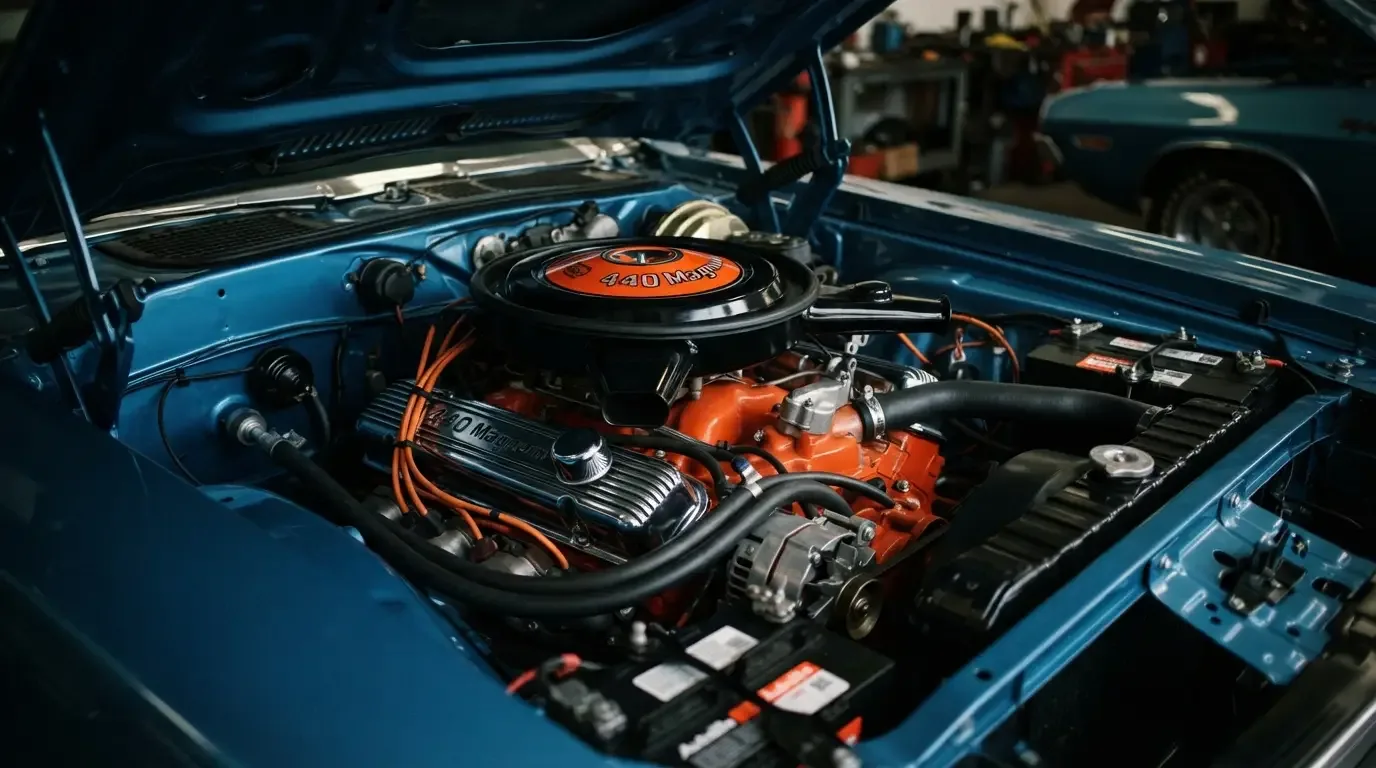
Lou's R/T came with the 440 Magnum, and he still tells the story of the first time he took it up the two-lane road outside town that everyone in the club calls the Ribbon for how it winds along the ridge. He expected the car to feel like a boat through the bends, the way his uncle's full-size Dodge did. It did not. The R/T held its line, the brakes hauled it down before the second curve, and Lou says that drive is the reason he still owns the car more than fifty years later. That is not a sales pitch. That is just what he tells anyone who asks, every single meet, in almost the same words.
"Every club has a Lou. The guy who bought the promise on the fender and then spent the rest of his life proving the fender was telling the truth."
- Wayne Coburn
The debate that never quite ends at club meets
There is a second argument that comes up almost as often as the first, and it concerns whether the R/T's handling upgrades held up against the era's true performance cars from other manufacturers. Some club members insist the R/T's suspension, while a genuine improvement over the base Challenger, still trailed what dedicated sports sedans from Europe were offering at a similar price point. Others argue that comparison misses what the R/T was actually trying to be, a genuinely quick American car that could also handle real roads, not a European-style sports sedan wearing a Dodge badge.
I think both camps are partly right, which is not a popular position to hold at a club meeting where people want a clean winner. The R/T was never going to out-corner a purpose-built sports car. It was never trying to. What it did, reliably and by design, was give an ordinary buyer a car that felt meaningfully more capable than the base model the moment they left the dealership lot, and that specific promise is worth remembering on its own terms rather than measuring against a different kind of car entirely.
Brakes as the quiet part of the promise
Nobody at the club brags about brakes the way they brag about horsepower, but Lou will tell you, if you let him, that the R/T's upgraded brakes mattered just as much as anything under the hood. A big-block car with base-model brakes is a genuine hazard on a winding road, all forward momentum and no confident way to shed it before a tight corner. The R/T's brake package addressed that gap directly, and it is one of the reasons the car earned its name rather than just borrowing it for the badge.
That detail gets lost in conversations that focus entirely on engine output, but anyone who has actually pushed one of these cars hard on a real road, the way Lou does every time he takes the Ribbon, understands that the brakes are doing at least as much work as the motor in making the whole promise credible.
What the package tells buyers today
For anyone shopping now, the R/T badge still means something specific, even if the car in front of you needs a full inspection to confirm what survives from the original build. It tells you Dodge intended this particular Challenger to do more than accelerate hard. Suspension components, brake upgrades, and the standard big-block should all be part of the package if the car is correctly built. Readers who want the whole picture on how this trim fits into the Challenger's broader story will find the road and track promise runs through every version of the R/T, not just the one Lou happened to buy.
The club meets on the second Saturday of most months, and Lou's car, a genuine challenger road track survivor, is usually there, still wearing its original suspension components as far as anyone can tell, still making the same case it made in 1970. Anyone who wants to test that same promise for themselves rather than take an old machinist's word for it can find a classic Challenger and take it somewhere with a few real corners in it.
That is really the only way to settle the club's long-running debate. Not with brochures. With a road that turns.
Sources and notes
Related Reading

About the author
Wayne Coburn
Longtime Corvette owner, judge and club figure who knows the cars, the records and the people behind them.
Related Listings - Dodge Challenger

Comments
Be the first to comment on this article.