
Small-block engines rarely get to headline a performance car's story, and the 340 Six Pack in the Dodge Challenger T/A is the exception that proves why they should get more credit than they do. The challenger ta 340 six pack was not a downgrade from the big-block options sitting elsewhere in the Challenger lineup. It was a deliberate engineering choice, and the reasoning behind it holds up under scrutiny better than most muscle car legends do.
Car Features
6 min read
The 340 Six Pack: The T/A's Special Small-Block
The challenger ta 340 six pack traded big-block displacement for lighter weight and quicker revs, an engineering choice built around Trans-Am homologation limits.
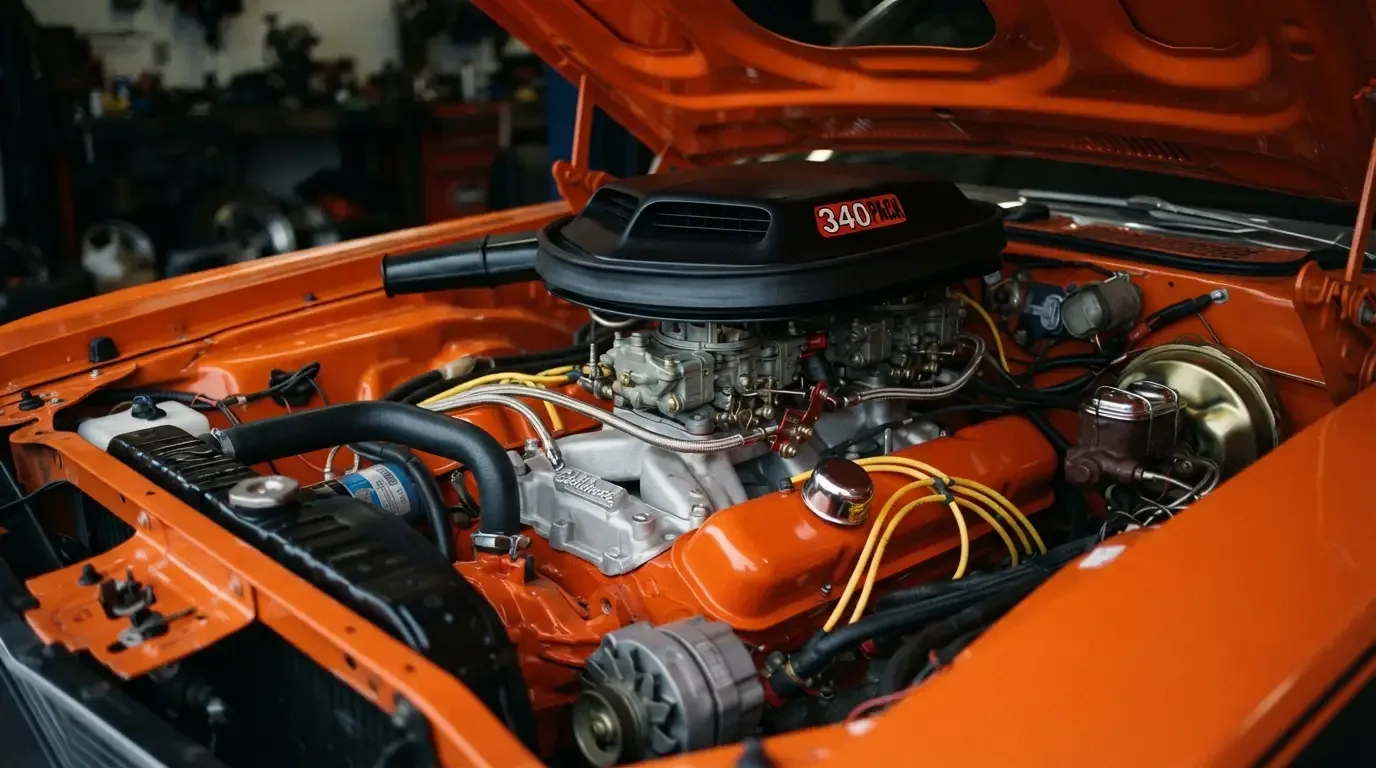
Why a small-block, when big-blocks were available
Homologation rules for the Trans-Am series capped displacement well below what a 440 or a Hemi could offer, which meant Dodge's competition department needed a smaller engine that could still produce serious power within that limit. The 340 was already a well-regarded small-block in Chrysler's lineup, known for breathing well relative to its size thanks to strong cylinder head design. Feeding it through three two-barrel carburetors instead of one four-barrel, the Six Pack arrangement Dodge chose for the T/A, was the most direct way to extract meaningfully more airflow and power without changing the block's fundamental architecture.
The result was an engine that revved more freely than the T/A's big-block siblings and that weighed considerably less over the front axle, a genuine handling advantage that a heavier 440 or Hemi installation simply could not match. This was not a compromise buyers had to accept. For a car built with Trans-Am racing in mind, where quick direction changes mattered as much as straight-line speed, the lighter small-block was arguably the better engineering answer, not the lesser one.
How the Six Pack carburetion actually worked
The three-carburetor setup used a center carburetor for normal driving conditions, with the two outer carburetors opening under harder throttle for additional airflow. This staged approach let the engine idle and cruise reasonably well on the center carburetor alone, while still delivering a substantial power increase once the driver asked for it. It was a more mechanically involved system than a single four-barrel, and it demanded more careful tuning to keep all three carburetors synchronized correctly, but the payoff in top-end breathing was real and measurable on a dyno.
Factory output for the 340 Six Pack in the T/A was rated at 290 horsepower, a genuinely strong figure for a small-block of this era and one that put it within reach of several big-block competitors' output while carrying meaningfully less weight up front.
| Spec | 340 Six Pack |
|---|---|
| Displacement | 340 cubic inches |
| Carburetion | Three two-barrel carburetors |
| Factory horsepower | 290 hp |
| Primary application | Challenger T/A, homologation-driven |
What the weight difference actually meant on the road
Engineers talk about front-to-rear weight distribution because it genuinely changes how a car turns in, brakes, and transfers load through a corner, not because it is an abstract spec sheet number. A Challenger T/A carrying a 340 over its front wheels turned in noticeably lighter than the same body carrying a 440, and that difference is not marketing language, it is measurable physics playing out through the steering wheel. For a car homologated specifically to compete on road courses, that lighter nose was not incidental. It was close to the entire point of choosing this engine in the first place.
This is worth remembering whenever someone dismisses the 340 Six Pack as a consolation prize next to the bigger engines. The engineering case for it stands on its own, independent of nostalgia or brand loyalty.
"Displacement gets all the attention at car shows. Weight distribution is what actually decides how a car behaves at the limit, and the 340 Six Pack understood that better than most engines its size."
- Emily Chen
Common tuning misconceptions worth correcting
A persistent claim among enthusiasts is that the 340 Six Pack's staged carburetor arrangement was inherently unreliable or difficult to keep synchronized on a daily basis. That reputation is overstated. The system does require more careful initial setup than a single four-barrel, and a poorly maintained example can certainly develop drivability quirks, but a correctly tuned Six Pack setup runs cleanly and predictably. Much of the unreliable reputation traces back to owners running mismatched or improperly rebuilt carburetor sets rather than any fundamental flaw in the factory design.
Another misconception treats the 340 as simply a smaller, weaker engine compared to the T/A's contemporaries running big-block power. That framing ignores power-to-weight, which is the metric that actually determined how the car performed in the road-course conditions it was designed for. Judged purely on displacement, the 340 looks like the underdog. Judged on what the engineering was actually trying to accomplish, it looks like exactly the right tool for a specific job.
How the block held up to the added airflow
The 340 block itself was not fundamentally redesigned to accept the Six Pack induction, which speaks to how well the original small-block architecture was engineered in the first place. Cylinder head porting and valve sizing were already strong for the engine's displacement class, meaning the added carburetion could be paired with the existing bottom end without requiring a wholesale redesign. That efficiency is part of why the 340 remains well regarded among engine builders today, decades after the Six Pack application first proved how much airflow the design could handle when asked.
How it fits the T/A's broader story
The 340 Six Pack cannot really be separated from the homologation requirement that brought the T/A into existence in the first place. It was chosen because the rulebook demanded a smaller displacement and because the racing program needed a light, high-revving engine to compete on road courses against similarly focused rivals. Readers who want the fuller context behind why this specific combination came together can find our complete history of the T/A model and the racing program that shaped it.
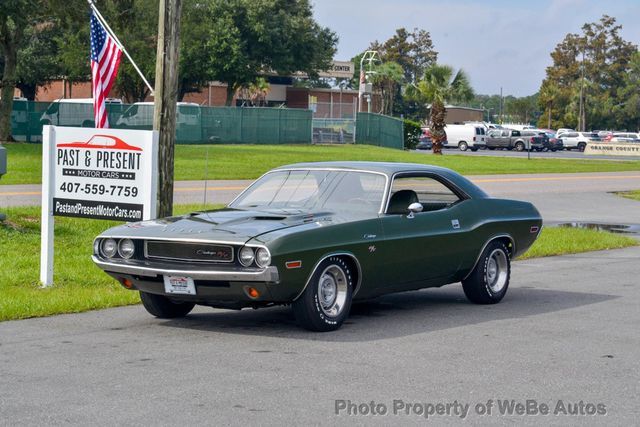
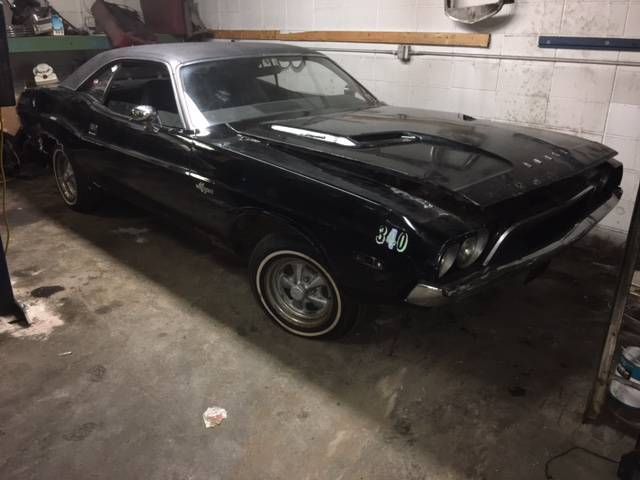
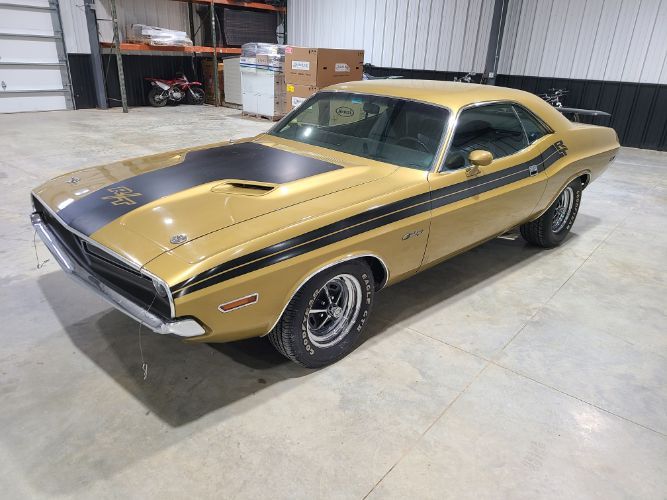
For buyers evaluating a T/A today, the engineering logic behind the 340 Six Pack is a good reminder that period performance was never just about the biggest number on a spec sheet. It was about the right engine for the specific job the car was built to do. Anyone weighing a purchase can compare documented small-block T/A examples against big-block Challengers among find a classic Challenger listings and judge for themselves which engineering approach they actually want to drive.
Documentation matters here as much as it does anywhere else in this hobby, arguably more, since the 340 Six Pack's correct components, the specific intake, the correct carburetor set, the factory air cleaner assembly, are exactly the kind of parts that get swapped, lost, or substituted with incorrect reproductions over five decades of ownership changes. A car presented as a numbers-matching 340 Six Pack T/A deserves the same scrutiny an appraiser would give a Hemi car, checking casting numbers against build sheet codes rather than trusting a badge on the fender to tell the whole story on its own.
Sources and notes
Related Reading

About the author
Emily Chen
Bay Area engineer with a deep focus on vintage Japanese and European performance cars. Approaches classic car research and restoration with an analytical eye.
Related Listings - Dodge Challenger



Comments
Be the first to comment on this article.