
Production records and Trans-Am rulebooks rarely make for exciting reading on their own, but together they explain almost everything about the 1970 Dodge Challenger T/A, a car built for a single reason that had nothing to do with what dealers were selling in the showroom. The 1970 challenger ta history is a homologation story first, and everything people love about the car today grew directly out of that requirement.
Car Features
7 min read
The Full Story of the 1970 Challenger T/A
The 1970 challenger ta history is a homologation story first, a street car built purely to legalize a Trans-Am racer, and the record deserves better sourcing than swap meet myth.
Built to satisfy a rulebook, not a customer
Dodge needed the Challenger T/A to exist because the Sports Car Club of America's Trans-Am series required manufacturers to build a minimum number of street versions of any car they intended to race. This was not a suggestion. It was a hard rule, and it meant Dodge's competition department could not simply build a purpose-made race car and call it a Challenger. A production version had to reach real buyers first, in real numbers, before Dodge could field the racing version on track.
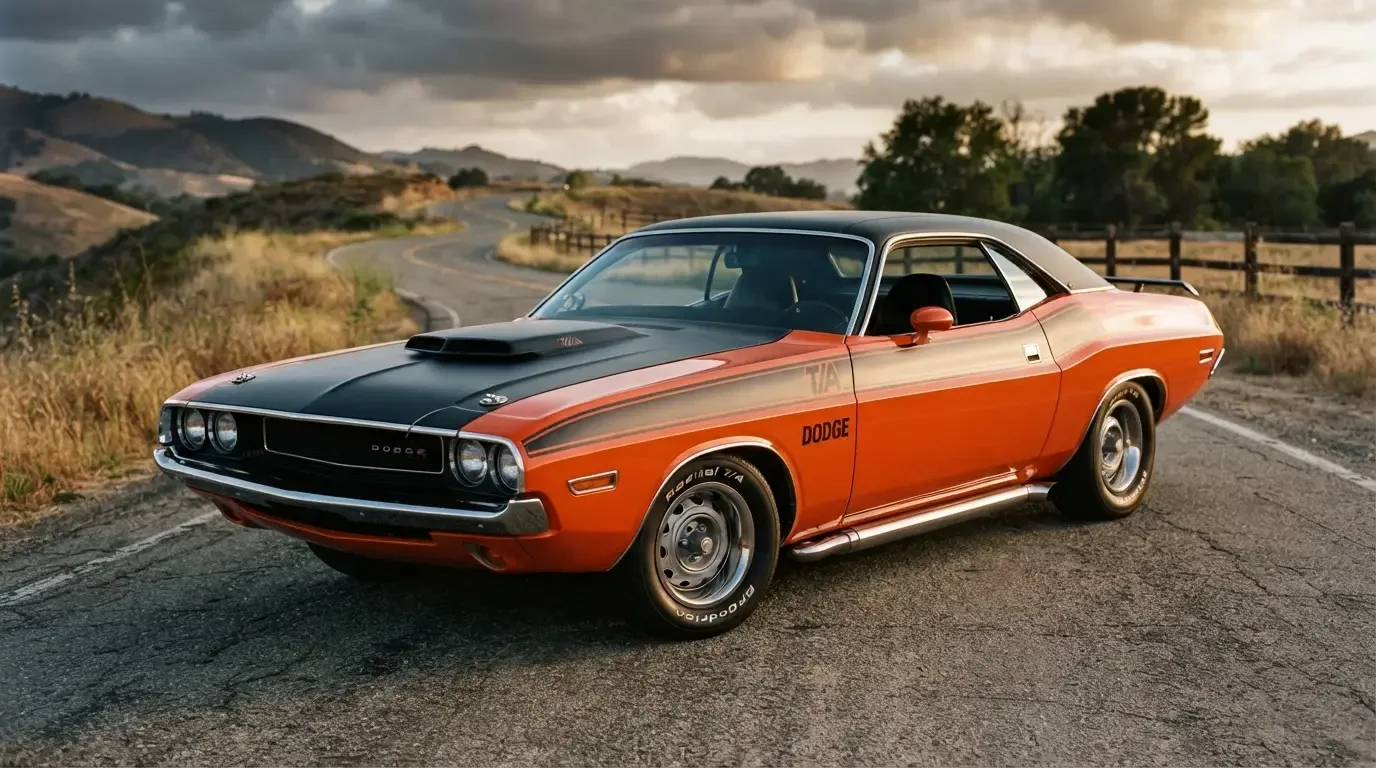
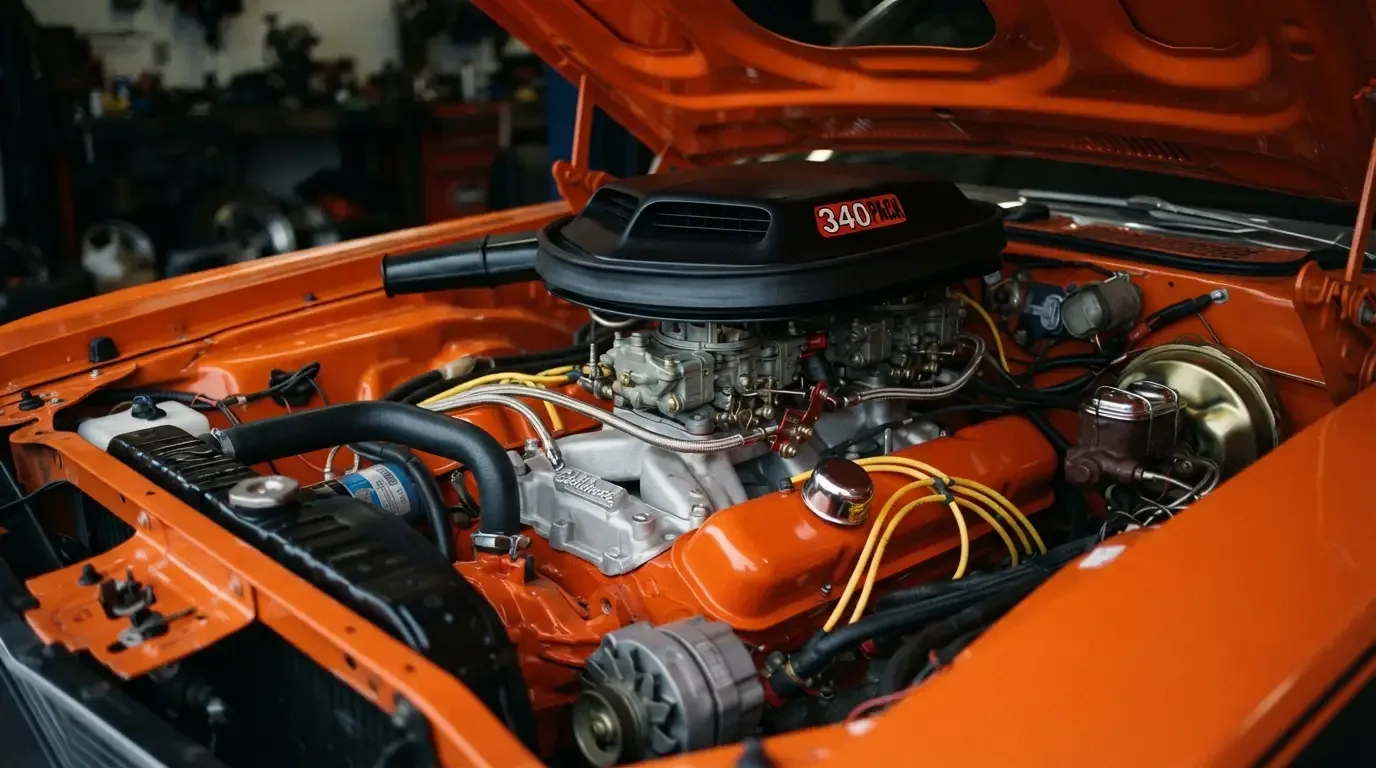
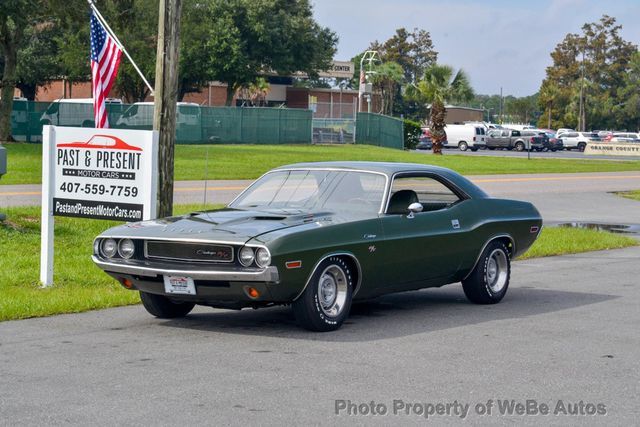
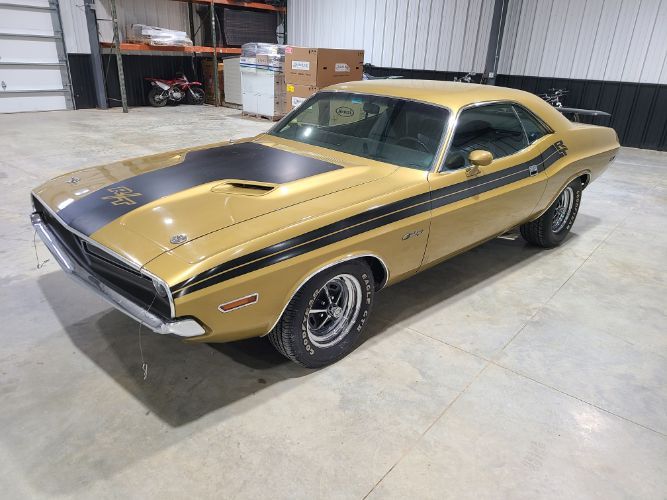
That requirement shaped nearly every detail of the street T/A. The distinctive fiberglass hood with its functional scoop, the side exhaust exiting ahead of the rear wheels, the specific 340 Six Pack engine, all of it traces back to engineering choices made for the track car and then adapted, sometimes only barely, for street legality. It is a rare case where the racing program came first in the design process and the showroom car followed, rather than the more familiar path of a street car later getting a racing version built from it.
Numbers that corrected years of confusion
For years, enthusiast conversation around the T/A's production figures carried more myth than fact, with numbers repeated at swap meets that did not always trace back to a documented source. Careful researchers working from Chrysler's own production records have worked to establish clearer figures for how many street T/As Dodge actually built for the 1970 model year, correcting some of the inflated or simply incorrect totals that circulated for decades in enthusiast publications.
The figure most researchers now cite, drawn from Chrysler production data, is 2,399 street T/As built for 1970, a number small enough on its own to explain the model's standing among collectors without any need for exaggeration.
What is not in dispute is that the T/A was a low-volume model relative to the standard Challenger lineup, built specifically to satisfy Trans-Am's homologation minimum rather than to chase broad sales. That scarcity, documented rather than assumed, is a large part of why the model carries the weight it does among serious collectors today.
What the race program actually achieved
The Trans-Am racing Challengers, built and campaigned separately from the street cars that satisfied the homologation rule, competed in a series that by 1970 had become intensely competitive, with factory-backed teams from multiple manufacturers fielding serious equipment and serious drivers. Dodge's effort was a genuine attempt to compete at that level, not a token entry built only to justify the street car's existence.
The racing program's on-track results are a more complicated and more contested subject than the street car's specifications, and figures here should be treated carefully rather than repeated from memory. Readers researching the racing side of the story should look for primary sources rather than assume the enthusiast consensus is accurate, since this is exactly the kind of subject where myths have outpaced documentation over the decades. Anyone assembling the fuller record of the T/A alongside its R/T sibling can find dodge challenger ta history covering how the two models developed within the same broader Challenger lineup.
"Every enthusiast publication in the 1980s repeated the same production number for this car. Almost none of them cited where it came from. That is how myths get built, one uncited repetition at a time."
- Tom Ramirez
Correcting the record on what made the T/A distinct
Enthusiast writing from decades past sometimes blurred the line between the standard Challenger R/T and the T/A, treating them as close cousins with only minor cosmetic differences. That framing understates how deliberately the T/A's specification was built around the homologation requirement rather than around what a typical R/T buyer wanted. The hood, the exhaust routing, and the specific small-block engine were not options layered onto an existing R/T. They were the entire reason the model existed, a package built backward from a rulebook rather than forward from a marketing brief.
This distinction matters for anyone trying to date or verify a T/A today. A car with R/T-style options mixed into what is claimed to be a T/A build sheet should raise immediate questions, since the two packages were not designed to be casually combined the way later enthusiast folklore sometimes suggests. Careful documentation review, not general Challenger knowledge, is what actually separates a correct T/A from a well-intentioned but inaccurate tribute.
Why the homologation story still matters to buyers
Understanding that the T/A exists because of a rulebook, not a sales forecast, changes how a serious buyer should evaluate one today. The hood, the exhaust routing, the 340 Six Pack engine were not options a buyer could mix and match freely the way they could on a standard Challenger. They were a fixed package, and a car missing one of those defining elements is missing part of what made the T/A a T/A in the first place. For the small-block engine that made this whole package possible, readers can also look at a related story focused specifically on that engine's development and reputation.
The paper trail on any individual T/A, production records, broadcast sheets, verified engine numbers, matters as much here as the car's visible condition, arguably more, given how much myth still circulates around this specific model. Buyers doing real diligence before a purchase can compare documented examples among Challengers for sale now and weigh each against what the historical record, not the swap meet rumor mill, actually supports.
Homologation specials rarely get remembered for the rule that created them. The 1970 Challenger T/A is a reminder that sometimes the rule is the whole story worth telling.
Why single-year production still matters decades later
The T/A's status as a single model year product, built for 1970 and not carried forward in the same form, adds another layer to how the car should be understood historically. Homologation specials often have a short shelf life by design. Once a manufacturer's racing program moves on or a rule changes, the requirement that justified the street car's existence disappears, and continuing to build it no longer serves any competitive purpose. That is largely what happened here, and it means every surviving 1970 T/A represents a genuinely finite production window rather than an ongoing model line that simply evolved year to year.
Researchers cataloging Chrysler's broader Trans-Am effort have noted how quickly the racing series itself changed in the years immediately following, which helps explain why Dodge did not extend the T/A concept further. Understanding that context prevents a common error among casual buyers, assuming a later Challenger with similar options is somehow a continuation of the same homologation program. It is not. The T/A was built for a specific rule, in a specific year, and that specificity is exactly what collectors are paying for when they seek out a verified example today.
Sources and notes
Related Reading

About the author
Tom Ramirez
Corvette researcher and historian based in Bowling Green, Kentucky. Two decades documenting Corvette production history from original factory records.
Related Listings - Dodge Challenger


Comments
Be the first to comment on this article.