
The 1970 Dodge Challenger T/A ran exactly one full season in the SCCA Trans-Am series before the factory walked away, and the driver most associated with the Dodge effort was Sam Posey. Posey came into Trans-Am racing with a road racing pedigree that included Can-Am and Formula One dabbling, and he wound up in the seat of a Challenger T/A run by Ray Caldwell's Autodynamics operation out of Marblehead, Massachusetts. It was not a factory-in-name-only program either. Chrysler put real money behind the challenger trans am racing effort in 1970, and Posey became the public face of it whether he wanted the job or not.
Car Features
8 min read
Sam Posey and the Challenger in Trans-Am Racing
Sam Posey spent the 1970 Trans-Am season behind the wheel of Dodge's factory Challenger T/A, a compressed one-year effort that still shapes how the street car is remembered.
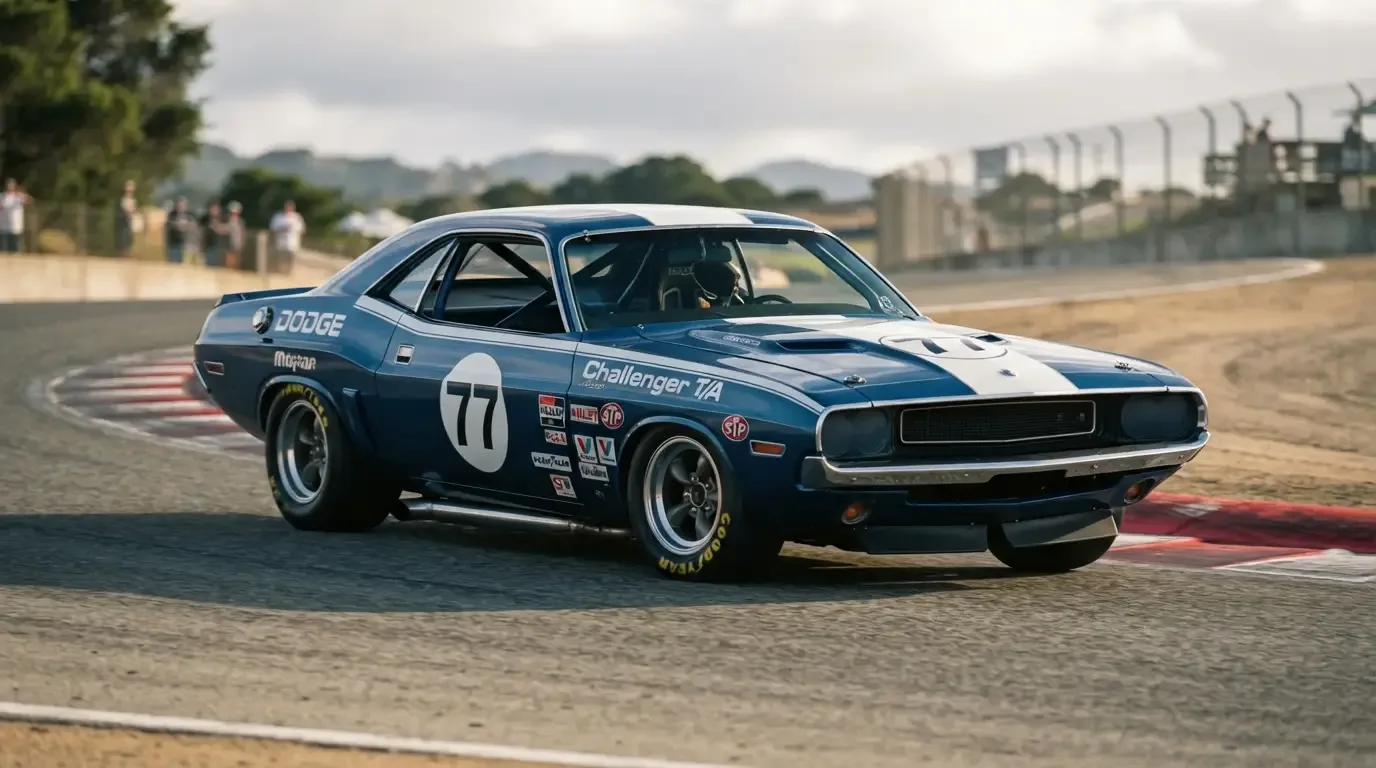
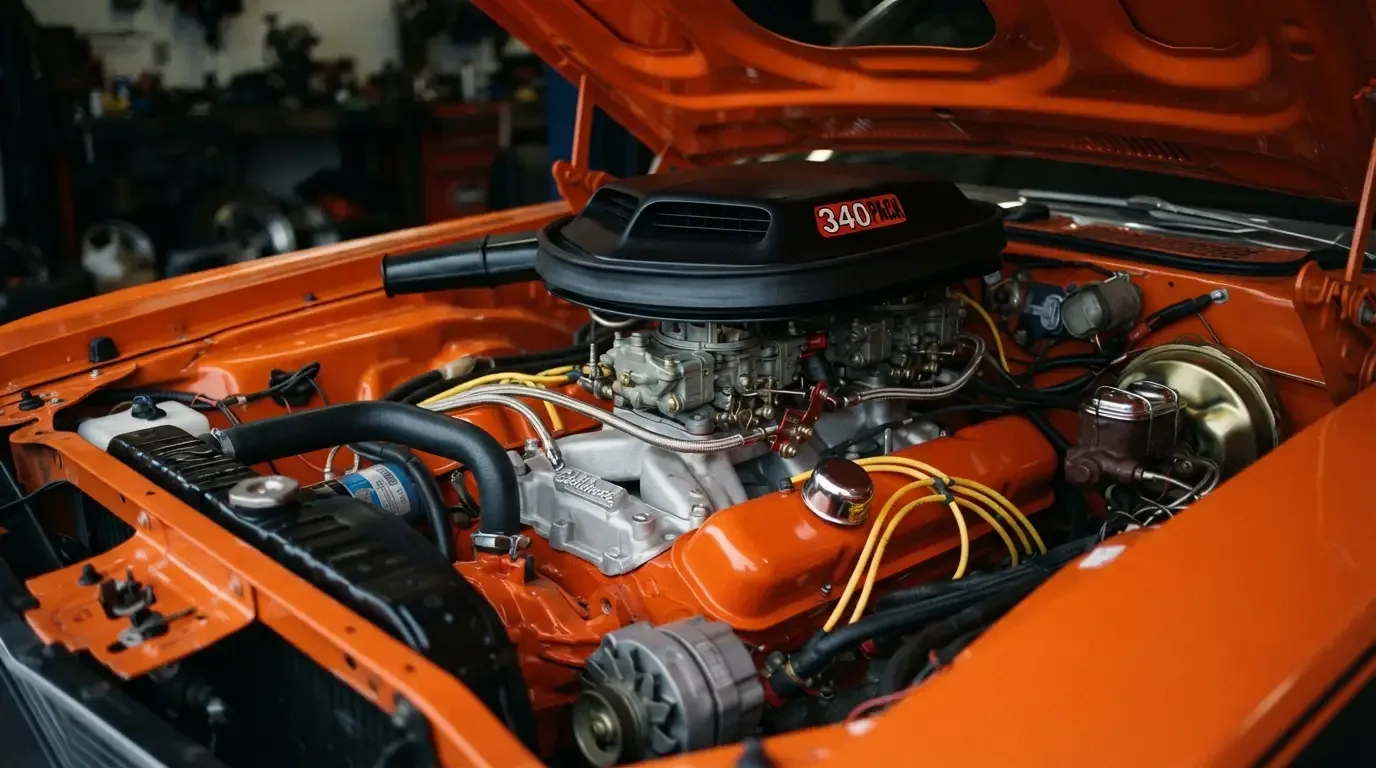
Trans-Am in 1970 was arguably the most stacked road racing series in America. Mustangs, Camaros, Barracudas, Javelins, and Challengers all showed up with factory backing, real engineers, and drivers who would go on to be household names in motorsport circles. The Over 2.0-Liter class required manufacturers to homologate a street car with a 5.0 liter (305 cubic inch) engine limit for competition, which is why the race cars ran de-stroked versions of the 340 rather than the full 340 that street T/A buyers got. If you want read the background on why the street T/A existed at all, the short version is that Dodge needed a homologated platform before it could go racing, and the T/A package was that platform.
Posey's season behind the wheel
Sam Posey drove Challenger T/As for Autodynamics through the 1970 Trans-Am season, running the number 77 car for the first five races before switching to the team's number 76 car for the remaining rounds, and by his own later accounts it was not an easy car to love at first. The Challenger was heavier than the Mustangs and Camaros it was chasing, and getting the chassis to rotate predictably took development that a compressed season did not always allow. Posey was candid in interviews years afterward that the Dodge program felt like it was playing catch-up to Ford and Chevrolet, both of whom had multiple seasons of Trans-Am development behind them by 1970.
Still, the car was competitive on its best days. Posey scored points across the season, helping Dodge to a fourth place finish in the Over 2.0-Liter manufacturers' standings that year, even if the Challenger T/A never took the outright manufacturer's title, which went to Ford. The results were respectable enough that Dodge's investment did not look wasted, but respectable was not the same as dominant, and Trans-Am in 1970 rewarded dominant.
The team behind the number
Autodynamics was not some fly-by-night shop. Ray Caldwell had built a reputation running open-wheel and sports racing programs before Chrysler tapped his operation to prepare and campaign the Challenger T/A. The car Posey drove was stripped, caged, and fitted with a purpose-built 305 cubic inch small block that shared almost nothing with a showroom T/A's 340 six pack besides the family resemblance under the hood. Suspension geometry, brakes, and aerodynamics were all reworked for closed-course racing, which is a useful reminder that the street T/A and the race T/A were related in name and homologation paperwork more than in hardware.
Why the factory effort ended so fast
Chrysler pulled its factory backing from Trans-Am at the close of the 1970 season, and it was not alone. Ford and Chevrolet both scaled back their own commitments heading into 1971 as the sales link between racing success and showroom traffic weakened and the manufacturers' costs kept climbing. The pony car homologation wars that had produced the Challenger T/A and its sibling, the Plymouth AAR Cuda, could not be sustained once the business case evaporated. Insurance premiums on high performance street cars were also climbing fast by 1971, which hit the exact buyers these homologation specials were built for.
The result is that the Challenger T/A racing story is compressed into a single, intense season. There was no gradual development arc across several years the way there was with, say, the Mustang's Trans-Am program. Dodge built the car, homologated it, raced it hard for one year, and then walked away. That compression is part of why the story still gets told. It is a snapshot rather than a saga.
What the racing legacy means for collectors today
None of this changes hands on a used car lot, obviously. The actual Autodynamics race cars are museum pieces or in the hands of serious vintage racing collectors. But the racing program is inseparable from why the street Challenger T/A commands the attention it does. Buyers looking at a 1970 T/A today are buying into the one year that Dodge went to war in Trans-Am with Sam Posey behind the wheel, and that context is worth understanding before you shop. The homologation story is worth a look too if you want the fuller picture of how SCCA rules shaped the street car's spec sheet.
"You can hand somebody a fact sheet about the T/A's three two-barrel carburetors, but that doesn't explain why people care. What explains it is a guy named Sam Posey wringing that car out at Watkins Glen in 1970, one season, no second chances."
- Mike Sullivan
Reading the racing story into a real car
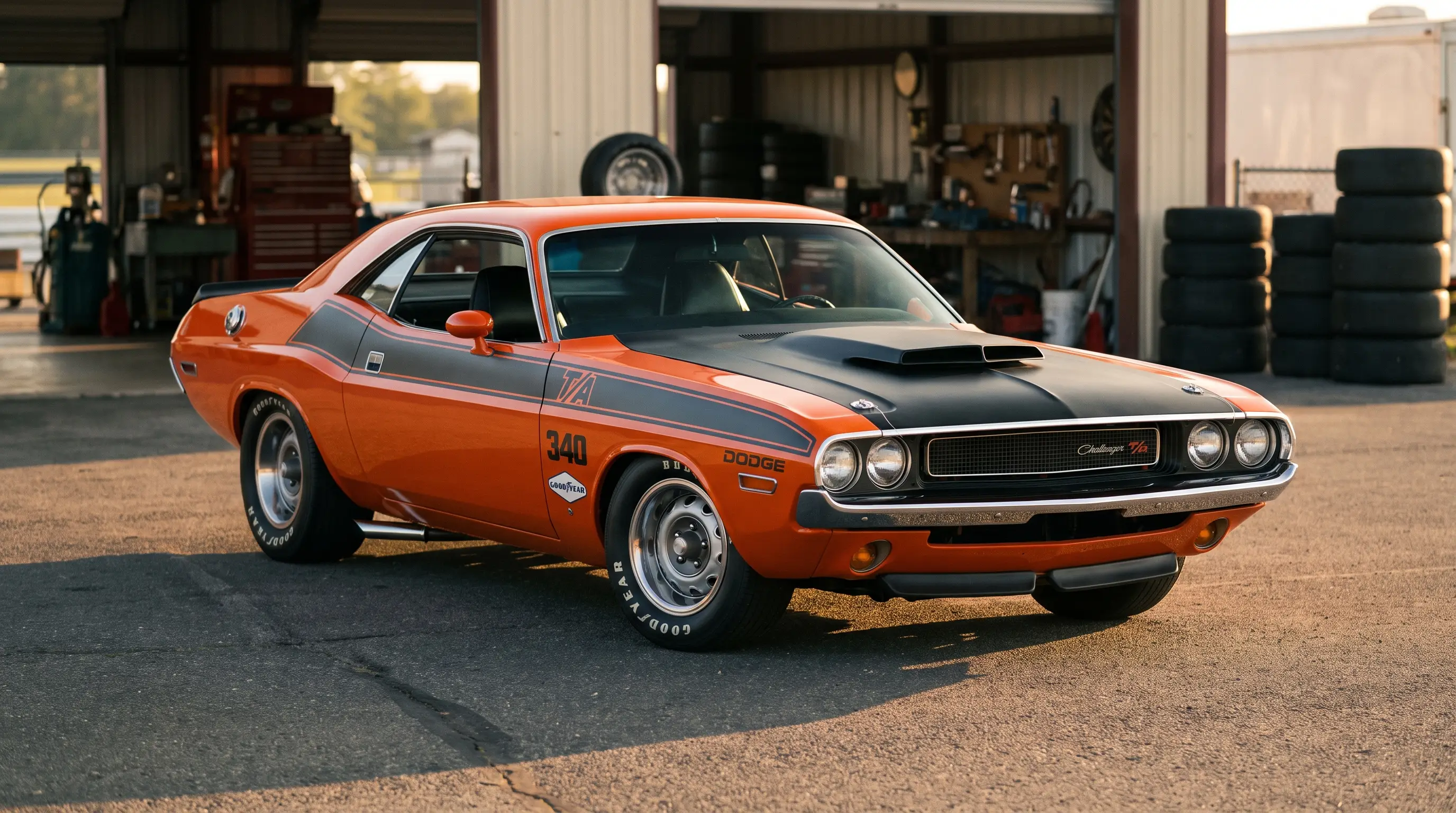
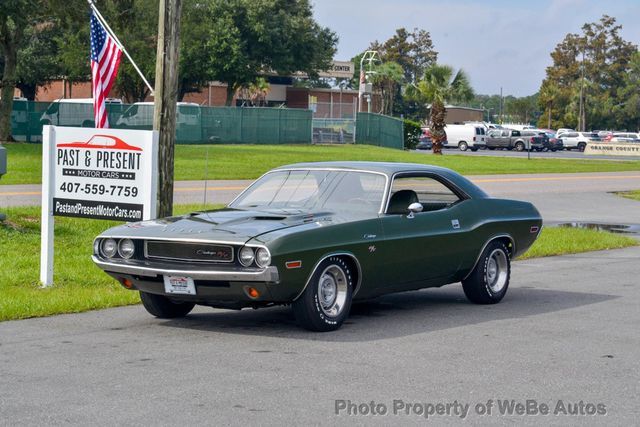
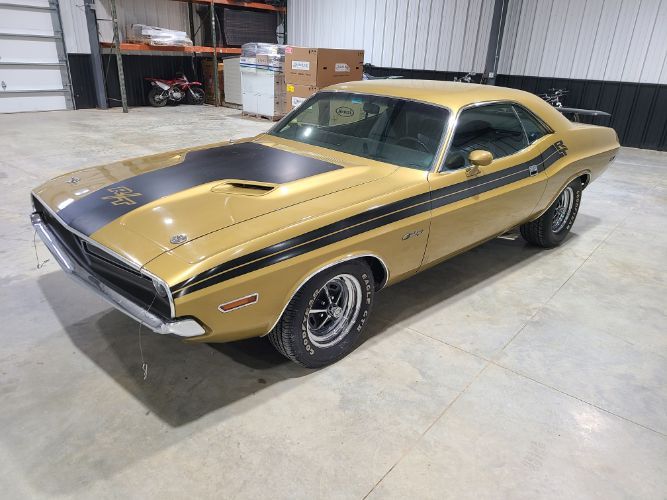
When you are looking at a T/A for sale, the racing pedigree is atmosphere, not a spec you can verify on a build sheet. No production Challenger T/A actually raced in Trans-Am; the race cars were separately built and campaigned. What the street car gives you is the closest thing Dodge sold to a factory racer's understudy, right down to the side pipes and the staggered tires that echoed the race car's stance. That is enough for plenty of buyers, and if you are one of them, you can shop classic Challenger listings and see what is actually on the market right now.
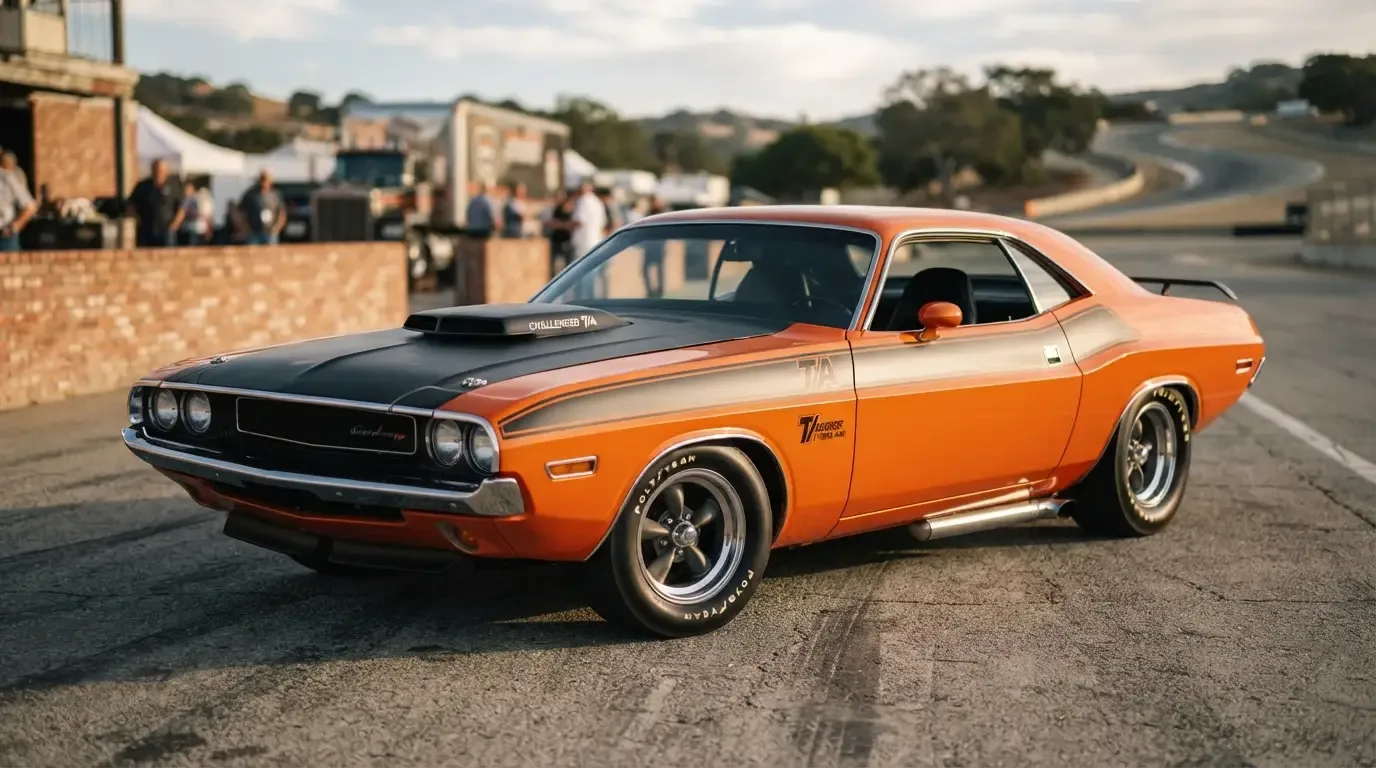
The Trans-Am connection also explains some of the T/A's odd hardware choices that otherwise look like styling exercises. The side exhaust, the hood pins, the matte black hood, none of it was there because a designer thought it looked good in a vacuum. It was there because Dodge wanted a street car that looked like it belonged next to Posey's Autodynamics cars at a Trans-Am paddock, and by most accounts, it succeeded at that even if the racing results themselves were middling by the end of the season.
What the paddock actually looked like in 1970
Trans-Am race weekends in 1970 drew serious crowds, and the paddock itself was a mix of factory transporters, privateer haulers, and a level of manufacturer investment that is hard to picture now given how road racing sits in the American motorsport hierarchy today. Dodge's presence, run through Autodynamics rather than an in-house Chrysler racing department, was smaller in scale than Ford's Trans-Am effort but not amateur by any measure. Caldwell's crew worked long hours between sessions chasing setup changes that a compressed single season did not always give them time to fully sort out, and Posey has talked since about how much of that year felt like development work happening in real time under race conditions rather than in a proper test program.
That kind of on-track development, with limited private testing and a shortened runway to sort out a brand new chassis, is part of why the Challenger T/A's Trans-Am results read as competitive rather than dominant. Ford's program had years of accumulated setup knowledge by 1970. Dodge had one season to close that gap, and one season is rarely enough against that kind of head start, no matter how talented the driver behind the wheel happens to be.
What survives from that season today
Very few of the actual Autodynamics-built race cars from the 1970 season survive in fully documented, unaltered form, and the ones that do tend to live in serious vintage racing collections rather than change hands publicly with any regularity. That scarcity is part of why the racing story gets told through drivers and photographs rather than through surviving hardware the way some other era race cars can be examined directly. Sam Posey's own recollections, along with period photography and magazine coverage from 1970, remain the best window into what that program actually looked like trackside, since the cars themselves are largely out of public circulation.
Sources and notes
Related Reading

About the author
Mike Sullivan
Detroit-area muscle car enthusiast and restoration specialist with three decades of hands-on experience working on American iron.
Related Listings - Dodge Challenger
Comments
Be the first to comment on this article.