
Nobody mistakes a 1970 Challenger T/A for a base model Challenger from across a parking lot, and a good chunk of that credit goes to the graphics package Dodge wrapped around it. The challenger ta stripes were not an afterthought bolted on to justify a higher sticker price. They were part of a complete visual identity that tied the street car directly to the Trans-Am race program it was built to homologate, and getting that graphics package right is one of the things that separates a properly restored T/A from a car that just looks the part from ten feet away.
Car Features
7 min read
The T/A Stripe and Strobe Graphics
The Challenger T/A's matte black hood and bold side stripes were part of a complete visual identity, and getting the graphics geometry right is where many restorations quietly go wrong.
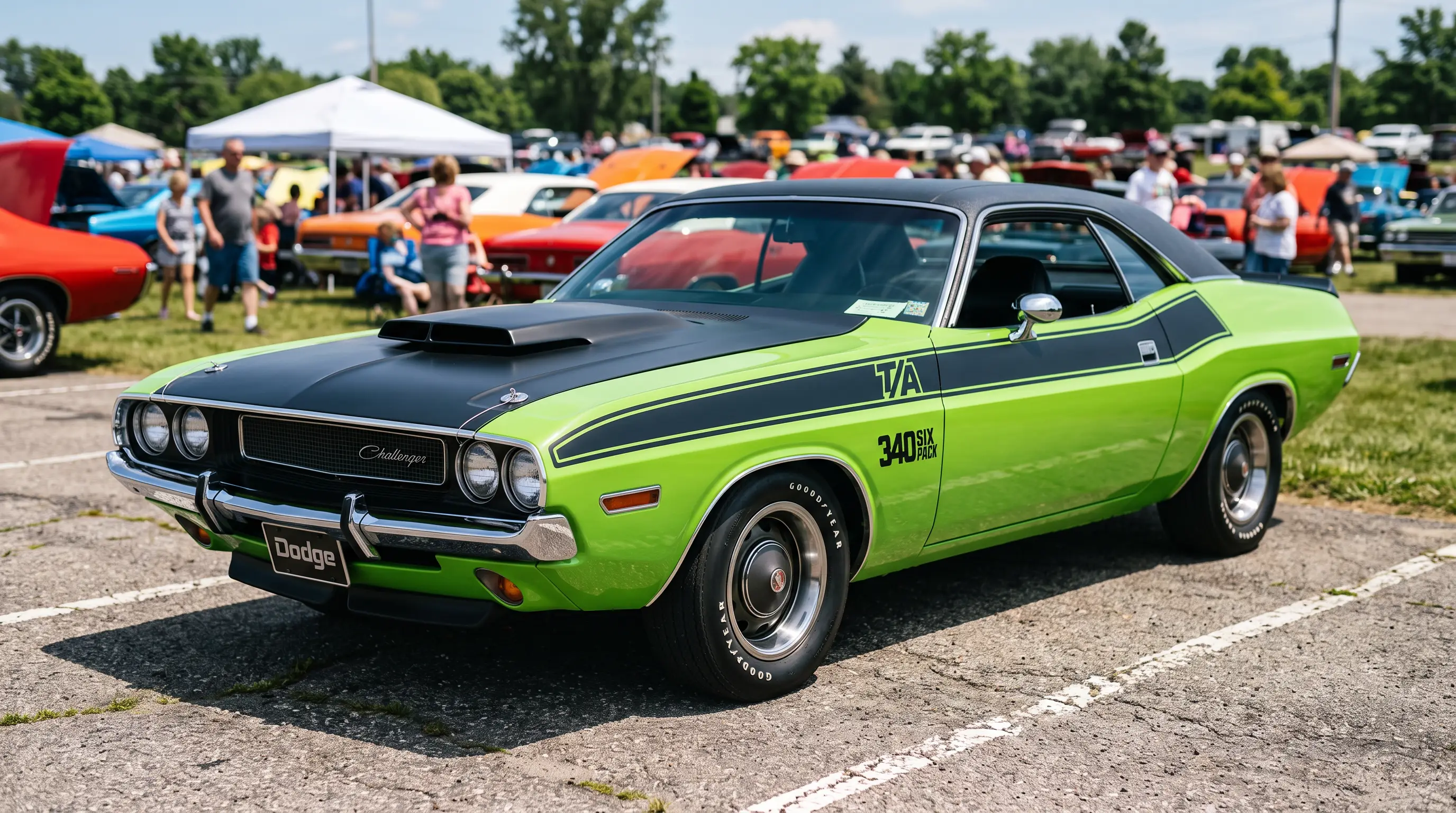
The matte black hood as the starting point
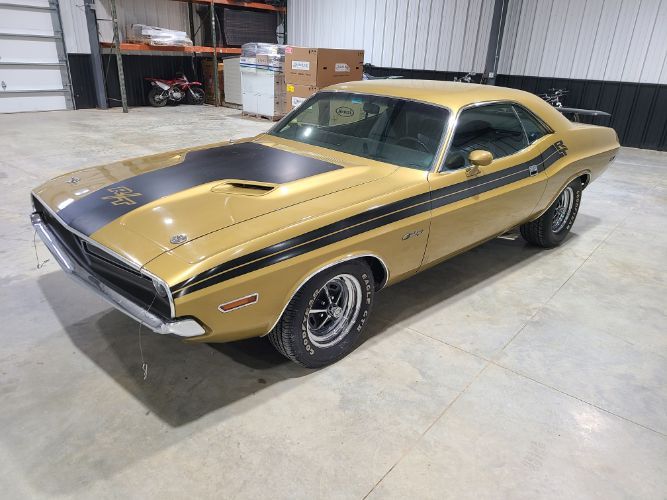
Every T/A left the factory with a matte black fiberglass hood featuring a functional scoop, and that black treatment was not purely cosmetic. It was borrowed from racing practice, where a flat, non-reflective hood surface cuts down on glare bouncing up into a driver's eyes at speed. On the street car, the matte black hood became the visual anchor that everything else, the body color, the stripe treatment, the side graphics, worked around. Whatever color T/A you were looking at on a dealer lot, that black hood was doing a lot of the work to make the car read as something more serious than a standard Challenger.
Side stripes and body graphics
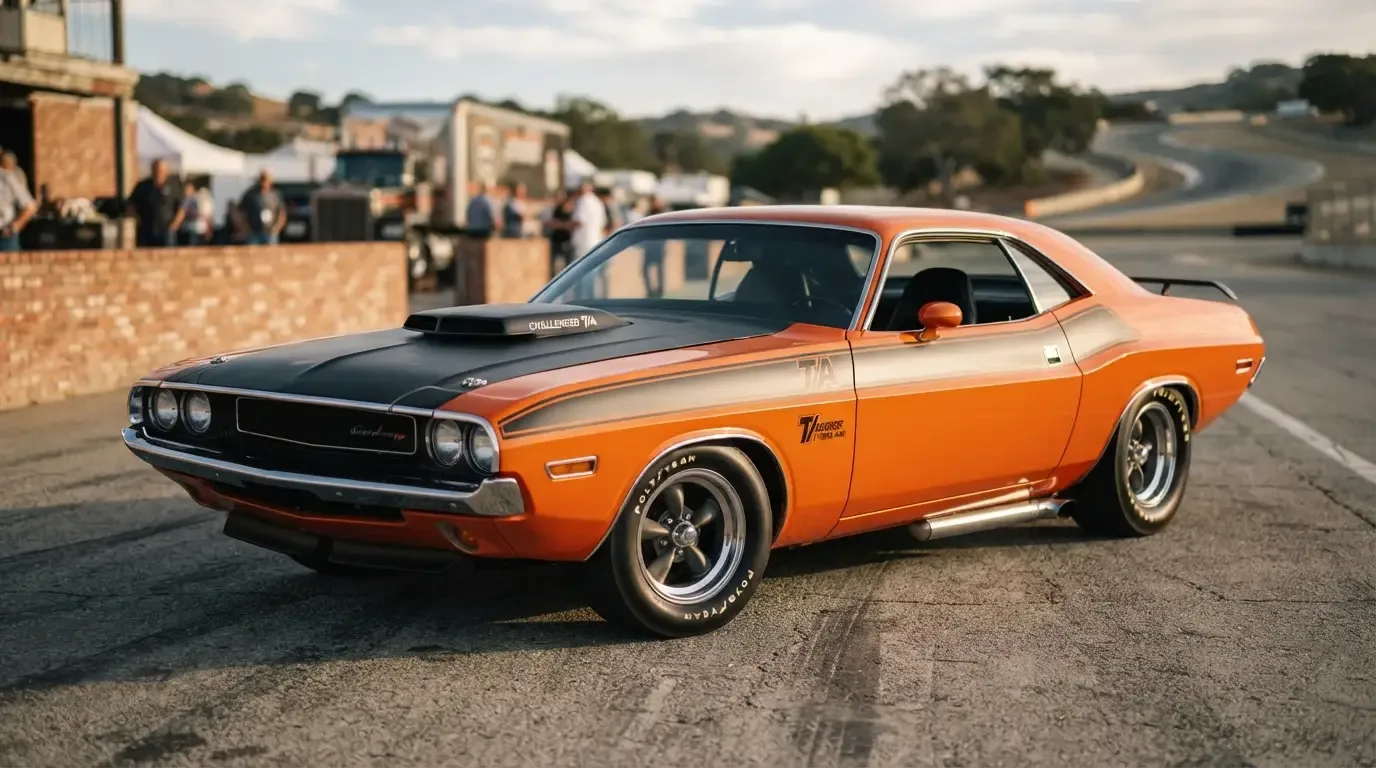
Below the hood, the T/A carried bold side striping that traced the character line of the body, along with T/A specific badging that told anyone who knew what they were looking at exactly which Challenger they were seeing. The graphics were bold by design, meant to be read at speed and at a distance, consistent with the car's identity as a homologation special rather than a boulevard cruiser. This is different from the strobe stripe graphics that later became associated with other Mopar performance packages into 1971 and beyond, which used a different visual language, more of a shaded gradient effect. The T/A's own graphics were simpler and more geometric, and getting the exact width, placement, and color of those stripes right during a restoration is a detail that judges and serious buyers both pay close attention to.
Why graphics accuracy matters more than people expect
Paint and bodywork on a T/A restoration gets most of the attention, and rightly so since it is the biggest line item on any budget. But stripe accuracy is where a lot of otherwise well done restorations lose points, because stripe kits from different vintage parts suppliers are not all cut to the same dimensions or the same placement tolerances as the factory original. A stripe that is half an inch off in width or sits slightly wrong relative to the body character line will look correct to a casual observer and wrong to anyone who has spent real time around original, unrestored T/As.
This is a place where builder judgment actually matters. Anyone doing this work correctly cross references factory build photos, original parts catalogs, and surviving unrestored examples rather than just ordering whatever stripe kit a given vendor happens to stock. The people who get it wrong are usually working from a single reference photo or trusting a kit's marketing copy over the actual factory documentation, and the difference shows up the moment the car sits next to a correctly done example.
"I've redone stripe kits three times on the same car because the first two vendors had the geometry close enough to fool a buyer but not close enough to fool a judge. Close enough isn't a standard I work to. Either it matches the factory car or it doesn't."
- Jim Vasquez
Color combinations and how graphics were coordinated
Dodge offered the T/A across a handful of exterior colors that model year, and the graphics package was designed to read consistently across that palette rather than being tuned individually for each color. The stripe treatment had to work whether the car underneath it was a bright high impact color or something more restrained, and that meant Dodge's design team had to think about contrast and visibility across a range of paint choices rather than just picking a single hero color and building the graphics around it. That kind of cross-color consistency planning is easy to overlook decades later, but it explains why the stripe design reads as bold and legible on nearly every color combination Dodge actually sold rather than working well on only one or two.
When a restoration shop gets the color and stripe pairing wrong, even by using a technically period-correct stripe color in combination with a body color it was never actually offered with, the result can look plausible to a casual viewer while still being historically inaccurate. This is another area where cross-referencing factory literature and original color and trim charts matters more than trusting instinct or a photograph found online without clear provenance.
Why this level of detail is worth the effort
It might seem excessive to care this much about stripe width and color pairing on a fifty year old car, but that level of scrutiny is exactly what separates the T/A market from a more casual corner of the classic car hobby. Buyers paying a premium for a documented, correctly restored T/A are paying in part for that precision, and a shop or seller who cannot speak confidently to these details is telling you something about how the rest of the car was probably handled too.
None of this is meant to scare a buyer away from a well restored car. Plenty of shops do this work correctly, and a T/A with accurate graphics is a genuinely satisfying thing to see in person, the kind of car that photographs well from any angle because every line on the body is doing what Dodge's designers intended fifty years ago. The point is simply that graphics accuracy is verifiable, and a buyer willing to do a little homework before purchase is in a much stronger position than one who takes a seller's word for it.
What buyers should look for
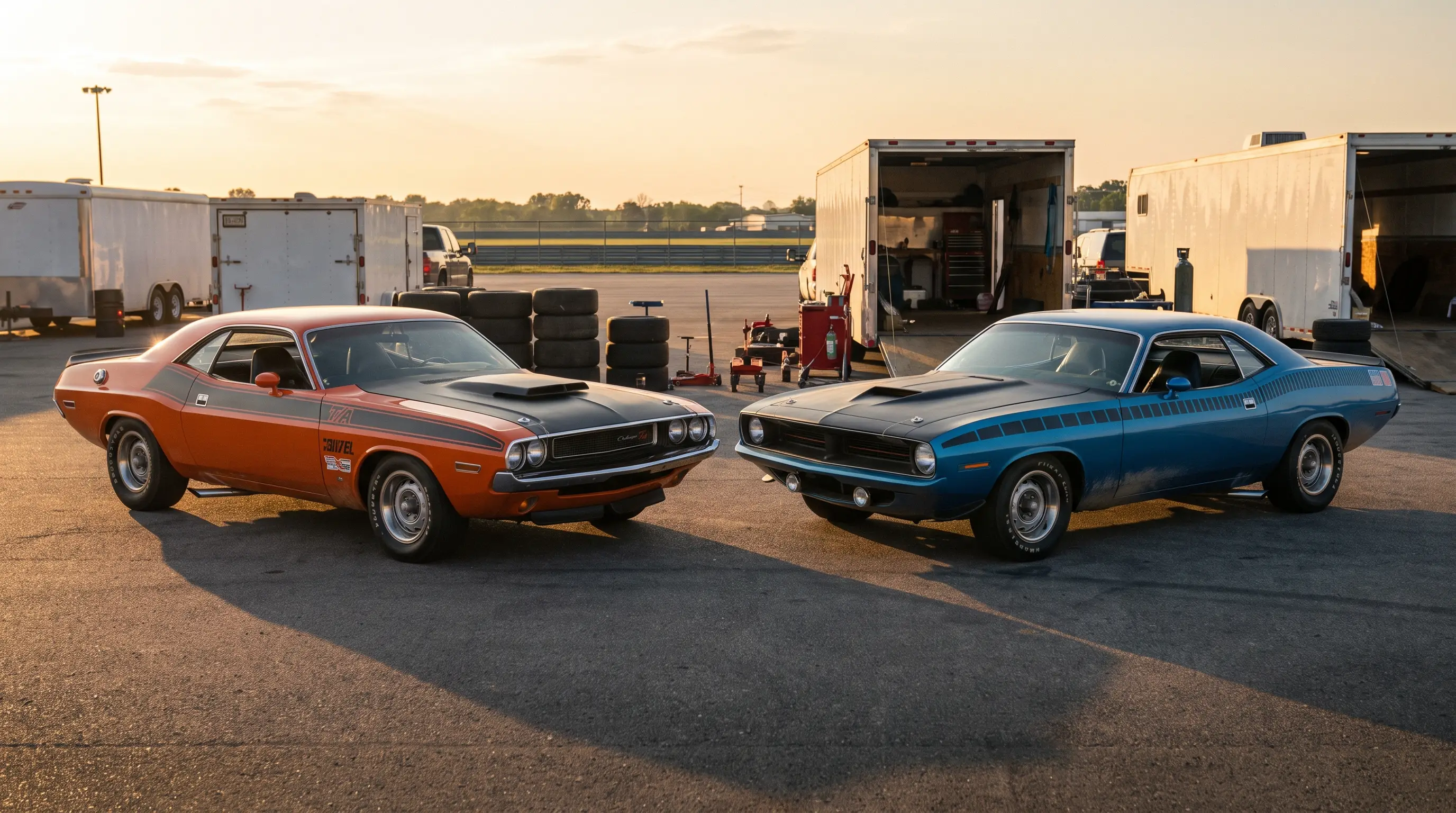
If you are shopping for a T/A and the car has been restored, ask specifically about the stripe kit source and whether the installer referenced factory documentation or worked from a generic pattern. It is a small question that tells you a lot about how carefully the rest of the restoration was probably handled, since a shop that gets sloppy about stripe geometry is often a shop that got sloppy about other details too. Combine that question with a look at the car's fender tag and any surviving broadcast sheet, and you have a much better sense of what you are actually buying. For the wider context of what makes a T/A a T/A beyond the graphics, our dodge challenger ta retrospective covers the full package, and if you want to see how the T/A stacks up against its closest homologation cousin, a related story puts it head to head with the Plymouth AAR Cuda. When you are ready to look at what is actually for sale, there are Challengers for sale now worth a look.
Sources and notes
Related Reading
#muscle car restoration
#mopar history
#dodge challenger
#Challenger T/A
#stripe graphics
#matte black hood

About the author
Jim Vasquez
Southern California hot rod and custom car builder with roots in the traditional kustom kulture scene.
Related Listings - Dodge Challenger

Comments
Be the first to comment on this article.