I've pulled apart enough of these to know that the paint code on a Charger R/T tells you more than most people bother to check. Half the cars I look at have a repaint that's close to the original color but not exact, and the owner either doesn't know or hopes I won't notice. I always notice. The fender tag doesn't lie even when the seller does.
Colors and stripes on the R/T changed enough between 1968 and 1971 that you can't talk about them as one topic. Each year had its own palette, its own stripe treatment, and its own set of options that either came standard or cost extra depending on what Dodge was pushing that season. Get the year wrong and you'll misjudge the whole car.
The stripe treatments, year by year
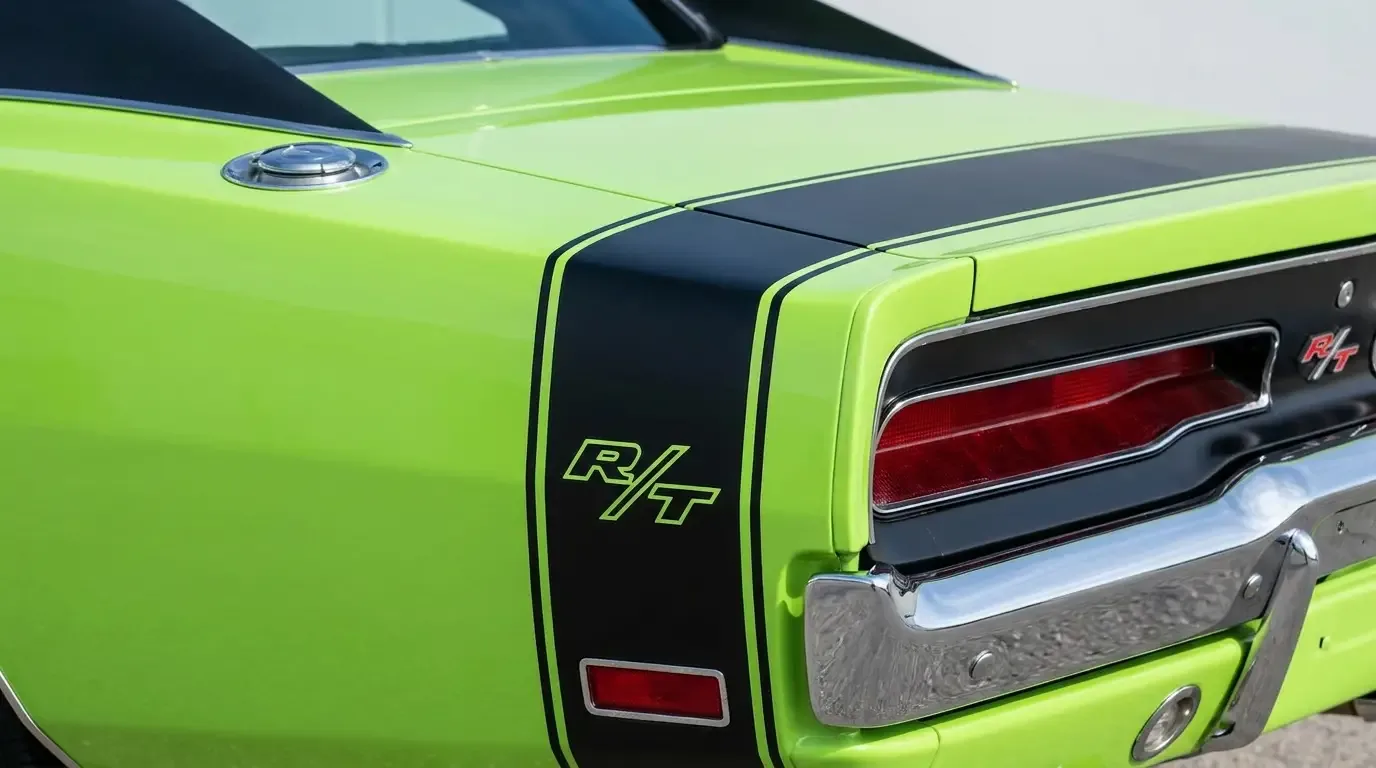
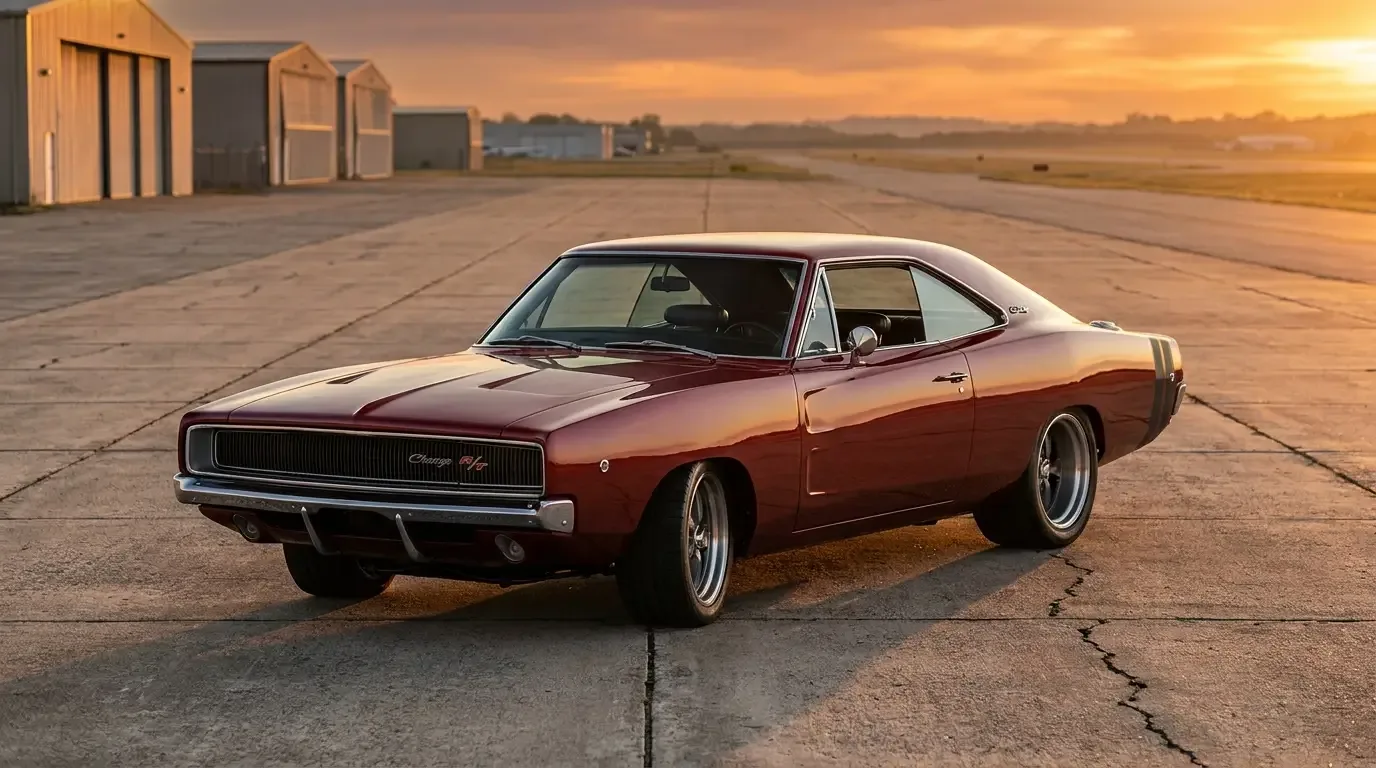
1968 R/Ts came with a simple bumblebee stripe wrapping around the tail, subtle compared to what followed. By 1969, Dodge offered the full-length side stripe as an alternative to the bumblebee, and both were legitimate factory options that year, which is why you'll see 1969 cars with either treatment and both are correct. 1970 brought a revised bumblebee design with the R/T call-out worked into the stripe itself, distinct enough that a trained eye can date a car from twenty feet away just from the tail treatment. The 1971 fuselage body dropped the bumblebee entirely in favor of a bodyside stripe that ran the full length of the car, part of the broader redesign that changed nearly everything about the R/T's look. Read up on how the R/T's overall mechanical package evolved alongside these visual changes, read more here for the full engineering side of the story.
Colors that actually moved off the lot
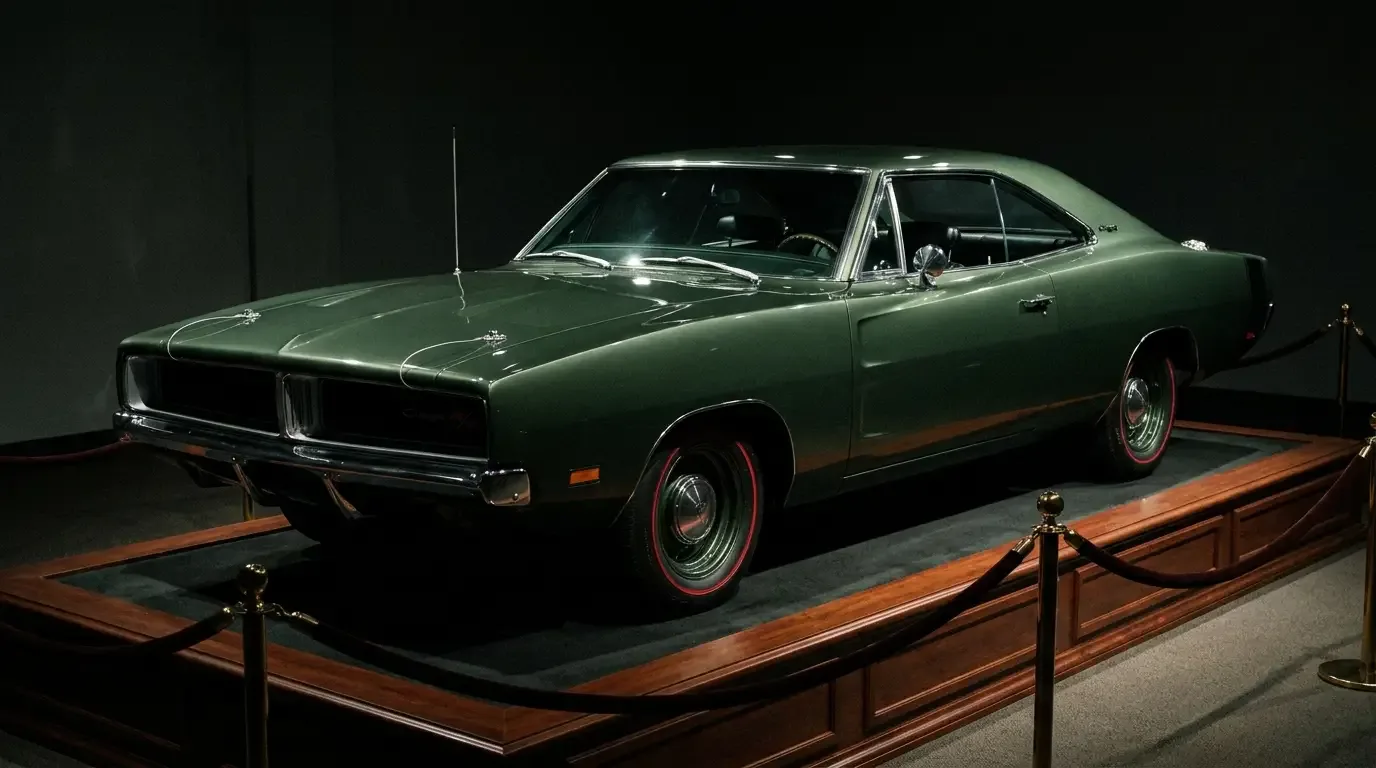
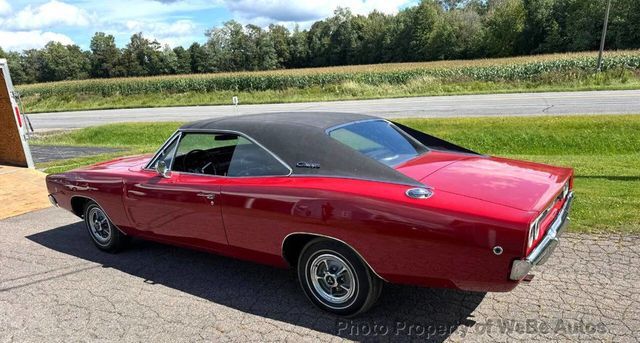
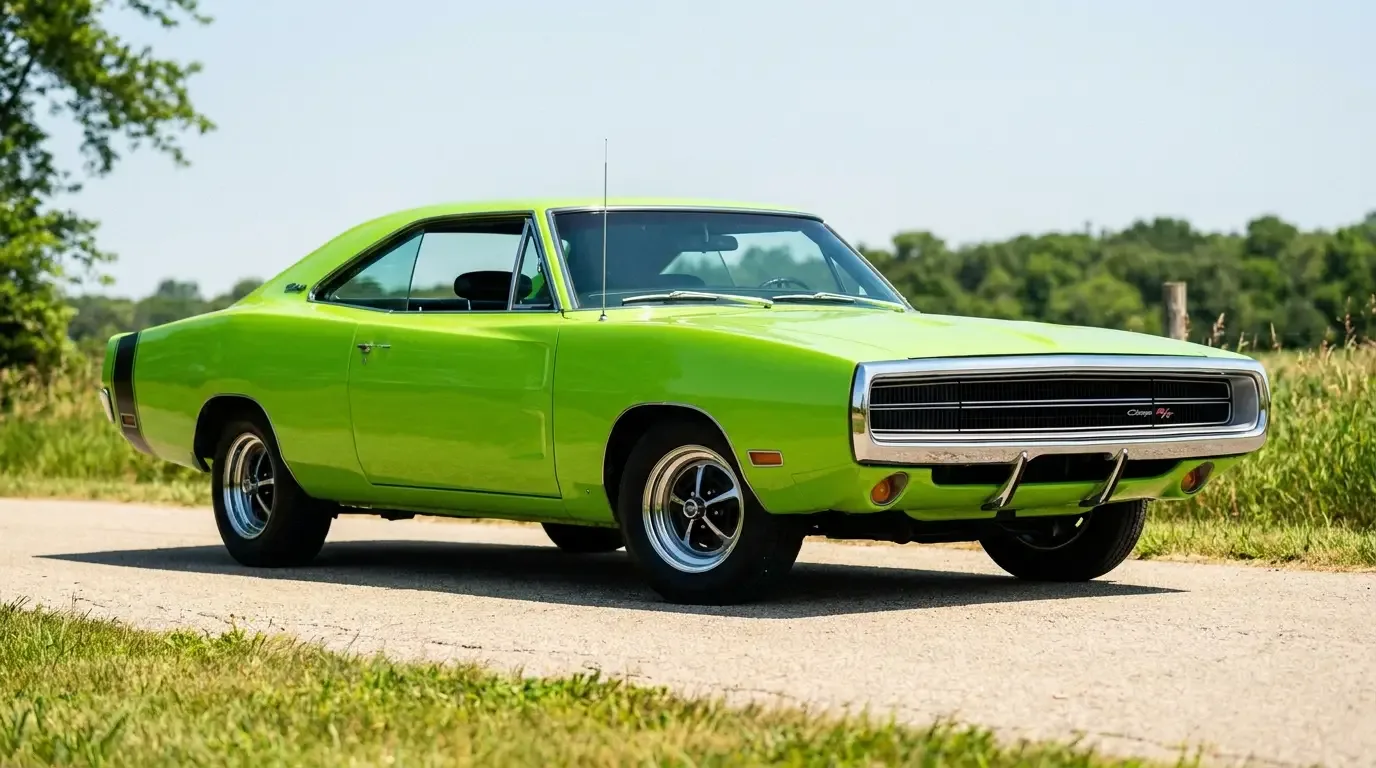
Some colors were everywhere. Others barely got ordered. Popular choices across the R/T's run included Bright Red, the high-impact Sublime green introduced for 1970, and Bright White, all colors that showed up regularly enough that surviving examples in these shades don't carry much of a rarity premium on their own. What does carry weight is a documented low-production color paired with a clean fender tag confirming it's original, not a repaint someone chose because they liked it better. I've seen plenty of cars wearing a color that never came on an R/T that year, repainted decades ago by an owner with more enthusiasm than research, and it takes the fender tag to sort fact from wishful thinking.
"The paint looks right at fifteen feet. Under the hood there's a rebuilt carb on an engine that hasn't seen fresh oil in two years. Here's what to actually look at."
— Mike Sullivan
| Year | Stripe Treatment | Notable Colors |
|---|---|---|
| 1968 | Simple bumblebee tail stripe | Bright Red, B5 Blue |
| 1969 | Bumblebee or full-length side stripe | Bright Red, Bright Green Metallic (F6 spring special) |
| 1970 | Revised bumblebee with R/T call-out | Sublime, Plum Crazy |
| 1971 | Full-length bodyside stripe | Bright White, Top Banana |
Options that actually matter versus options that don't
A lot of buyers get hung up on cosmetic options, wheel covers, mirror styles, whether the console is the right pattern, and skip past the mechanical options that actually change what the car is worth. Power front disc brakes, the Track Pak with a heavy-duty rear axle, and the Rallye instrument cluster all matter more to a serious collector than whether the hood pins are the dealer-installed kind or the factory kind. I'd rather find a car with the right axle ratio and disc brakes and a slightly wrong mirror than the reverse, because one of those affects how the car drives and the other doesn't affect anything at all.
Interior trim and console options worth checking
Inside the car, the R/T's interior options changed less dramatically year to year than the exterior did, but the details still matter. Bucket seats with a center console were the sportier configuration and the one most buyers picture when they think of an R/T interior, but a documented bench seat car isn't wrong, it's just a different, less common order that some buyers actually chased deliberately because it didn't chase the sales premium other cars did. Woodgrain dash appliques, the Rallye cluster I mentioned earlier, and factory tachometers are all things I check against the broadcast sheet before assuming they're original, because these are exactly the kind of small parts that get swapped in from a parts car during a restoration without anyone disclosing it.
I always tell people the same thing when they ask what to check first on an interior. Match the door panel pattern and the seat upholstery pattern to what's documented for that model year, because Dodge changed these details often enough that a mismatched interior is one of the easier ways to spot a car that's been reassembled from more than one donor vehicle.
Why all this changes what you should pay
None of this is trivia for its own sake. A correctly documented color and option package changes the number I'd tell a buyer to pay, sometimes by a meaningful amount. A car with the right stripe, the right paint code, and options that match the build sheet is worth more than an otherwise identical car dressed up with guesses. If you want to see how all of this actually translates into dollars at today's market, charger rt value breaks down what condition, documentation, and originality are actually worth right now. Get the colors and options right first, because that's the foundation everything else gets built on.
Sources and notes
- Muscle Cars Illustrated - Mopar High-Impact Colors - confirmed Sublime as a 1970 high-impact color and Plum Crazy's 1970 introduction.
- UreChem - 1968 Charger paint codes - confirmed B5 Bright Blue Metallic as a 1968 Charger color.
- UreChem - 1969 Charger paint codes - confirmed the 1969 palette, including the F6 Bright Green Metallic spring special.
- Autoevolution - Top Banana Charger - confirmed Top Banana (FY1) as a Dodge high-impact yellow offered into the early 1970s.
- Wikipedia - Dodge Charger - background on the year-by-year R/T stripe treatments and the Rallye instrument cluster option.