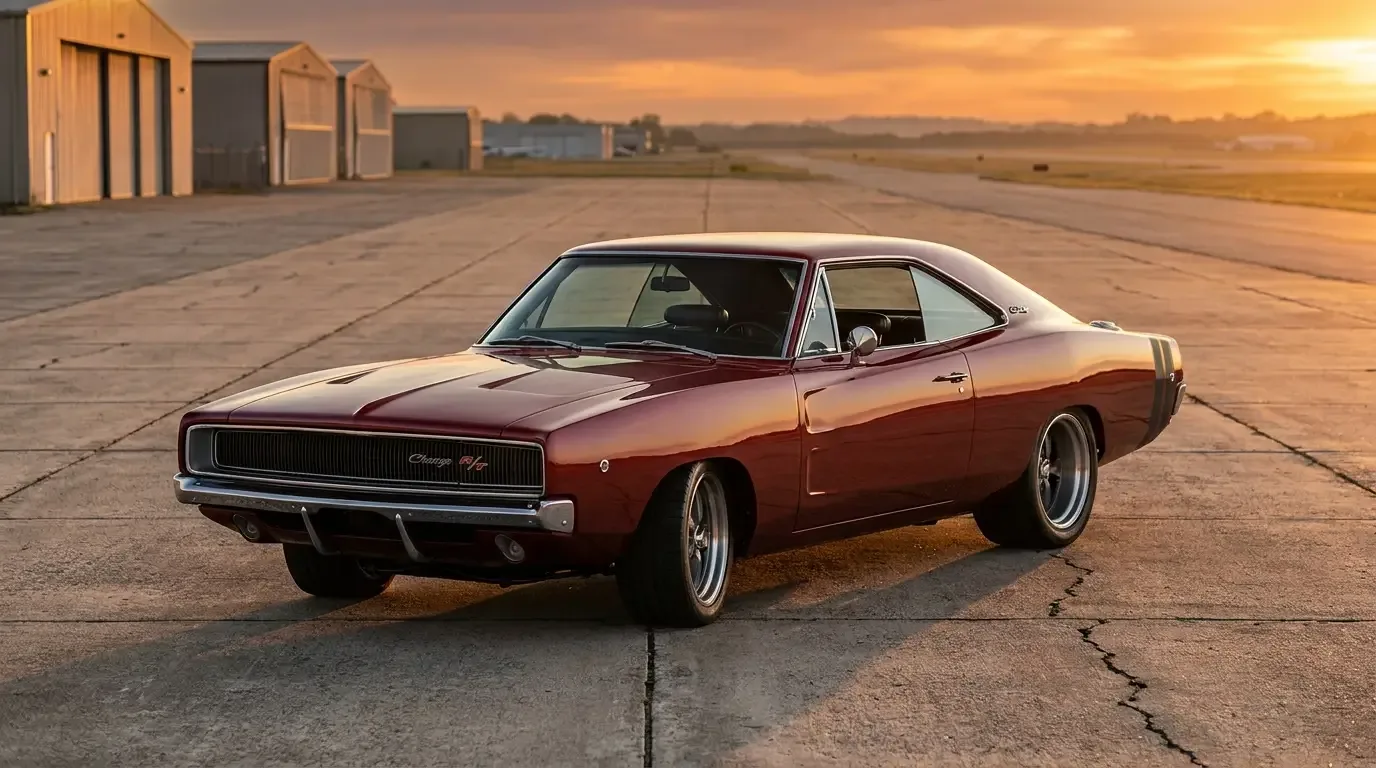
R/T is two letters that get thrown around loosely today, slapped on hats and reissue badges like it's a flavor. In 1968 it meant something specific: Road and Track, a factory designation that told you the car under it was built to handle both. Not a stripe package. Not a marketing gimmick tacked on after the fact. An actual spec sheet.
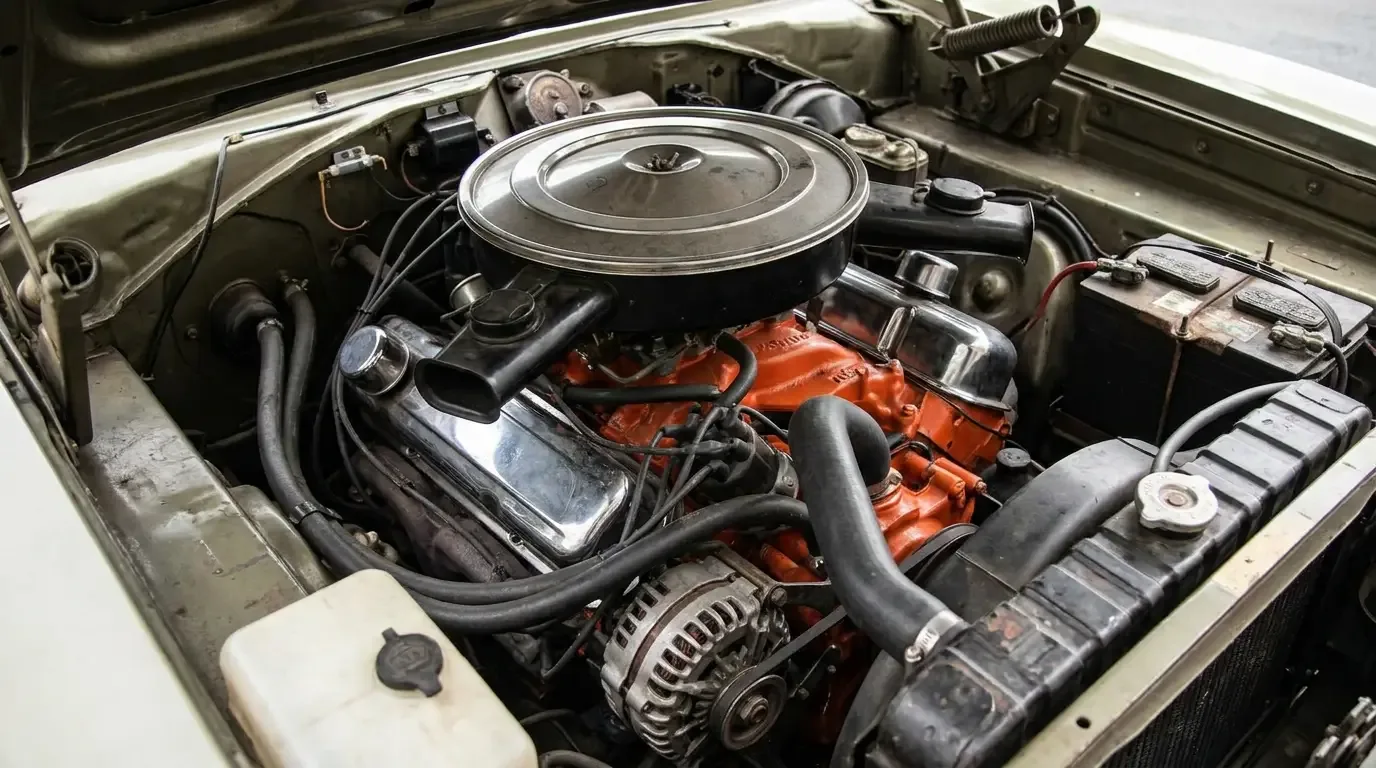
The number that matters here is 375. That's the horsepower Dodge rated for the standard engine in every Charger R/T built in 1968, a 440 cubic inch Magnum V8 that came in the car with no options list to argue about. You bought the R/T package, you got the 440. There was one step up from there, and I'll get to it, but the baseline alone put the R/T ahead of nearly everything else wearing a Dodge badge that year.
What "Road and Track" actually specified
Dodge didn't invent the letters for the Charger. R/T had already run on the 1967 Coronet R/T, and the badge carried a real engineering brief with it: standard heavy duty suspension, standard heavy duty brakes, and a standard big block. No R/T left the factory as a small block car. That's the detail people miss when they call any '68 Charger an R/T on a for sale ad. If the fender tag doesn't back it, the badge is aftermarket.
The suspension spec included firmer torsion bars up front and stiffer leaf springs in back, not a huge departure from the base Charger but enough that period reviewers noticed the difference in body roll. Brakes were upgraded drums as standard, with front discs as a documented option that a meaningful share of buyers actually checked. None of this was flashy. It was Dodge building a car that could back up the badge instead of just wearing it, and for read more here on exactly what that 440 Magnum delivered under the hood.
The 1968 body and why the timing mattered
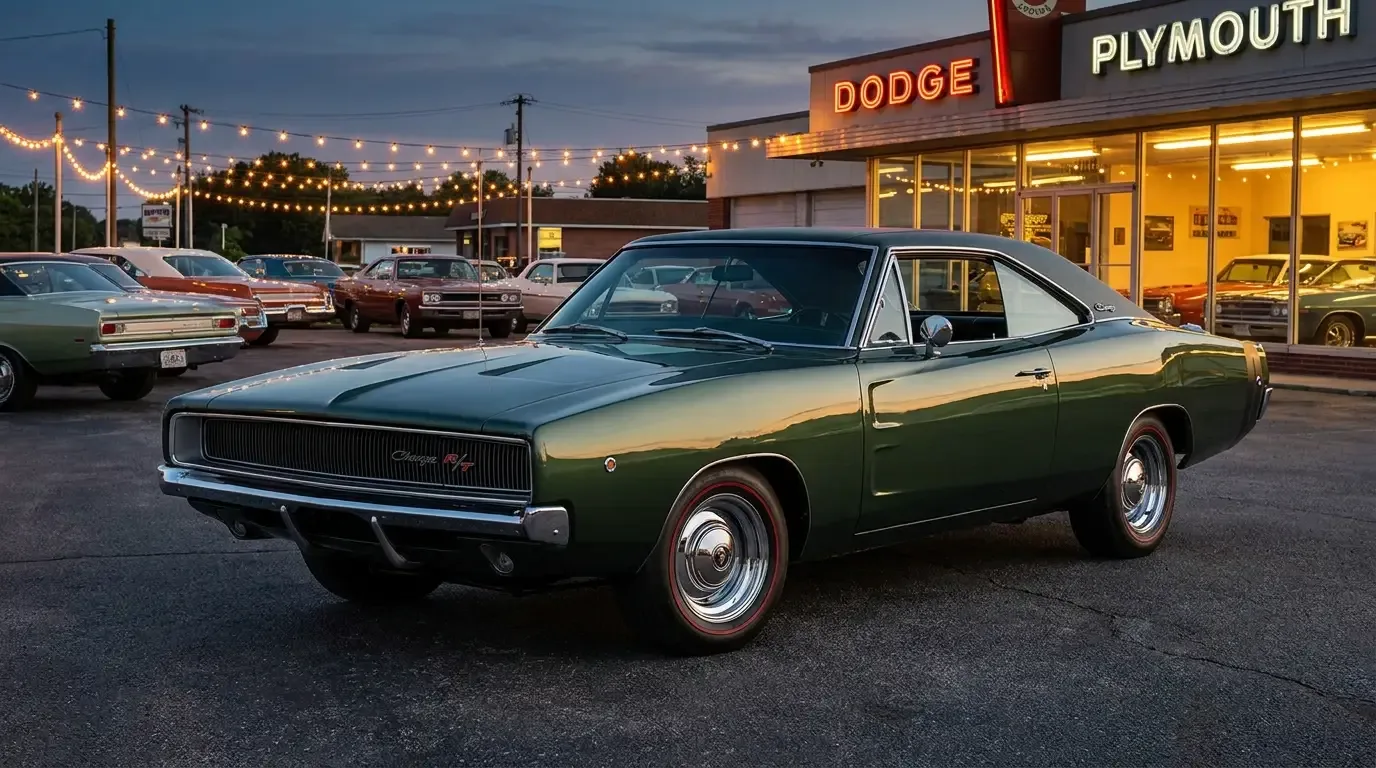
1968 wasn't just a new trim, it was a completely redesigned Charger, the second generation with the coke bottle profile and hidden headlights that people still draw from memory forty plus years later. Anyone tracing how this car fits into the marque's arc should read the full dodge charger history for context on where the 1968 redesign sat in the model's run. Dodge launched the R/T package alongside that redesign, which meant the performance flagship and the styling flagship arrived in the same model year. That's not always how it goes. Sometimes the hot engine option shows up a year or two after the body redesign once engineers catch up. Here, Dodge had both ready at once, and the R/T got the fastback roofline, the twin scallops down the doors, and the full width taillight treatment that made the base car look almost conservative by comparison.
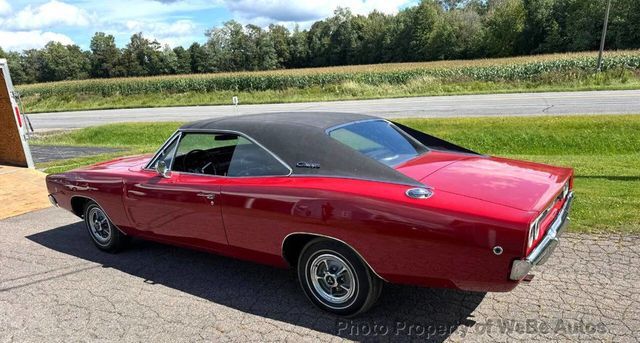
Production for 1968 R/Ts landed at roughly 17,665 units, all of them two door hardtops. The second generation Charger was never offered as a factory convertible, so unlike the Coronet R/T there's no drop top variant to chase here. What collectors hunt instead are the documented Hemi cars, only 475 Chargers got the 426 Hemi that year, and the well optioned survivors that came through fifty plus years without losing their original driveline.
"The blower looks great on the invoice. On the dyno it made twelve more horsepower than the combo that cost a third as much. That's the number that matters."
— Dan Reeves
The optional 426 Hemi and where it sat in the lineup
Above the standard 440 Magnum sat the 426 Hemi, rated at 425 hp on paper, a figure everyone in this hobby knows is conservative by design. Dodge underrated the Hemi for insurance and marketing reasons that had nothing to do with what a dyno actually showed. The take rate on the Hemi option in 1968 was tiny, low single digit percentages of total R/T production, because the option cost real money and most buyers who wanted serious performance found the 440 Magnum did the job for less. That's not a knock on the Hemi car. It's just math. For the full story on what that top engine option meant across the R/T's run, read more here.
| Spec | 1968 Charger R/T (440 Magnum) |
|---|---|
| Engine | 440 cubic inch Magnum V8, standard |
| Horsepower | 375 hp (gross rating) |
| Optional engine | 426 Hemi, 425 hp (rated) |
| Transmission | 3 speed automatic or 4 speed manual |
| Brakes | Standard drum, front disc optional |
| Body styles | Two door hardtop only |
Why the R/T badge held its value as a spec, not a sticker
Here's the thing about badges from this era. A lot of manufacturers in the late sixties started slapping performance names on cars that were mostly cosmetic, stripes and hood scoops over an engine that wasn't meaningfully different from the base model. The Charger R/T didn't work that way, at least not in 1968 and 1969. The fender tag documentation exists, the broadcast sheets exist for cars that still have them, and the engine block casting numbers back up what the badge claims. That paper trail is exactly why more on the Charger R/T is worth reading before you shop one, because knowing what the badge is supposed to guarantee is half of buying one correctly.
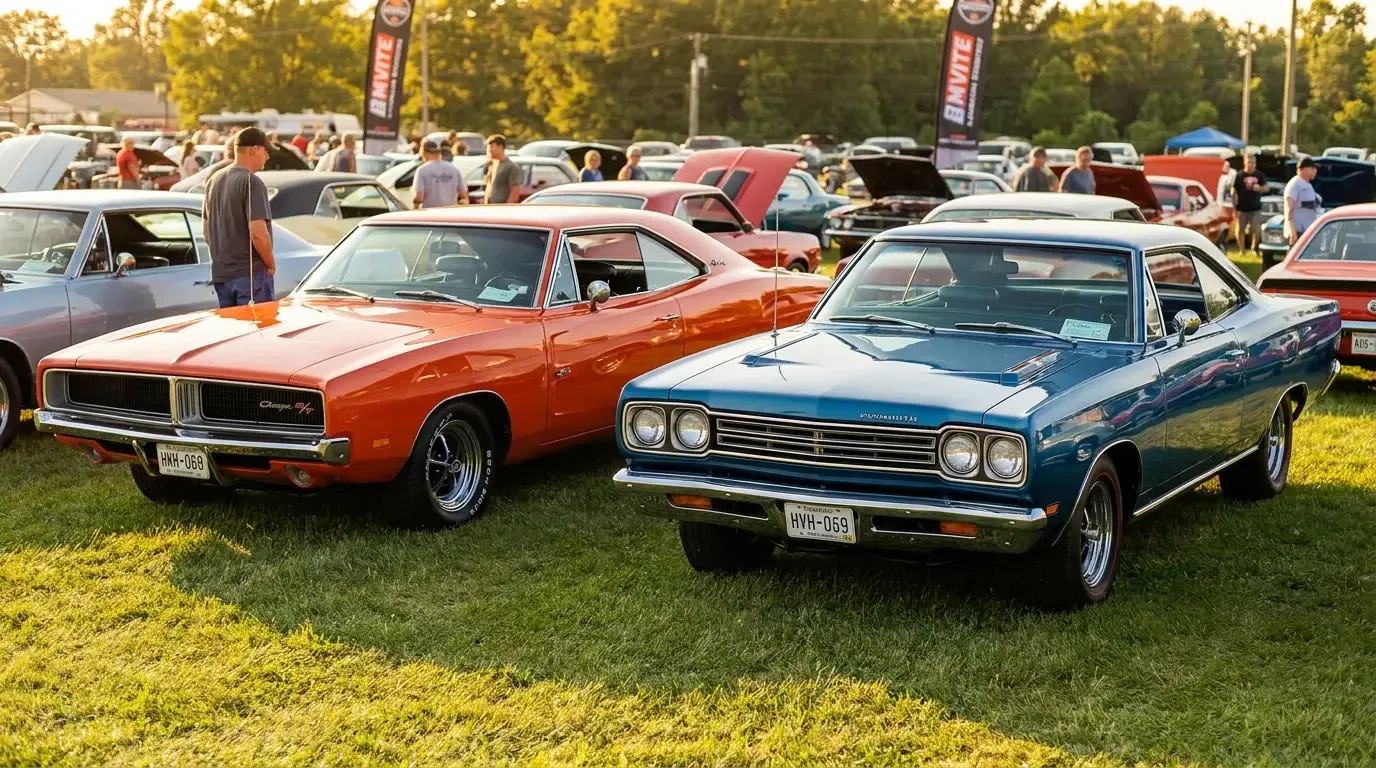
I've looked at plenty of R/T clones over the years, cars with the right stripes and the wrong VIN decode. The giveaway is almost always the engine pad stamping or a fender tag that doesn't match the block. A real 1968 R/T commands a real premium over a clone built from a base Charger, sometimes double depending on condition and documentation, and that gap only grows as more buyers learn to check the numbers instead of trusting the paint.
Where the R/T name went from here
The R/T badge carried forward through the Charger's second generation, into 1969 and 1970, then continued in reduced form into the 1971 body style before big block performance cars lost the market to insurance rates and emissions rules. But 1968 is where it started on the Charger platform, tied to a specific 440 Magnum spec that Dodge didn't water down for the launch year. If you're shopping this generation, that first year matters, both for what it means historically and for what a documented '68 R/T is worth against later, more diluted years. Anyone building a full picture of the model should look at the R/T performance story to see how the R/T fits into the wider Charger story, or start browsing classic Dodge Chargers for sale to see what's actually on the market today.
Sources and notes
- Hagerty 1968 - 70 Charger buyer's guide - confirmed the second generation Charger was hardtop only, no factory convertible.
- Wikipedia: Dodge Charger (1966) - 1968 R/T production and 440 Magnum standard-engine details.
- Mac's Motor City Garage: Dodge 440 Magnum V8 - 375 hp gross rating and 440 Magnum specification.
- Autoevolution: 1968 Charger R/T Hemi - only 475 Chargers received the 426 Hemi in 1968.
- Ultimate Muscle Car: 426 Hemi rated vs real hp - the Hemi's 425 hp gross rating was conservative for insurance reasons.