Provenance is the word everyone uses and almost nobody defines carefully. On a coachbuilt car it means something specific: a documented, unbroken account of what the car originally was, who built the body, who owned it, and how it got from the coachbuilder's shop to the driveway it sits in today. Every gap in that chain is a question mark, and question marks are exactly what erode a coachbuilt appraisal faster than anything else I deal with. I have watched a car with obvious craftsmanship lose most of its projected value the moment a body number would not match any surviving record.
For the background on how these bodies were commissioned and built in the first place, the classic car provenance story is worth reading before you go looking for an authentication trail. Here I want to walk through what I actually check, in order, when someone brings me a car to authenticate.
Start with the body number
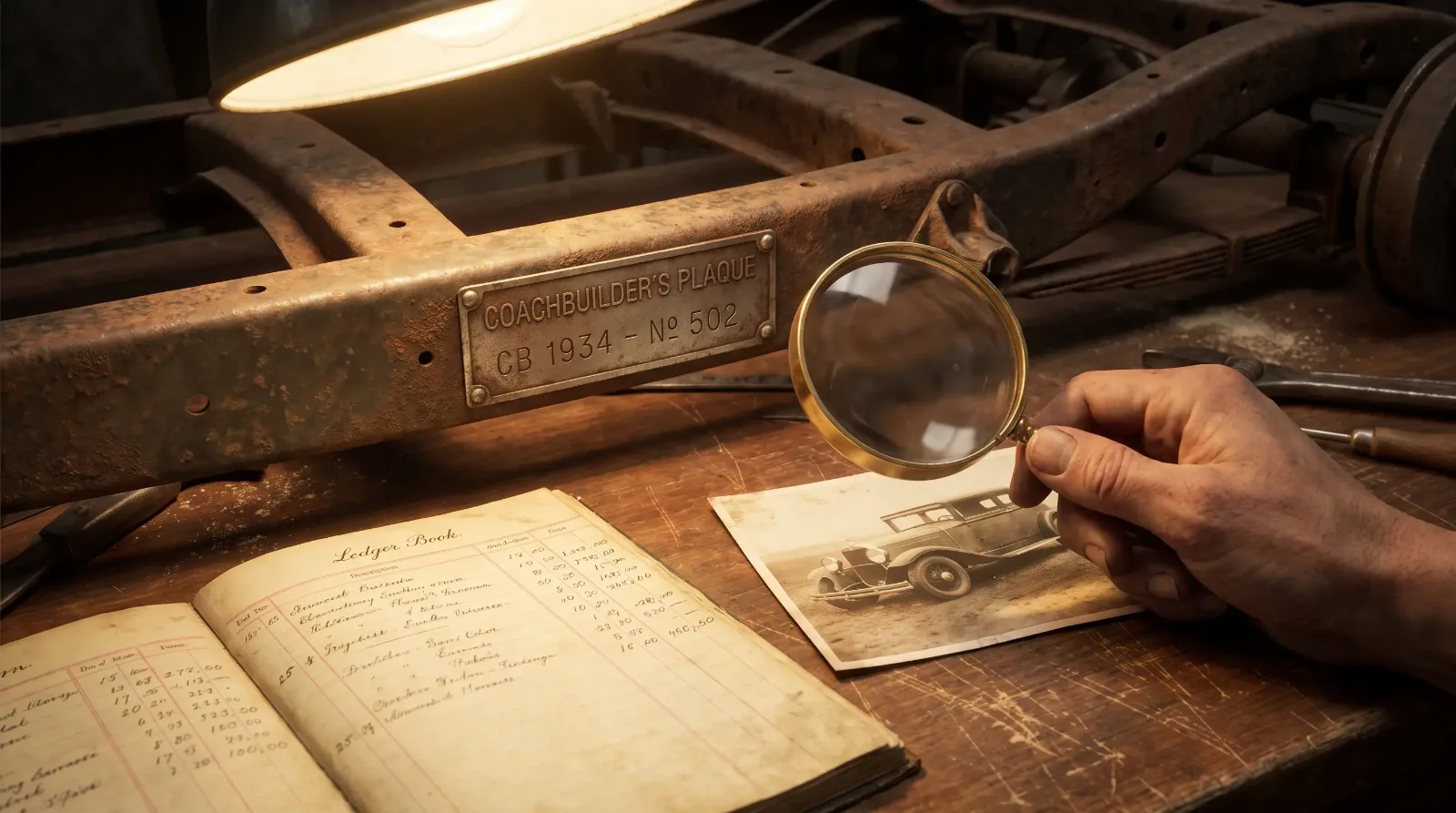
Every coachbuilder assigned its own body number, separate from the chassis serial number the manufacturer stamped. That body number is the single most important piece of physical evidence on the car, usually found on a plate or stamped into the frame itself, sometimes hidden under trim or carpet. The first thing I do is locate that number and cross-reference it against whatever surviving coachbuilder or marque club records exist. A body number that matches a documented commission is worth far more than a body number that cannot be traced, even if the two cars look identical to an untrained eye.
Trace the ownership chain
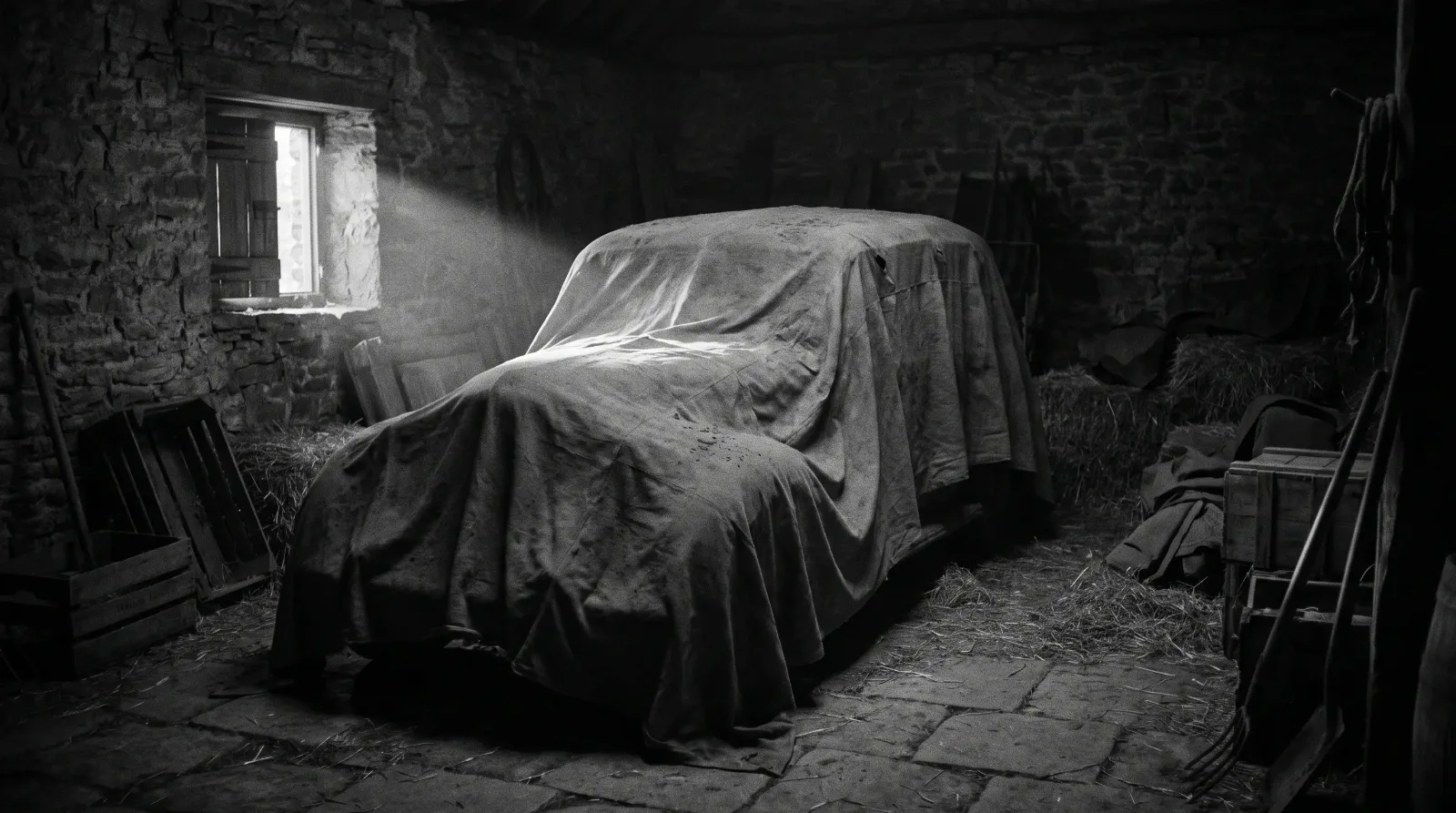
A continuous ownership record, ideally with period photographs, registration documents, and any surviving correspondence, builds the case that the car in front of me is the car the records describe. Gaps happen, especially across decades where cars changed hands informally or sat in storage, and a gap is not automatically disqualifying. What matters is whether the gap can be explained and bridged with other evidence, or whether it is simply unexplained silence. An unexplained silence of twenty or thirty years, right around the period when a body swap or a heavy modification would have been easy to do quietly, is the kind of gap that should worry a buyer.
I also weigh how the ownership chain interacts with major historical disruptions, because those windows are where the real risk concentrates. The years around the Second World War, when many of these cars were requisitioned, hidden, sold under duress, or simply abandoned as their owners fled, produced more broken chains and quiet substitutions than any other period in this market's history. A car that can account for its whereabouts through the late 1930s and into the 1940s, even with a thin record, is a stronger candidate than one that goes dark for exactly that stretch and reappears afterward with no explanation. That specific window gets extra scrutiny from me every time.
Look for physical evidence that supports or contradicts the paper
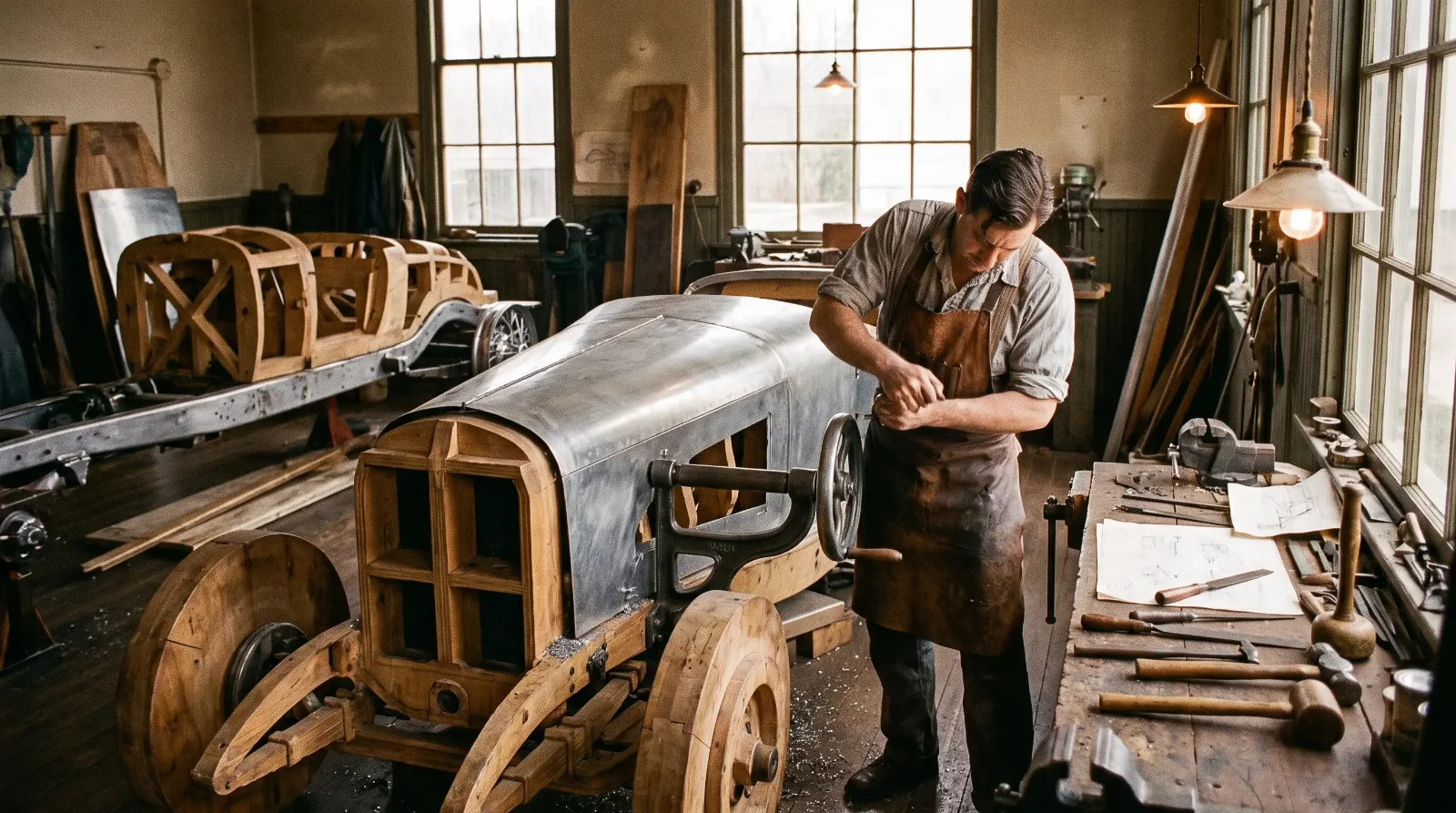
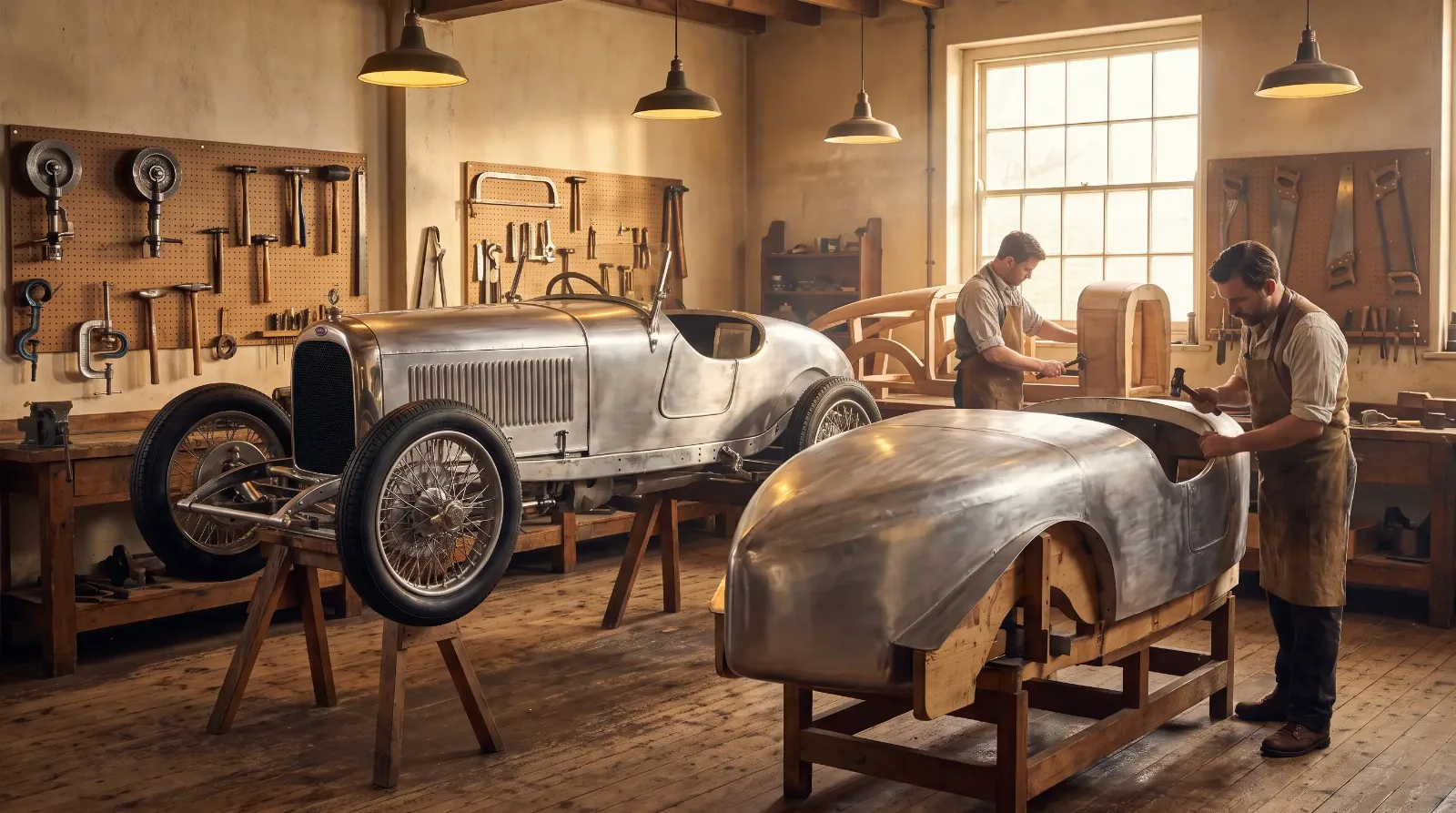
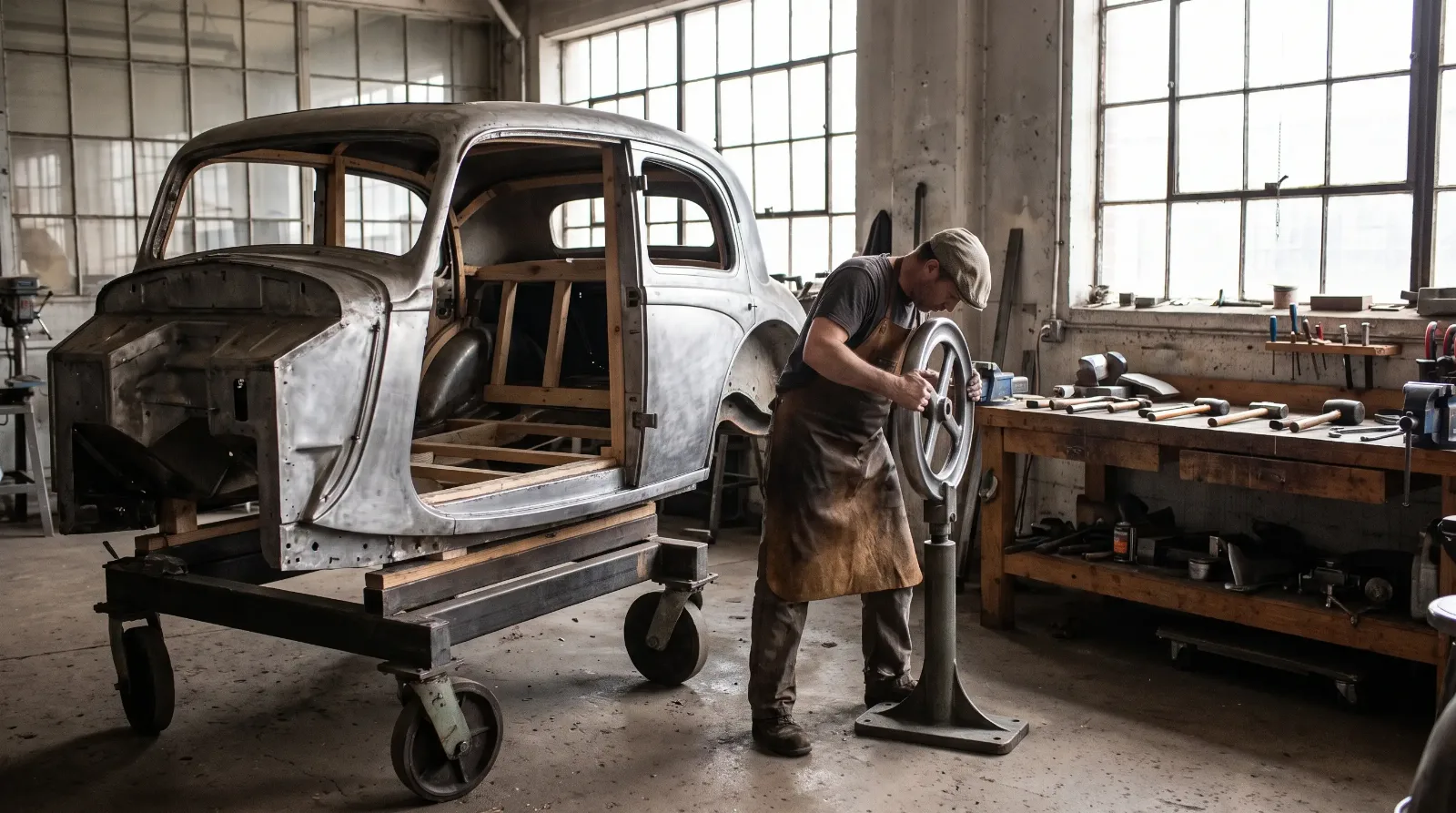
Paperwork alone is not enough. I want the physical car to agree with the documentation. That means checking whether the wooden frame construction matches the coachbuilder's known methods, whether panel gauge and fastener patterns are consistent with the period, and whether any modifications show clear signs of being later work rather than original construction. A body that claims a famous coachbuilder's provenance but shows construction details inconsistent with that shop's known practices is a red flag no amount of paperwork can fully resolve.
| Evidence type | What it confirms | Limitation |
|---|---|---|
| Body number and records | Original coachbuilder commission | Records may be incomplete or lost for some coachbuilders |
| Period photographs | Original body style and details | Photos can be misattributed to the wrong chassis |
| Ownership chain | Continuity of the specific car | Long gaps require other corroborating evidence |
| Construction method | Consistency with the claimed coachbuilder's known practices | Requires specialist knowledge to evaluate correctly |
"I do not authenticate a car by falling in love with it. I authenticate it by trying, as hard as I can, to prove myself wrong. If the story survives that, it is worth something. If it does not, better I find the hole than the next buyer."
— Marcus Feld
Third-party verification matters more than a seller's word
I never rely solely on documentation supplied by the current seller, however credible it looks. Wherever possible I want independent confirmation, a marque club registrar who has reviewed the car separately, a coachbuilder archive that can confirm a record exists outside the seller's own file, or a prior appraisal from someone with no financial stake in the outcome. A seller's file can be entirely honest and still incomplete, and an independent second set of eyes catches things a motivated party might miss without ever intending to mislead anyone.
What happens when the story does not hold
Not every car passes. Some arrive with a story that unravels under a careful look, a body number that does not match any known commission, or construction details that point to a later rebody rather than an original one. That does not always mean the car is worthless. A well-executed rebody using period-correct methods can still be a fine driver and a legitimate piece of history in its own right. It simply is not the documented original the seller may have believed it to be, and the price has to reflect that honestly. If you want a clearer sense of what actually separates a documented original from a rebody at a more basic level, a related read covers that distinction directly.
Authentication is slow, unglamorous work, and it rarely gives a buyer the answer they were hoping for on the first pass. But it is the only thing standing between a real number and a guess, and on a market as thin and history-dependent as America's antique automobiles have become, a guess is not something I am willing to put my name on. For the wider view of that market, America's antique automobiles is a useful place to start.
Sources and notes
- Hagerty: How provenance and documentation drive valuation
- RM Sotheby's: Documented provenance in a coachbuilt lot listing
- Wikipedia: Coachbuilder history and body numbering practice
- New Cadillac Database: Survivor and body number registry example
- Duesenberg Registry: Model SJ Beverly by Murphy provenance record