
A convertible top is the hardest thing a luxury car has to do well. A fixed roof only has to sit there. A folding roof has to disappear cleanly, seal against wind and water, look taut and correct when raised, and vanish into the body without ruining the line when lowered, and it has to do all of this thousands of times without complaint. On the finest classic cars that mechanism was a genuine feat of craftsmanship, part cabinetry, part upholstery, part hydraulics, and it is one of the first places a tired car shows its age.
Car Features
6 min read
Convertible Top Craftsmanship in Classic Luxury Cars
How convertible tops were built on classic luxury cars, from hand-sewn fabric and hydraulics to the Ford Skyliner, and how to inspect one before buying.
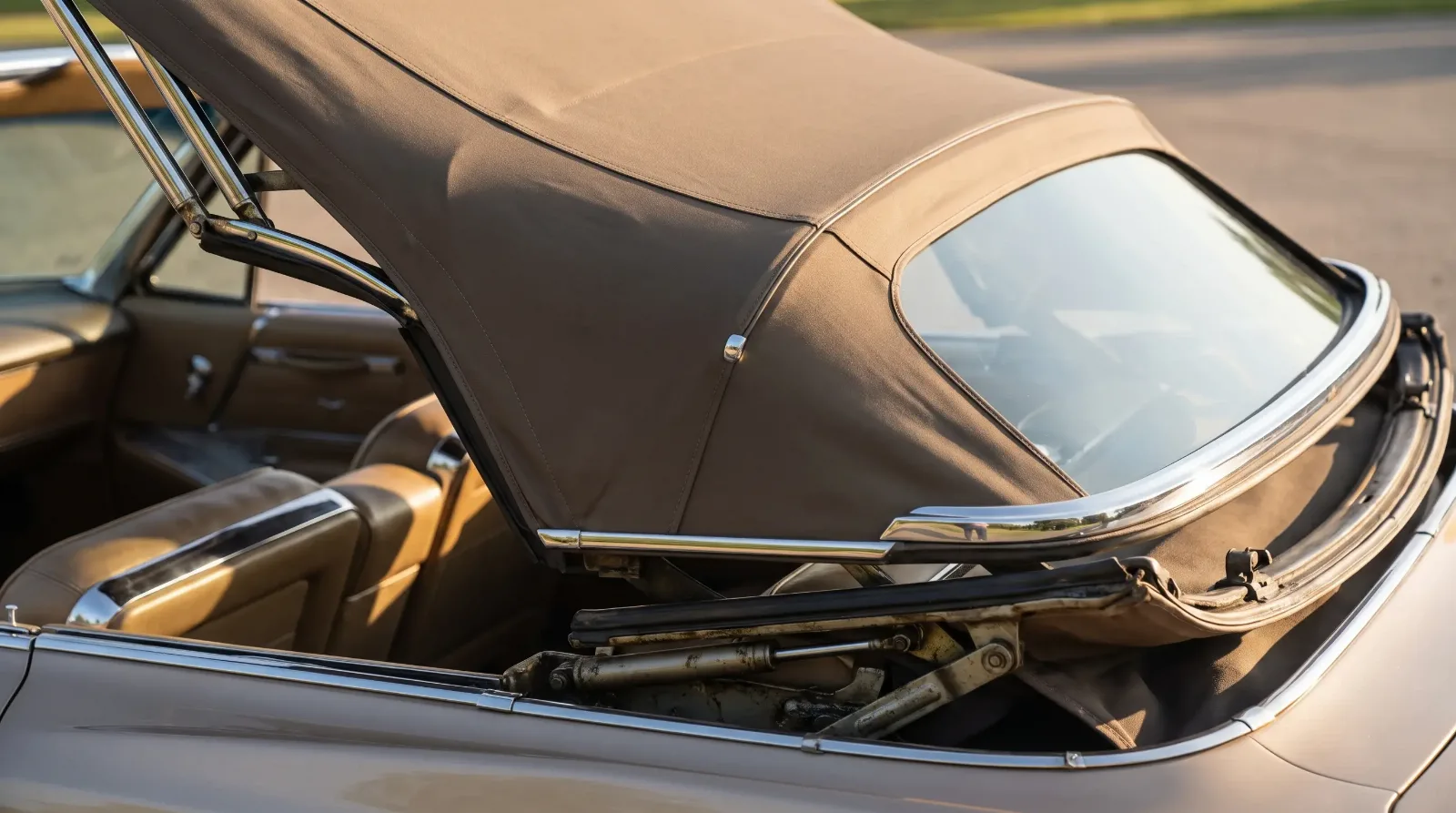
Because the top is complex, it is also revealing. A convertible that raises and lowers smoothly, seals tightly, and stows without wrinkles has usually been cared for by someone who understood the car. One that fights the mechanism has usually been neglected, and the repair bill is rarely small. The folding roof belongs to the same tradition of visible, expensive craft covered across the design language hub, where the effort is meant to be felt as much as seen.
The anatomy of a folding roof
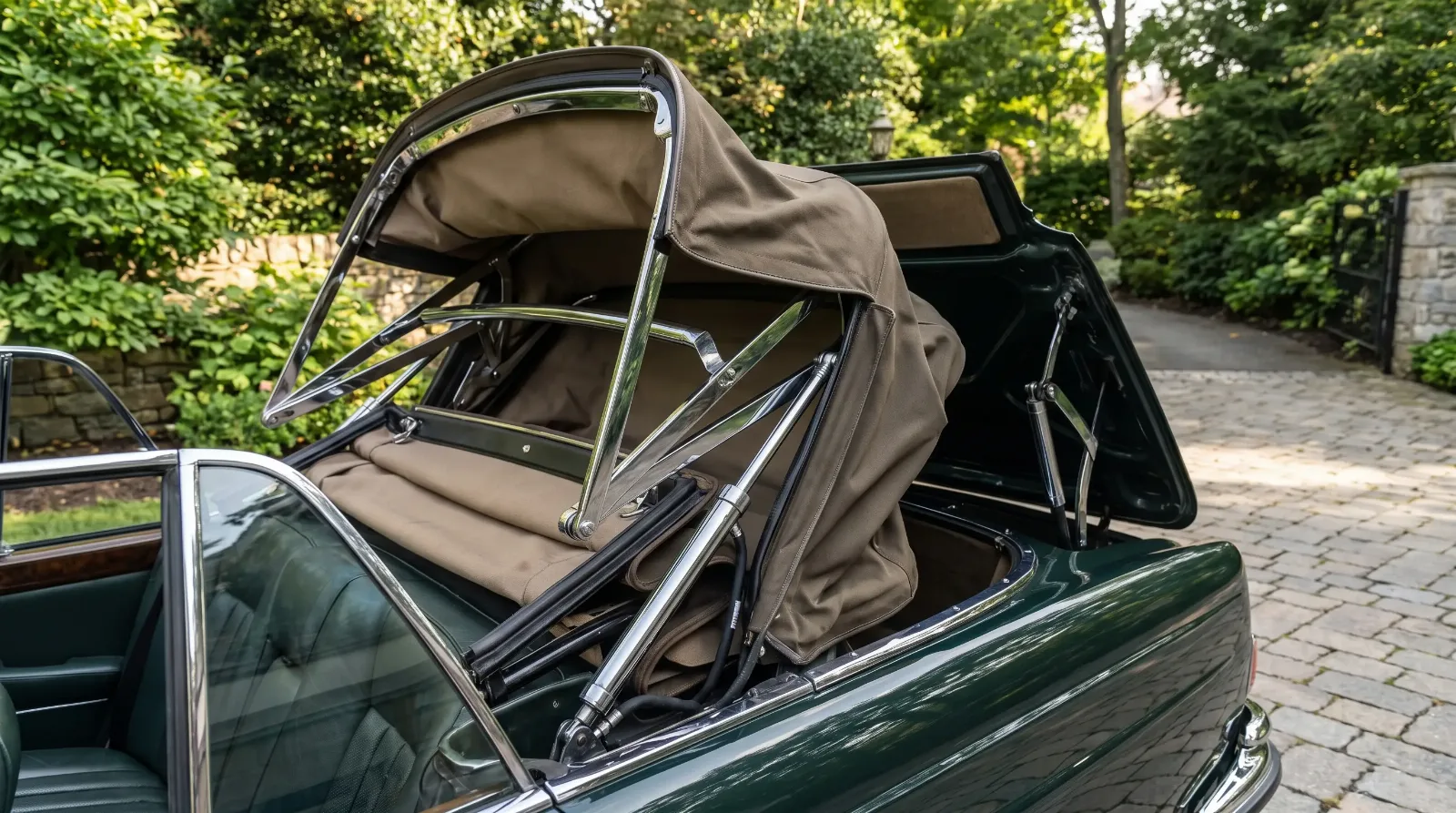
A classic convertible top is built around a skeleton of steel or aluminum bows, the transverse ribs that give the raised roof its shape and hold the fabric off the occupants' heads. Over that frame goes a layered assembly, an outer skin of coated cloth or vinyl, often a padding layer on the most formal cars to give a smooth, upholstered look, an inner headliner, and a rear window that was for decades a sheet of flexible plastic before glass became common. Each layer is stitched and bonded so the whole thing tensions evenly when the frame locks up.
The best of these were sewn by hand from heavy canvas duck, and later from the coated cloths that became the industry standard for quality tops. A correctly made top is not simply stretched over the bows. It is tailored, with the seams falling exactly along the bow lines so the raised roof looks crisp and the folded roof stacks neatly. That tailoring is why a cheap replacement top always looks wrong, bagging between the bows or pulling at the corners, even when the color is right.
From muscle to hydraulics
Early convertibles were raised and lowered by hand, and on a large luxury car that was real work. The luxury makers led the move to power operation, adding electric and then hydraulic assistance so the driver could drop the top from the seat. The typical postwar system used an electric pump driving hydraulic cylinders on each side, pushing the frame up and pulling it down while the driver held a switch. It felt like magic in 1950, and it added a whole category of things that could leak, bind, or fail.
The most ambitious answer to the folding-roof problem abandoned fabric entirely. Ford's retractable hardtop, the Fairlane 500 Skyliner of 1957 to 1959, folded a solid steel roof back into the trunk, an astonishing piece of mechanism for its day. It was heavy, expensive, and it swallowed most of the luggage space, and it lasted only three model years before Ford retired the idea, but it remains one of the great engineering set pieces of the American 1950s.
Where convertible tops go wrong
Every folding roof has predictable failure points, and knowing them turns a nerve-racking inspection into a checklist. The fabric fails first at the seams and at the rear window, where old plastic yellows, cracks, and finally tears. The frame rusts where water collects, especially at the pivots and the front header. Power systems leak, most often at the hydraulic cylinders and their lines, and a slow, uneven raise is usually a hydraulic complaint rather than a fabric one. Because water travels, a bad top is frequently the cause of a wet, rusting floor beneath it.
Why the craftsmanship still matters
Reproducing a convertible top correctly is one of the more specialized jobs in restoration, and it is not a place to economize. A proper installation on a large luxury convertible means correct material, correct padding where the car had it, and a trimmer patient enough to tension the fabric evenly across every bow. The difference between a good top and a poor one is visible from across a parking lot, and on a formal car it can move the whole restoration up or down a grade.
"I judge a convertible by its top before I judge anything else, because the top is where the maker's craftsmanship and the owner's care both show at once. Correct material, seams landing on the bows, a rear window without cracks, a frame that locks up tight. Get under the dash and watch it operate. A top that raises evenly and seals cleanly tells you the car was loved. One that fights you tells you what the previous owner was willing to ignore."
Sarah Whitfield
The folding roof asks more of a luxury car than any other single system, and for that reason it rewards close study more than any other. It combines tailoring, cabinetry, and hydraulics into one mechanism that has to work every time and look effortless doing it. Read the top well and you have read the whole car. For the wider view of where this craft sits in the story, the complete classic luxury car story ties it together, and the styling thread continues with the details that finished these cars off, in next: Whitewalls and Wire Wheels.
Related Reading
Have a
Classic Car
for Sale?
Reach thousands of serious classic car collectors across the US.
Sell It Here →
Are You a Classic Car Dealer?
List your full inventory and connect with targeted classic car buyers.
Join as a Dealer →

About the author
Sarah Whitfield
Third-generation classic car collector specializing in pre-war American and European coachbuilt automobiles. Researcher and concours enthusiast.




Comments (2)
M
MoparMatt
2 days ago
Honest question, are Skyliner owners rebuilding those original roof motors or swapping in modern actuators? Seems like a wiring nightmare haha.
T
Tom Addison
2 months ago
Seller said it was all original when I asked about the engine. VIN tag told a different story. Always check the details.