The 1970 Plymouth Cuda did not evolve out of the previous Barracuda. It arrived as a clean break, a wider, lower, far more aggressive shape built on a platform that had nothing in common with the compact-based cars that wore the Barracuda name through the 1960s. Understanding 1970 cuda styling means understanding that Chrysler's designers were finally given a blank sheet, and they used it to build one of the most confident looking cars to come out of Highland Park in that entire decade.
A new platform meant a new shape
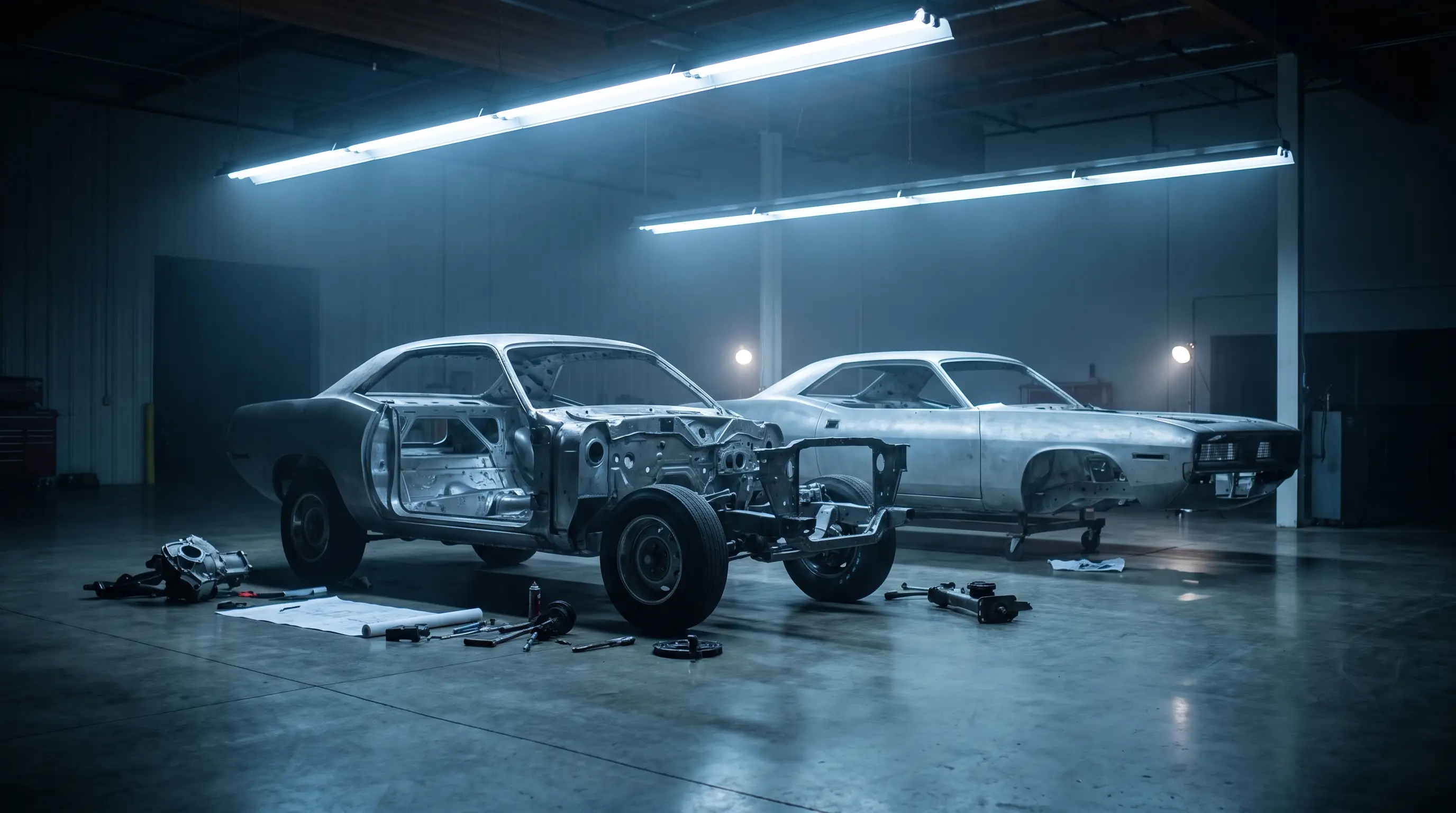
The 1970 Cuda rode on the E-body platform, a chassis developed specifically for the Barracuda and its Dodge Challenger sibling, and that structural freedom is the whole reason the styling could change so dramatically in one model year. Earlier Barracudas were built off the compact Valiant platform, which limited how wide the body could be and how low the beltline could sit. The E-body threw those limits out, giving stylists a wider track and a longer hood to work with, and the resulting proportions read as pure muscle car rather than compact car with a performance package bolted on. Anyone wanting the full mechanical background behind that shift should read 1970 barracuda history for the platform's complete story.
The face of the car
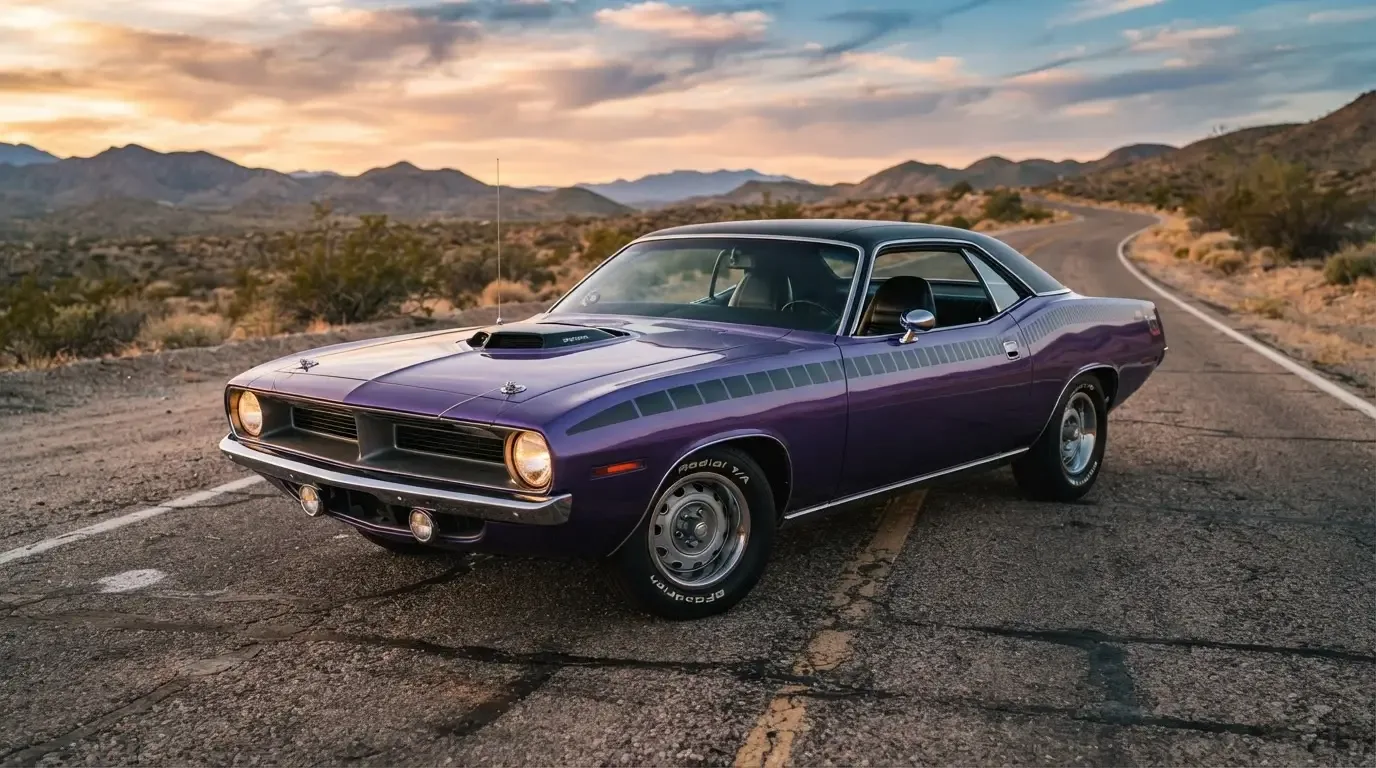
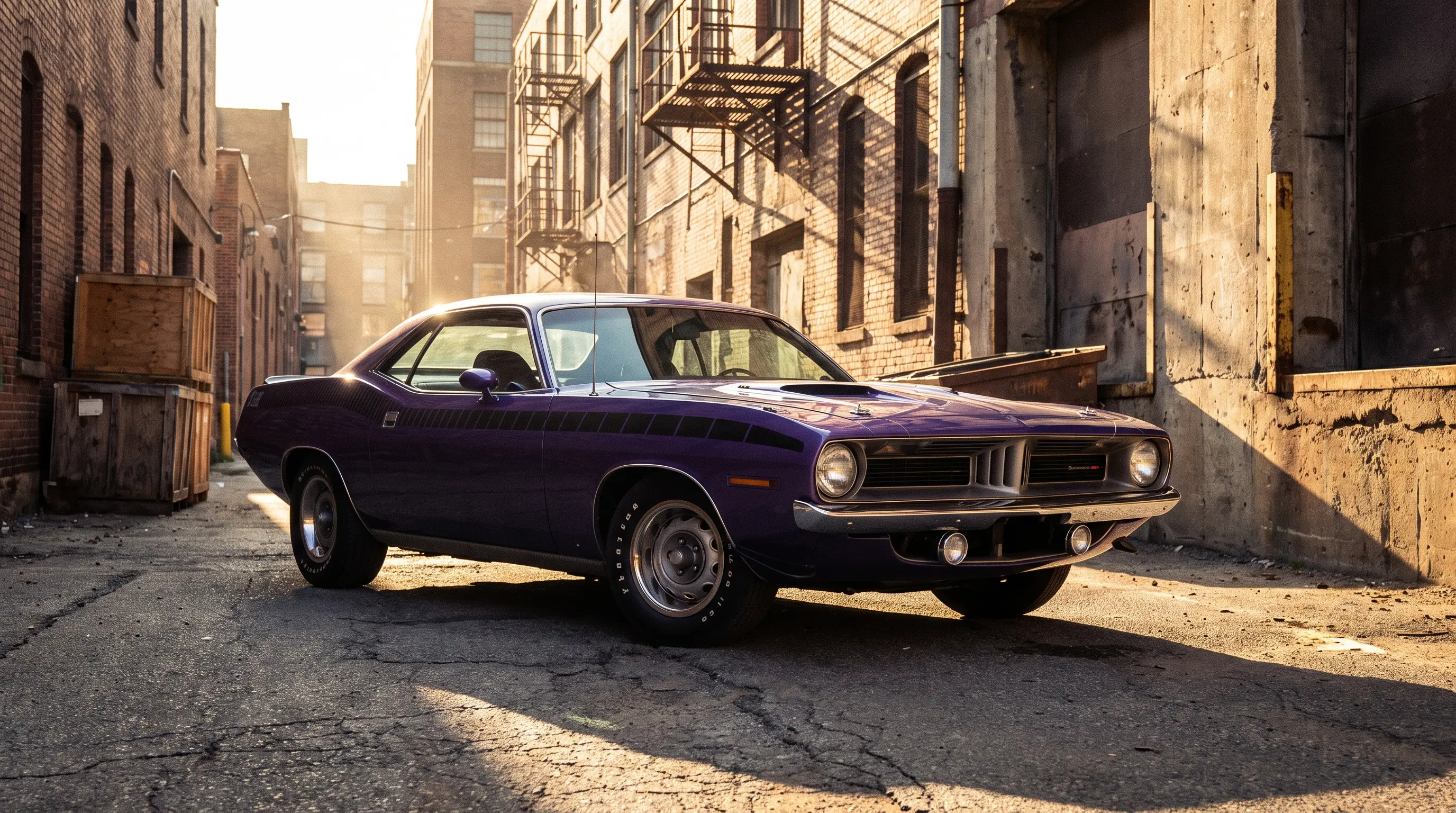
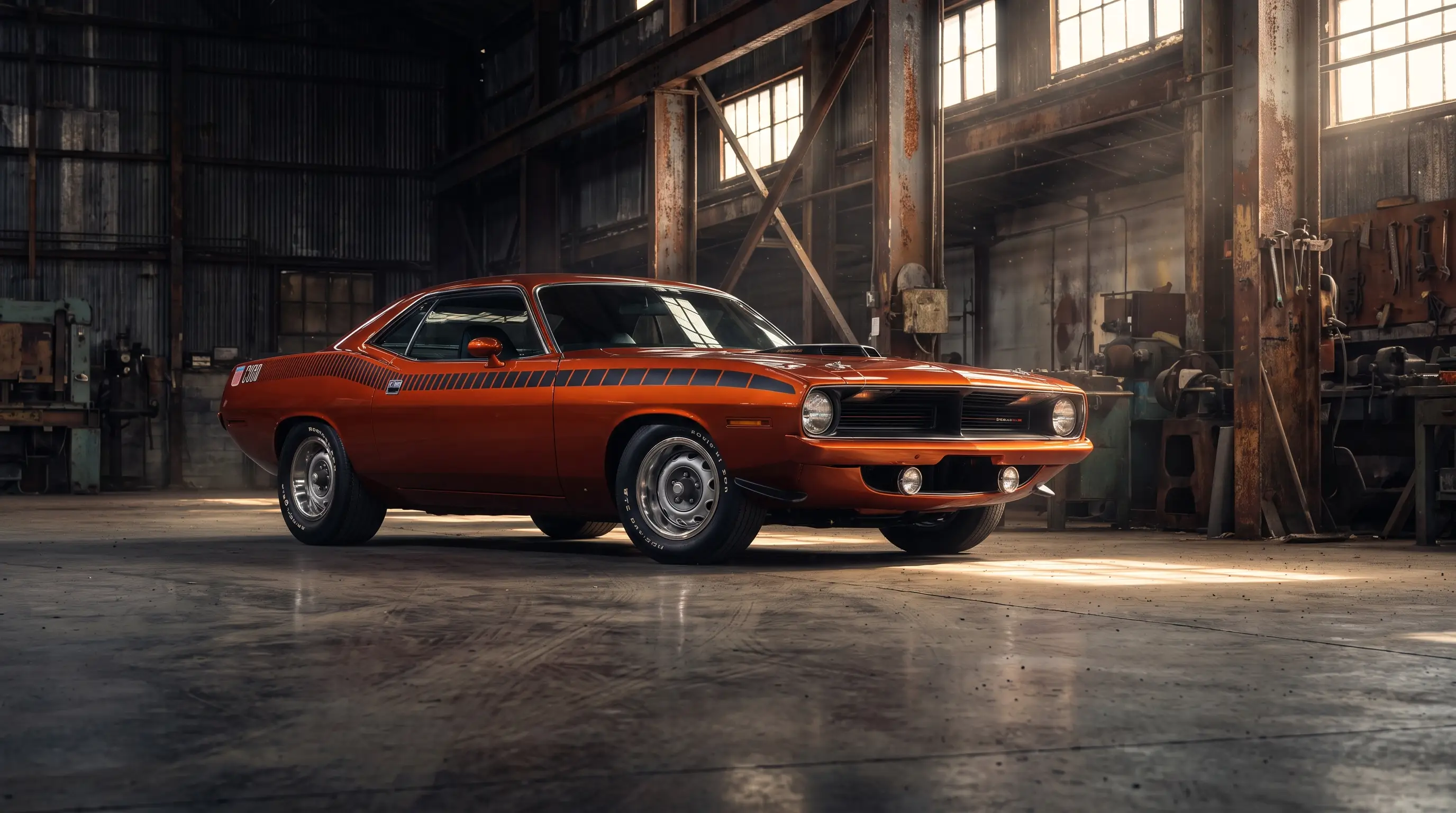
Up front, the 1970 Cuda carried a single, wide grille opening flanked by round headlights, a simple face compared to what would follow in 1971's quad-headlight redesign, and that simplicity is part of why so many collectors consider the 1970 front end the purer design. The hood itself came with available functional scoops depending on trim and engine, most notably the shaker hood scoop that poked straight through the hood surface and vibrated visibly with engine movement at idle, a detail that turned the engine itself into a styling element rather than something hidden under sheet metal.
The rear quarters carried the car's signature curve, a pronounced hip over the wheel arch that the design team used deliberately as a canvas for graphics. That is exactly where the available hockey stick stripe package sat, wrapping the character line and calling out engine displacement, and the whole design was built with that graphic placement already considered rather than added as an afterthought. The wider billboard stripe most people picture on an E-body Cuda did not arrive until the 1971 redesign, and putting it on a 1970 car misreads the year.
Trim levels wore the same shape differently
Plymouth built three distinct trim levels on the 1970 body, the base Barracuda, the Cuda, and the Gran Coupe, and the way each one dressed that shared shape says a lot about how deliberately the design team thought about audience. The base car ran cleaner, without the Cuda's specific grille treatment or the hood graphics package, aimed at buyers who wanted the proportions without the performance image attached. The Gran Coupe went the other direction entirely, adding brighter trim, upgraded interior appointments, and a more formal, luxury-leaning presentation aimed at buyers who wanted the shape without shouting about it.
The Cuda sat in the middle in market position but led the range visually. It carried the specific grille insert, the hood treatment options, and the graphics packages that made the shape read as a performance car from any angle, and it is the version most people picture when they think of the 1970 body regardless of which trim level they are actually looking at across a parking lot. That visual leadership is not an accident. Chrysler's product planners knew the Cuda needed to carry the image for the whole lineup, and the styling details reflect that assignment specifically, from the grille texture down to the available stripe packages that only really made sense on this particular trim.
Recognizing which trim level you are looking at from a distance is a useful skill for anyone shopping this era, because the same body shell wearing different trim can carry a substantially different price depending on buyer demand, and casual observers sometimes assume any 1970 E-body with the right proportions is automatically a Cuda when the grille and trim details say otherwise.
Interior and detail work
Inside, the 1970 Cuda moved away from the flatter, simpler dashboards of earlier Barracudas toward a more sculpted cockpit, with deep-set gauges and a console design that echoed the exterior's muscular curves. High-back bucket seats were available, and buyers could option houndstooth or vinyl inserts depending on trim level, choices that read today as period signatures almost as recognizable as the exterior colors. The overall effect was a cabin that felt purpose-built for a performance car, not a family compact wearing a sportier badge.
Color played an outsized role in how the 1970 styling read in period. The High Impact palette, names like Lemon Twist, Moulin Rouge, and In-Violet, gave the shape a second layer of personality, and a car finished in one of those colors with the correct stripe package looks like a completely different design exercise than the same body in a conservative factory color. The shape was doing real work regardless of paint, but the palette amplified everything the stylists had built into the sheet metal.
"Nineteen seventy is the year Plymouth's designers stopped adapting an existing car and started drawing one from nothing. Every panel on that Cuda earns its shape."
- Tom Ramirez
How the styling was received and how it aged
Period reviews praised the 1970 Cuda's proportions specifically, calling out the wide stance and low beltline as a real departure from the outgoing model, and that reception has held up remarkably well across five decades of hindsight. Where plenty of 1970s designs have aged into curiosities, the 1970 Cuda's shape still reads as confident and correctly proportioned today, which is a large part of why it remains one of the most collected American cars from the entire muscle car era.
For a related look at how this platform came together mechanically before the styling team ever touched a drawing, a related story covers the E-body's development from the ground up.
Why the design still matters to buyers
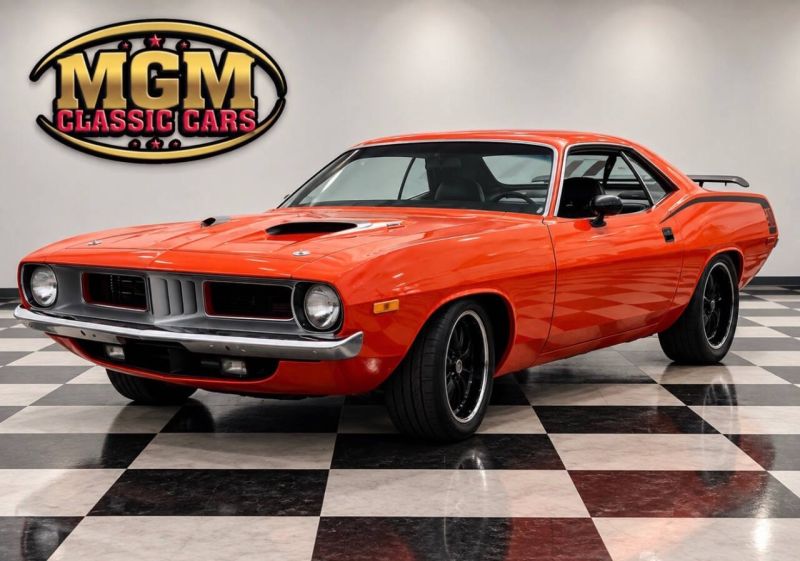
Originality in styling details, the correct grille texture, the correct scoop, the factory-matched stripe layout, carries real weight with today's buyers and judges, because so much of this car's appeal is visual first and mechanical second. A numbers-matching engine with incorrect trim will always draw more scrutiny at a serious sale than a well-documented, factory-correct exterior. Buyers who want to see how this styling holds up in person, rather than in old brochures, can look at what is currently listed as Barracudas for sale now and compare real cars against everything the design team built into that single, decisive model year.
The 1970 Cuda's styling was not an evolution. It was a statement, delivered once, on a platform built specifically to make it possible, and that is exactly why it still stops people in a parking lot more than fifty years later.