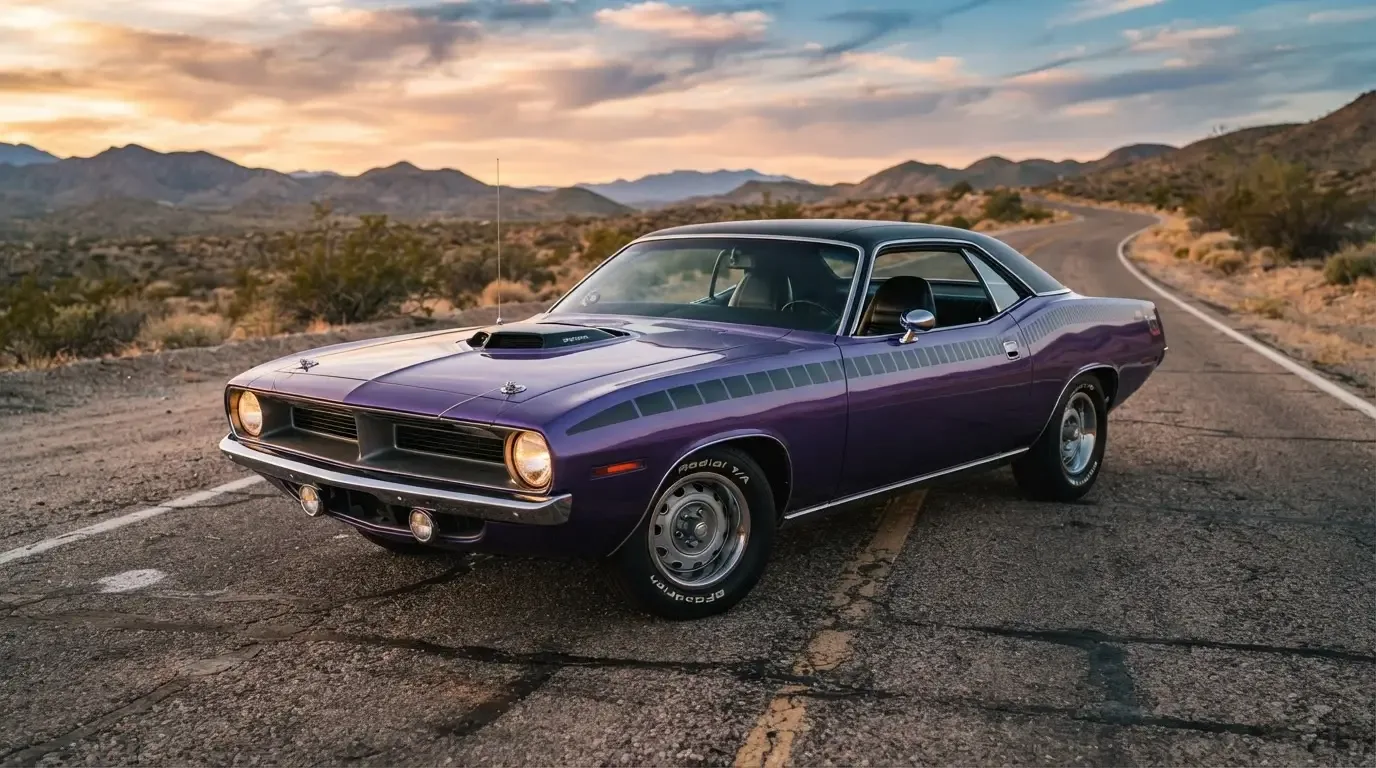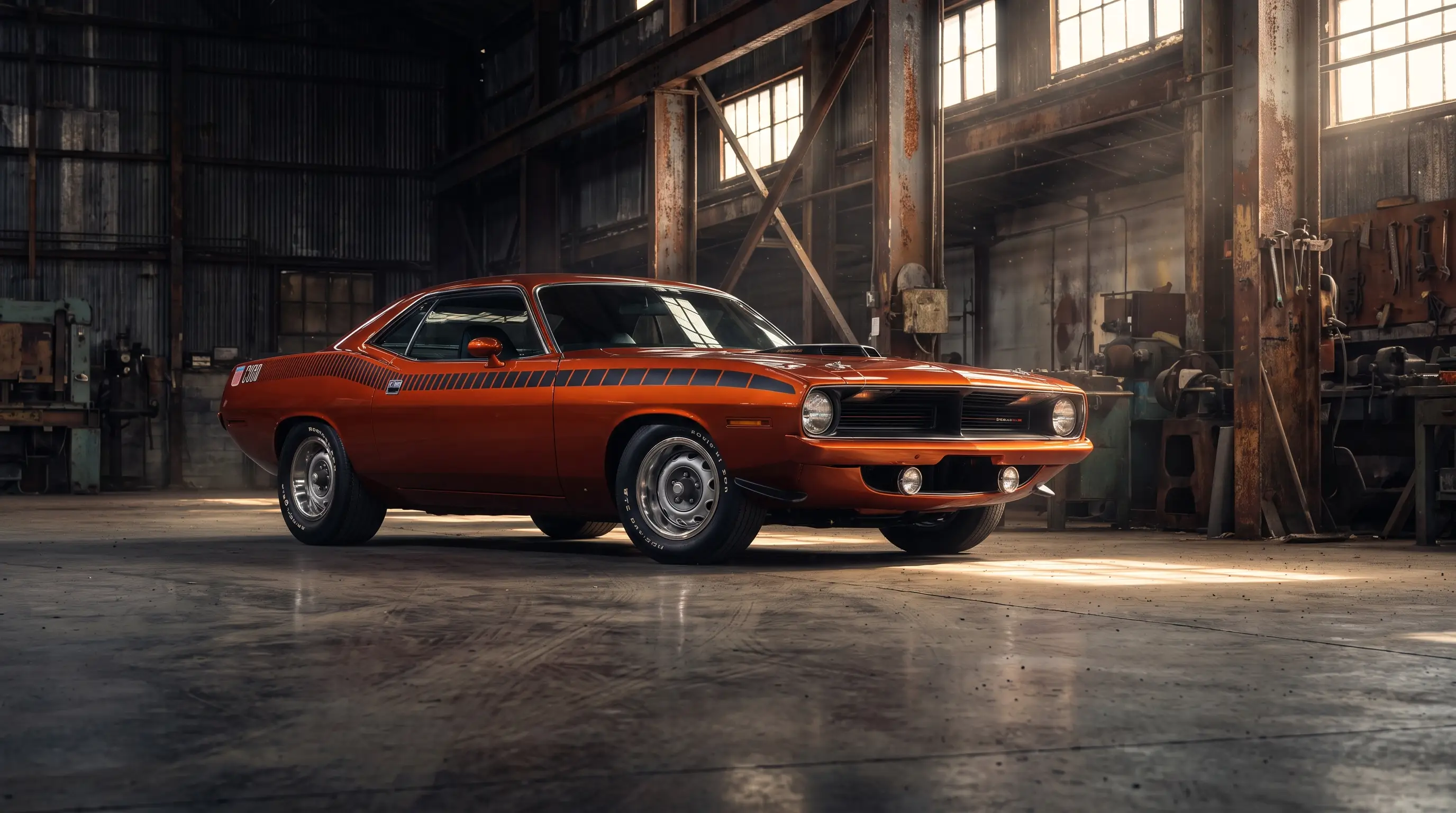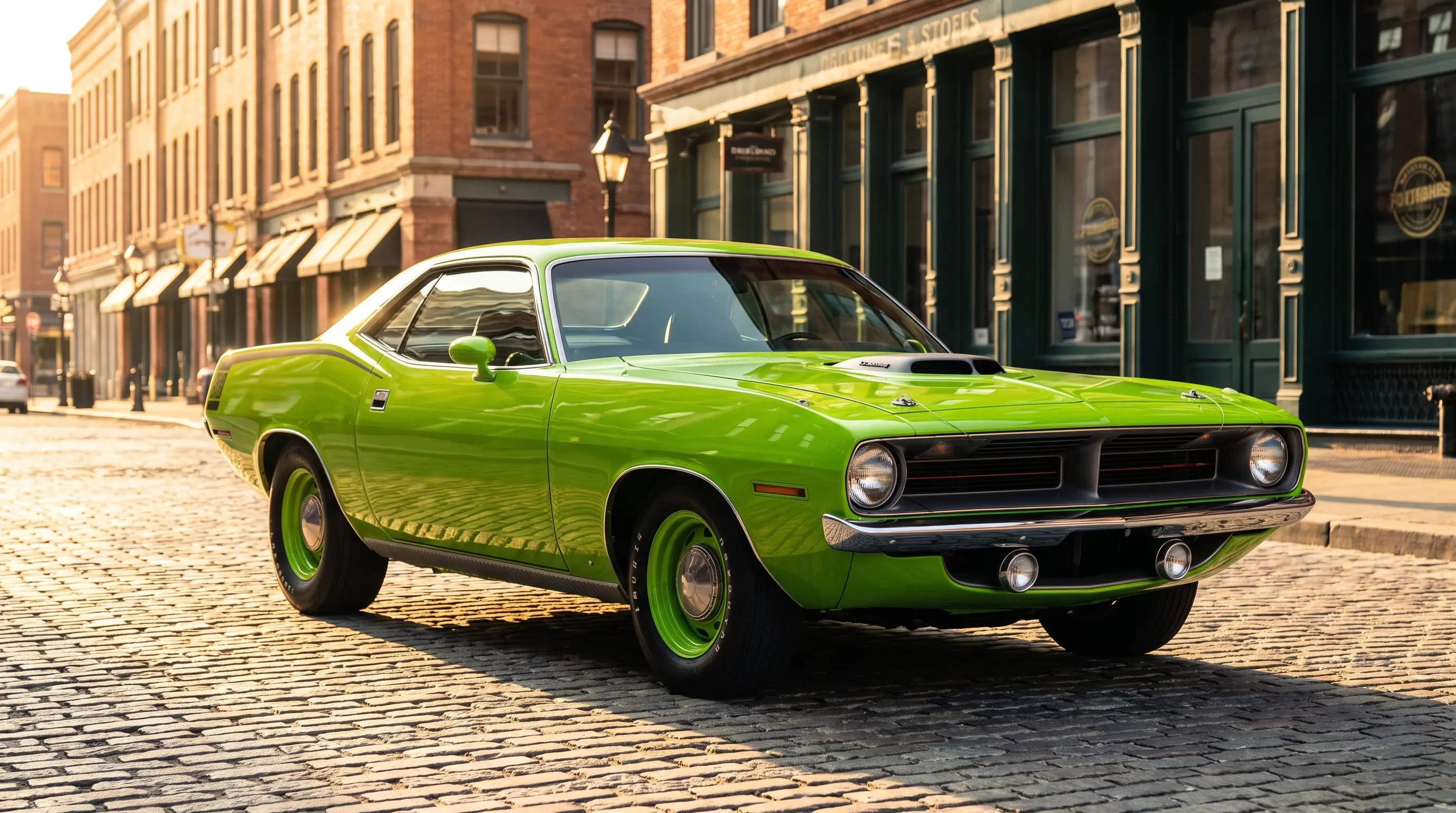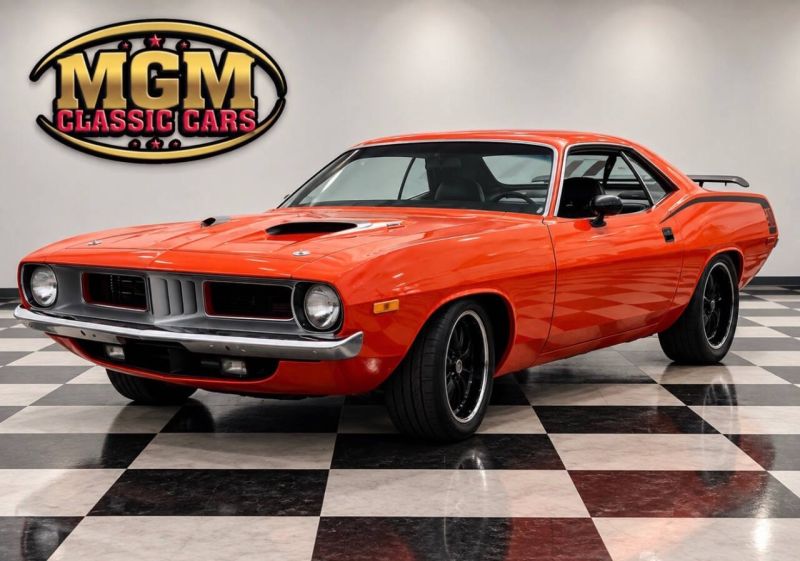
Every Mopar club meeting eventually gets to the same argument, usually somewhere around the second cup of coffee, about whether the Barracuda and the Challenger are really the same car underneath. I have watched this fight happen at three different regional shows, and it always resolves the same way once somebody who has actually crawled under both cars settles it: yes, they share bones, but the cuda e-body platform was never just a badge job on a Dodge, and the story of how that platform came to exist is more interesting than the argument itself.
Starting from nothing
Before 1970, the Barracuda had always been a Valiant underneath, a compact platform stretched and dressed up to compete in the pony car market Ford had created with the Mustang. That arrangement worked well enough in the mid-1960s, but by the end of the decade Chrysler's own product planners knew the compact-based approach had hit its ceiling. The car could not get wide enough, low enough, or aggressive enough looking to compete with what General Motors and Ford were building on purpose-designed platforms. The decision to build an all-new chassis specifically for the Barracuda and a new companion Dodge, the Challenger, came out of that recognition, and it is the reason the 1970 model year looks like nothing that came before it.
I remember an old-timer at one of our club dinners putting it plainly: Chrysler had been playing catch-up with a car built on borrowed bones for years, and the E-body was the moment they finally stopped borrowing. That single decision reshaped everything downstream of it, from the width of the doors to how the whole car sat on the road.
Shared bones, different personalities
The E-body platform underpinned both the Barracuda and the Challenger, sharing the basic unibody structure, front subframe, and much of the suspension architecture. But Chrysler gave the two cars different wheelbases, the Challenger rode on a longer wheelbase than the Barracuda, and that single dimension change let the two cars carry genuinely different proportions and personalities despite the shared engineering underneath. The Barracuda came off tighter and more compact looking, while the Challenger read as the longer, more boulevard-oriented cousin.
That wheelbase difference is the detail that ends most of the "they're just the same car" arguments at a club meet, once somebody actually measures the two side by side. They share a family, not a twin birth certificate, and the distinction matters to anyone restoring one correctly, since suspension and body components are not universally interchangeable between the two despite the platform kinship.
What the new platform unlocked
Because the E-body was purpose-built rather than adapted, engineers could widen the engine bay enough to comfortably accept Chrysler's largest engines, something the old Valiant-based Barracuda chassis had always struggled with. That is the direct link between the platform decision and the Cuda's ability to offer the 426 Hemi as a factory option starting in 1970, a powertrain that simply would not have fit in the compact-based car that came before it. The platform decision was not just about looks. It was the engineering prerequisite for everything the Cuda became known for through 1970 and 1971. Read the whole picture to see how that platform translated into the specific cars Plymouth actually built across those two years.
"Guys will argue all night about badge engineering, but nobody who has actually had a Challenger and a Cuda up on stands next to each other walks away thinking they're identical twins."
- Wayne Coburn
The development timeline nobody remembers correctly
Ask around a club meeting how long the E-body program actually took from approval to showroom, and you will get answers all over the map, mostly because people telescope the whole late-1960s product cycle into a single vague memory of "a few years." The reality is that Chrysler's product planners were working against a hard deadline, a 1970 introduction date that had already been set before the design was fully locked, which put real pressure on the engineering team to get the new unibody structure validated, crash tested, and tooled for production on a timeline that left little room for second-guessing.
That pressure shows up in small ways once you know to look for them. Some early production running changes on both the Barracuda and Challenger reflect last-minute adjustments made after tooling had already been committed, the kind of fix that happens when a program is racing a calendar rather than iterating at leisure. Club members who have restored early-production 1970 cars specifically, built in the first weeks after the model year started, sometimes find detail differences from later production cars of the same nominal spec, and that is a direct artifact of how compressed this development window really was.
None of that urgency shows up in the finished car's confidence, which is itself worth noting. Whatever the internal schedule pressure looked like on Chrysler's end, the E-body that reached dealers in the fall of 1969 for the 1970 model year did not read as rushed. It read as a fully resolved design, and that gap between how tight the actual development window was and how settled the final product looks is exactly the kind of detail that makes this platform's story worth telling at length rather than in the shorthand most casual conversations settle for.
A short life, a lasting shape
The E-body platform only lasted through the 1974 model year before emissions regulations, insurance costs, and shifting buyer tastes ended the pony car era across the entire American industry, not just at Chrysler. That short production run is part of why the platform carries so much weight in club conversation today. It was not around long enough to get diluted or watered down across a decade of running changes the way some longer-lived platforms did. What buyers got in 1970 was close to what the engineers intended from the start, and that clarity of purpose is something club members bring up again and again when they talk about why these cars still feel special compared to what came immediately before and after them.
For anyone who has spent an evening at a club meeting listening to these stories get told and retold, the E-body's short, focused existence is exactly what makes it worth chasing today. Buyers looking to own a piece of that specific engineering moment can go find a classic Barracuda and start comparing real cars against the history laid out here.
The platform argument at the club dinner never really ends, and it should not. That is half the fun of owning one of these cars, knowing the engineering story well enough to make your case, and knowing it well enough to know exactly where the other guy has it wrong.