The number that matters most when you talk about 1971 cuda rarity is not horsepower. It is the production count, and once you sit with those figures for a while, the 1971 Plymouth Barracuda starts to look less like a muscle car and more like a market anomaly, a single model year squeezed between a strong 1970 and a badly weakened 1972, built in numbers small enough that finding a clean one today is a genuinely different exercise than shopping the surrounding years.
Why one model year fell off a cliff
Total Barracuda production dropped hard for 1971, and the reasons are not mysterious once you look at what was happening across the entire muscle car market that year. Insurance surcharges on high-performance engines were biting into order sheets. Federal emissions rules were tightening ahead of the 1972 model year, which pushed compression ratios down across the board and made the big engines less appealing to order. And the E-body platform itself, shared with the Dodge Challenger, had already peaked in sales during its 1970 launch year, with the usual sophomore slump following right behind. Put those three forces together and you get a Barracuda lineup that shrank sharply in a single year, with the highest-performance variants shrinking the most.
That decline was not even across the model line. Base six-cylinder and small-block cars held up relatively better, since they were cheaper to insure and cheaper to buy. It is the big-block and Hemi cars where the numbers get genuinely thin, and where 1971 cuda rarity becomes a real, provable fact rather than just seller talk.
The quad-headlight year
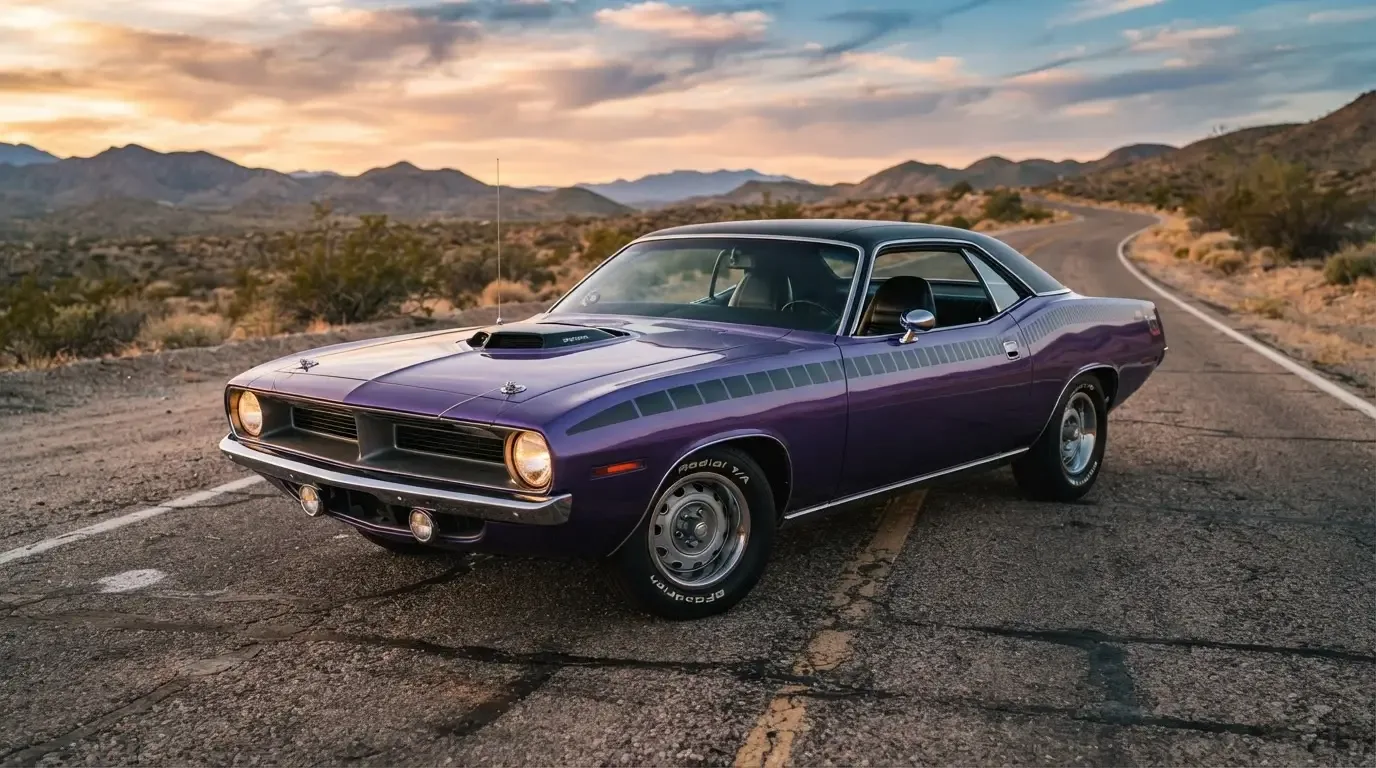
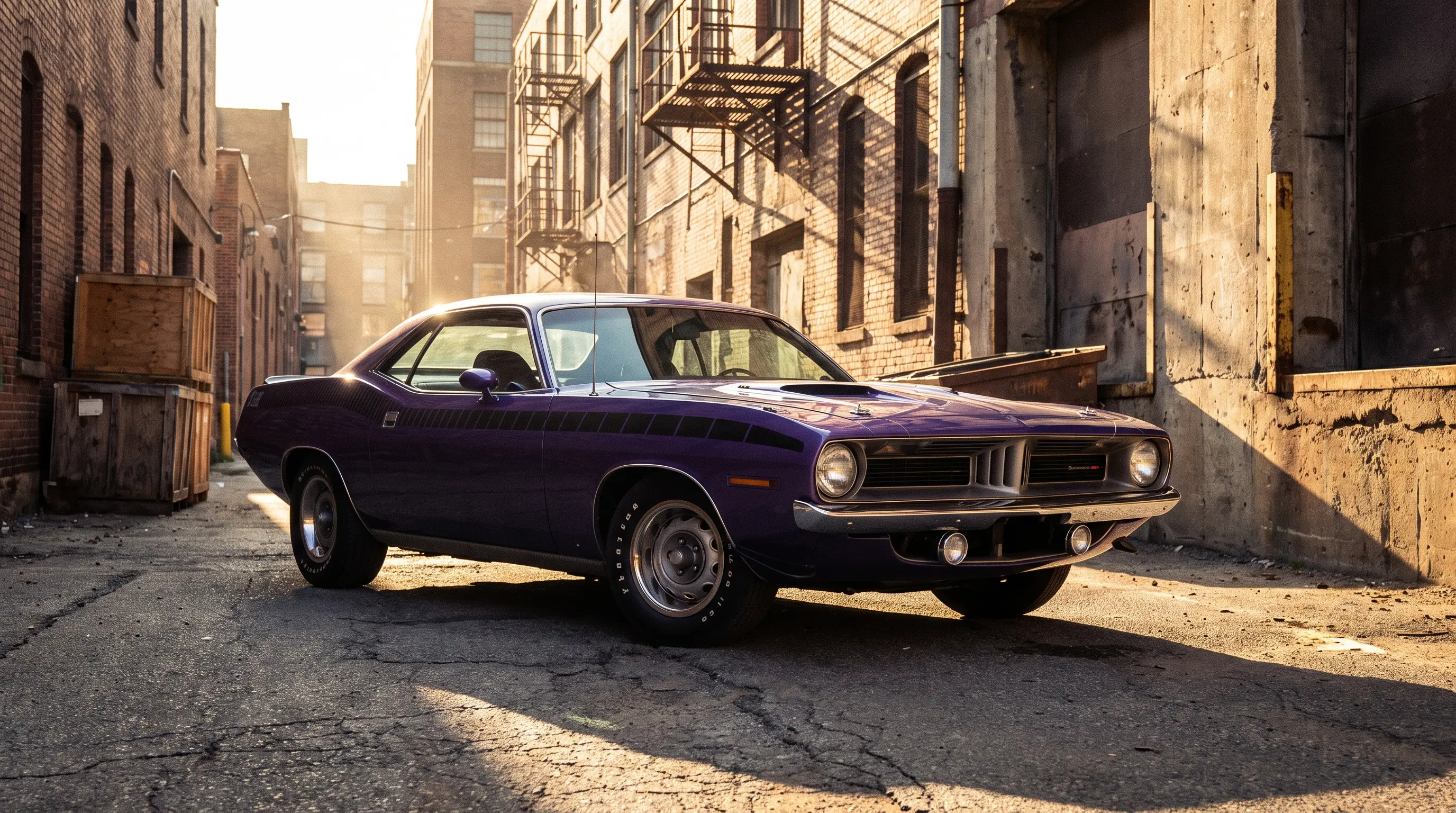
1971 is also the only model year of the E-body Cuda with quad headlights, a styling change that came and went in a single season before Plymouth reverted to the 1970-style single headlight arrangement for 1972 onward. That makes 1971 cars instantly identifiable even to a casual observer, and it adds a second layer to the rarity story: it is not just fewer cars built, it is a distinct look that exists on no other year of production. Collectors who specifically want that quad-headlight face have exactly one model year to shop, full stop.
Read our complete history of the 1970 and 1971 cars for the fuller picture of how the styling and options evolved between those two seasons, because the changes go well beyond the headlights.
What the numbers actually look like
Total 1971 Barracuda and Cuda production came in at roughly 16,500 cars across every body style and engine, well under the 1970 figure. Convertibles cratered hardest, a trend that hit every domestic manufacturer that year as buyers turned away from open cars regardless of the powertrain underneath. Within the Cuda and Hemi Cuda lines, the drop was steep enough that certain engine and body combinations for 1971 number in the hundreds rather than the thousands, the 440 Six Barrel came in at only 254 units and the 426 Hemi at only 114 units across the whole model year, and the convertible-and-big-engine combinations survive in the single and low double digits once documented, correctly-optioned survivors are counted rather than total build sheets.
| Factor | Effect on 1971 supply |
|---|---|
| Insurance surcharges | Suppressed orders for big-block and Hemi engines |
| Tightening emissions rules ahead of 1972 | Pushed buyers toward smaller, cheaper engines |
| Second-year sales slump | Overall E-body volume fell across the board |
| Convertible demand collapse | Open cars saw the steepest year-over-year decline |
| Single quad-headlight year | Created a styling variant unique to 1971 |
Survivorship makes the numbers worse, not better
Production totals only tell half the story. The other half is attrition, and a 1971 Cuda has had fifty-plus years to be crashed, rusted out, parted for a more valuable sibling, or simply left to rot behind a barn once it stopped being anyone's daily driver. Muscle cars from this exact window, cheap to buy used through the 1970s and 1980s before the collector market matured, took a beating that better-appreciated cars from other eras largely avoided. A meaningful share of any given 1971 production run is simply gone, which means the number of cars that actually survive in a condition worth restoring is smaller again than the already-thin factory build count would suggest.
That compounding effect is a pattern I track the same way I track any thin market, original supply shrunk by demand pressure, then shrunk again by decades of ordinary attrition. It is the reason completed sales data for 1971 Cudas, especially in the rarer engine and body combinations, has to be read car by car rather than averaged into a single blended number. A single well-documented sale of a genuinely scarce combination can move the entire comparable set for that specific configuration, because there may be only a handful of true peers left to compare it against.
This is also why serious buyers should not treat every 1971 as equally investment-grade just because the model year carries a rarity story. A six-cylinder 1971 Cuda, however scarce relative to earlier six-cylinder years, sits in a completely different demand tier than a big-block or Hemi car from the same year. Rarity within a low-demand configuration does not translate into the same price premium that rarity within a high-demand configuration commands, and conflating the two is a common mistake among buyers new to this specific market.
What rarity does to the market
Rarity alone does not set a price, documentation and condition do the heavier lifting, but 1971 cuda rarity acts as a hard floor under demand for genuine, correctly-optioned cars. I look at auction results the way an underwriter looks at a claims history: what actually traded, at what price, with what paperwork attached. Clean 1971 Cudas with matching numbers and a believable ownership trail command a real premium over comparable 1970 cars in the same trim, specifically because so few were built and fewer still survive unmolested. Clones and re-created trim packages exist in this market precisely because the real cars are worth chasing, which means buyer diligence on broadcast sheets and fender tags matters more here than almost anywhere else in the Barracuda lineup.
"Low production numbers only matter to a price if buyers can verify them car by car. On the 1971 Cuda, that verification work is exactly what separates a real premium from a hopeful asking price."
- David Mercer
Buying into a scarce model year
Anyone shopping seriously in this segment should treat a 1971 as its own category, not an interchangeable stand-in for a 1970 car with a different grille. Get the fender tag decoded, cross-reference it against the broadcast sheet if one survives, and price the car against actual completed sales of similarly documented 1971s rather than general Barracuda market averages, which will understate what a genuinely scarce, correctly optioned example is worth. For buyers ready to move, it is worth taking the time to browse classic Barracuda listings and compare real inventory against the production realities laid out here before making an offer.
The 1971 Cuda is a short chapter in the Barracuda's story, one model year wedged between a strong debut and a declining finish, but it is exactly that brevity that gives it lasting weight in the market today.
Sources and notes
- 440 Magnum Network: 1971 Plymouth Barracuda Production Numbers
- Classic Industries: The Unicorns of Auburn Hills, 1970 and 1971 Hemi 'Cuda Convertibles
- HotCars: The Rarest Hemi 'Cuda Reminds Us What Rare Really Means
- autoevolution: 1971 Plymouth Cuda With Rare Options Becomes World's Most Expensive 383 Hardtop
- Wikipedia: Plymouth Barracuda