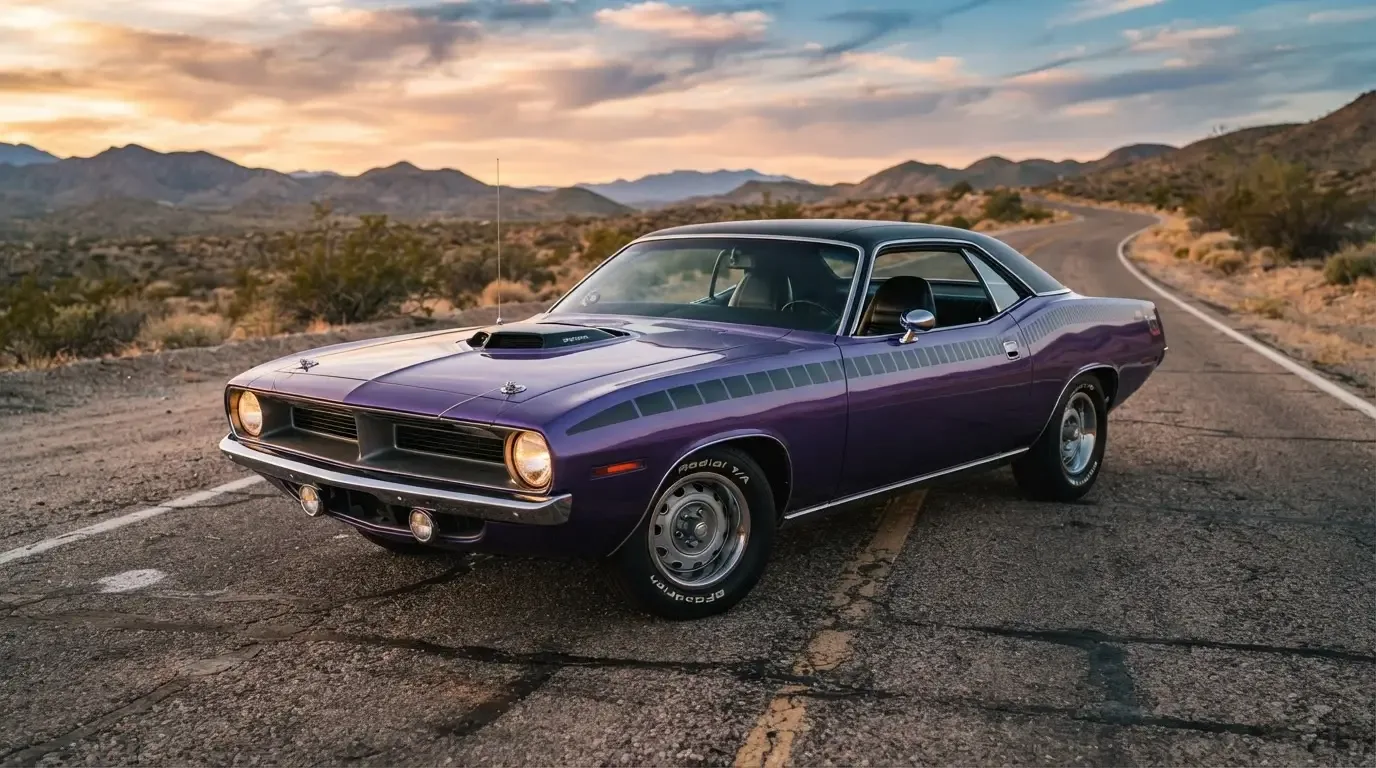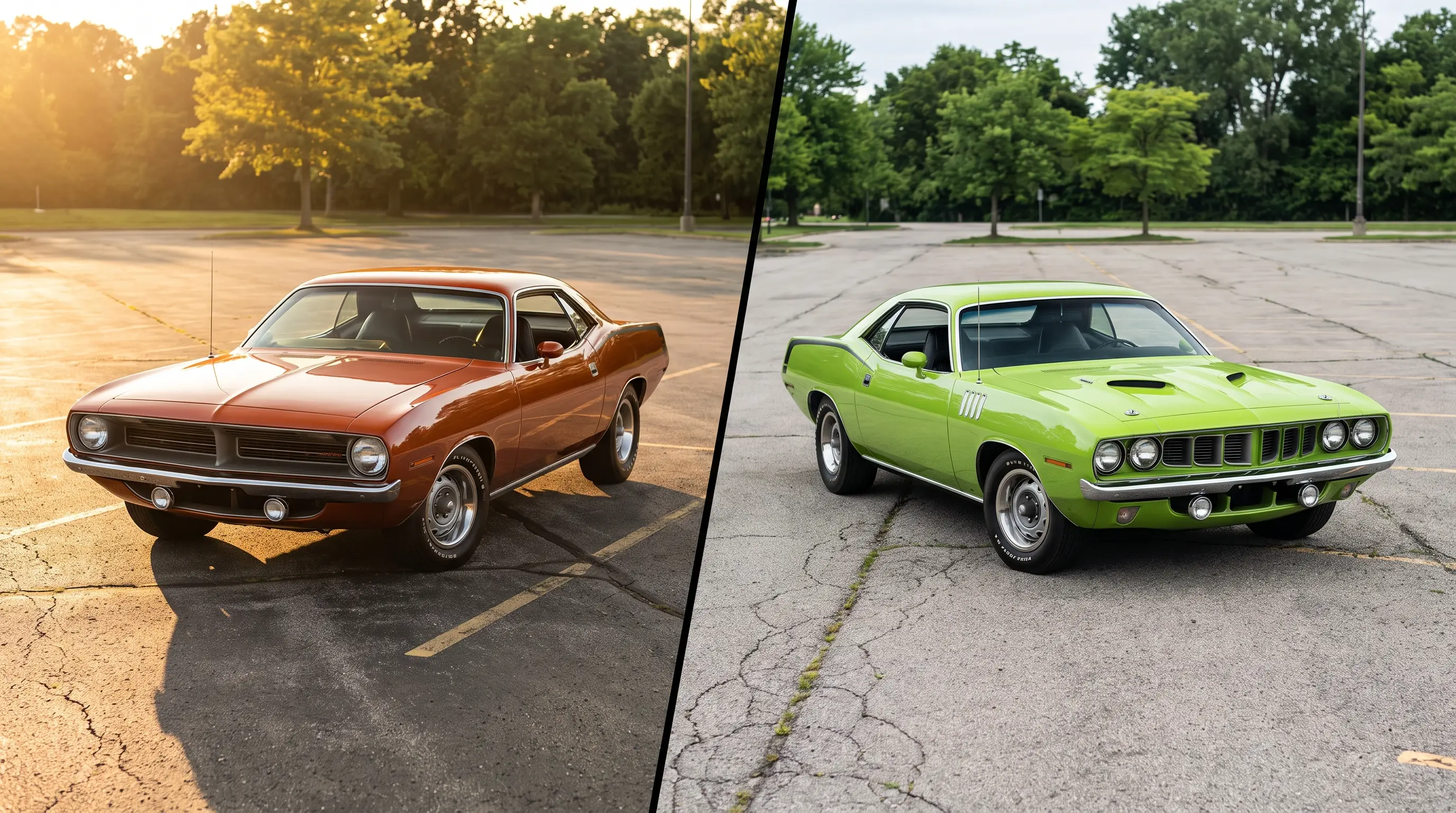
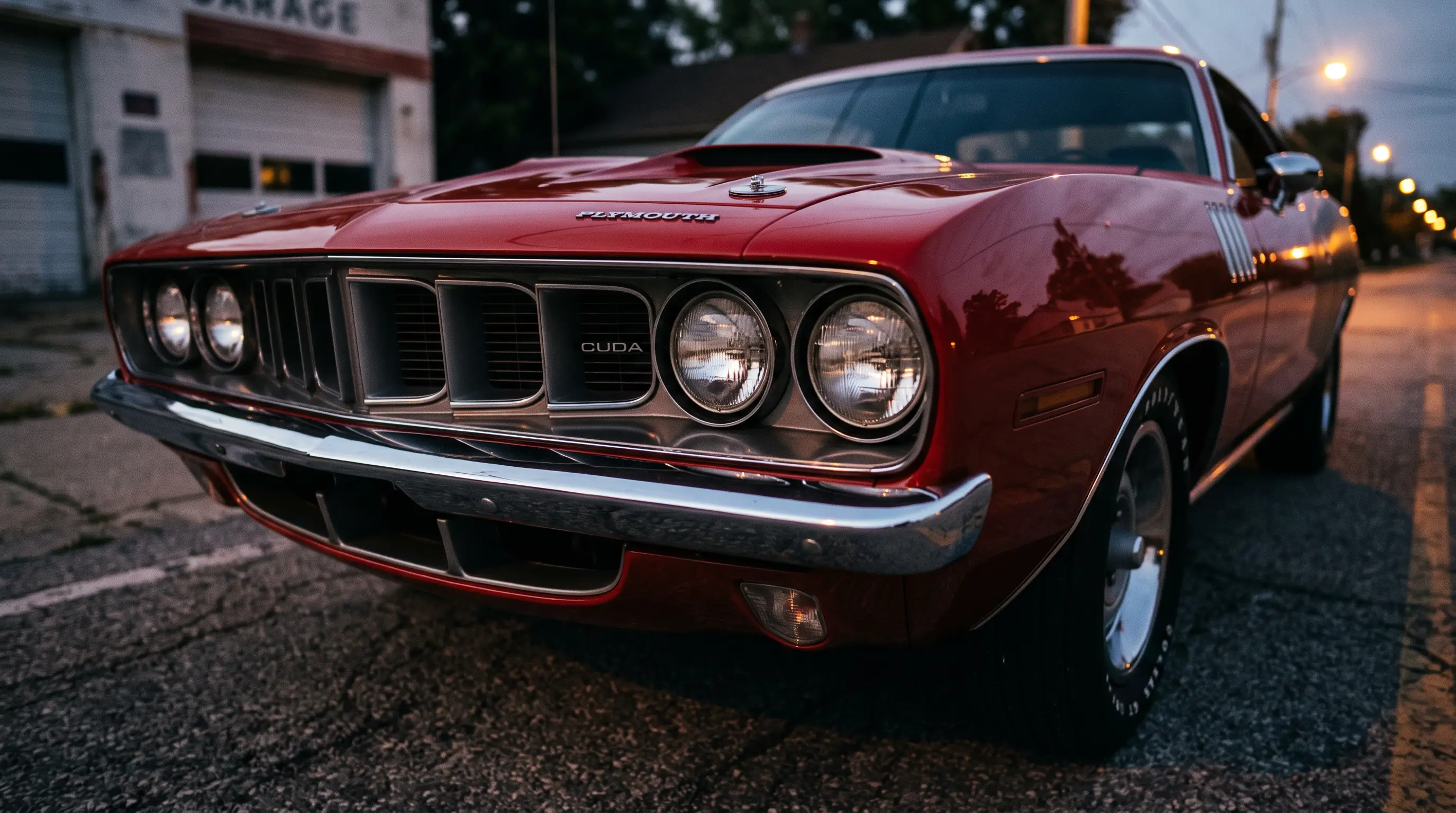
Of every visual change Plymouth made to the Barracuda across its four-year E-body run, none is as immediately recognizable as the 1971 Cuda grille and its four-headlight face. Where the 1970 car presented a single lamp per side set into the grille opening, the 1971 model pushed the outer pair of headlights out into the leading edge of the fenders, a layout unique to that single model year. For anyone documenting or restoring a car from this period, understanding exactly how that grille was built, and how easily it gets confused with reproduction parts today, is essential.
A one-year-only design decision
Plymouth's stylists revised the Barracuda's front end for nearly every model year of the E-body generation, and 1971 received the most dramatic treatment of the four. The quad headlight arrangement was not a running change made mid-year, it was a deliberate design commitment for the entire 1971 production run, distinguishing it clearly from both the 1970 model before it and the 1972 model that replaced it with a return to twin headlights. Documentation from period Plymouth literature confirms the layout was treated internally as a full styling revision rather than a minor facelift, which explains why the tooling for the fenders, the grille surround, and the header panel all changed together rather than piecemeal.
Anyone working from a 1970 car and trying to understand what came before the quad-light treatment should look at more on the 1970 barracuda, which lays out the design that the 1971 grille replaced.
How the grille itself was constructed
The center grille section on the 1971 Cuda uses a bolder, more open mesh pattern than the finer texture found on the 1970 car, and it no longer needs to accommodate headlight housings within its own boundary since those moved to the fenders. This freed the designers to treat the grille as a purely decorative element rather than a functional housing, giving it a more aggressive, forward-leaning appearance that period road tests commented on directly. The grille surround itself is body colored on some trim configurations and blacked out on others, depending on options selected at the factory, which is a detail restorers frequently overlook when sourcing reproduction parts.
The fender-mounted headlight buckets required their own sheet metal stampings, meaning a 1971 fender is not interchangeable with a 1970 or 1972 unit without significant rework. This is one of the more expensive lessons in the E-body restoration world, since a fender sourced from the wrong year will simply not accept the correct headlight housing without modification.
Why documentation matters more than memory here
Because the 1971 grille design was so short-lived, it has become one of the most frequently misidentified parts in the E-body aftermarket. Reproduction suppliers sell grilles cataloged under general "1970-71" or "1970-74" listings that do not actually fit both years correctly, and buyers restoring a numbers-matching car need to verify fitment against a genuine period parts book rather than trust a catalog description. Broadcast sheets and factory build documentation remain the most reliable record of what a given car left the assembly line wearing, and cross-referencing that paperwork against the physical car is the only way to confirm a grille and fender combination is period correct.
Parts counter staff at swap meets will sometimes tell a buyer a grille "fits all early Cudas," and that claim should always be checked rather than trusted outright. The physical differences in fender stamping depth and headlight bucket shape mean a grille built for the wrong year will either sit poorly, fail to seat against the fender properly, or require trimming that a judge at a sanctioned show will notice immediately. Careful buyers keep a folder of period photographs and factory parts book pages specifically for this reason, since visual memory alone is not a reliable enough standard when real money is on the line.
How the grille interacts with the rest of the front clip
The grille does not exist in isolation. It sits within a header panel assembly that also locates the hood latch and the front turn signal housings, meaning a grille pulled from a parts car needs the surrounding hardware to match as well or the whole assembly will not seat correctly. Restorers working on a numbers-matching 1971 car often find it easier to source an entire header panel assembly as a unit rather than trying to piece together individual components from different suppliers, since fitment tolerances across reproduction parts are not always consistent from one manufacturer to the next.
This interconnected design is part of why the 1971 front end commands so much attention in restoration circles. Get one piece wrong and the whole assembly can look subtly off in photographs even if it passes a casual glance in person, which is exactly the kind of detail that separates a documented, correctly assembled car from one that merely looks the part.
For readers who want the origin point of the whole Barracuda story before the E-body years and the styling decisions that led to 1971, where this started traces the model back to its first generation.
Collector demand and what it means for values
The distinctive one-year face has made 1971 cars a specific target for collectors who want the quad-headlight look and are not willing to settle for a 1970 or 1972 substitute. This demand shows up in auction results, where well-documented 1971 Cudas with correct, unmolested grilles and fenders command a premium over cars with mismatched or reproduction front ends that do not present correctly under close inspection. Buyers shopping specifically for the 1971 look should budget time for verifying originality rather than assuming any car advertised as a 1971 actually retains its factory grille assembly.
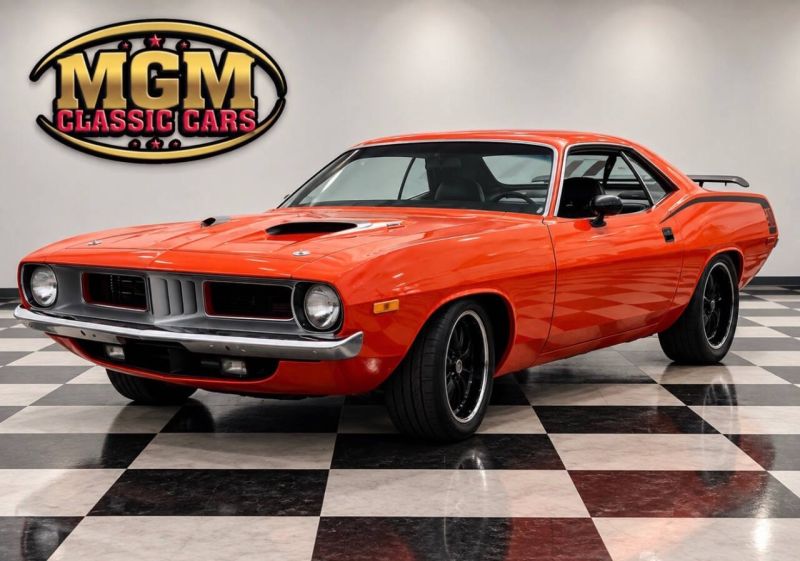
Those looking to acquire a car from this era, whether a documented 1971 or a comparable 1970 example, can browse classic Barracudas on the market to see what condition and documentation currently commands in real listings.
"The 1971 grille is a one-year part in every sense that matters. If a car has it and the fenders match, that is worth confirming with paperwork, not just a glance."
- Sarah Whitfield
What a careful inspection actually looks for
A proper inspection of a 1971 Cuda's front end starts with confirming the fender stampings match known 1971 part numbers, checking that the headlight buckets are the correct depth and shape for the fender-mounted design, and verifying the grille texture matches period photographs rather than a generic reproduction pattern. Paint and chrome condition matter for cosmetics, but originality of the underlying stampings is what separates a documented example from a well-restored guess. Cars that retain their original sheet metal in this area, even with some wear, are generally considered more desirable by serious collectors than a car wearing brand new but incorrect reproduction parts.
The 1971 model year gave the Barracuda a face it never wore again, and that rarity is exactly why the details around its construction, sourcing, and documentation continue to matter to anyone serious about the car's history.