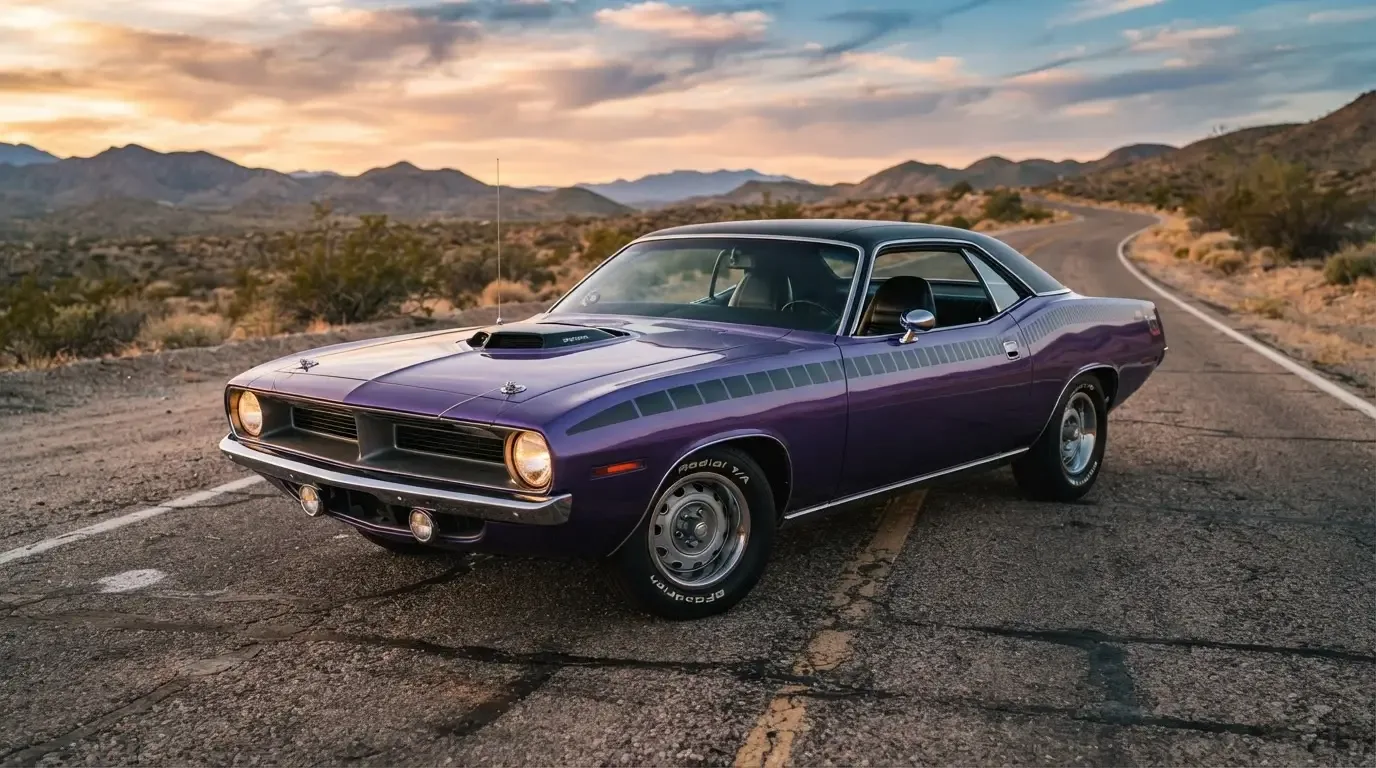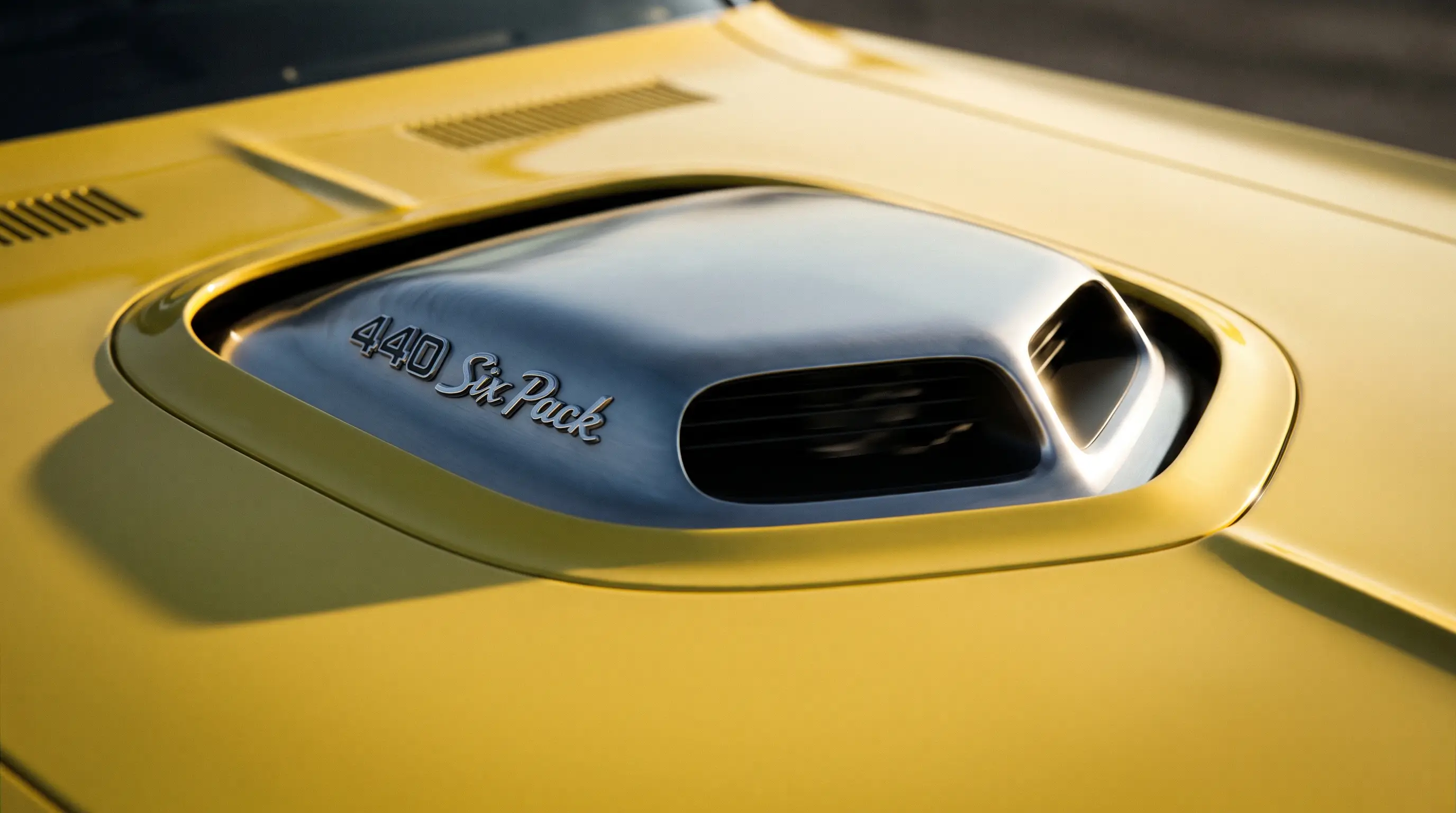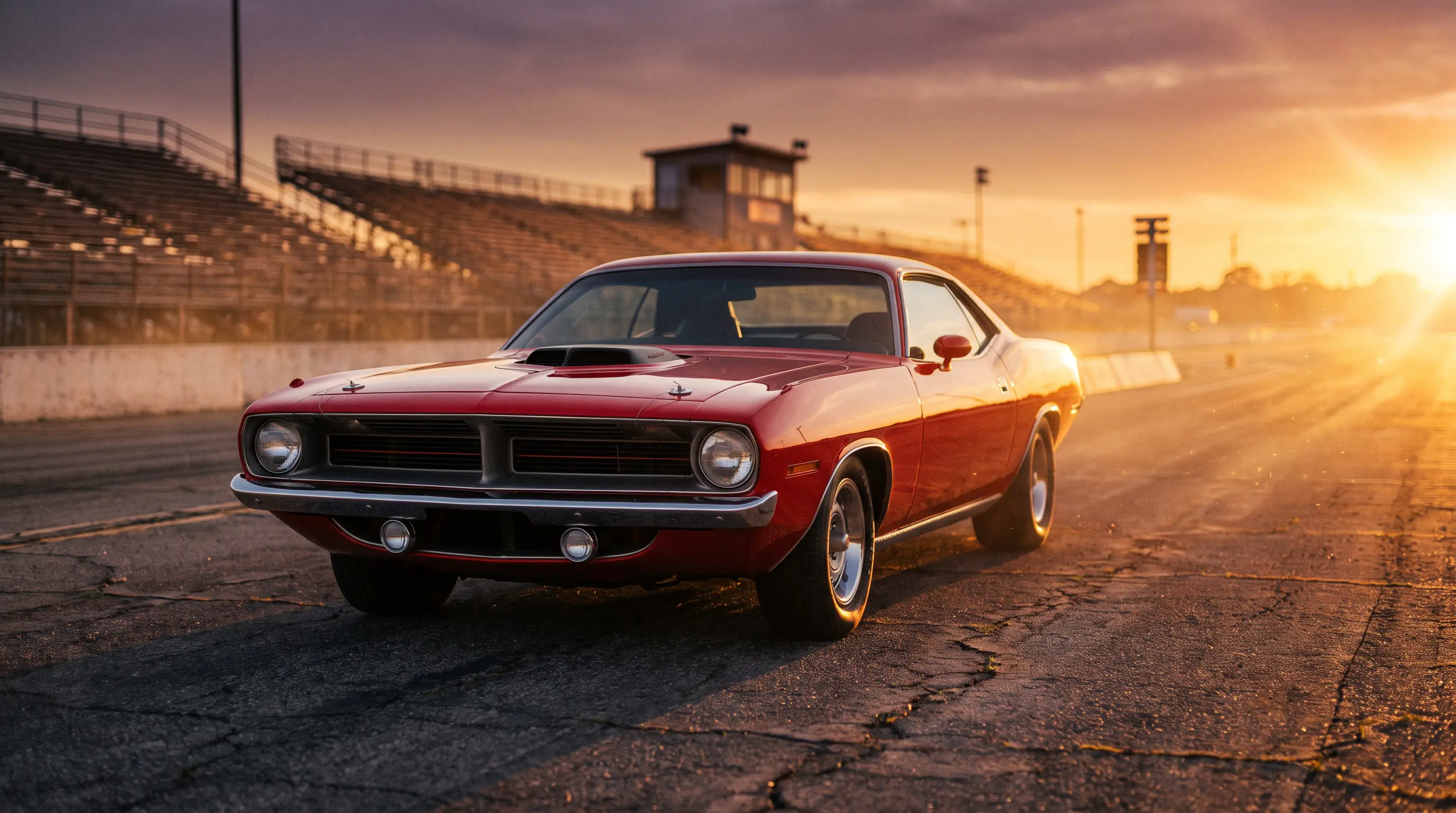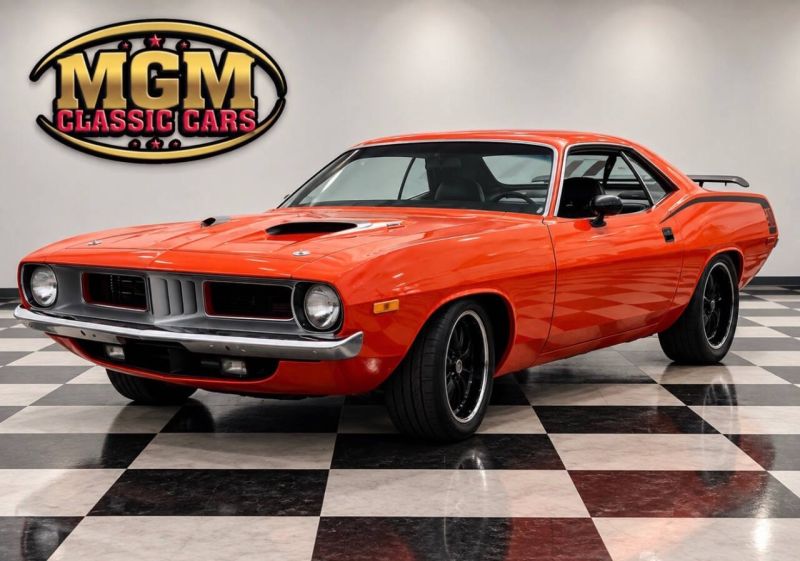
Big block Cudas get most of the attention, but the Cuda 340 is the car that actually rewards a driver who wants to use it on a road with more than one turn. Displacing a modest 340 cubic inches against the 383, 440, and 426 Hemi options sitting above it on the order sheet, the small block traded outright thrust for a chassis balance the heavier engines could never match. It is the option that engineers, rather than drag strip regulars, tend to defend most strongly when the argument comes up at a show.
The numbers that matter and the ones that get exaggerated
Plymouth rated the 340 four-barrel at 275 horsepower, a figure that undersells how the engine actually performed once revved past 5,000 rpm. Unlike the big blocks, which built their reputation on low-end torque, the 340 was happiest spinning quickly, with a free-breathing cylinder head design that let it pull cleanly toward its redline in a way a 440 never bothered to. Weight distribution is the real story here. A 340 Cuda carries meaningfully less mass over the front axle than a 440 or Hemi car, and that difference shows up immediately in how the car turns in, not just in how it accelerates.
Quarter mile numbers for the 340 typically ran a half second to a full second behind a well-tuned 440 car, a gap that big block buyers loved to point out and small block buyers largely ignored, because straight-line speed was never really the point of choosing this engine.
Why the chassis balance actually matters
Muscle car discussions tend to fixate on horsepower figures and ignore what a lighter engine does to a car's front-to-rear weight distribution. The 340's compact iron block and shorter accessory drive meant less mass sitting ahead of the front wheels, which translates directly into quicker steering response and less understeer at the limit. On a genuinely twisty road, a well-set-up 340 Cuda can keep pace with, and in some corners outrun, a 440 car that is objectively faster in a straight line but noticeably more reluctant to change direction. This is not a controversial engineering point, it is simply physics, and it is the reason the 340 built its own dedicated following instead of being dismissed as the budget option.
| Spec | 340 Cuda |
|---|---|
| Displacement | 340 cubic inches |
| Rated output | 275 hp (four-barrel) |
| Character | High-rpm breathing, quick-revving |
| Relative weight vs 440/Hemi | Notably lighter over front axle |
How it fits into the wider Barracuda engine lineup
The 340 sat in an interesting spot on the order form, priced below the big block options but delivering a driving experience that a good number of period buyers actually preferred once they had driven both. It shared showroom space with the 383, the 440 in standard and Six Barrel form, and the legendary 426 Hemi, and Plymouth marketed all of them under the same aggressive Cuda badge without pretending one was simply a lesser version of another. For readers who want the full breakdown of how these engines and the rest of the early Cuda lineup came together, the full story covers that ground in detail.
Buyers cross-shopping engines today still face the same basic decision period buyers did: chase outright straight-line numbers with a big block, or take the small block and get a car that rewards a driver willing to work the gearbox and use the corners.
Reliability and everyday livability
There is a practical side to the 340 story that gets less attention than the horsepower numbers. A smaller, lighter engine put less strain on the front suspension components over decades of driving, meaning original 340 cars often present with less wear in the front end than big block equivalents that saw the same mileage. Fuel consumption, while never good by modern standards, was noticeably better than the 440 or Hemi options, which mattered to period buyers who intended to actually drive the car regularly rather than treat it as a weekend toy. That combination of lower running cost and reduced mechanical strain is part of why so many 340 Cudas survived in driveable condition into the collector era, rather than being parked and forgotten the way some harder-to-maintain big block cars were.
What this means for buyers today
Values for 340 Cudas have climbed steadily as more buyers rediscover what the option actually delivers, though they still generally sit below equivalent 440 and Hemi cars in most market comparisons. That gap has narrowed over the past several years as documented, numbers-matching 340 cars become harder to find in unmolested condition, since plenty were modified or swapped over the decades by owners chasing more power rather than preserving what Plymouth originally built. A correctly documented 340 with its original engine and drivetrain intact is a legitimately scarce find, and the asking prices increasingly reflect that scarcity rather than treating the engine as an afterthought next to its bigger siblings.
Anyone shopping this segment of the market can browse classic Barracuda listings to compare what is currently available across the different engine options.
"People ask why anyone would pick the small block over a 440. Then they drive both back to back through a set of corners, and they stop asking."
- Emily Chen
What a proper inspection looks for
Confirming a genuine 340 Cuda comes down to matching the fender tag's engine code against the block's casting numbers and date codes, since the 340 was popular enough that plenty of cars have had engines swapped in or out over the decades for reasons ranging from a blown motor to a simple desire for more power. A numbers-matching 340 with documentation tracing it back to its original build sheet carries real value over a car with a period-correct but non-original replacement engine, even if the replacement is mechanically identical. Buyers should also check the intake manifold and carburetor casting numbers, since these components were frequently swapped for aftermarket parts by original owners chasing extra performance, and a fully factory-correct induction setup is scarcer than the engine block alone.
The honest tradeoff
None of this is meant to argue the 340 is objectively superior to the big block options, because it is not, at least not in every measure that matters to every buyer. It gives up real acceleration and a good deal of low-end torque in exchange for a car that handles with more precision and rewards a driver who actually wants to steer rather than simply point and accelerate. That tradeoff was clear to period buyers who chose it deliberately, and it remains just as clear to modern collectors who understand exactly what they are getting when they pass on a 440 for the lighter, quicker-revving alternative.