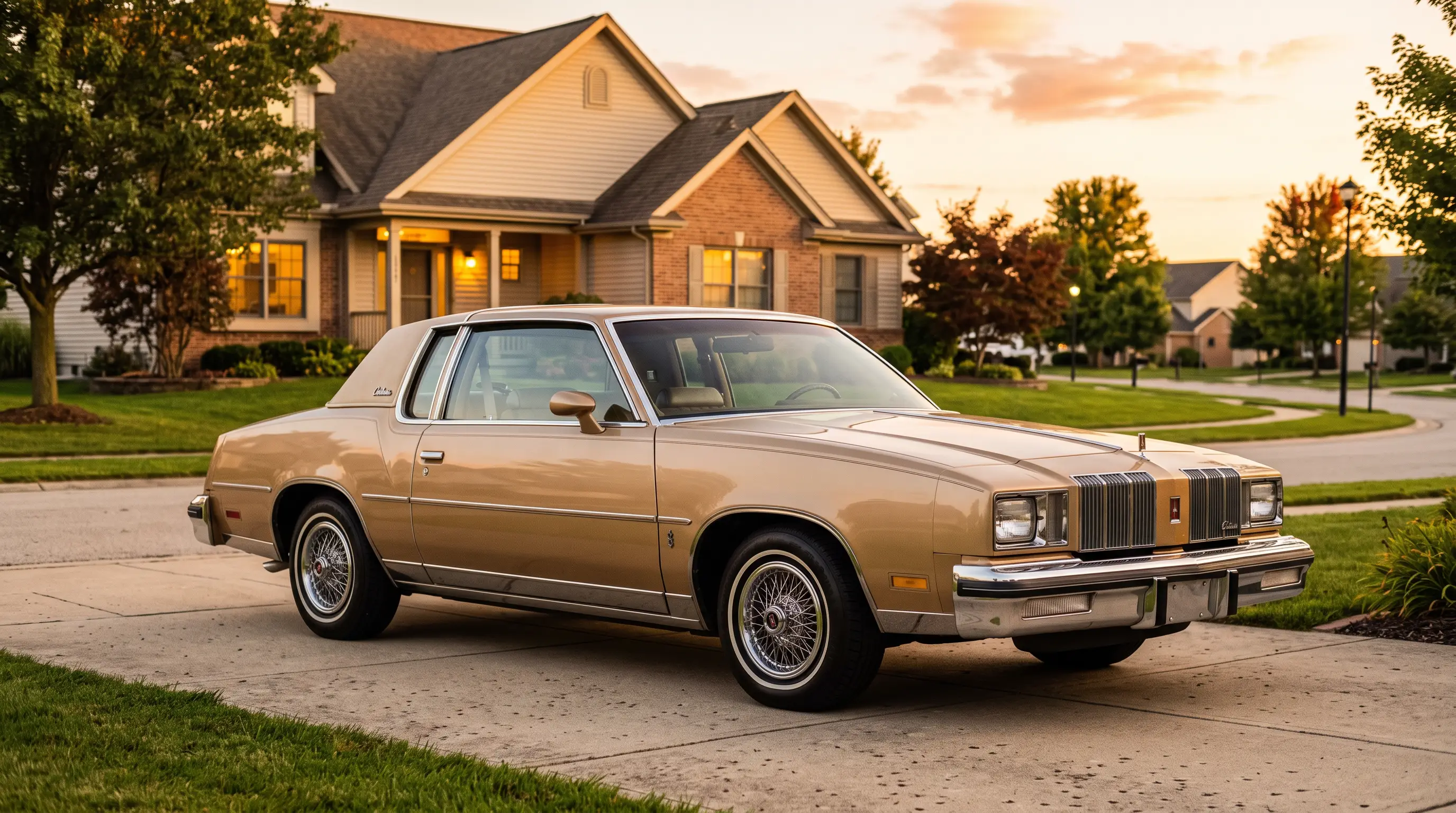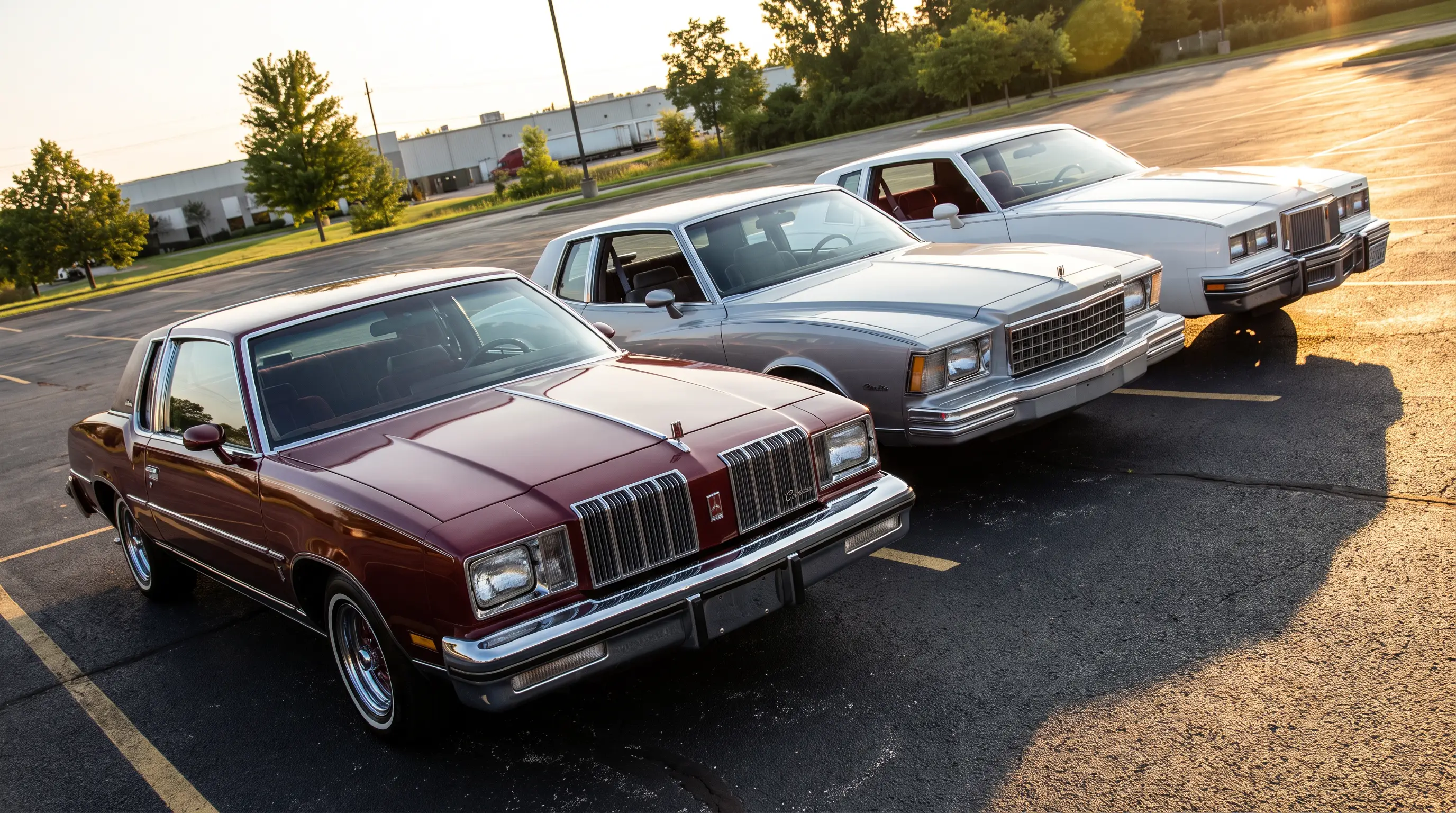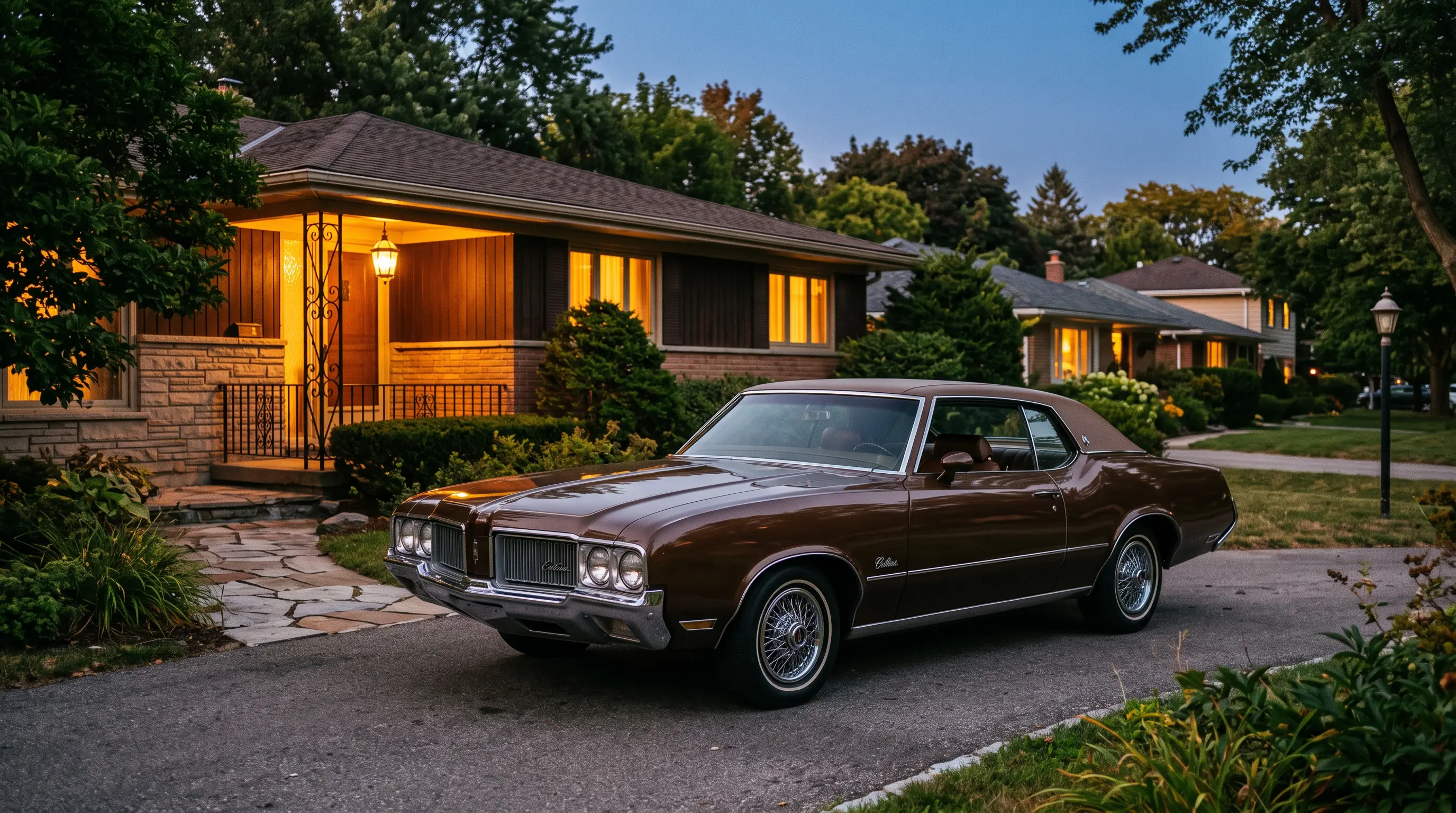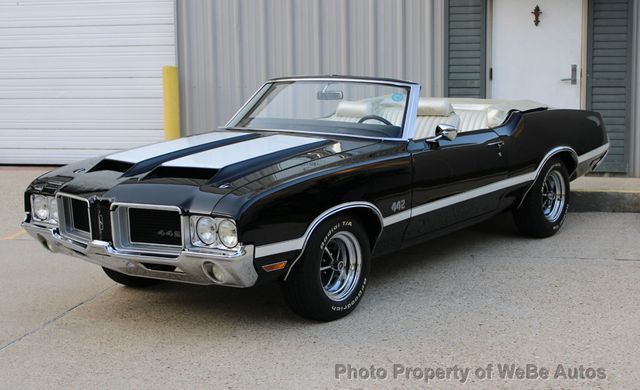
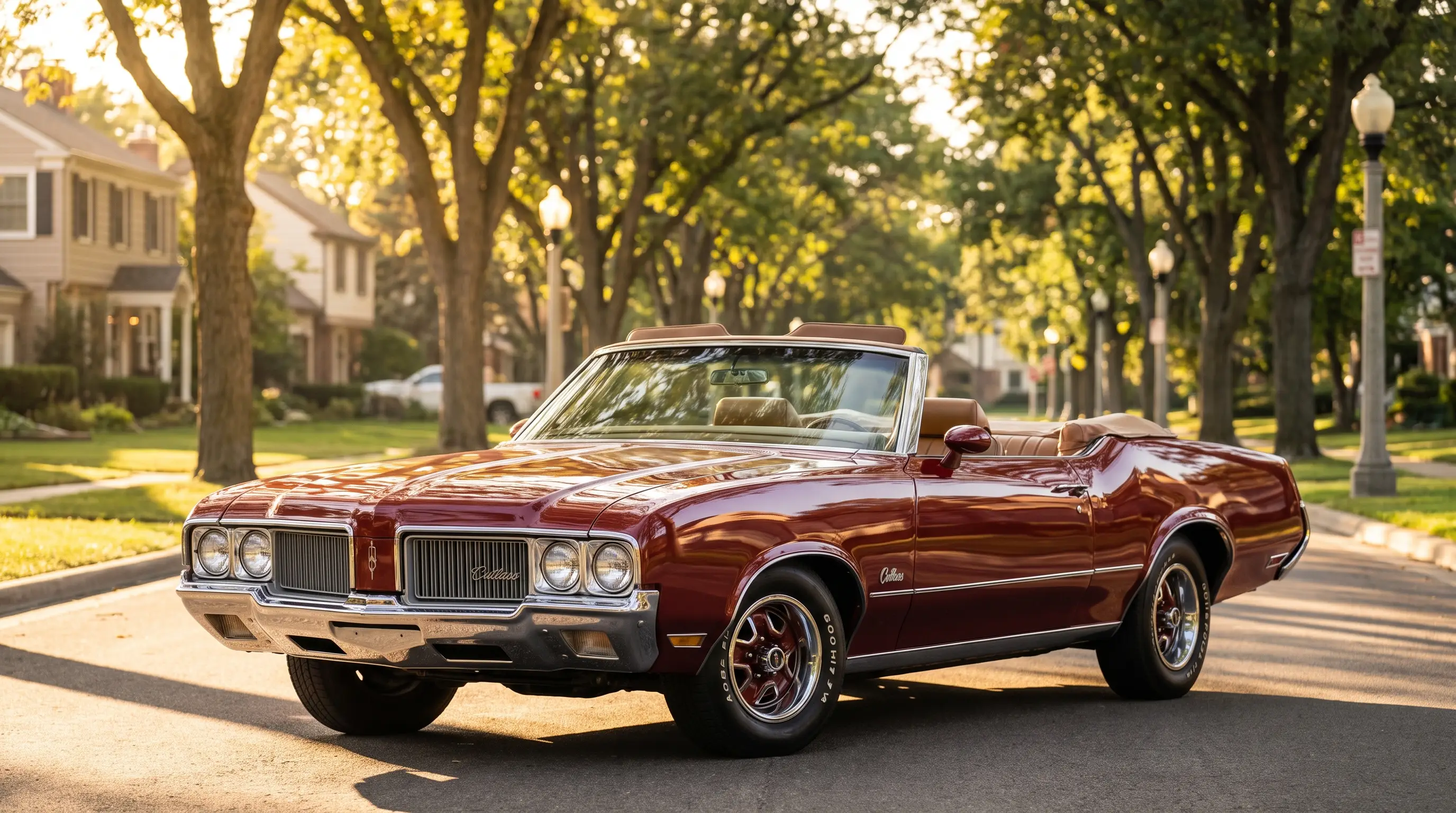
A woman in Tulsa still remembers the sound her father's Cutlass Supreme convertible made pulling out of the driveway on a Friday in June, the top folded down behind the back seat, the radio turned up just enough to hear over the wind. She was eight. She didn't know the car's build sheet or its options codes. She knew the top went down and the whole neighborhood knew her father was headed somewhere worth being seen. That is the version of the Cutlass Supreme convertible most people carry with them, not a spec sheet, a feeling.
The convertible was never the volume seller in the Cutlass Supreme lineup. It was the one people pointed at.
A body style built for a specific kind of pride
When Oldsmobile positioned the Cutlass Supreme above the base Cutlass in the mid-1960s, the convertible sat at the top of that ladder for a reason. Coupes were for commuting. Sedans were for families who needed the back doors. The convertible was for the driveway on a Sunday, for the drive-in, for the parade route through downtown on a summer weekend. It cost more, it weighed more once the top mechanism and reinforced frame were figured in, and buyers paid the premium anyway because a folded top said something a hardtop couldn't.
Oldsmobile dealers understood this. A convertible on the showroom floor pulled foot traffic even from people who ended up buying a coupe. It did the job a convertible is supposed to do in a lineup: it made the whole brand feel more alive.
The years it disappeared, and why
By the early 1970s, the American convertible market was shrinking fast. Air conditioning was cheap and reliable enough that buyers no longer needed an open top to survive a summer commute. Insurance costs on soft-top cars were climbing. And Washington was circulating rollover safety proposals that had every manufacturer nervous about a body style with no fixed roof structure. Oldsmobile, like most of Detroit, pulled back on convertible production through the decade, and 1972 turned out to be the last year for the rear-wheel-drive Cutlass Supreme convertible, even though it went out on a strong note with over 11,000 sold that model year. The convertible would not return to the Cutlass Supreme lineup until 1990, on the front-wheel-drive W-body platform, an eighteen-year gap with no factory ragtop Supreme at all.
For a stretch, if you wanted open-air Oldsmobile motoring, you were shopping used. That absence is part of why the convertible variant carries the weight it does today. Scarcity does that to a car. It turns a trim option into a memory people go looking for decades later.
What the top-down experience actually meant to owners
Ask an owner what they remember about their Cutlass Supreme convertible and the answer rarely starts with horsepower. It starts with a specific drive. A coastal road. A parking lot at a high school reunion. The particular sound the top makes folding down, a hydraulic whir that owners describe with genuine affection decades later. The convertible turns a car into an event rather than a commute, and that shift in how a machine is used changes how it gets remembered.
There is also a social dimension that coupe and sedan owners rarely mention with the same intensity. A convertible top down is a public statement. You are visible in a way a hardtop owner isn't, and that visibility mattered to buyers who wanted their success, their taste, or simply their good mood on display.
"People don't restore convertibles because the numbers make sense. They restore them because they remember exactly what it felt like the first time the top came down, and they want that feeling back in their own driveway."
— Nora Beckett
Collecting the convertible today
Anyone chasing a Cutlass Supreme convertible now is chasing a smaller pool than the coupe and sedan crowd. Tops need attention that hardtops never demand: frames, motors, weatherstripping, and the fabric itself all age at their own pace, and a convertible that looks clean in photos can still hide a top mechanism that barely functions. Buyers who care more about the feeling than the paperwork should still budget for that mechanism before anything else, because a convertible that won't drop its top has lost the entire point of owning one.
The pride-of-ownership factor cuts both ways here. The same visibility that made the convertible special new makes a tired one obvious old. Rust along the rocker panels, a top that sits crooked, upholstery gone brittle in the sun, all of it shows in a way a coupe's flaws simply don't. That is part of what makes a good one worth the search, and it is a large part of the reason shoppers still go looking for a classic Cutlass Supreme for sale instead of settling for whatever coupe happens to be closest.
Where the convertible fits in the larger story
The convertible was never meant to be understood alone. It sits inside the Supreme chapter of Oldsmobile's history, one variant among coupes and sedans that together built the Cutlass Supreme's reputation. Read the era from another angle and the convertible's place becomes clearer still, a car built for a specific cultural moment when open-top driving still meant something to a buyer walking onto a lot. For the fuller arc of how the whole Cutlass name grew from a modest compact into a genuine American icon, our Classic Cars Arena feature traces that path from the beginning.
What endures about the convertible isn't a number on a spec sheet. It's the driveway memory, the sound of the top going down, the specific kind of attention a car gets when it has no roof to hide behind. That is worth more to most owners than any figure a brochure ever printed.
Talk to enough owners and a pattern emerges. Almost none of them bought the car because it was the fastest or the cheapest option on the lot. They bought it because someone in their life once had one, or because they remembered riding in the back seat of a neighbor's as a kid with the wind pulling at their hair. The convertible sells on memory as much as metal, and that is precisely why it has outlasted plenty of cars that beat it on paper. A folded top invites a story in a way a fixed roof never quite manages, and that invitation is still what draws people toward the model today.
Sources and notes
- Oldsmobile Cutlass Supreme, Wikipedia
- Curbside Classic, The Elusive Cutlass Supreme Convertible
- Curbside Classic, 1972 Cutlass Supreme 4-4-2 Convertible, the last drop-top 442
- The Truth About Cars, Junkyard Find: 1994 Cutlass Supreme Convertible
- Hagerty Valuation Tools, 1967 Cutlass Supreme 4-4-2
- Outright Oldsmobile, Cutlass model guide