
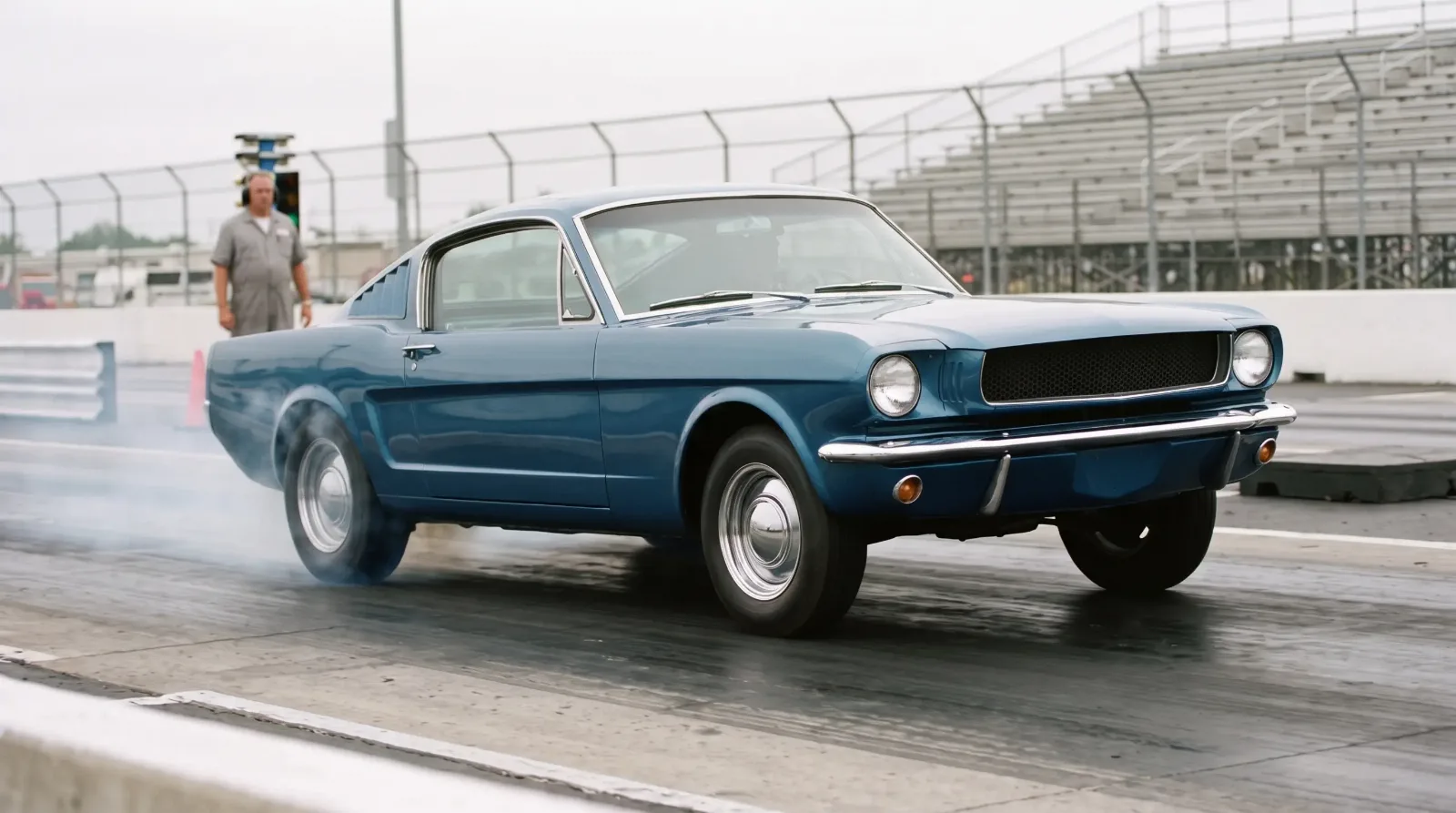
Ask most people where the muscle car came from and they will point at a showroom. I point at a strip of asphalt a quarter mile long. That is where Detroit learned that horsepower sold cars, and once the factories figured that out, the whole thing stopped being a hobby and turned into a business. The birth of factory muscle did not happen in a design studio. It happened at the drag strip, where a slow Tuesday-night bracket car and a full corporate war effort ended up sharing the same starting line.
Car Features
6 min read
Drag Racing and the Birth of Factory Muscle
How the quarter mile built the muscle car. Max Wedge, Race Hemi, Super Duty and the class wars that turned Detroit horsepower into a business.
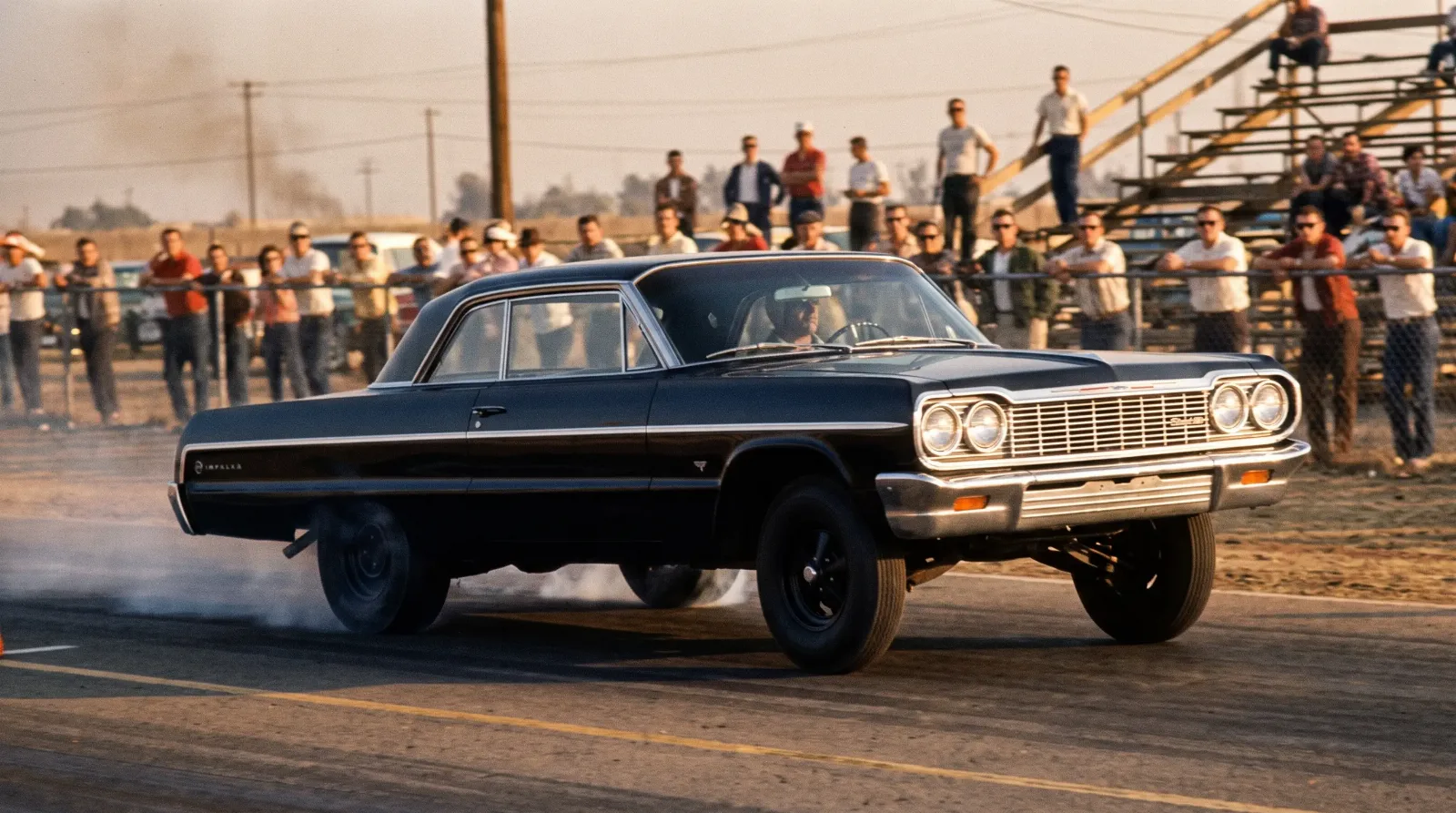
The early days were pure grassroots. Guys ran what they had, stripped out the spare tire, swapped in a hotter cam, and hoped the rear end held together. By the early 1960s the manufacturers were watching those results closely, because a win on Sunday moved iron on Monday. If you want the long arc of how the sport shaped the cars, the drag racing history pillar lays out the sanctioning side. This piece is about the machines and the men who built them.
Where the factory got into the fight
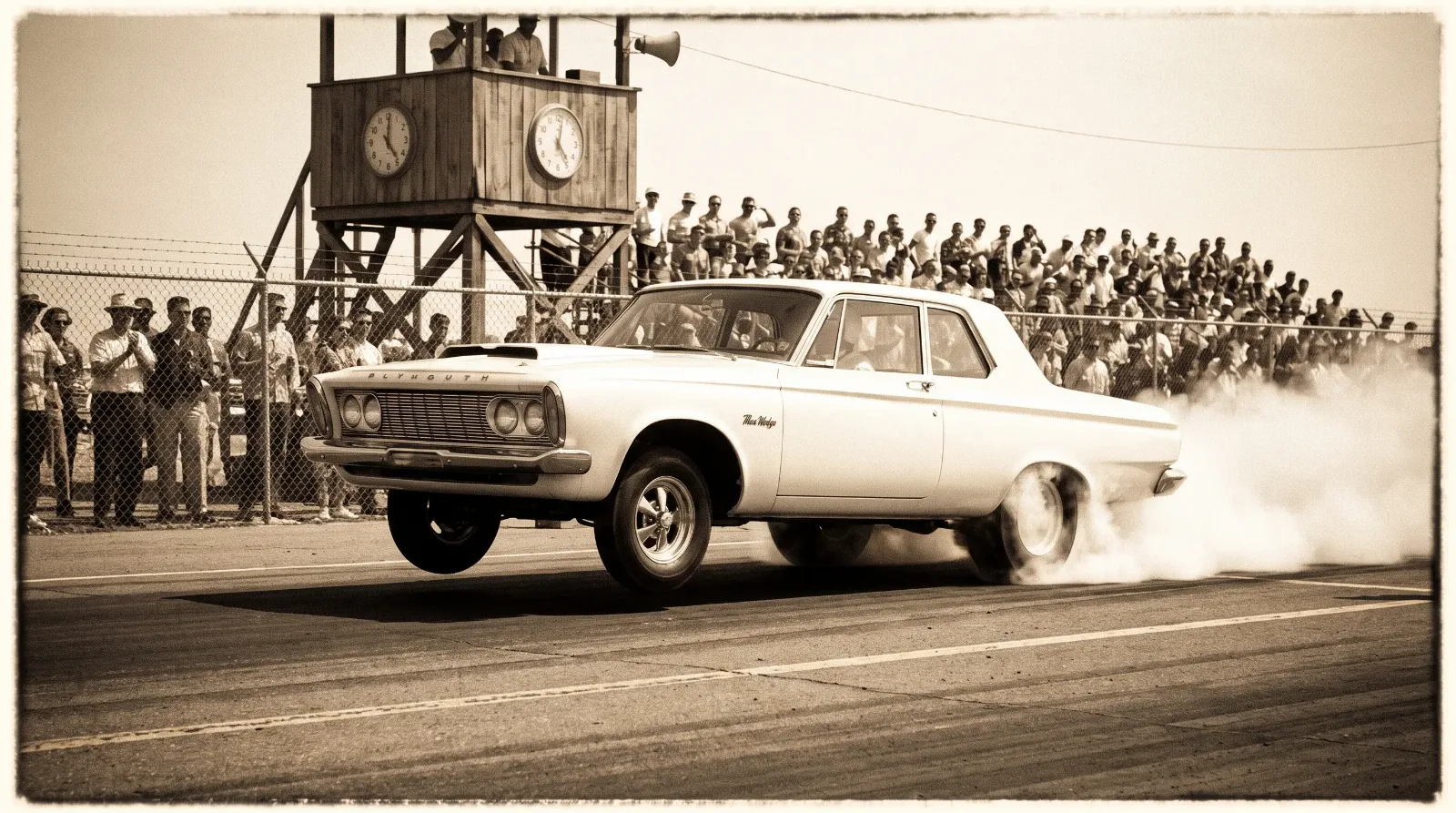
The National Hot Rod Association came together in 1951 under Wally Parks, and it gave the sport rules, a schedule, and respectability. For a while the factories stayed at arm's length. That changed when the numbers started making sense. A Super Stock class car that ran fast in front of a crowd was cheaper advertising than a magazine spread, and it reached exactly the young buyer Detroit wanted.
Chevrolet moved early with the 409, made famous enough that the Beach Boys wrote a song about it. Pontiac built the 421 Super Duty, a purpose-made package that was a race car wearing a Catalina body. Then General Motors backed out. In early 1963 GM enforced a corporate racing ban, pulling official support right when the momentum was building. That opening handed the initiative to Ford and Chrysler, and both took it.
The engines that started it
Chrysler swung the biggest hammer. The Max Wedge program put a race-tuned big-block into lightweight Dodge and Plymouth bodies, first as a 413 in 1962 and then a 426 in 1963, factory-rated in the neighborhood of 415 to 425 horsepower depending on the tune. Those cars were miserable to drive on the street and brutal in a straight line. That was the point.
Then came the 426 Race Hemi in 1964, and the sport changed shape overnight. Ford answered with the 427, a side-oiler that would go on to win at more than the drag strip. The horsepower ratings the factories published were a game of their own, usually understated to slip a car into a friendlier class. Anybody who has read the muscle car backstory knows the street versions of these engines are what made the legend. The strip versions came first and hit harder.
| Package | Year | Engine | Approx. factory rating |
|---|---|---|---|
| Pontiac 421 Super Duty | 1962-63 | 421 cu in V8 | around 405 hp |
| Mopar Max Wedge | 1962 | 413 cu in V8 | 410-420 hp |
| Mopar Max Wedge | 1963 | 426 cu in V8 | 415-425 hp |
| Chrysler Race Hemi | 1964 | 426 cu in Hemi V8 | rated 425 hp |
Class rules that shaped the cars
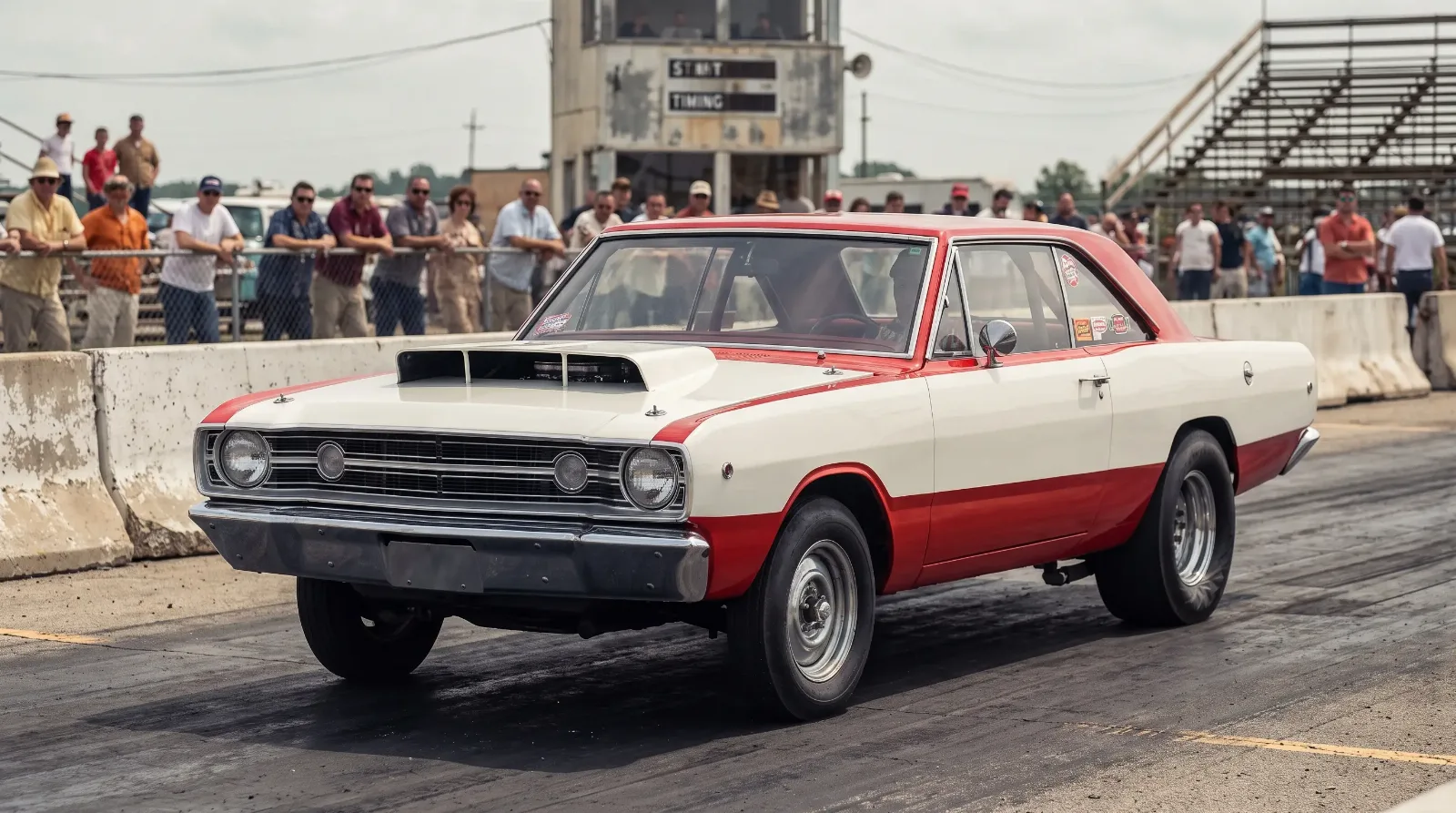
Racers do not build in a vacuum. They build to a rulebook, and the NHRA rulebook did as much to shape these cars as any engineer did. Stock and Super Stock classes broke cars down by weight and advertised horsepower, so the factories chased favorable ratios. Lighter body, bigger engine, lower published number, and you landed in a class you could dominate.
That pressure created the Factory Experimental classes, where the rules loosened and the wild ideas started. Aluminum panels showed up. Bumpers and heater boxes came out. This is the point where a stock car stopped pretending to be stock, and it set the stage for the lightweight and altered-wheelbase machines that came next. I have built enough cars to respect what those factory teams pulled off with the tools they had. No CAD, no data logging, just guys who understood weight and traction from the inside.
The transmission choice mattered as much as the engine. Early on, most of these cars ran a heavy-duty three-speed manual or a beefed automatic, and getting the launch right was half the battle. A car could make all the horsepower in the world and still lose if it bogged off the line or spun the tires into a cloud of smoke. The factory teams learned to read traction, to match a gear to a track surface, and to set a car up so the power actually reached the pavement. That knowledge did not come from a brochure. It came from making pass after pass and paying attention to what the car told you.
What the movement left behind
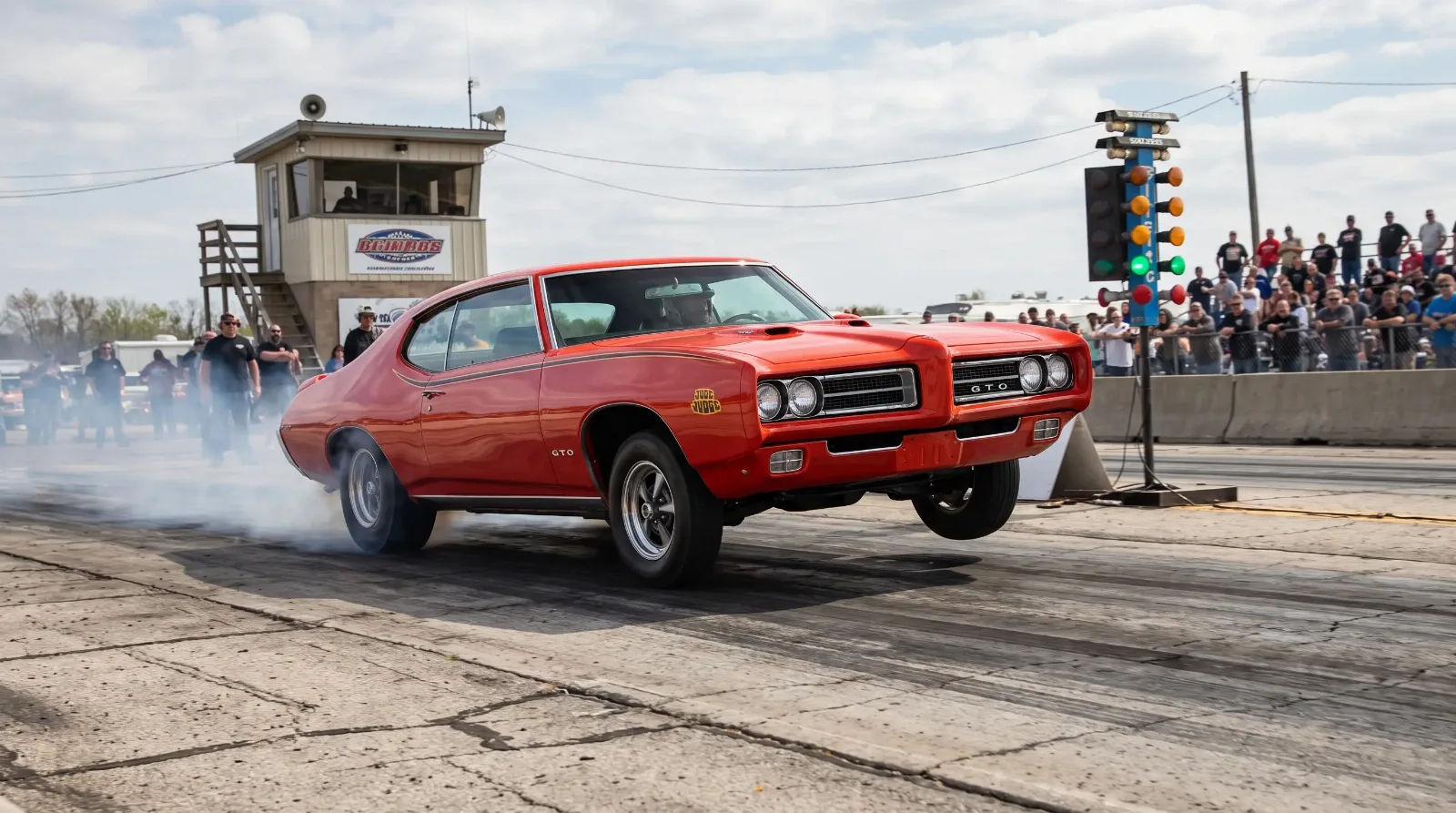
By the middle of the decade the line between a street car and a race car had become a marketing tool. The GTO, the 396 Chevelle, the Hemi Road Runner, every one of them traced its pitch back to what happened at the strip. Detroit learned to sell a Saturday-night reputation to a kid who would never run the car past a stoplight. That is the real inheritance of factory drag racing. It taught the industry that performance was a product.
The cars themselves became blue-chip collectibles, and the class wars only got fiercer from here. If you want to see where this fight went next, with acid-dipped shells and homologation games, read the full story. The factories were just getting warmed up.
"These weren't showroom cars with a louder exhaust. They were purpose-built weapons that happened to have a title, and the guys who built them knew exactly what corner of the rulebook they were living in."
Jim Vasquez
Look at one today at a show and it reads as a piece of Detroit history. Back then it was a tool with one job. Get to the far end first, and let the salesman handle the rest.
Related Reading
Have a
Classic Car
for Sale?
Reach thousands of serious classic car collectors across the US.
Sell It Here →
Are You a Classic Car Dealer?
List your full inventory and connect with targeted classic car buyers.
Join as a Dealer →

About the author
Jim Vasquez
Southern California hot rod and custom car builder with roots in the traditional kustom kulture scene.
Comments
Be the first to comment on this article.