
Super Stock was the class where the factories stopped being polite. On paper it was a bracket for lightly modified production cars. In practice it turned into an arms race between Detroit engineering departments, each one trying to build the fastest thing the rulebook would let them get away with. The result was a run of cars so extreme that a lot of them barely qualified as street machines at all. That is the story of the Super Stock wars, and it is one of the wildest chapters in American racing.
Car Features
5 min read
The Super Stock Wars Explained
Inside the Super Stock arms race: Max Wedge, Race Hemi, 1968 Hemi Darts and Barracudas, Thunderbolt and Z11, and the factory class-rule games.
I have been around builders my whole life, and I still respect what these factory teams did with a pencil and a stopwatch. They understood weight, traction, and the exact wording of a class rule. For the full arc of how the sport was organized, the Drag Racing History pillar covers the sanctioning side. Here I want to talk about the cars themselves.
How the class became a war
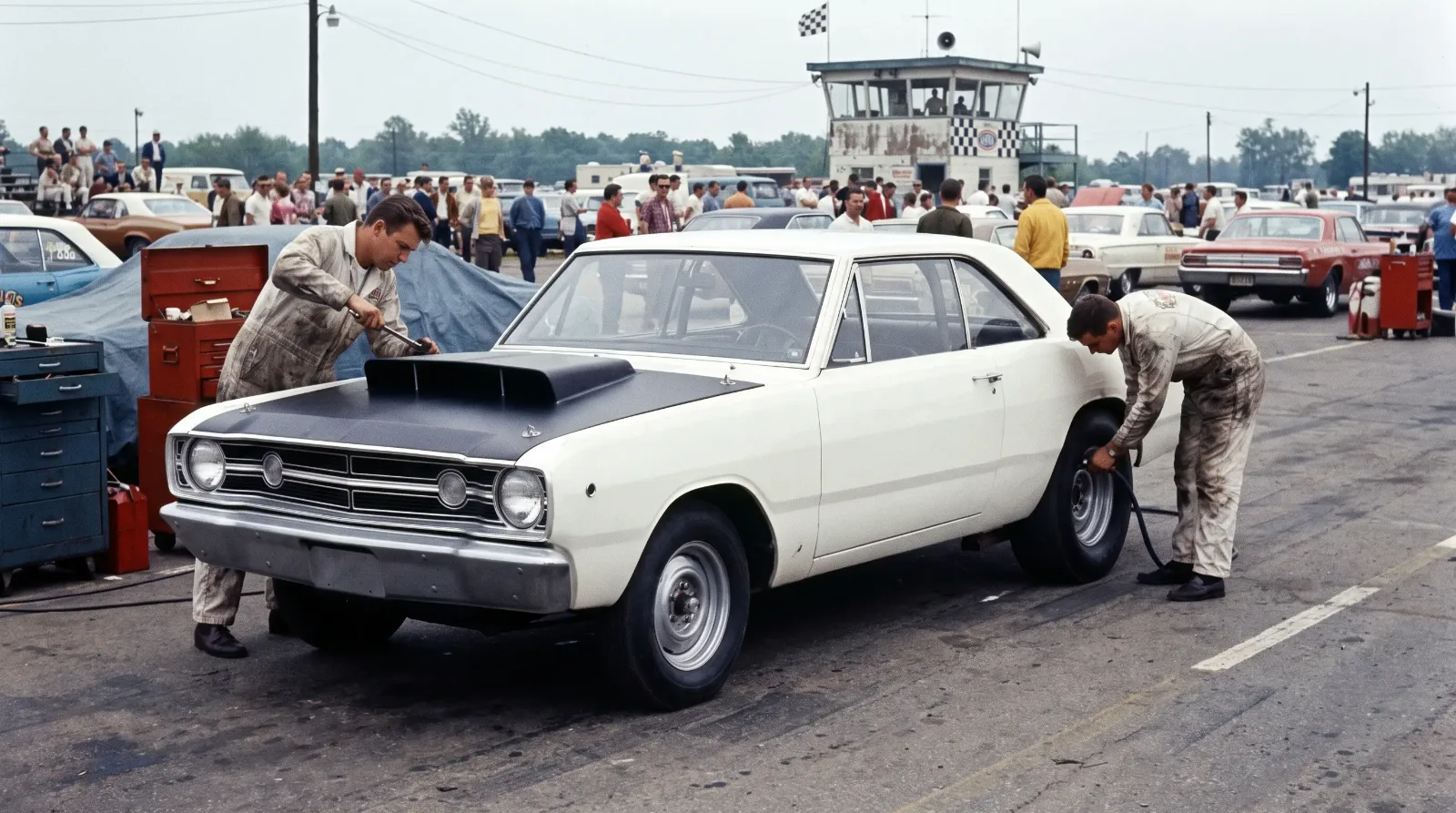
The National Hot Rod Association built Super Stock around a simple idea. Take a production car, allow a short list of changes, and sort everything by a weight-to-horsepower formula. The trouble was that the manufacturers treated that formula like a puzzle to be solved rather than a fence to stay behind. Every advantage got chased. A lighter body, a hotter factory cam, a published horsepower number that conveniently undersold the real output.
By the early 1960s the class had split into a stack of sub-brackets, and winning meant landing your car in the softest one. The engineers who understood this got their cars into classes they could own. The ones who did not got beaten by a car that looked identical on the outside.
The factory-backed teams also had an advantage the privateer never did. Access. When a works team needed a special axle ratio, a stronger clutch, or a batch of hand-picked parts, a phone call got it done. That is why the same names kept winning. It was not luck, and it was not just talent behind the wheel. It was a pipeline of factory hardware feeding a small number of cars that were dialed to the last detail. A backyard racer could copy the recipe, but he could not copy the supply line.
The Mopar heavy hitters
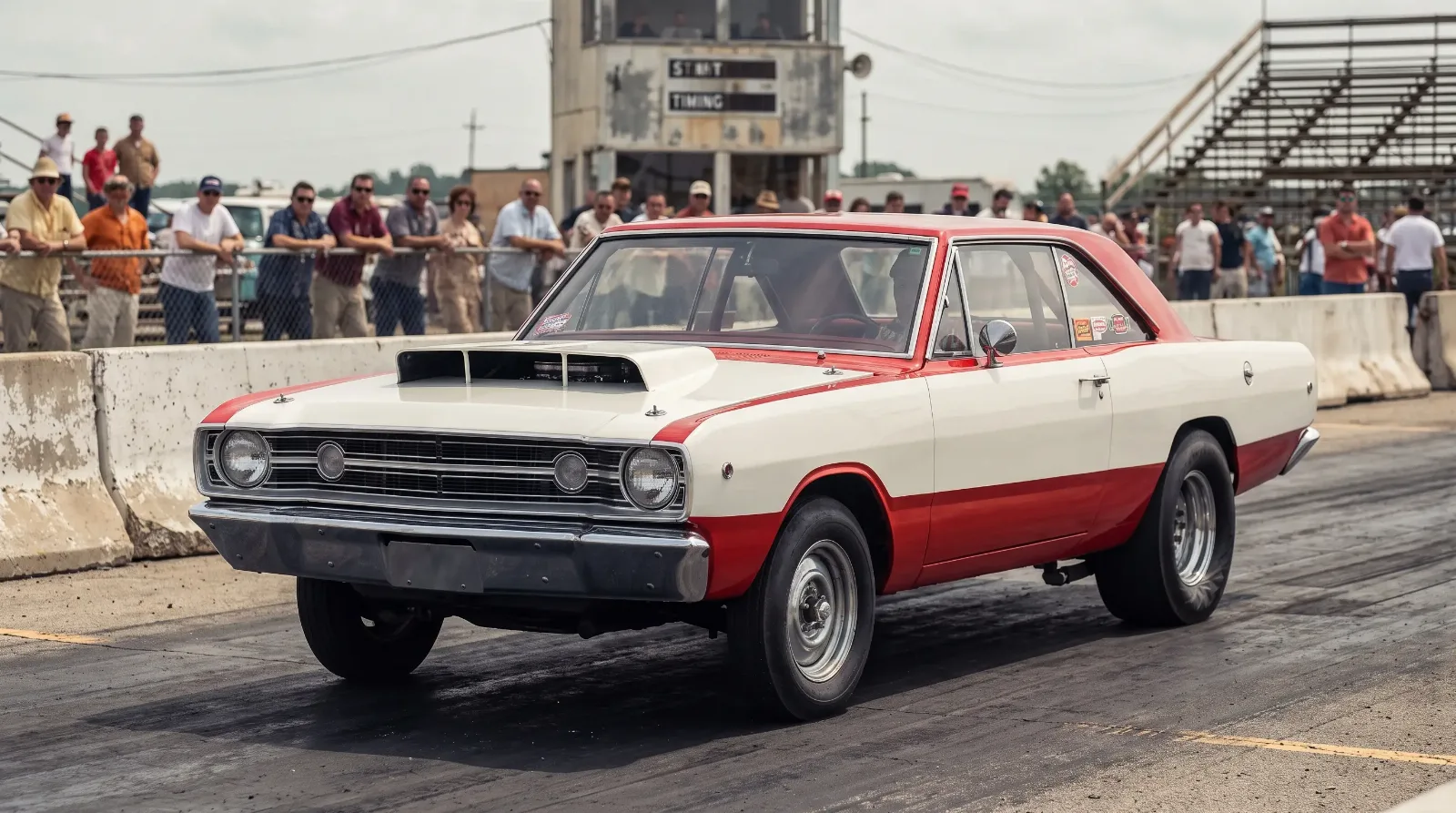
Chrysler treated Super Stock like a religion. The Max Wedge cars came first, big-block Dodges and Plymouths built lean and mean in 1962 and 1963. Then came the 426 Race Hemi in 1964, and it rewrote the whole class. But the machine everybody remembers is the 1968 Hemi package, the LO23 Dodge Dart and the BO29 Plymouth Barracuda.
Those cars were built with help from Hurst, and they were not subtle. Acid-dipped body shells to save weight, fiberglass fenders and hoods, thin side glass, and the 426 Hemi crammed into an A-body that was never designed to hold it. Roughly 80 Hemi Darts and around 70 Hemi Barracudas left the line. They came with no sound deadener, no back seat as delivered, and a note that they were not warranted for street use. Chrysler was telling you exactly what these things were.
Ford and Chevy answer back
Ford did not sit still. The 1964 Thunderbolt took a mid-size Fairlane and stuffed a 427 high-riser under a fiberglass hood, with lightweight panels and deleted trim, built in a run of about 100 cars. It was a factory-blessed race car with a license plate bracket, and it won the NHRA Super Stock championship that year.
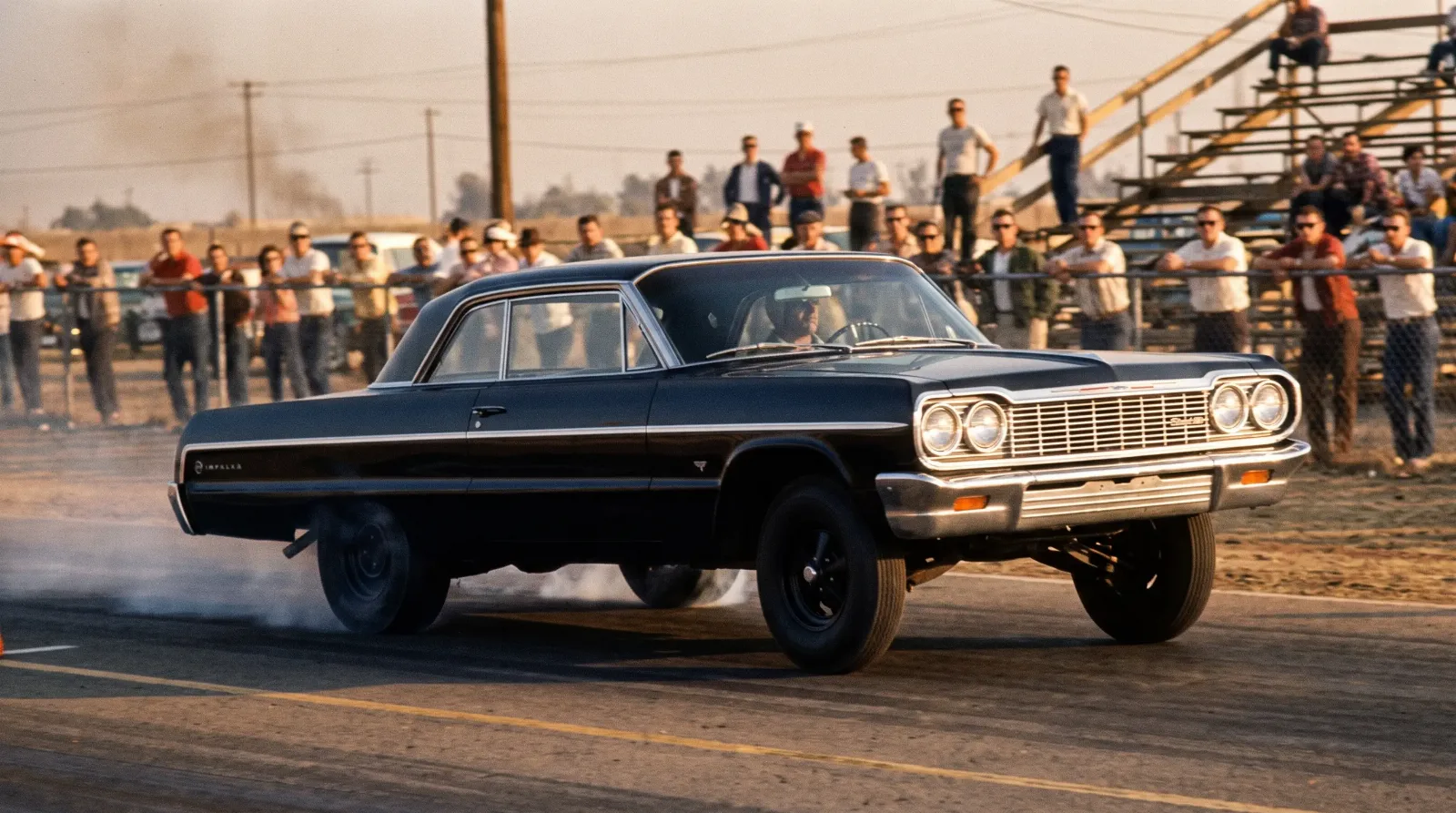
Chevrolet had already shown its hand with the 1963 Z11, an Impala running a 427-cubic-inch W-series engine with an aluminum front end, built in tiny numbers before GM's racing ban pulled the plug. If you want to understand how all of this fed the street-car legend that followed, the American muscle narrative ties the strip cars to the showroom. These Super Stockers were the tip of the spear.
| Car | Year | Engine | Notable weight tricks |
|---|---|---|---|
| Chevrolet Z11 Impala | 1963 | 427 W-series V8 | aluminum front end, deleted trim |
| Ford Fairlane Thunderbolt | 1964 | 427 high-riser V8 | fiberglass panels, lightweight glass |
| Dodge Hemi Dart (LO23) | 1968 | 426 Hemi V8 | acid-dipped shell, fiberglass, thin glass |
| Plymouth Hemi Barracuda (BO29) | 1968 | 426 Hemi V8 | acid-dipped shell, fiberglass, thin glass |
Why these cars still matter
The Super Stock wars mattered because they proved how far a factory would go for a class win. These were not garage builds. They were corporate programs, run with real budgets, aimed at a strip full of spectators who would remember the winner when they walked into a dealership. That connection between the strip and the showroom is the whole engine of the muscle car era.
Today the surviving cars are among the most valuable American racers you can own, and a genuine 1968 Hemi package with documentation trades in serious money. If you want to see what the broader era produced beyond the pure race cars, you can explore muscle cars on the market and get a feel for how the street versions have held up. The Super Stockers themselves rarely surface, and when they do, the paperwork matters as much as the car.
"A Super Stock car looks like something off a dealer lot until you open the door. No carpet, no back seat, fiberglass where the steel should be. Every ounce that didn't help you win was gone."
Jim Vasquez
The wars cooled off as the sport moved toward heads-up racing and purpose-built machines, but the cars they produced never lost their status. They were the moment the factories admitted they were racing, and they built the cars to prove it. For a look at where the speed spilled off the strip, read the full story.
Related Reading
Have a
Classic Car
for Sale?
Reach thousands of serious classic car collectors across the US.
Sell It Here →
Are You a Classic Car Dealer?
List your full inventory and connect with targeted classic car buyers.
Join as a Dealer →

About the author
Jim Vasquez
Southern California hot rod and custom car builder with roots in the traditional kustom kulture scene.
Comments
Be the first to comment on this article.