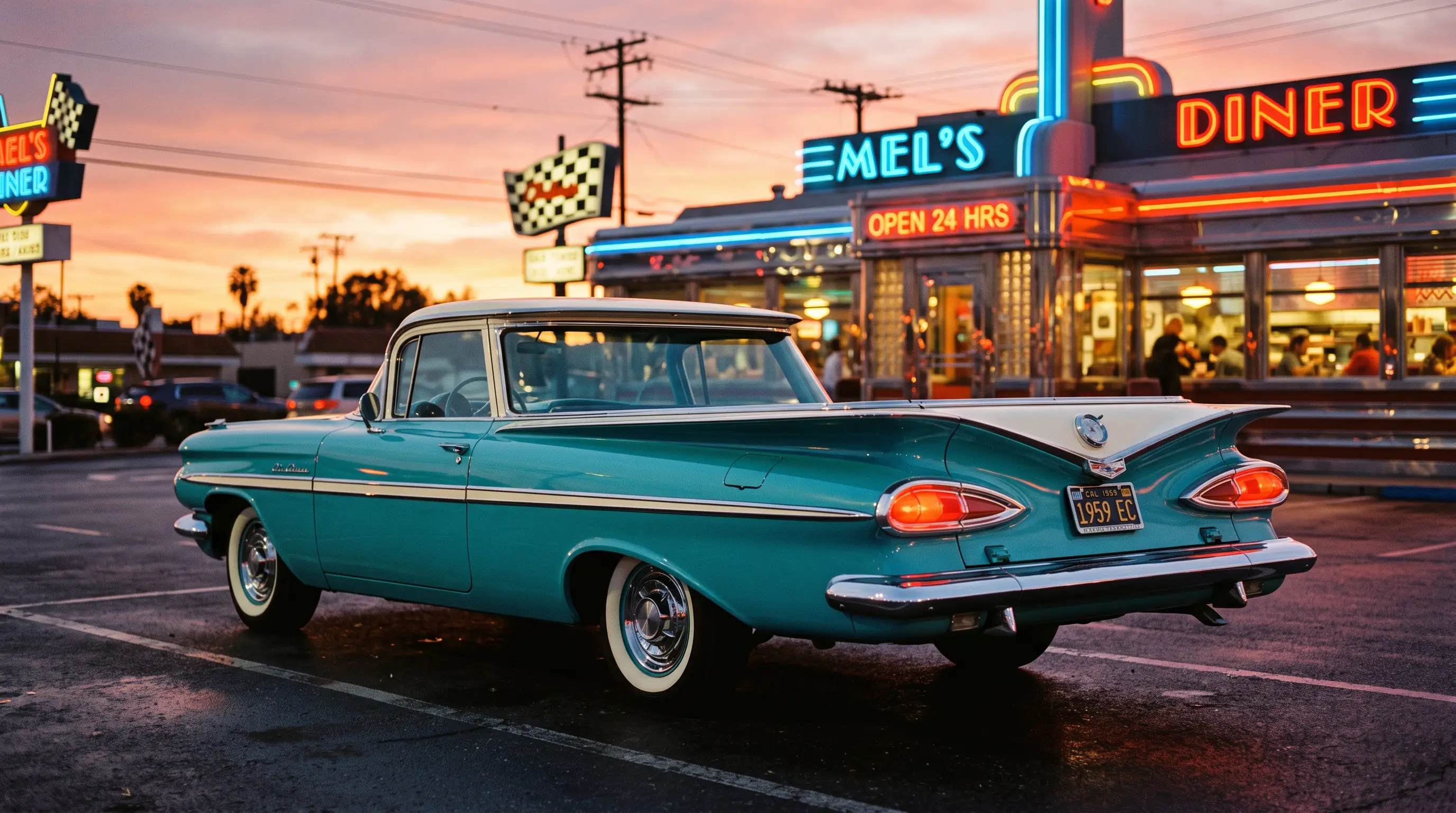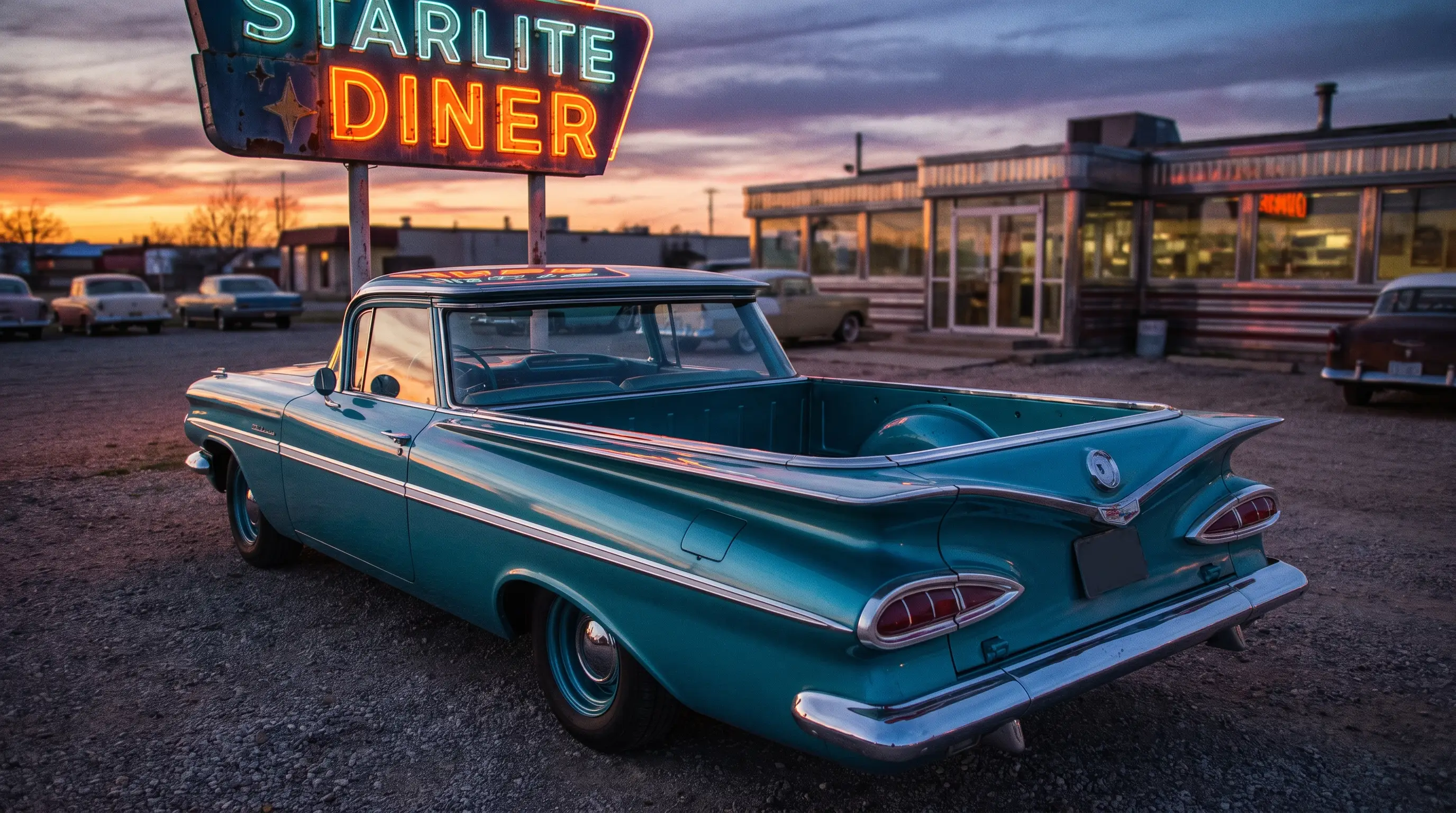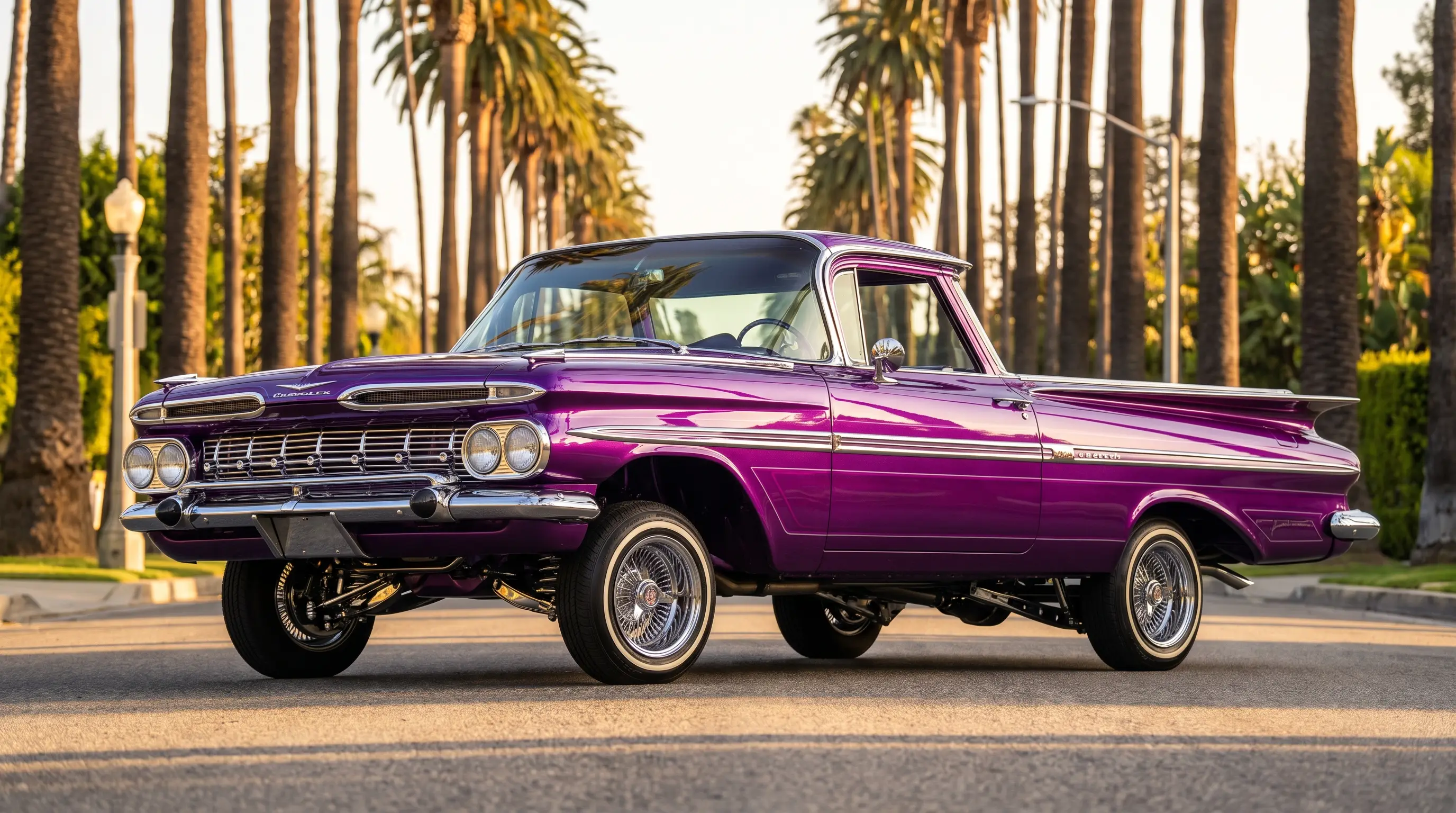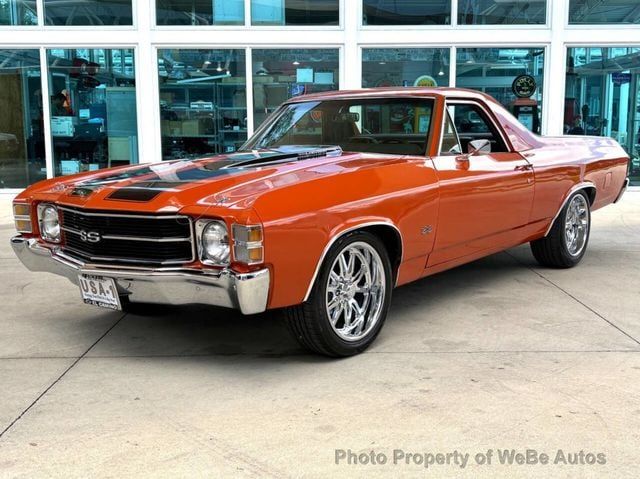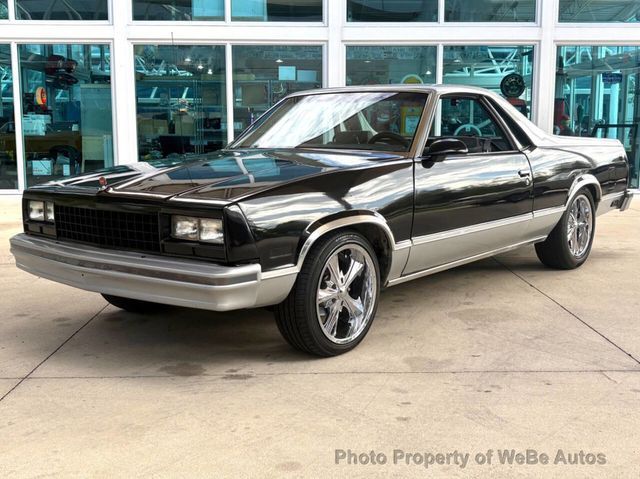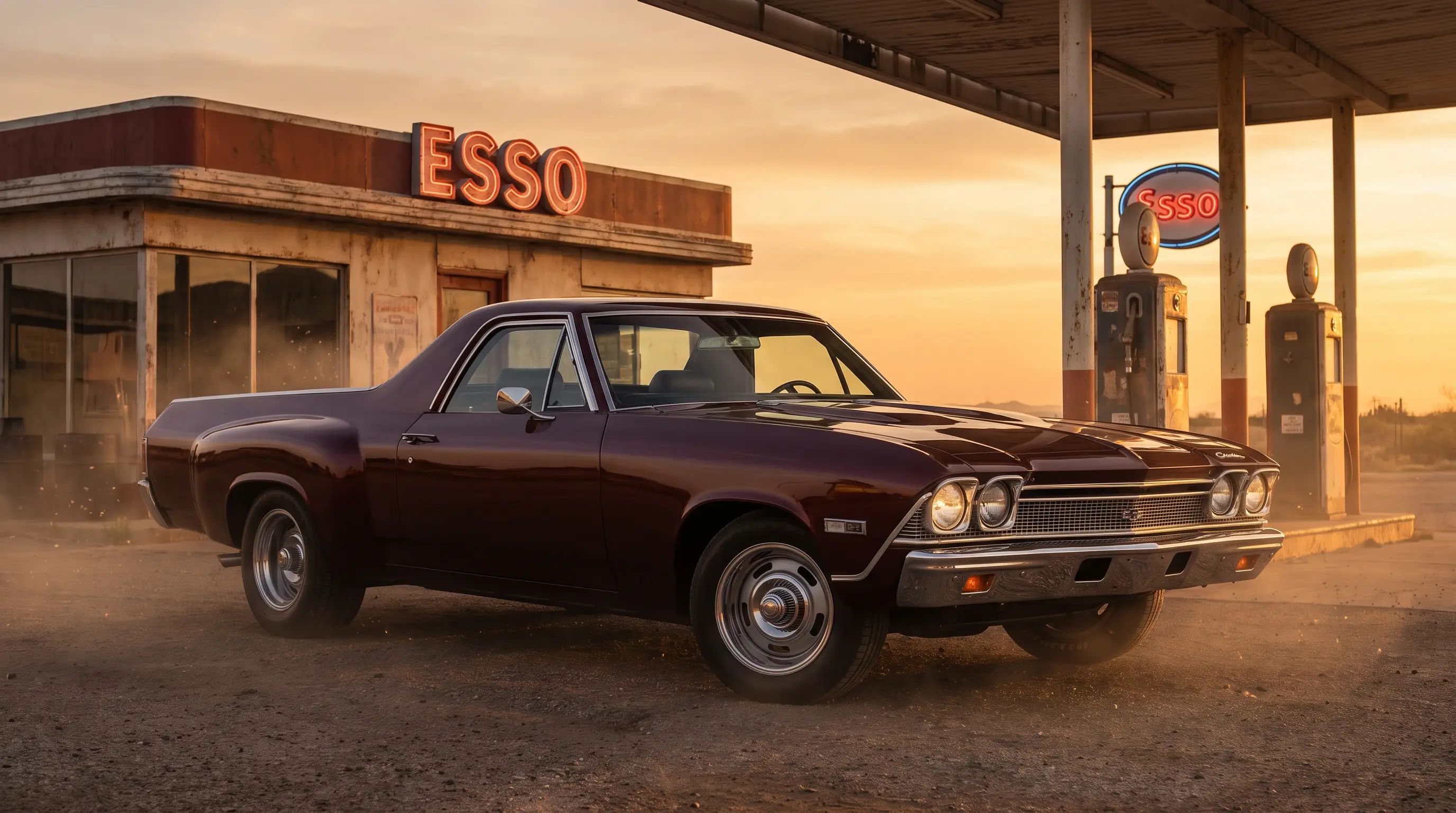

Look past the cargo bed sitting behind the cab on a 1959 El Camino and what you are actually looking at is an Impala. Not in spirit, in specification. Chevrolet's flagship passenger car lent its trim, its brightwork, its interior fabrics, and much of its front-end identity to the new car-truck, and that borrowed glamour is the reason the 1959 El Camino never reads as a stripped-down work vehicle no matter how much lumber ends up in the bed.
Sharing the Impala's best material
Chevrolet's 1959 lineup positioned the Impala as the newly introduced top of the full-size range, a status symbol nameplate Chevrolet was eager to promote across as many body styles as its assembly plants could support, and the El Camino, though technically built off the Brookwood wagon's structure, was trimmed and equipped much closer to Impala standards than to a base-model Biscayne or Brookwood. Buyers could option an El Camino with the same anodized aluminum grille inserts, the same wide chrome side spears, and the same range of two-tone paint combinations offered on the Impala, and dealer literature from the period leaned into that comparison directly, presenting the El Camino as a vehicle that gave up none of the passenger car's visual prestige in exchange for its added utility.
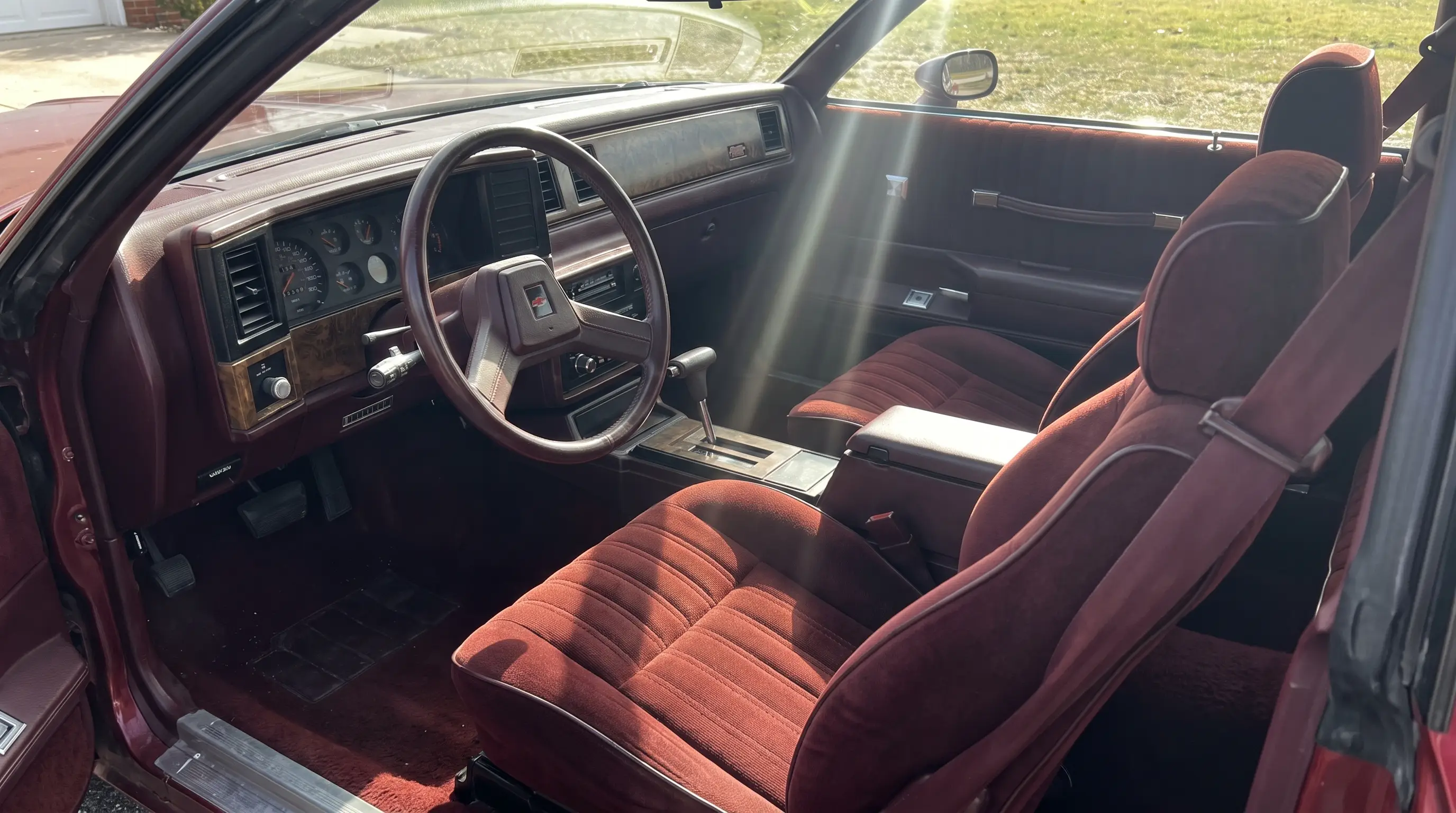
Inside, the story continued. Seat fabrics, door panel patterns, and dashboard trim on well-equipped 1959 El Caminos matched what a buyer would find in a nicely optioned Impala sedan, right down to the two-spoke steering wheel and the wide, symmetrical speedometer housing. That level of shared trim was not typical for hauling vehicles of the period, most of which offered plain, utilitarian cabins regardless of how much a buyer was willing to spend.
Even small convenience items followed the Impala's lead. Options like a padded dash, an electric clock, and upgraded door armrests, all drawn straight from the passenger car parts bin, could be specified on an El Camino order form the same way they could on an Impala coupe or sedan. Chevrolet's parts and options catalog for 1959 did not maintain a separate, scaled-down list for the El Camino the way many manufacturers did for their commercial vehicles. A buyer filling out an order form saw largely the same menu regardless of which body style they checked.
Why Chevrolet chose glamour over utility as the pitch
The decision to align the El Camino so closely with the Impala rather than with Chevrolet's actual truck line was a deliberate market position, not an accident of shared tooling. Chevrolet wanted to sell the car to buyers who already wanted an Impala and simply needed to be convinced that a small amount of added cargo capability would not cost them any of the style or comfort they associated with that top-trim nameplate. Positioning the El Camino as a glamour hauler, rather than a working truck with car-like touches, widened the potential buyer pool considerably beyond the traditional pickup market.
That strategy is visible in period advertising, which rarely emphasized payload figures or towing capacity the way a genuine truck brochure would. Instead, Chevrolet's marketing for the 1959 El Camino focused on style, comfort, and the novelty of having both in one vehicle, treating the cargo bed almost as a bonus feature layered onto an otherwise conventional passenger car experience.
What "glamour hauler" meant on the road
Driving a well-optioned 1959 El Camino delivered on that promise in practical terms. Ride quality, steering feel, and interior comfort closely matched a full-size Impala of the same year, since both vehicles shared the same frame, suspension tuning, and available drivetrains. A buyer stepping from an Impala into an El Camino would have noticed remarkably little difference in how the car felt to drive, right up until they needed to load something into the bed behind them.
That parity is part of why the El Camino found buyers who were not traditional truck shoppers at all. Some were small business owners who wanted a presentable vehicle for client-facing work during the day and genuine hauling capacity on weekends. Others were simply drawn to the novelty of a vehicle that looked like their neighbor's Impala but could carry a load of firewood or camping gear without complaint. Chevrolet's decision to build the glamour into the car from the factory, rather than treat it as an aftermarket dress-up option, made that broader appeal possible.
Dealers reportedly used that crossover appeal in their own sales pitches, showing the El Camino alongside the Impala on the showroom floor rather than parking it near the truck inventory in the back lot. A salesperson could walk a customer from one vehicle to the other, pointing out the shared paint, the shared interior, and the shared engine options, then close by mentioning the bed as an added bonus rather than the main selling point. That approach reportedly helped move inventory during a model year when the novelty of the car-truck concept alone might not have been enough to justify the price difference over a standard Impala for every buyer on the fence.
"When I catalog a well-optioned 1959 El Camino, I am essentially cataloging an Impala with a different rear section. The trim codes, the fabric choices, the paint combinations, all of it traces straight back to the same option sheet Chevrolet used for its flagship sedan that year."
- Sarah Whitfield
Collecting the glamour angle today
For today's buyers, the Impala connection is a genuinely useful research angle. Original trim tags, interior fabric swatches, and factory paint codes for a 1959 El Camino can often be cross-referenced against Impala documentation from the same model year, since Chevrolet drew from a shared parts and trim catalog rather than maintaining separate systems for the two nameplates. That overlap widens the pool of reference material available to anyone trying to verify a car's originality.
You can read the background on the full 1959 model year story, including how this Impala-level trim fit into the car's broader design and market positioning. Shoppers drawn to the glamour hauler concept can find a classic El Camino currently listed to compare trim levels and originality firsthand.
Verifying that trim originality matters more with this car than with a standard Impala, precisely because the shared parts catalog makes it easy for a seller to dress up a plainer El Camino with Impala-sourced pieces that were never actually installed at the factory on that specific vehicle. A careful buyer should cross-check trim tags, interior codes, and paint documentation against known factory records rather than assume every chrome piece or fabric pattern on a given car came from Chevrolet's assembly line rather than a later, well-intentioned upgrade.