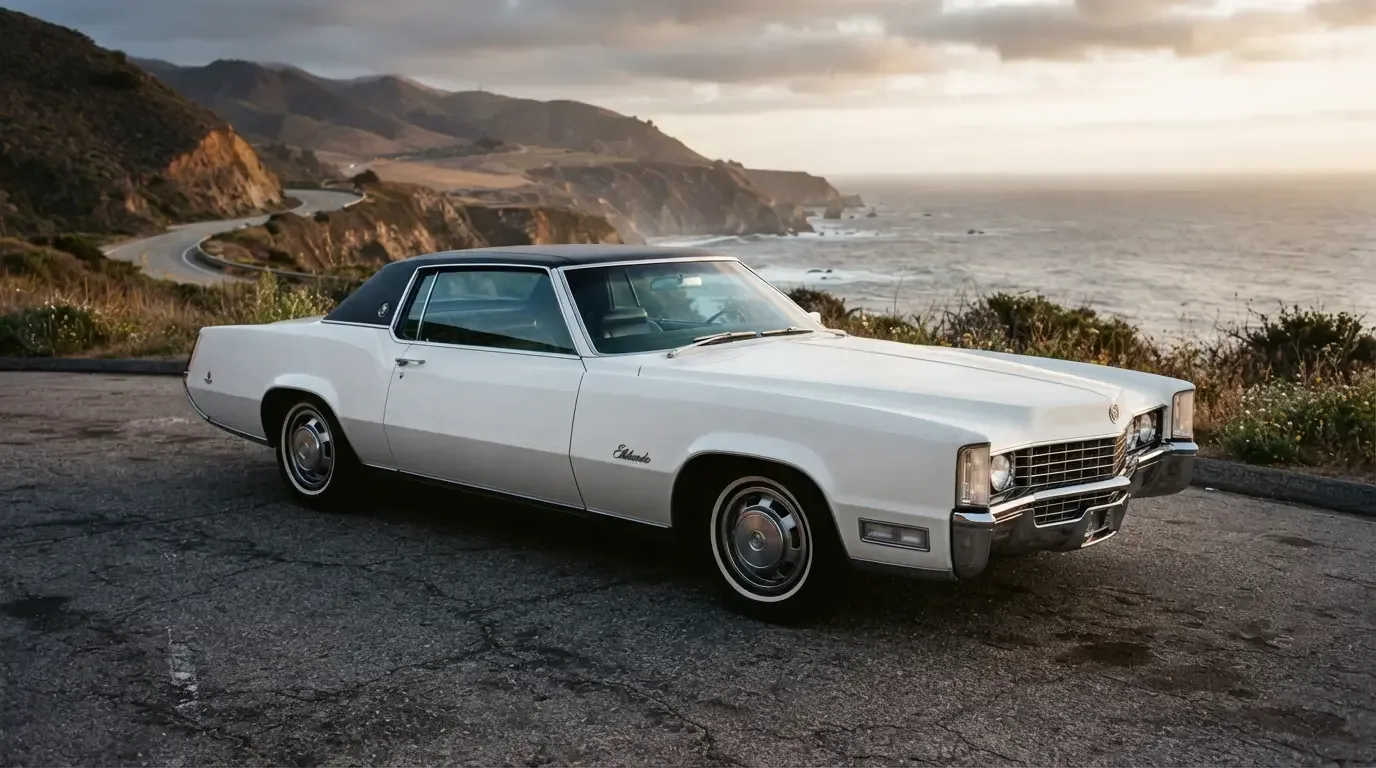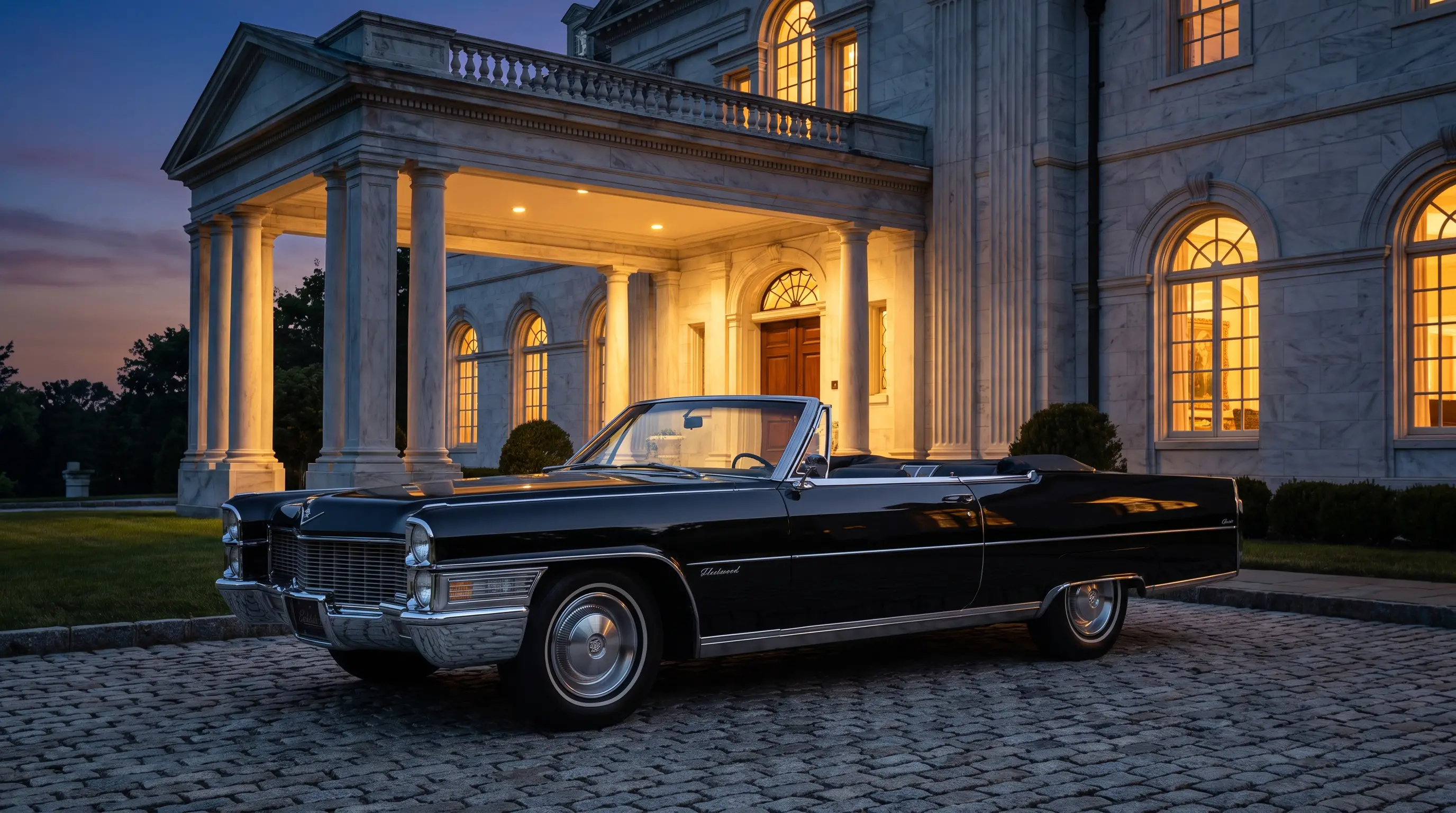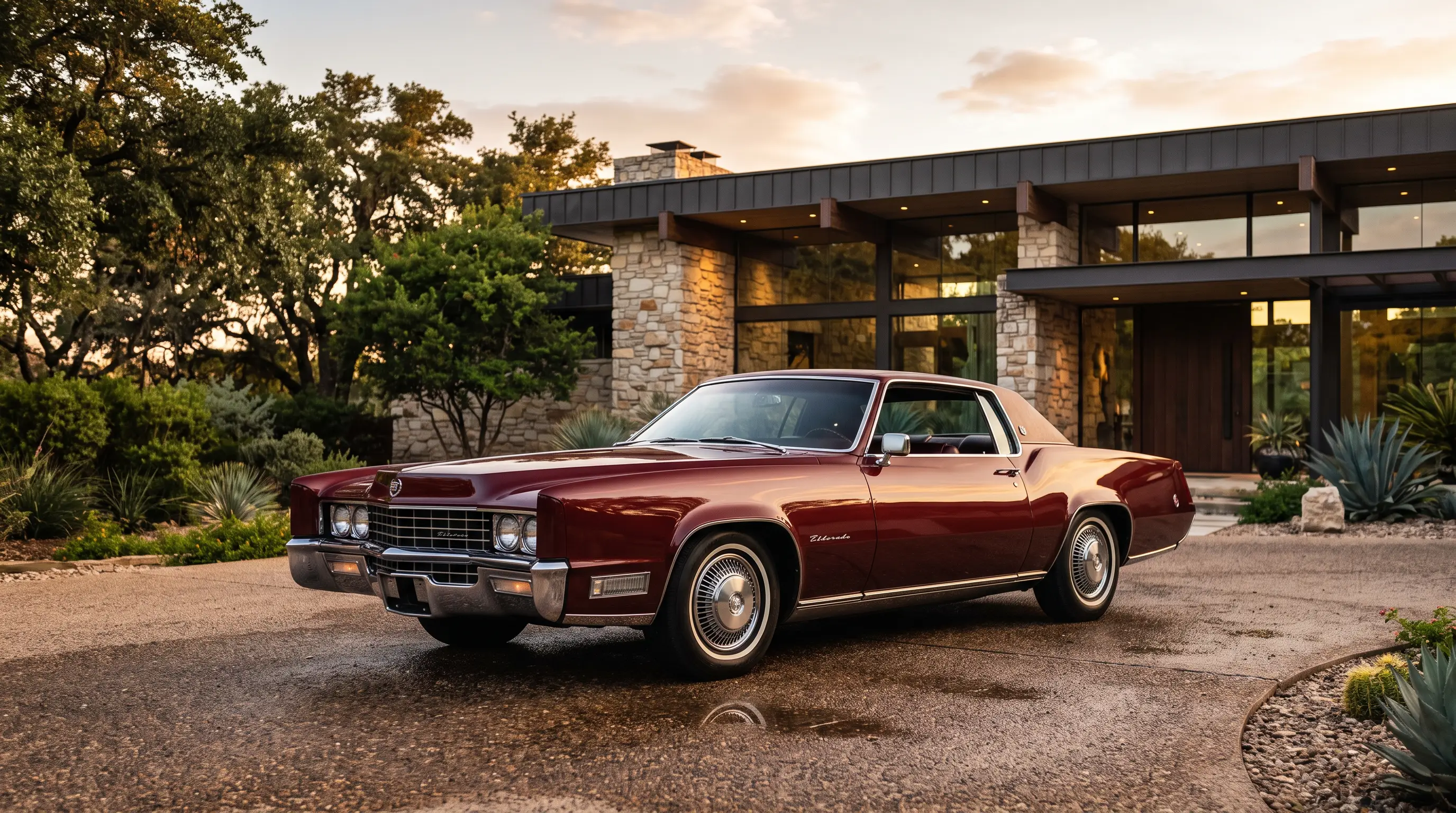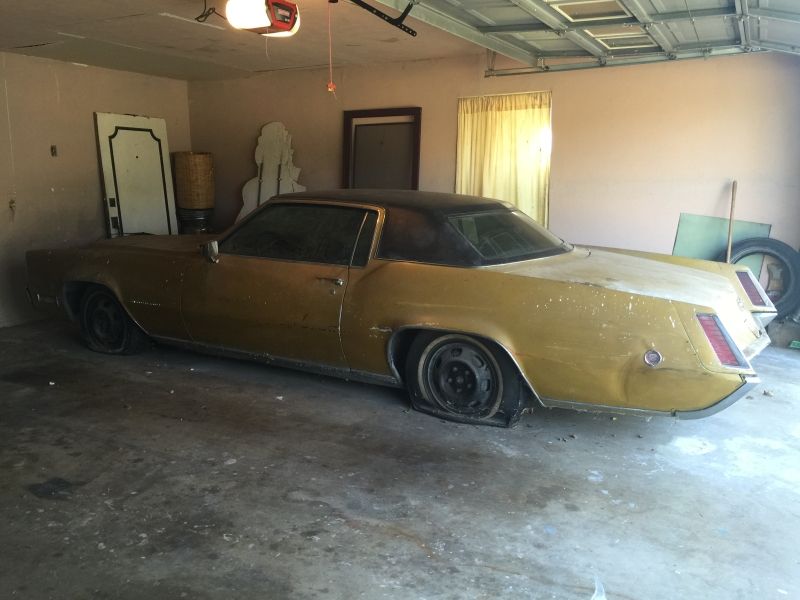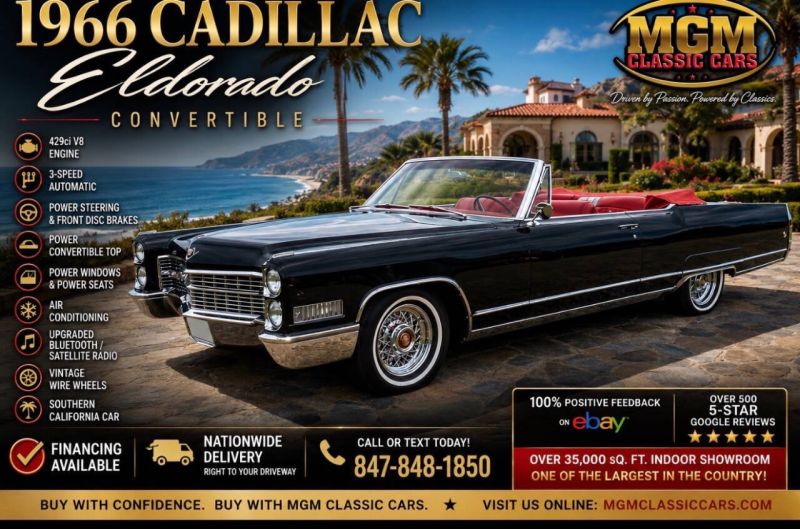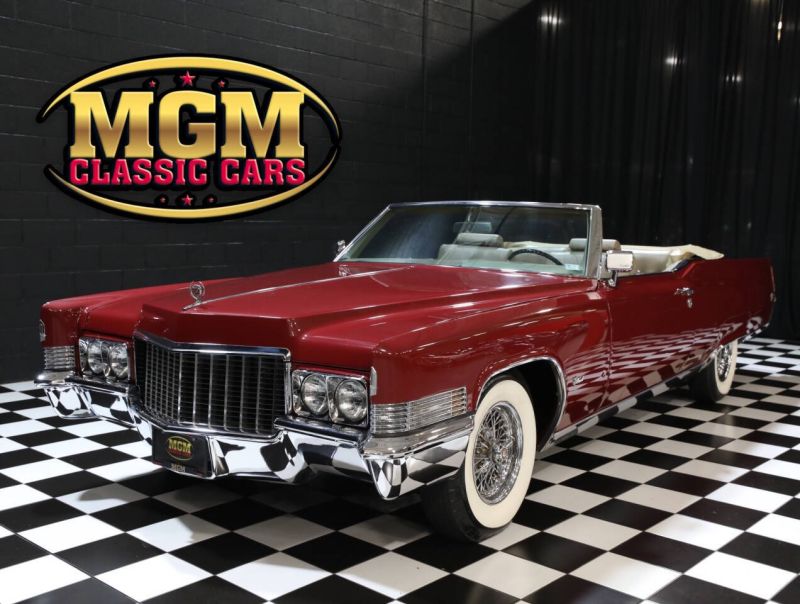
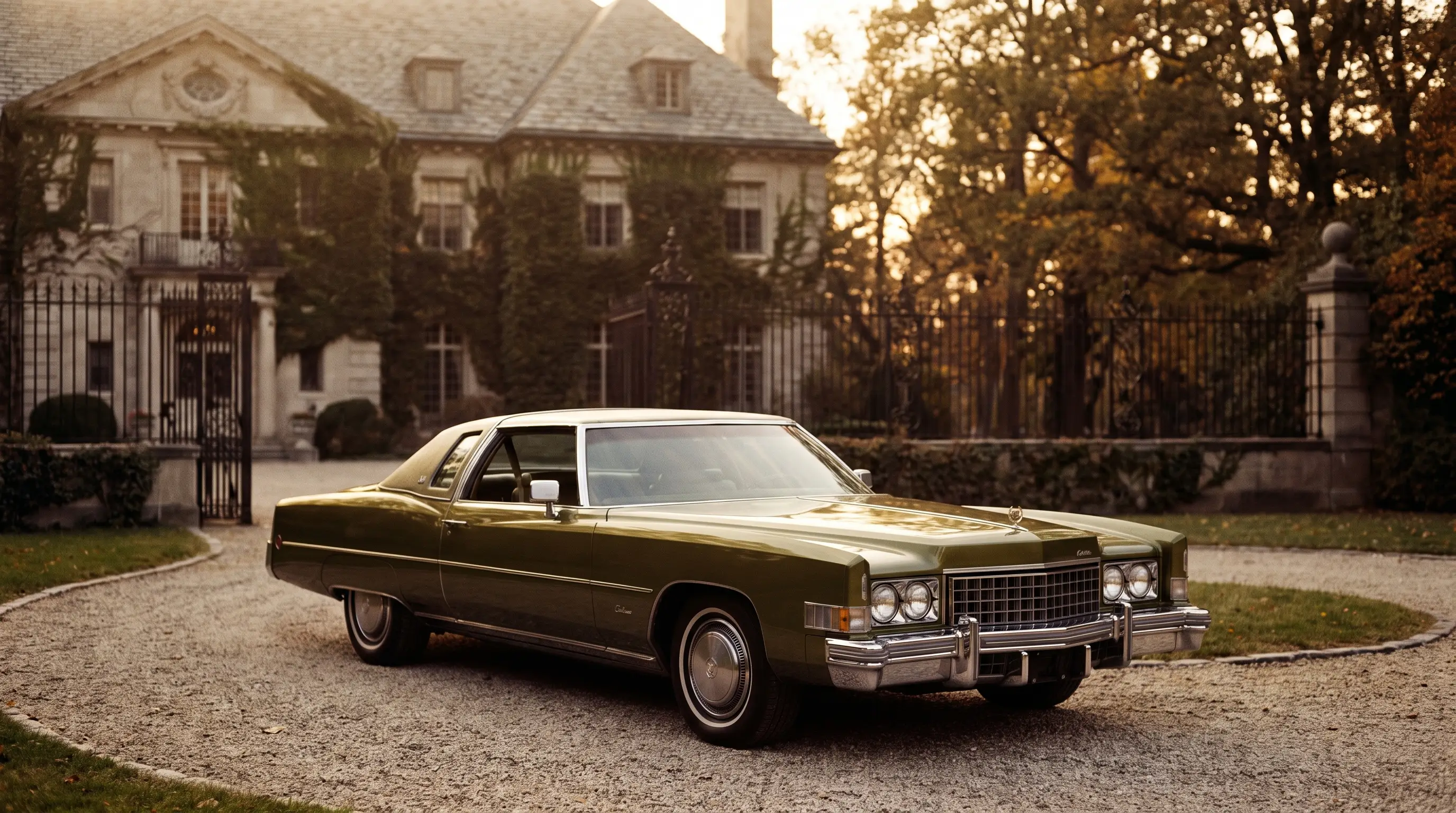
Front-wheel drive on a Cadillac sounds unremarkable now, when most luxury sedans on the road pull rather than push. In 1967 it was a genuine gamble, and the reason it mattered has less to do with engineering trivia and more to do with what it signaled about how a luxury coupe was supposed to drive, feel, and be packaged. Understanding that shift is useful for anyone trying to value or evaluate a Cadillac Eldorado from this era today.
The packaging argument, not just the engineering argument
Front-wheel drive on the Eldorado was never primarily about traction or handling novelty, even though period marketing leaned on both. The real case was packaging. Eliminating the driveshaft tunnel that a rear-drive layout requires opened up a genuinely flat floor front to back, which meant a lower overall roofline was possible without sacrificing headroom, and interior space that would otherwise be consumed by drivetrain hardware could go toward passengers and trunk volume instead. For a personal luxury coupe competing on presence and comfort rather than outright performance, that packaging advantage translated directly into a lower, sleeker silhouette that rear-drive competitors like the Lincoln Continental Mark III could not match without different compromises elsewhere.
The mechanical layout itself, a chain-driven transfer case feeding power forward from a Turbo-Hydramatic transmission, was shared with the Oldsmobile Toronado, but Cadillac's execution, larger V8, more insulation, more standard content, positioned the Eldorado as the premium expression of an idea GM had already tested successfully at Oldsmobile.
What it did to the buyer's perception of value
From a market standpoint, front-wheel drive gave the Eldorado a story no other American luxury coupe of the period could tell. A buyer paying Cadillac money got a car that was mechanically distinct from a Series 62 sedan wearing the same badge, not just a shorter wheelbase or a two-door roofline grafted onto shared bones. That distinction supported pricing at the top of the Cadillac range and gave dealers a genuine talking point beyond trim level and options. In an industry where differentiation often came down to chrome and upholstery, the Eldorado's drivetrain was a real, defensible point of separation.
That differentiation shows up in how the car has held its value relative to more conventional Cadillacs of the same years. Front-drive Eldorados from 1967 through 1970 consistently draw stronger collector interest and stronger auction results than contemporary Series 62 or Calais sedans built on the same-era rear-drive architecture, a gap that reflects genuine mechanical distinctiveness rather than styling alone.
"When I'm asked whether a front-drive Eldorado is worth a premium over a rear-drive Cadillac from the same years, my answer is always yes, and the reason is mechanical, not sentimental. You're buying a genuinely different car under the skin, and the market has consistently priced that difference in."
- David Mercer
How this plays into buying decisions today
For a buyer weighing a 1967 through 1970 Eldorado against alternatives, the front-wheel-drive layout is a real consideration on both sides of the ledger. On the plus side, it is the mechanical feature that gives the car its identity and its collector premium, and a well-maintained example has a reputation for durability that dispels the assumption that early front-drive systems were inherently fragile. On the downside, parts and specialist knowledge for this specific drivetrain are narrower than for a conventional rear-drive Cadillac, since the system was never used as broadly across the GM lineup and shares real complexity with the Toronado rather than with the majority of period Cadillacs.
My general read for a buyer serious about this generation: budget for a pre-purchase inspection from a shop or specialist familiar specifically with the front-drive Eldorado and Toronado platform, not a generalist classic car mechanic. The drivetrain's reputation for durability holds up when it has been maintained correctly, and falls apart quickly when it has not, and the difference between those two outcomes is not always visible from a test drive alone.
Comparing the sales pitch to the competition
Set the Eldorado's front-wheel-drive pitch against the alternatives a shopper in 1967 actually cross-shopped and the differentiation gets sharper. The Lincoln Continental Mark III, which arrived a year later, was built on a shortened Ford Thunderbird platform, a conventional rear-drive layout dressed in formal, upright styling. The Buick Riviera, closer in spirit to the Eldorado as a personal luxury coupe, also stayed rear-drive throughout this period. Neither competitor could offer a buyer the specific combination of a flat cabin floor, a lower roofline enabled by that packaging, and genuine mechanical novelty that the Eldorado carried as standard equipment. That gap gave Cadillac dealers a sales argument that did not depend on subjective styling preference, which tends to be a more durable kind of differentiation than chrome trim or two-tone paint.
It is worth noting the tradeoff was not free. Front-wheel drive added complexity and weight over the front axle, and early ownership experience included a learning curve for mechanics unfamiliar with the layout. Cadillac's decision to absorb that complexity anyway, rather than simply badge-engineering a rear-drive coupe the way some competitors did, is part of why the model retains a reputation for engineering ambition that a lot of period American luxury cars simply do not have.
The bottom line on why it mattered
Front-wheel drive mattered for the Eldorado because it gave a luxury coupe a genuine mechanical reason to exist as its own model rather than a dressed-up sedan variant, and that distinctiveness has proven durable in how the collector market treats these cars decades later. The 1967 cadillac eldorado story covers how that engineering decision actually came together inside GM, and for readers who want the complete arc of the nameplate from its 1953 debut through the front-drive years and beyond, the full story is worth reading start to finish.
For buyers ready to act on that history rather than just read about it, classic Eldorados on the market is a sensible next step, since current listings make it easy to compare condition and documentation across the generation before committing.
My verdict, in short: front-wheel drive is not a footnote on these cars, it is the reason to buy one over an otherwise similar rear-drive Cadillac from the same years, and the market has agreed with that assessment consistently enough that it is no longer a contrarian position.
One more data point worth flagging for anyone comparing multiple candidates: condition and documentation still matter more than the drivetrain story alone. A rough front-drive Eldorado with a questionable history is not automatically a better purchase than a clean, well-documented rear-drive Cadillac from the same period. The front-wheel-drive premium is real, but it is a premium applied on top of condition and paperwork, not a substitute for either one. Treat it as one factor in a broader evaluation, and it will steer you correctly more often than not.
The larger lesson for collectors is that mechanical distinctiveness ages well in a way that styling trends alone rarely do. Fins, chrome, and two-tone paint schemes come and go in and out of fashion across decades of collector taste, but a genuinely different engineering approach keeps generating interest regardless of which decade's aesthetic happens to be in vogue at auction. That is the quieter, more durable reason front-wheel drive mattered, and continues to matter, for this specific generation of Eldorado.