
There is a moment on every rat rod build where the guy has to decide what to do with the metal. Real patina takes decades. It is the paint a truck wore off in a hayfield, the surface rust that crept in under a barn roof, the faded green a farmer brushed on in 1952. You cannot buy that at a swap meet. So a whole cottage industry grew up around faking it, and the fake stuff is where the arguments start. I have welded up cars in my driveway that wore honest rust, and I have watched people spray vinegar on a fresh panel and call it history. Those are not the same car.
Car Features
8 min read
Faking Patina and Clear-Coating Rust
Real age versus a weekend acid job, and how to clear-coat surface rust so it stops eating your rat rod.
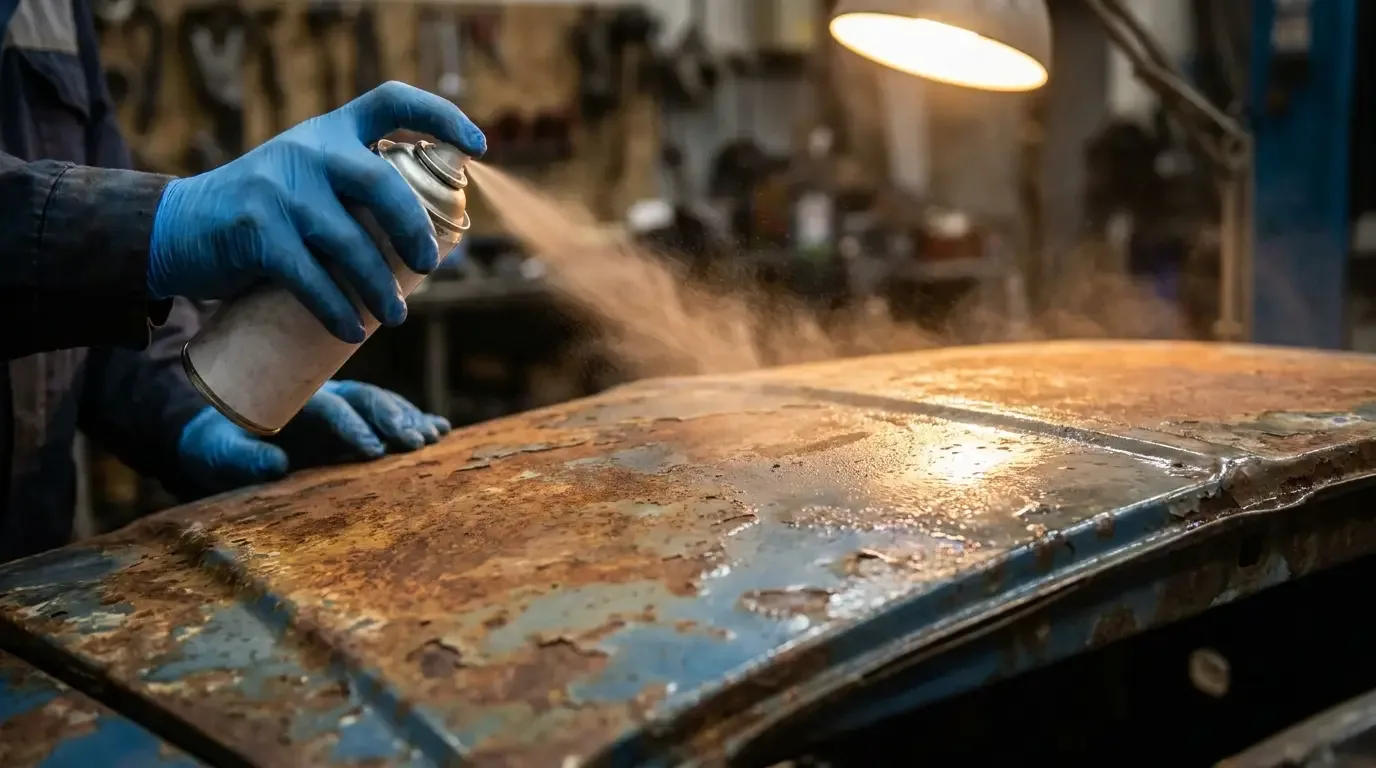
This is the fight underneath a lot of what people call rat rod patina. Some of it is genuine age. Some of it is a bottle of acid and an afternoon. Knowing the difference, and knowing how to keep whichever one you have from eating your car, is half the craft.
Real patina versus the manufactured kind
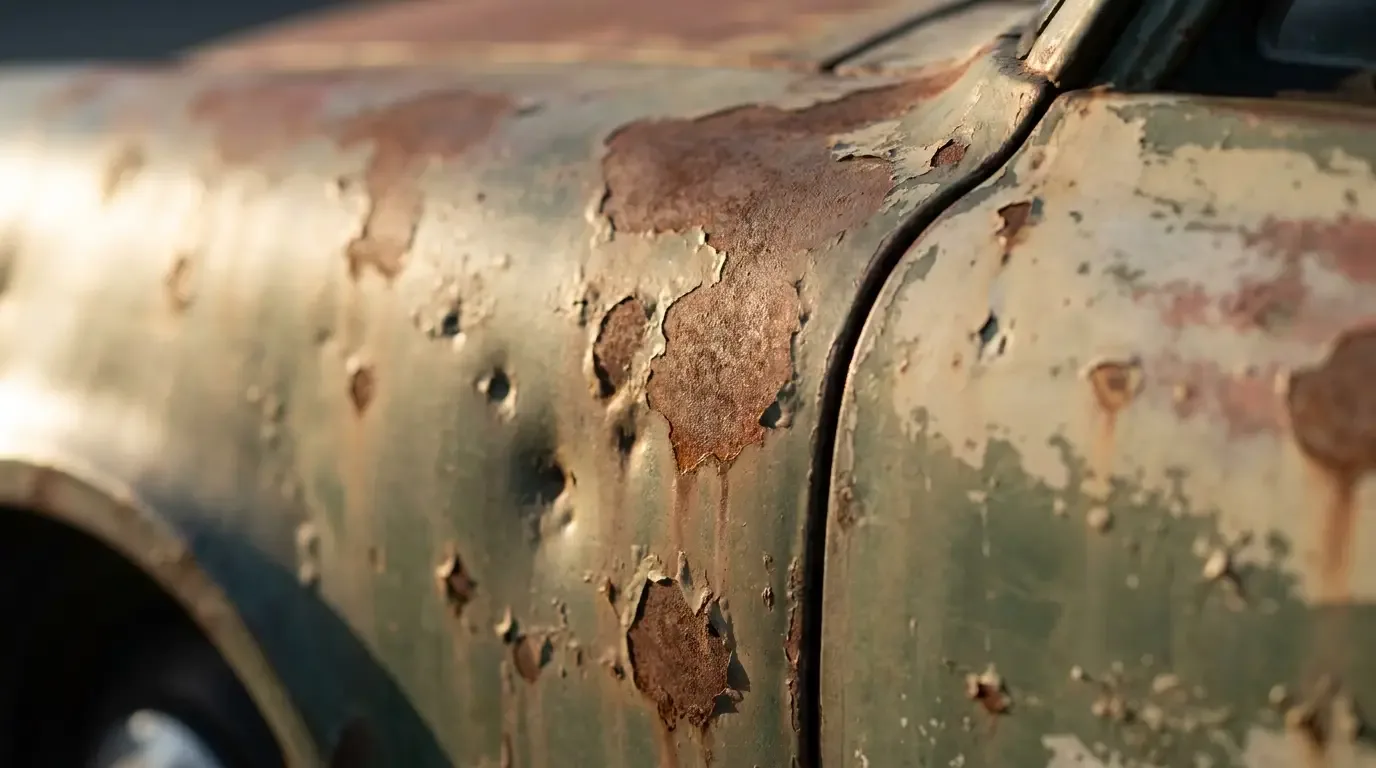
Real patina is a record. A panel that sat in the sun for forty years fades in a way that follows how the light actually hit it. Rust blooms where water pooled and where a seam trapped moisture, not in a tidy even coat. The edges of a fender wear brighter than the flats because hands and rags touched them. When you see an original truck, the story reads correctly because it happened.
Manufactured patina is somebody imitating that record in a weekend. The common tricks are cheap and fast. Spray a bare steel panel with vinegar or muriatic acid, sprinkle salt water on it, park it in the sun, and you get rust overnight. Layer a base color, sand through it to a primer, sand through that to metal, then hit it with acid and let it bleed. Some builders use hydrogen peroxide mixed with salt and vinegar to flash-rust bright steel in an hour. It works. The panel goes orange. What it does not do is put the wear in the right places, because no hand ever touched it, no rain ever ran down it.
A trained eye catches the fake almost every time. The rust is too uniform. The sand-throughs land in spots a real thumb would never reach, like the dead center of a door. And a lot of "rat-look" cars give themselves away by being too clean underneath the aged paint, a fresh floorpan and a crate motor wearing a costume of old skin.
Why purists sneer at faked age
Here is the part people get touchy about. The rat rod started as a reaction against expensive over-restored trailer queens. The whole point was that the car was raw and built cheap, an honest heap somebody dragged home and made run. So when a shop charges a big number for a car and then fakes the poverty look on top of it, that offends the people who built the scene. You are paying show-car money for a car pretending to be a broke man's car. That is backwards. If you want the origin of that attitude, it runs straight through the story of the rat rod.
The other complaint is simpler. Faked patina is a lie about the car. A genuinely old panel earned its look. A day-old acid job is set dressing. Neither one is unsafe or wrong to want, but calling manufactured rust "patina" the way you would an original barn find rubs people the wrong way, and they will let you know at the show. My own line has always been that a fake-rust car is fine as long as nobody pretends it is something it is not.
"I do not care that you aged the panel. I care when you charge me for forty years of history you put on with a spray bottle last Tuesday. Build it cheap or build it honest, but do not sell me a costume and call it a life."
Jim Vasquez
Rust is not a finish, it is a process
The thing every rat rod owner learns the hard way: rust does not stop on its own. Surface rust is iron oxide, and left open to air and moisture it keeps eating. What looks like a charming crusty fender today is thinner metal next year. Real patina cars and fake-rust cars have the exact same problem here, because both have exposed steel. If you want to keep the raw look, you have to kill the reaction and then seal it, or your "patina" turns into holes.
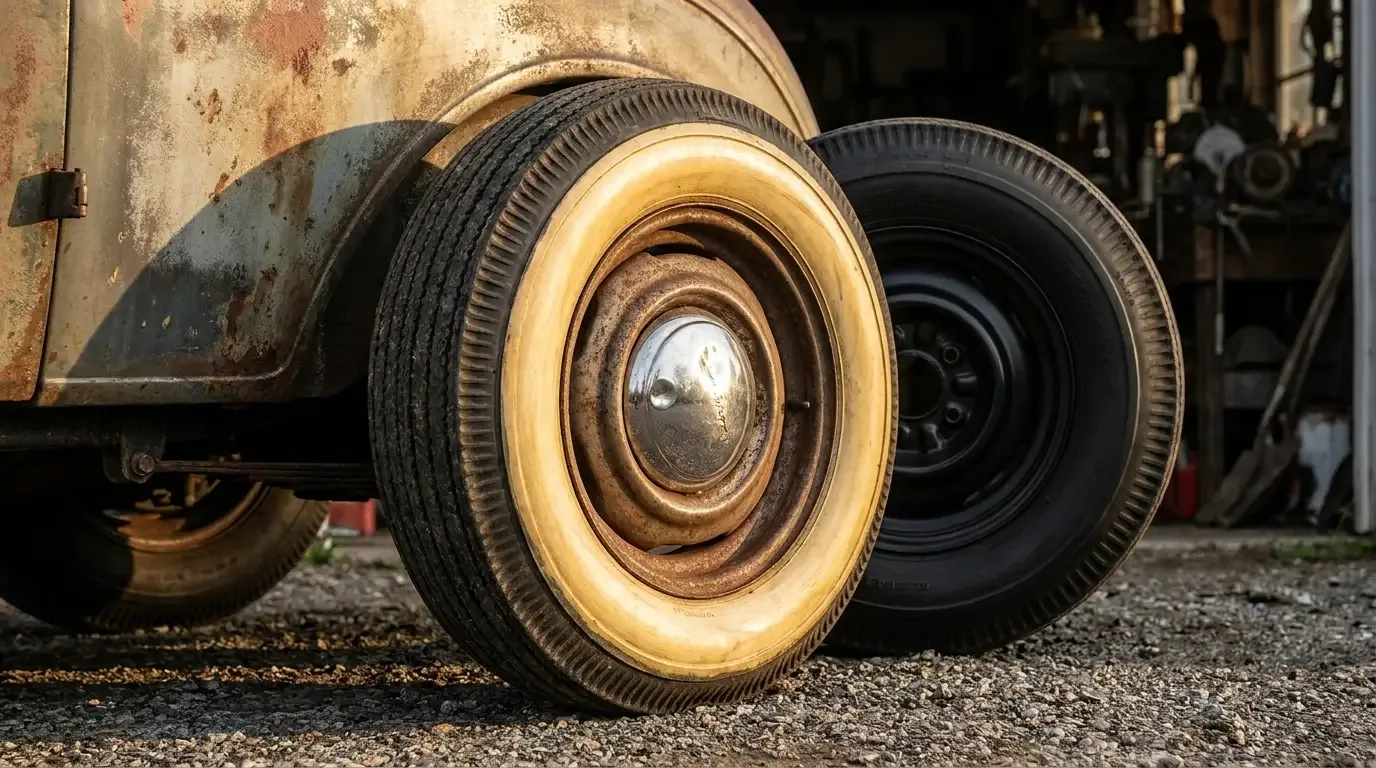
That is the honest tension in this whole style. You want the car to look unfinished, but an actually unfinished steel surface is a rotting surface. So the real skill is not making rust. It is stopping rust while keeping it looking like you did nothing at all. The wheels and stance carry the same idea, a studied roughness that still has to function, which is why builders sweat the details on Rat Rod Wheels and Tires as much as the paint.
How to seal surface rust so it stops
Sealing patina is its own small craft. Done wrong you get a glossy plasticky sheen that looks nothing like the dry crust you started with, and the whole effect dies. Done right the surface looks untouched and stops shedding rust on your hands and your garage floor. The steps below are the ones that hold up.
| Step | What you do | Why it matters |
|---|---|---|
| Stop active rust | Wire-brush loose flakes, then treat with a phosphoric-acid rust converter | Converts loose red rust to a stable black layer so it stops spreading under the seal |
| Degrease | Wipe the whole surface with a wax-and-grease remover | Clear coat will not bond over oil, fingerprints, or silicone residue |
| Choose a matte clear | Use a flat or satin clear, never high gloss | Gloss makes patina look wet and plastic and kills the raw look instantly |
| Light coats | Two or three thin passes, not one heavy one | Heavy clear pools in the pits and darkens the color unevenly |
| Test first | Spray a hidden panel or a scrap piece before doing the whole car | Every clear changes the color slightly, and you want to see it before it is permanent |
So should you fake it
Honestly, that is your call, and the scene is more forgiving than the loudest voices make it sound. Plenty of good cars wear aged paint that started life on a shelf at a paint store. If the base metal is solid and you are aging a repair panel to match an original, most builders will nod along. Where it goes wrong is passing off a fresh acid job as a genuine survivor, or spending restomod money and dressing it in poverty. Build it cheap or build it honest. If you do age a panel, seal it like you mean it, because faked rust eats steel exactly as fast as the real thing.
Sources and notes
- Period and current rat-rod and hot-rod press coverage of patina preservation and the survivor-versus-restoration debate
- Builder and shop interviews on acid-aging, rust-converter chemistry, and matte clear-coat technique
- General chassis and refinishing references on surface-rust treatment and phosphoric-acid conversion
- Show and club discussion of the real-patina versus manufactured-patina divide
Related Reading
Have a
Classic Car
for Sale?
Reach thousands of serious classic car collectors across the US.
Sell It Here →
Are You a Classic Car Dealer?
List your full inventory and connect with targeted classic car buyers.
Join as a Dealer →

About the author
Jim Vasquez
Southern California hot rod and custom car builder with roots in the traditional kustom kulture scene.




Comments
Be the first to comment on this article.