
Walk any big rat rod show and you can sort the cars into two piles inside about ten seconds, and I've been doing that sorting since before half these builders were born. One pile earned its rust. The other bought it in a spray can. The look is the whole game with these cars, and the look is also where the arguments start, because a rat rod is supposed to read as a survivor that got dragged out of a barn and made to run, not a fresh build wearing a costume. Getting the aesthetic right is less about buying parts and more about restraint, and that is exactly what trips people up. If you want the background on how this whole scene grew out of a backlash against over-restored show cars, that sits in the story of the rat rod.
Car Features
10 min read
Rat Rod Style and the Patina Look
Real patina vs faked rust, clear-coating, stance, and wheels: the rat rod look and where the line sits between authentic and poseur.
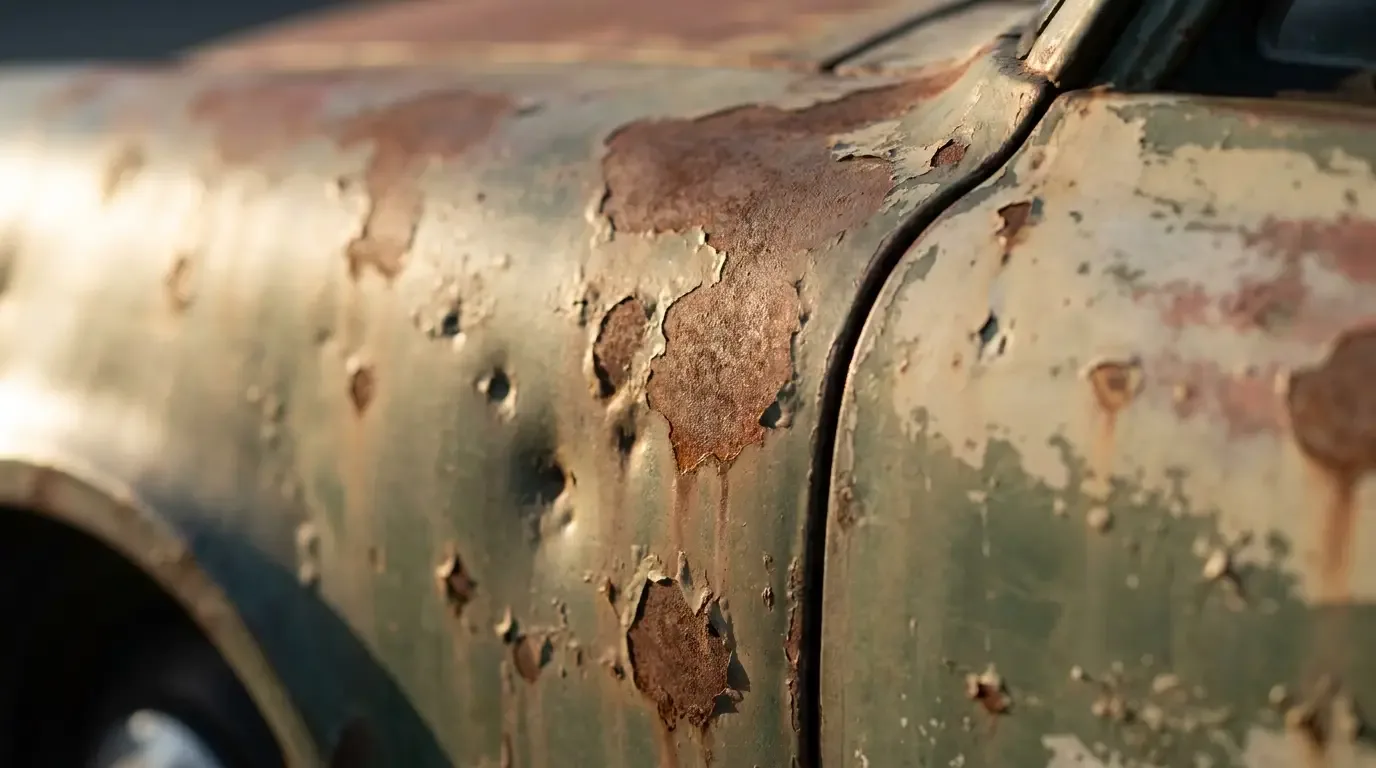
What people actually mean by rat rod patina
Patina is just the surface a car earns from decades of weather, sun, and neglect. Faded paint, surface rust that has gone a warm brown, chalky primer spots, a hood that is three different colors because it came off three different trucks. On a real barn find that finish is a record of the car's life, and rat rod builders started chasing it because it looks honest next to a mirror-polished street rod. The problem is that honest is hard to fake, and most of the eye-rolling in this hobby comes from builds that try.
There is a real distinction between a car that has patina and a car that has been given "the rat look." A genuine patina panel has uneven rust, pitting that follows where water actually sat, and paint that faded more on the horizontal surfaces the sun hit. A faked one tends to be too even, too artful, and rusty in places water never pools. Once you have looked at a hundred of these cars you stop needing to think about it. Your eye just knows. For the deeper history and where the whole ethos came from, start with the story of the rat rod.
Real patina versus faked rust
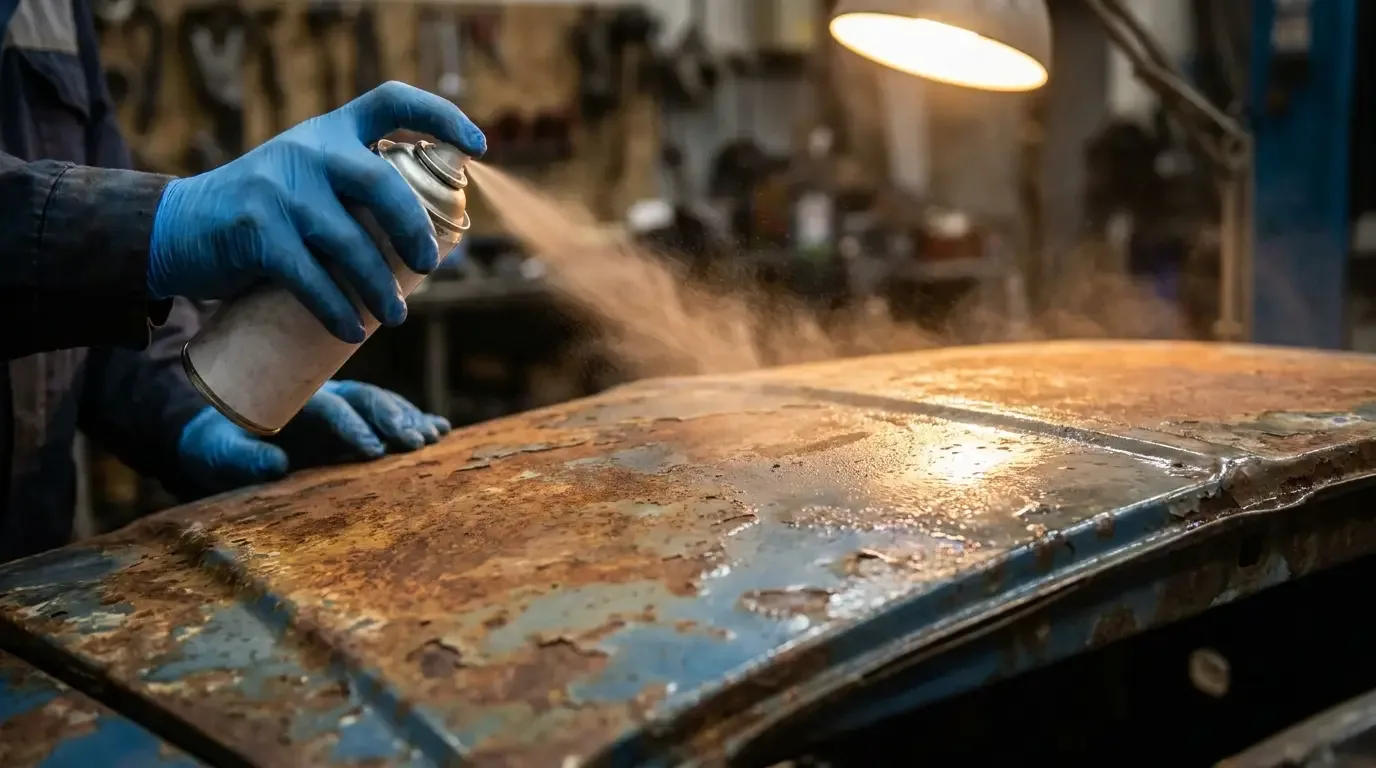
Here is the honest split. Real patina comes from a car that sat outside for forty years. You find the shell, you clean it, you keep what the weather did, and you build around it. Faked patina comes from a builder taking a solid or repainted body and attacking it with muriatic acid, salt water, vinegar, a torch, or one of the aging kits that got popular in the 2010s. Some guys airbrush faux rust and shadow over fresh primer and clear it. Done well it can fool a phone camera. Done badly it looks like a Halloween prop.
I'm not a purist about much, but I'll say this plainly: a faked-rust body is a paint job, and there's nothing wrong with a paint job as long as nobody pretends it's forty years of Nebraska winters. The builds that get called poseur are not the ones with fake patina. They are the ones with fake patina and a story attached about a barn that never existed. If the car is cool, own how you got there.
- Real patina: uneven, follows water paths and sun exposure, rust pits are deep and irregular, paint edges are soft and chalky.
- Chemically aged: faster and more uniform, often too consistent panel to panel, tends to run heavy where the acid pooled.
- Painted faux patina: rust that sits on top of the primer instead of coming through it, no pitting you can feel with a fingernail, looks flat in raking light.
None of these is wrong on its own. The line between authentic and poseur is honesty about which one you did. For the full breakdown of the chemistry and the clear-coat step, we go deeper in a companion piece, but the short version lives right here.
Clear-coating rust so it does not eat the car
Left raw, surface rust does not sit still. It keeps oxidizing, it rubs off orange on your hands and clothes, and it slowly turns surface scale into holes. That is the practical reason most serious rat rods that keep the bare-metal or patina look get sealed. The usual path is a wash to kill loose scale, a rust converter or a phosphoric-acid wash to neutralize the active corrosion, then a matte or satin clear over the top. A gloss clear on patina looks wrong, too wet and too new, so builders reach for flat clears or additives that knock the shine down.
Clear over patina is a compromise and everyone knows it. It stops your good shirt turning orange and it slows the metal loss, but a heavy clear coat also flattens the depth that made the raw finish look alive in the first place. The trick is a thin coat. You want the rust sealed, not drowned. Get it wrong and a genuinely aged body suddenly reads like plastic, which is its own kind of fake.
"I've channeled bodies and chopped tops in my driveway for thirty years, up here in Wisconsin where the winters do half the aging work for you, and the patina is the part people rush. Rust took forty years to look that good. You're not going to beat it in an afternoon with a spray can, so either use what the car already earned or be straight that you painted it."
Gary Nowak
Stance is what actually sells the look
Ask most people why a rat rod looks right and they will point at the rust. They are wrong. It is the stance. A rat rod lives low, usually nose-down, sitting on a dropped or channeled body over a narrowed frame, and that aggressive rake is doing more for the aesthetic than any amount of surface rust. You can take a shiny painted body, drop it in the weeds with the right rake and the right wheels, and it will read more "rat rod" than a perfectly patina'd car sitting up on tall springs like a stock farm truck.
The moves that build the stance are the same ones traditional hot rodders have used for decades. Channeling drops the body down over the frame rails. A dropped front axle or a suicide front end brings the nose down. Bags or a Z'd frame get the rockers close to the pavement. None of this is cheap-looking cheating, it is real fabrication, and it is the difference between a car that looks intentional and a car that just looks like a rusty stocker. If you are weighing whether all this is even street-legal once the car is on the ground, that is a fair question and we cover it under are rat rods legal.
| Look element | Authentic move | Poseur tell |
|---|---|---|
| Finish | Real weathered patina, or fake patina you admit to | Even acid rust with a fabricated barn-find backstory |
| Stance | Low, raked, body channeled or axle dropped | Rusty body sitting at stock ride height |
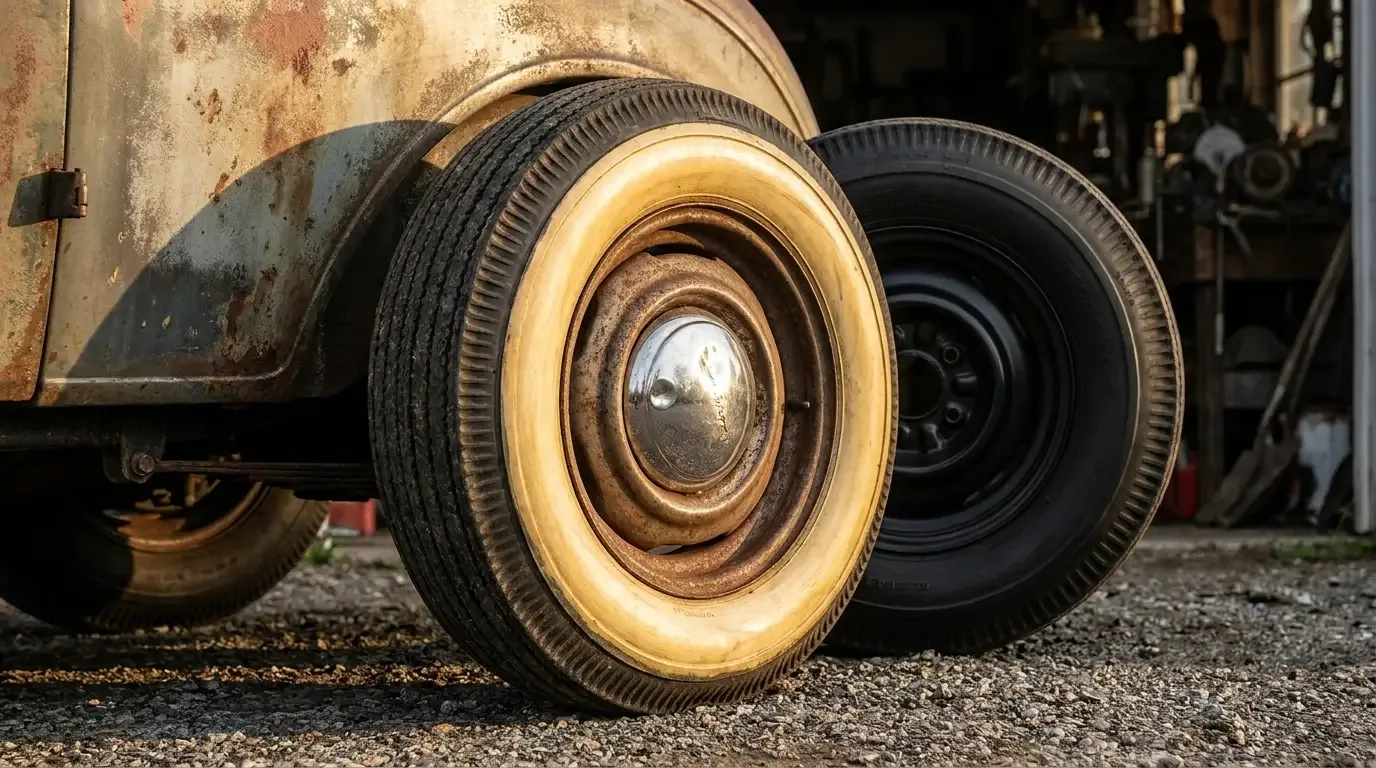
| Wheels | Steelies, wide whites or dry-rot-look bias tires, staggered sizes | Shiny modern billet wheels that fight the theme |
| Details | Hand-welded brackets, found-object trim that works | Bolt-on skulls and chains covering thin fabrication |
| Cost story | Actually built cheap and rough | Expensive build dressed to look cheap |
Wheels, tires, and the welded details
Wheels make or break the aesthetic, and the safe answer is almost always steel. Painted or bare steelies, often in a staggered setup with skinny fronts and fat rears, sell the period look for very little money. Wide whitewalls, or bias-look tires with the old-timey tread and a bit of intentional weathering, finish it. The fastest way to kill a rat rod's credibility is a set of shiny modern billet wheels. They fight everything else the car is trying to say.
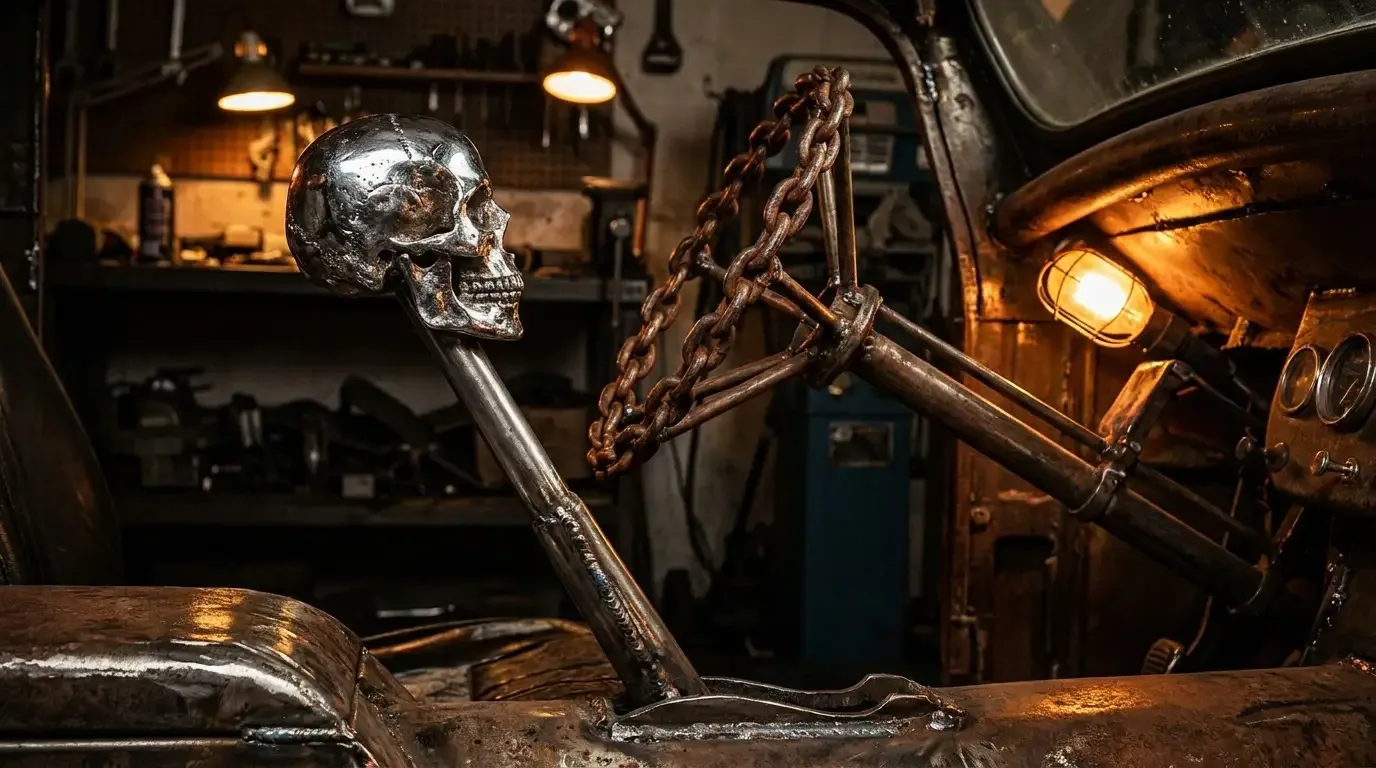
Then there are the welded details, and this is where builders separate themselves. A rat rod is a fabricated car, so hand-built brackets, a chopped and welded firewall, exhaust that some human clearly bent and stitched together, and found-object parts pressed into new jobs all read as authentic because they show real work. The gimmick version is the bolt-on stuff: chrome skulls, chains for no reason, shifter knobs made of grenades. A few of those are fine as a wink. When they are there to hide that the actual fabrication is thin, everybody can tell.
- Steelies over billet: steel wheels are cheaper, period-correct, and do not clash with a weathered body.
- Stagger the sizes: skinny fronts and wide rears exaggerate the rake and the aggressive stance.
- Weld it, do not bolt it: visible hand-fabrication reads as real. Bolt-on decoration reads as a costume.
- Use gimmicks sparingly: one welded skull is a wink. A carload of them is a cry for help.
Where the line sits between authentic and poseur
After all of it, the line is not really about rust or wheels. It is about honesty and work. A car with fully faked patina, steel wheels, a low stance, and real hand-fabrication is a legitimate rat rod even though the finish came out of a spray gun, because the builder did the work and does not lie about it. A car with genuine forty-year patina but expensive billet wheels, a stock stance, and a bank statement to match is the thing the scene actually rolls its eyes at: money pretending to be grit.
That is the whole test. Real rat rods look cheap because they were built cheap and rough by someone who had more time than money. The poseur build inverts it, spending real money to manufacture the look of not having spent any. Keep the stance low, keep the wheels honest, weld more than you bolt, and be straight about how the finish got there, and nobody at any show is going to question the car. If you like the look enough to want one in the driveway rather than build it, there are always project rat rods for sale worth a weekend of sorting.
Sources and notes
- Period and current hot-rod and rat-rod press coverage of patina, faux-finish, and build-style trends.
- Builder and fabricator interviews on stance, channeling, and driveway fabrication technique.
- General refinishing and corrosion references on rust conversion, phosphoric-acid treatment, and matte clear-coat practice.
- Show and club observation of judged and displayed rat rod builds.
Related Reading
Article
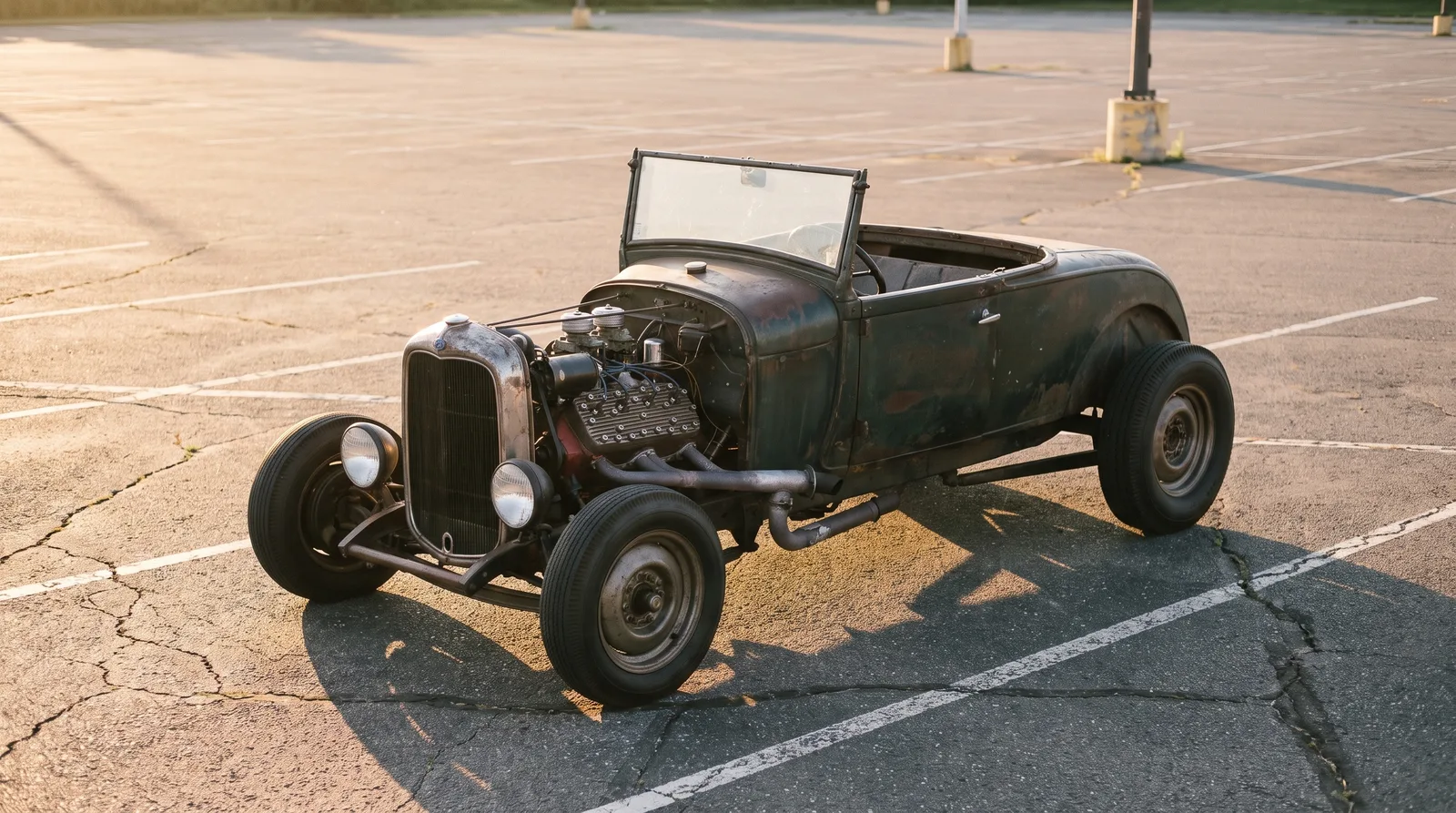
The Rat Rod Story
Article
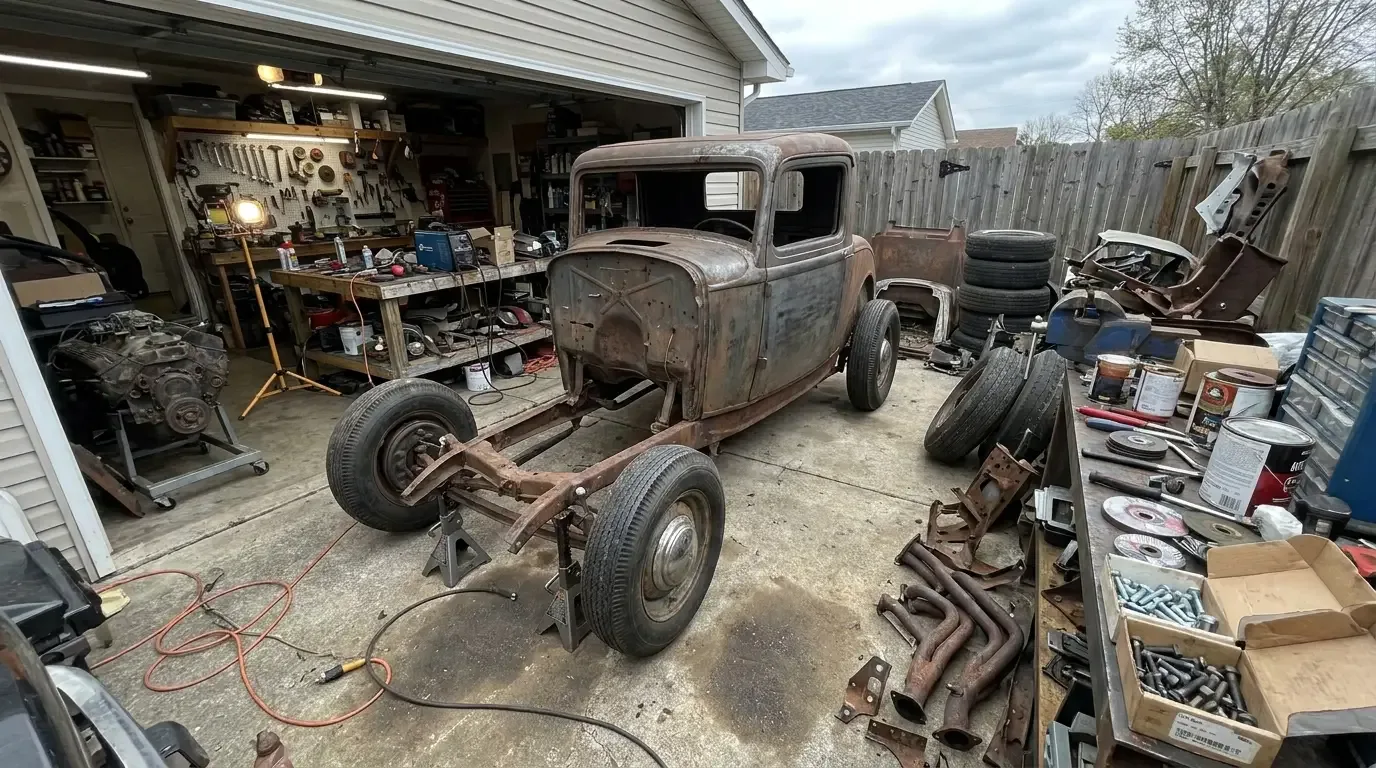
Building a Rat Rod on a Budget
Article
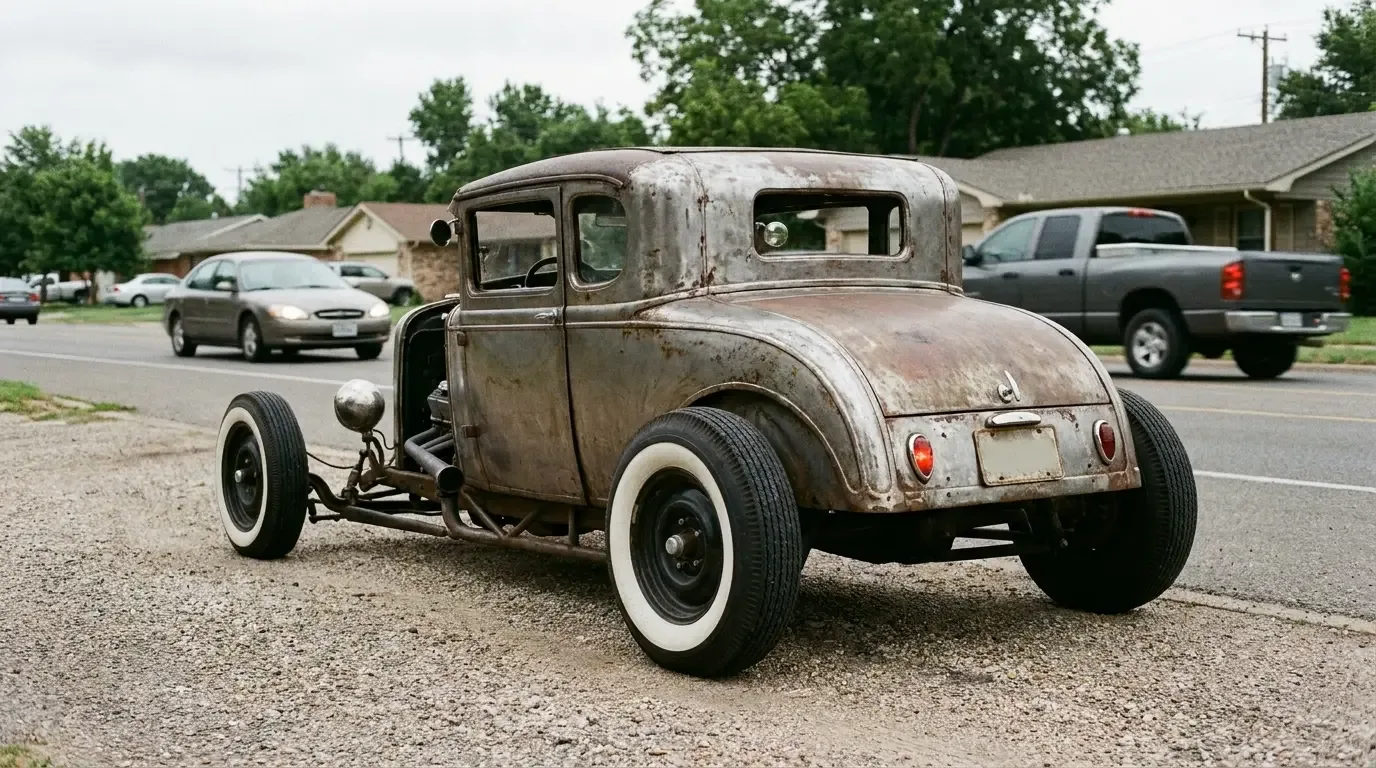
Rat Rod Safety, Legality and the Controversy
Article
Faking Patina and Clear-Coating Rust
Article
Rat Rod Wheels and Tires
Article
Rat Rod Interiors and Details
Article
Welded Art, Skulls and Rat Rod Gimmicks
External
/rat-rods-for-sale
Have a
Classic Car
for Sale?
Reach thousands of serious classic car collectors across the US.
Sell It Here →
Are You a Classic Car Dealer?
List your full inventory and connect with targeted classic car buyers.
Join as a Dealer →

About the author
Gary Nowak
Lifelong Midwest rodder who has been building and driving traditional pre-war hot rods since the 1970s.
Comments
Be the first to comment on this article.