
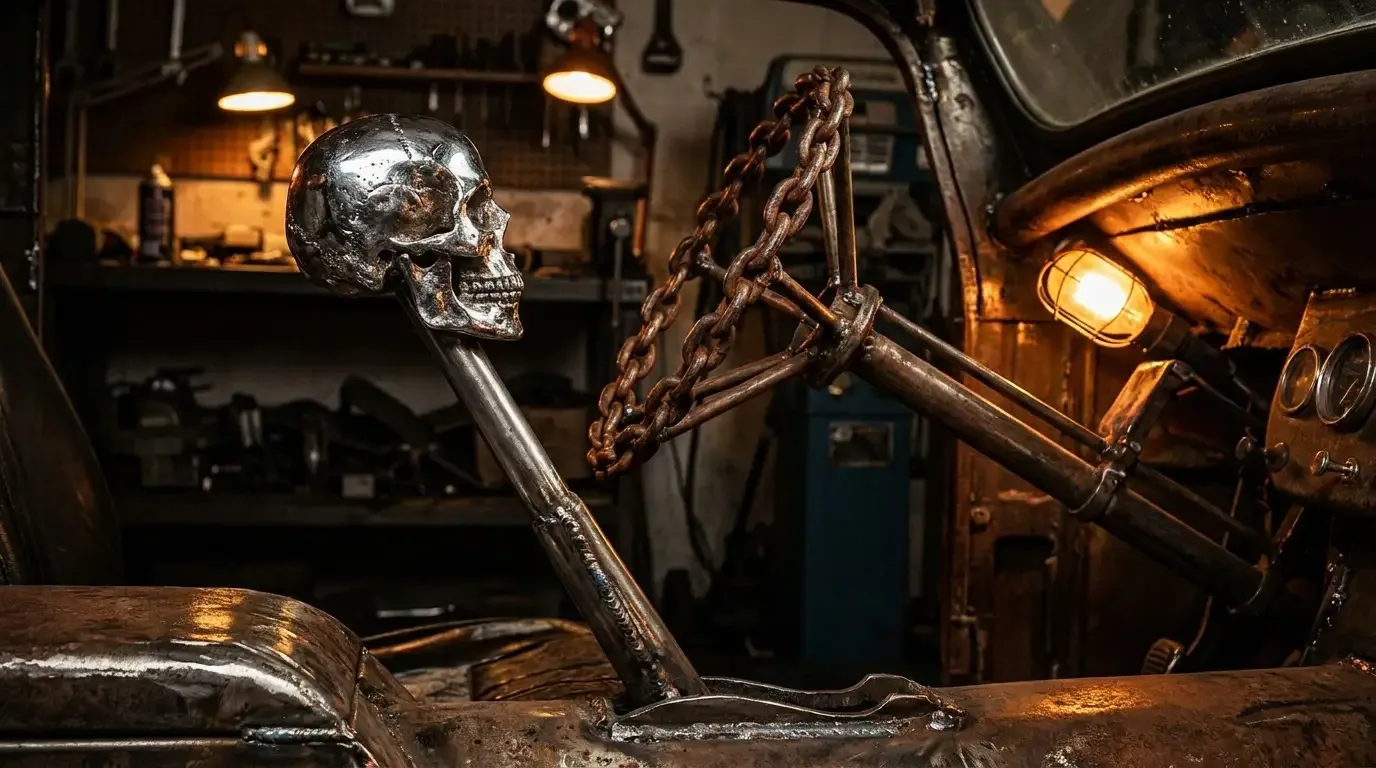
Walk any rat rod show and you will see it within the first ten cars: a chromed skull screwed onto a shifter, a section of motorcycle chain welded into a steering wheel, a console built out of a real coffin lid. Some of it is genuinely clever metalwork. A lot of it is a bolt-on cliche someone bought off a swap-meet table and called art. I have spent thirty years welding up cars in a driveway, and I can tell you the line between the two is real, even if nobody at the show wants to admit where it sits.
Car Features
6 min read
Welded Art, Skulls and Rat Rod Gimmicks
Skull shifters, chain steering wheels and coffin consoles. A builder's take on where welded rat rod art ends and the gimmicks begin.
This is the fun, ugly, argued-about side of the style. If you have read our take on rat rod patina, you already know the look is half the point of one of these cars. The welded-on details are where builders show off, and also where they most often embarrass themselves.
Where fabrication actually earns its keep
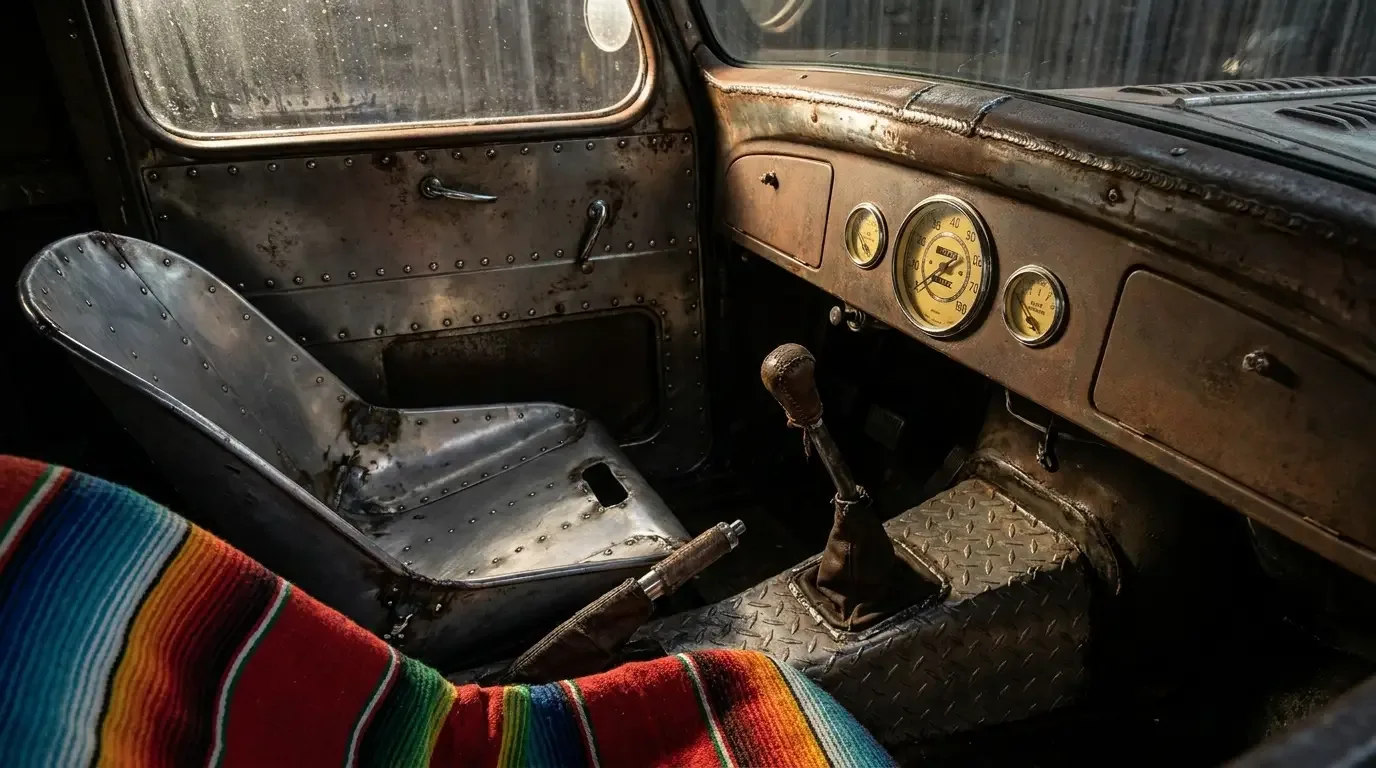
Real welded art on a rat rod is fabrication you could not just buy. A shifter carved and welded from stacked wrenches, each one cut to length and blended so the throw still works. A brake pedal made from a gear with the teeth left sharp. Bomber-style seats hammered out of sheet steel with the rivet lines showing. That stuff takes a torch, a grinder, and a couple of ruined weekends, and it reads as personal because it is.
The tell is function. Good driveway art still does its job. A chain steering wheel that is welded to a solid hub and does not flex under load is a build. The same wheel that wobbles because the maker never trusted the welds is a prop. Same shape, completely different car.
"I do not care how mean your skull shifter looks. If you bought it in a bag and I could too, you did not build anything. Show me the part you made at two in the morning with a grinder and a bad idea. That is the car I want to talk about."
Jim Vasquez
- Gear and wrench shifters that keep a clean, repeatable throw.
- Spiderweb work TIG-welded from thin rod, tight and even, not globbed on.
- Sculpture built from the car's own junk, an old cylinder head turned into a valve cover cap.
- Hand-formed brackets that show the hammer marks on purpose.
The gimmick pile: skulls, coffins, and the rest
Now the other side. The chromed skull shifter is the single most overdone part in the hobby. You can buy one for pocket change, it takes four minutes to install, and it turns a personal car into every other car at the show. Same story with the eight-ball shifter, the coffin center console, the machine-gun exhaust tips, the fake bullet holes stuck on with a vinyl decal. None of it is fabrication. It is shopping.
I am not against a skull. I am against a skull standing in for actual work. When a car is nothing but a rust-look shell wearing a bolt-on gag rack, it belongs in the same bin as the fake-patina poseur builds, all costume, no craft. If you want to know why that matters to people who take this seriously, our piece on Faking Patina and Clear-Coating Rust covers the same argument from the finish side.
| Detail | Fabrication or gimmick? | Why |
|---|---|---|
| Welded wrench shifter | Fabrication | Cut, stacked, welded, and still works |
| Bolt-on chrome skull shifter | Gimmick | Bought whole, four-minute install |
| TIG spiderweb on a frame horn | Fabrication | Skill shows in the weld quality |
| Vinyl fake bullet holes | Gimmick | A sticker, not metal |
| Coffin console, hand-built | Depends | Craft if formed, cliche if bought |
Chain, gears, and the safety part nobody wants to hear
Here is where I stop being a critic and start being the guy who does not want you to crash. A chain steering wheel is a great look. It is also a steering wheel, the one part of the car you hold when a truck pulls out in front of you. If it is welded to a proper hub with full-penetration welds and it does not deflect, fine. If it is tack-welded chain wrapped around a bar because it photographed well, that is a hospital visit waiting for a reason.
Same goes for gear shifters with the teeth left razor-sharp at knee height, and jagged sculpture bolted where your leg lives in a rollover. Art on a car still has to lose the fight with a human body. Grind the edges. Trust the welds or do not run the part.
So where does the line actually sit?
My rule is simple. If you made it and it works, it is art. If you bought it and it just sits there, it is a gimmick, and if the whole car is gimmicks, you built a costume, not a rat rod. That is not gatekeeping for its own sake. The style started as a rejection of cars that were all show and no substance, so a rat rod that is all bolt-on shock value is missing its own point.
None of this means your car has to be humorless. The best of these builds are funny, dark, and personal all at once, and that spirit runs straight back through the rat rod story from the start. Weld something nobody else has. Make it work. Then bolt one skull on if you must, and let the rest of the car earn the joke.
Sources and notes
- Period and current rat-rod and kustom-kulture press coverage of show cars and fabrication trends.
- Builder and fabricator interviews on welded controls, sheet-metal work, and found-object sculpture.
- General chassis and steering references on welded control components and joint integrity.
- Show and club judging notes distinguishing hand-built detail from bolt-on accessories.
Related Reading
Have a
Classic Car
for Sale?
Reach thousands of serious classic car collectors across the US.
Sell It Here →
Are You a Classic Car Dealer?
List your full inventory and connect with targeted classic car buyers.
Join as a Dealer →

About the author
Jim Vasquez
Southern California hot rod and custom car builder with roots in the traditional kustom kulture scene.




Comments
Be the first to comment on this article.