
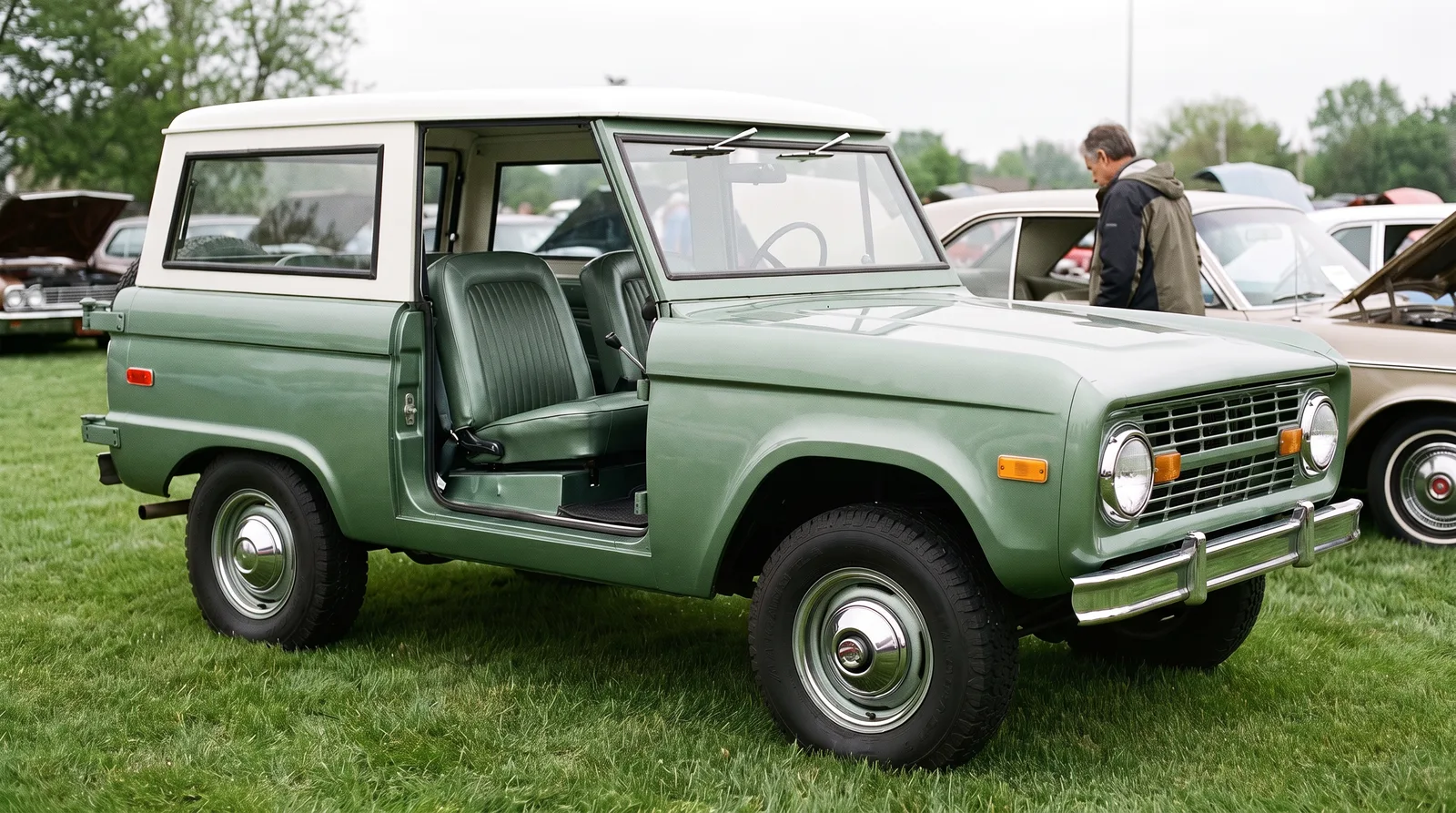
Slide behind the wheel of a 1966 Bronco and then climb into a 1973 model and the difference registers before the engine even turns over. The seat sits a little softer. The dash feels a touch more considered. Nothing about the 1973 Ford Bronco's cabin would impress anyone stepping out of a modern truck, but compared to where this platform started, it represents a quiet, steady march toward making a working vehicle livable for the people who actually spent their days inside it.
Car Features
7 min read
The More Livable 1973 Bronco Cabin
The 1973 Ford Bronco's cabin was still spartan by modern standards, but incremental seat, sound, and safety improvements made it the most livable version of the original small Bronco yet.
A cabin built for chores, slowly softened
Ford's original Bronco concept prioritized capability over comfort almost entirely. Early trucks from 1966 through the late 1960s offered thin vinyl seating, minimal sound deadening, and a dashboard laid out for function rather than feel. That approach made sense for a vehicle marketed to ranchers, hunters, and utility buyers who cared more about what the truck could do than how pleasant it was to sit in for an afternoon.
By 1973, buyer expectations had shifted. Recreational use of four-wheel-drive vehicles was growing, and Ford's customer base increasingly included people using the Bronco for weekend trips rather than daily ranch work. The company responded with incremental cabin improvements that, taken individually, seem modest, but together made a meaningful difference to how the truck actually felt to occupy for more than a short errand.
What actually got better
Seat padding saw genuine improvement by 1973, with thicker cushioning than the earliest trucks offered, and upholstery choices expanded to include more color and material options for buyers willing to pay for them. Sound deadening also improved incrementally, quieting some of the road and wind noise that had defined the earlier trucks' cabin experience. Ford added shoulder belts as standard equipment this model year as well, a safety improvement that also changed how secure occupants felt on rougher terrain.
Climate control remained basic by any modern measure. A factory heater was standard, but air conditioning existed only as a dealer-installed option that many original buyers skipped, given the added cost and the truck's more utilitarian intended use. Ventilation relied heavily on opening windows and the truck's removable top options, a system that worked reasonably well in dry Western climates but left buyers in hotter, more humid regions with a genuinely uncomfortable summer cabin.
Small space, deliberate layout
The Bronco's compact footprint meant Ford's designers had limited room to work with inside the cabin, and the layout reflects careful prioritization rather than generous space. Storage was minimal. Legroom, particularly for taller occupants, remained tight compared to the roomier Chevrolet Blazer and GMC Jimmy that had entered the market a few years earlier with a longer wheelbase and more generous interior dimensions.
What the Bronco lacked in outright space, it made up for with a driving position that felt connected to the truck's mechanical nature, close to the controls, close to the road, with sightlines that made the compact dimensions feel like an advantage on tight trails rather than a limitation. Owners who have spent real time in both a Bronco and a Blazer from this era often describe the Bronco's cabin as tighter but more engaging, a trade some buyers actively preferred even at the time.
For more on how these cabin choices fit into the truck's broader specification and history for the model year, see more on the 1973 ford bronco covering the full picture.
What the seats and surfaces were actually made of
Material choice in 1973 reflected the automotive industry's broader habits of the period more than any Bronco-specific innovation. Vinyl dominated seating surfaces, chosen for its durability and ease of cleaning in a truck still expected to see genuine outdoor use rather than exclusively paved commuting. Carpet, where fitted, was a relatively thin rubber-backed material rather than anything plush, and door panels used a simple pressed vinyl-over-cardboard construction that has not always survived five decades of moisture and temperature swings without cracking or delaminating.
Those material realities matter enormously to a buyer evaluating originality today, because vinyl and early carpet from this era are notoriously difficult to source in exact period-correct form. Reproduction suppliers have gotten better at matching original textures and colors over the past decade, but a careful buyer should expect some compromise between perfect historical accuracy and practical availability when sourcing interior replacement parts for a truck this old.
How it compares across the nameplate's run
Placed alongside the Bronco's later generations, the 1973 cabin still reads as spartan. The larger, F-100 based Bronco that arrived for 1978 offered genuinely more interior room and comfort, a direct response to the exact complaints that had followed the compact truck throughout its production run. But within the context of the original small Bronco's own timeline, 1973 sits near the more comfortable end, benefiting from years of incremental refinement without yet needing the size and complexity that would come with the platform change five years later.
Readers interested in tracing that full arc, from the spartan early trucks through the comfort improvements of the early 1970s and into the larger generations that followed, can find our complete history of the Bronco nameplate covering every chapter.
"Nobody buys a 1973 Bronco expecting a plush ride. What surprises people the first time they sit in a well-kept one is how much thought actually went into small, quiet improvements that never made it onto a spec sheet."
- Nora Beckett
Aftermarket comfort upgrades owners actually chose
Even at the time, plenty of original owners supplemented the factory cabin with aftermarket additions rather than waiting for Ford to catch up. Seat cushion covers, aftermarket carpet kits, and add-on sound deadening from the period accessory market were common enough that surviving trucks today often carry a mix of factory and period-correct aftermarket comfort items layered together. That blending complicates restoration decisions, since a purist aiming for strict factory originality has to decide whether period aftermarket parts count as acceptable history or as deviations to be removed.
Most collectors land somewhere reasonable on that question, treating genuinely period aftermarket additions as part of a truck's honest history rather than something that needs stripping out to achieve authenticity. A dealer-installed accessory floor mat set or a period sound deadening kit installed by the original owner tells a story about how the truck was actually used, which many buyers find adds character rather than detracting from it, provided the additions are clearly identified as aftermarket rather than misrepresented as factory equipment.
Living with the cabin today
For today's buyer weighing ford bronco 1973 interior comfort against more modern alternatives, the honest expectation matters. This is not a truck that will feel comfortable by contemporary standards, even in the best-preserved examples. What it offers instead is an honest, mechanical connection to the driving experience, softened just enough by 1973's incremental improvements to make longer trips genuinely pleasant rather than merely tolerable.
Buyers who value that particular kind of comfort, one measured in character rather than cushioning, tend to find the 1973 cabin more than adequate once they adjust their expectations. Those ready to experience it firsthand can browse classic Broncos on the market and look specifically for seat condition, upholstery originality, and any surviving factory options like air conditioning, since those details do more to shape day-to-day comfort than anything else in the cabin.
Sources and notes
Related Reading
Have a
Ford Bronco
for Sale?
Reach thousands of serious classic car collectors across the US.
Sell It Here →
Selling a classic? Here's how: where to sell your classic car online
Are You a Classic Car Dealer?
List your full inventory and connect with targeted classic car buyers.
Join as a Dealer →

About the author
Nora Beckett
Automotive features writer and photographer who tells the human stories behind the cars, from show fields to cross-country road trips.
Related Listings - Ford Bronco
Comments
Be the first to comment on this article.