
Ford bronco 1973 power steering is a small line item on a build sheet that changed how the truck actually felt to drive. Before this model year, steering an early Bronco at low speed meant wrestling a heavy front axle through a manual box, an effort that discouraged casual buyers and made the truck feel more like farm equipment than daily transportation. The 1973 season is the point where Ford finally offered relief, and understanding why it took seven model years to arrive says as much about the truck's original design brief as it does about the option itself.
Car Features
6 min read
Power Steering Arrives, the 1973 Bronco Comfort Leap
The optional power steering system on the ford bronco 1973 power steering package finally solved the truck's biggest long-running complaint: heavy, tiring low-speed steering.
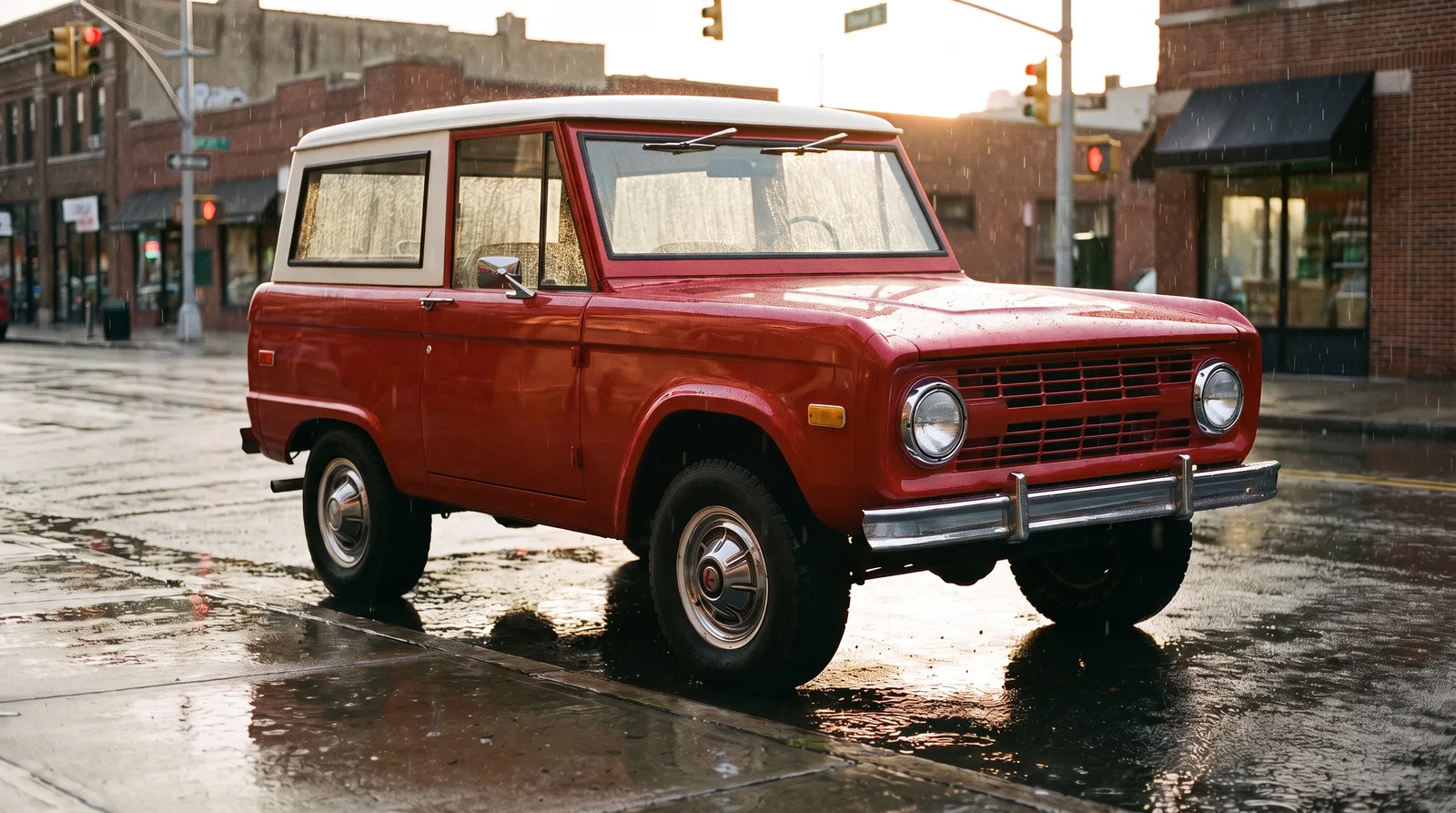
Why the early Bronco needed help in the first place
The Bronco's front suspension used a solid Dana axle mounted on radius arms and coil springs, a setup chosen for off-road durability rather than parking-lot ease. Manual steering on that layout, especially with the larger tires many owners fitted, required real effort at low speed. Ford's original target buyer, someone who wanted a Jeep CJ-5 competitor with a bit more comfort, tolerated this because the truck's off-road manners more than compensated. But as the Bronco's audience widened through the late 1960s to include suburban families and ranch wives who drove the truck as often as their husbands did, the heavy steering became a genuine complaint dealers heard repeatedly.
Ford's engineering team studied the problem for several seasons before committing to a factory power steering option, partly because packaging a pump and the associated plumbing into the Bronco's tight compact engine bay was not trivial, particularly with the 302 V8 installed.
What the 1973 power steering option actually delivered
When it arrived for 1973, the power steering system used a belt-driven pump feeding an integral steering gear, a fairly conventional setup for the era but a genuine upgrade for this platform. Owners who ordered it reported effort dropping dramatically at parking speed, while highway feel stayed reasonably direct for a solid-axle truck. It was not a subtle option either. Documentation from the period shows Ford marketing it specifically toward buyers who had previously found the Bronco too much of a workout to live with day to day.
The option carried a modest price premium and was not standard equipment, so plenty of 1973 trucks left the factory without it, particularly base-spec work trucks destined for ranches where buyers cared more about durability than comfort. That split matters enormously to collectors today, because a documented power-steering-equipped 1973 Bronco is a meaningfully different ownership proposition than a base manual-steer example.
How to verify a genuine period installation
Because power steering was optional rather than standard, verifying whether a surviving 1973 Bronco left the factory with it requires checking the original build sheet or door tag codes where present, since visual inspection alone can be misleading after decades of parts swapping and driveline rebuilds. Collectors researching our complete history of the 1973 model year will find that documentation habits varied widely among original owners, and many surviving trucks have incomplete paper trails.
A period-correct power steering pump, pulley, and hose routing look distinctly different from later retrofit kits that restorers sometimes add to earlier, manual-steering trucks to improve drivability. That distinction matters for authenticity-minded buyers, since a factory-original 1973 power steering truck carries different value than a later Bronco retrofitted for the same convenience.
"When I catalog a 1973 Bronco, the steering setup is one of the first things I check against the build sheet, because it tells you whether this was ordered as a comfort truck or a working truck, and that distinction shapes everything else about how the vehicle was likely used and preserved."
- Sarah Whitfield
How the option shaped ownership beyond just comfort
Power steering did more than reduce arm fatigue at parking speed. It changed who felt confident behind the wheel of a Bronco in the first place. Dealers of the period noted that the option broadened the truck's appeal to buyers who might otherwise have been intimidated by the heavy manual steering, including drivers who wanted the Bronco primarily as a second family vehicle rather than a dedicated off-road machine. That shift in buyer confidence had a ripple effect on how these trucks were actually used day to day, with power-steering-equipped examples more likely to see regular grocery runs, school pickups, and errands rather than sitting parked between weekend trail outings.
The option also interacted with tire choice in a practical way. Owners who fitted larger, more aggressive off-road tires, a common modification even in period, found that power steering became less of a luxury and more of a near necessity, since bigger tires only add to the effort a manual steering box demands at low speed. That practical reality helped drive steady demand for the option among buyers who planned to run larger rubber on their trucks.
What this means for buyers today
For a modern buyer, the practical case for seeking out a power-steering-equipped 1973 Bronco is straightforward comfort. These trucks are usable on regular roads without the fatigue that a manual-steering example demands, particularly in stop-and-go traffic or tight parking situations. That usability has translated into steady demand, and well-documented examples with the option tend to move faster in the collector market than comparable trucks without it.
Buyers evaluating a candidate should ask sellers directly whether the power steering is factory original or a later addition, request any surviving documentation, and inspect the pump and reservoir for period-correct casting marks and finish. None of this is a dealbreaker either way. A manual-steering 1973 Bronco is still a perfectly legitimate and historically accurate example of the model year. It simply drives differently, and that difference is worth knowing before you commit to a purchase. Readers ready to look at real inventory can browse current listings and find a classic Bronco that matches whichever steering setup fits their plans for the truck.
How the option affected resale even at the time
Used truck listings from later in the 1970s show power-steering-equipped 1973 Broncos commanding a modest but consistent premium over comparable manual-steering examples, a pattern that has essentially never reversed in the decades since. Dealers reselling these trucks recognized quickly that the option broadened the pool of interested buyers, since a manual-steering truck effectively screened out anyone unwilling to deal with the added physical effort. That practical reality shaped resale values from the option's earliest years, long before these trucks were considered collectibles in any formal sense.
A small option with an outsized legacy
Seven years into production, Ford finally solved a complaint that had followed the Bronco since its 1966 debut. The 1973 power steering option did not change the truck's shape, its drivetrain, or its off-road hardware. It changed who could comfortably own one, and that quiet shift in accessibility is exactly the kind of detail that period-focused research keeps alive long after the marketing brochures have faded.
Sources and notes
Related Reading
Have a
Ford Bronco
for Sale?
Reach thousands of serious classic car collectors across the US.
Sell It Here →
Selling a classic? Here's how: compare the places to sell classic cars
Are You a Classic Car Dealer?
List your full inventory and connect with targeted classic car buyers.
Join as a Dealer →

About the author
Sarah Whitfield
Third-generation classic car collector specializing in pre-war American and European coachbuilt automobiles. Researcher and concours enthusiast.
Related Listings - Ford Bronco
Comments
Be the first to comment on this article.