
Some trucks become famous for what they were built to be. A handful of Ford Broncos became famous for what they survived. Across the desert racing seasons of the late 1960s and early 1970s, a small number of race-prepared Broncos earned reputations that outlasted their competition careers by decades, and those trucks are still the reference point every Bronco enthusiast measures a rare find against.
Car Features
7 min read
The Most Famous Racing Broncos Ever Built
From Big Oly to the privateers who never made a magazine cover, a handful of race-prepared Broncos set the template every tribute build and collector still measures a truck against.
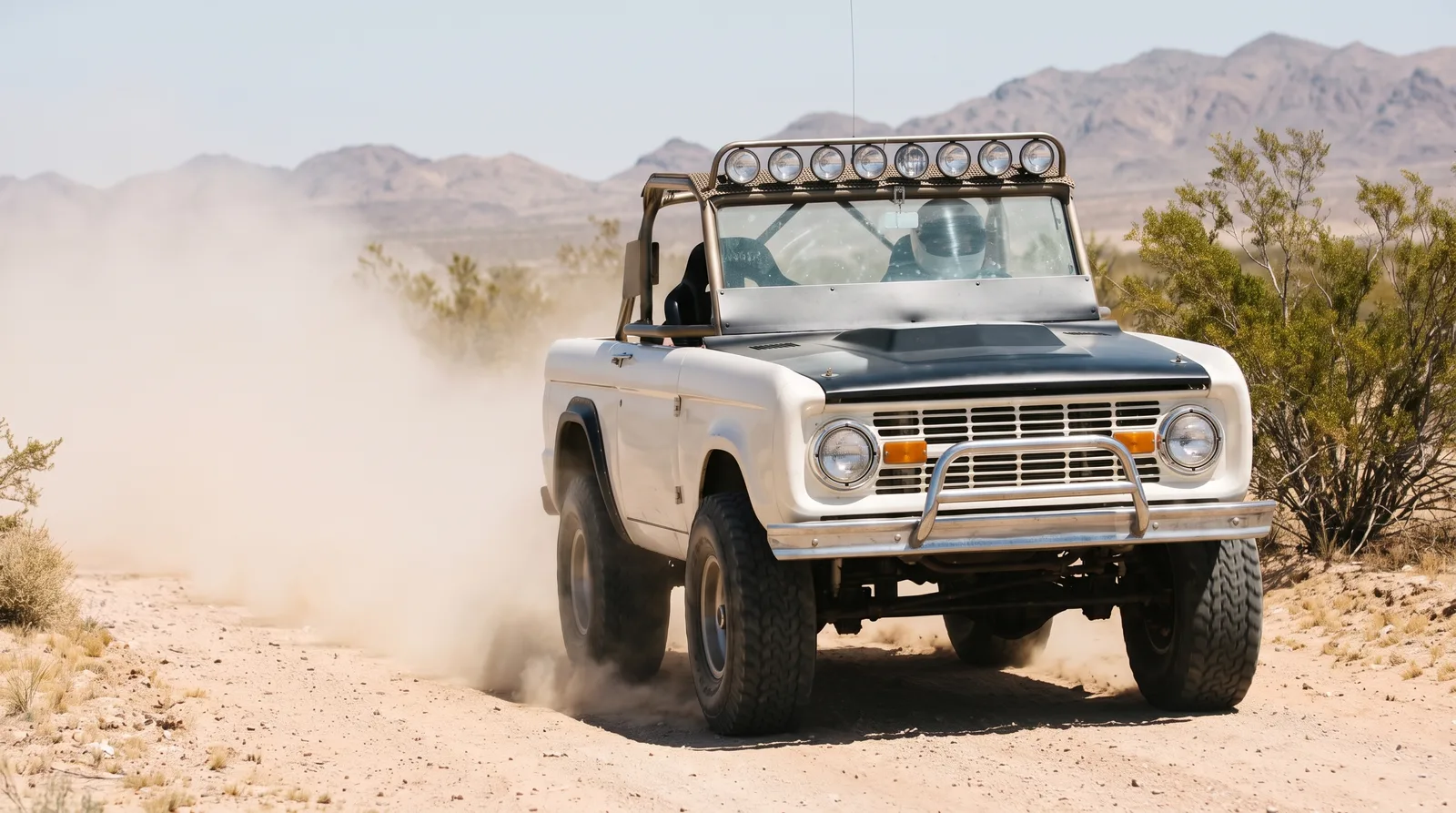
Big Oly, the truck that defined the legend
No conversation about famous racing Broncos gets far without landing on Big Oly, the orange race Bronco built by Bill Stroppe's shop for Parnelli Jones. Named after Olympia Beer, one of the program's sponsors, Big Oly was a purpose-built desert racer wearing Bronco bodywork over a chassis reinforced and modified far beyond anything a customer could order. It carried a fuel-injected V8 and long-travel suspension that let Jones push it at speeds the stock Bronco chassis was never designed to handle.
Big Oly's most celebrated results came when Jones, with Stroppe co-driving, took the truck to back-to-back overall wins in the Baja 1000 in 1971 and 1972, results that instantly elevated the Bronco's reputation from capable trail truck to legitimate desert racing weapon. The truck's fame only grew from there, cemented by magazine coverage at the time and by decades of retelling since. A faithful modern recreation of Big Oly still draws crowds at Bronco shows, which tells you how far that single truck's reputation has traveled.
The privateers who kept the reputation alive
Big Oly gets the spotlight, but the Bronco's desert racing record was built on the backs of privateer drivers who never had a factory budget or a sponsor's name on the door. Rod Hall, a name that shows up throughout early Baja history, campaigned Broncos and other four-wheel drive trucks across multiple seasons, and his results helped prove that Stroppe's approach to Bronco preparation worked reliably, not just in a single showcase run. These drivers were racing for finish times and class wins, not headlines, and their consistency did as much for the Bronco's reputation as any single famous result.
That distinction matters because it shows the Bronco's desert credibility was not a one-truck story. Multiple drivers, multiple seasons, and multiple finishes built a pattern that Ford could point to honestly when it started marketing the Baja Bronco special edition to civilian buyers. For the fuller story of how Stroppe's shop built that program from the ground up, our complete history covers it in depth.
What made these trucks different from a stock Bronco
The gap between a showroom Bronco and a genuine race truck like Big Oly was enormous, and understanding that gap explains why these trucks became icons rather than just successful examples of an ordinary product. Stroppe's team reinforced frames, built custom long-travel suspension setups, fitted fiberglass body panels to cut weight, and tuned engines well beyond what a dealership Bronco offered. These were not modified customer trucks, they were purpose-built competition vehicles that happened to wear Bronco sheet metal because that was the platform Ford handed Stroppe to work with.
That level of purpose-built engineering is part of why surviving genuine race trucks, or well-documented recreations of them, command such attention today. They represent a different category of vehicle entirely from even a well-optioned original Bronco, closer to a piece of motorsport equipment than a passenger truck. Collectors who understand that distinction treat documented race history as the single most valuable thing a truck can have, well above trim level or options.
"You can restore paint and chrome on any Bronco. You cannot restore the fact that a specific truck survived five hundred miles of desert at racing speed with a specific driver behind the wheel."
- Nora Beckett
Why these icons still matter to today's buyers
The influence of these famous racing Broncos extends well past the handful of surviving originals. Every Baja Bronco special edition sold to the public borrowed styling cues directly from these race trucks, and every tribute build in the current market is, in some sense, an attempt to recreate a piece of that legend for people who could never own the real thing. The icons set a visual and mechanical template that the entire Bronco community still references, whether they realize it or not.
For anyone who wants to go deeper on the man behind the program that produced these trucks, keep exploring covers Stroppe's career and legacy beyond just the Bronco years. His fingerprints are on every one of these famous trucks, and understanding his approach explains why the Bronco's racing reputation held up as well as it did.
None of this history changes what a good early Bronco is worth on its own merits, but it does explain why certain trucks command outsized attention at auction while otherwise similar examples sell quietly. A documented connection, however small, to this era of desert racing turns an ordinary classic into a piece of a bigger story. If that history has you interested in owning a piece of it, there is a real market of classic Bronco for sale right now, ranging from honest drivers to trucks with real provenance worth researching further before you buy.
Beyond Big Oly, the trucks history nearly forgot
Big Oly gets the magazine covers, but several other race Broncos from the same era deserve more credit than they usually get. Trucks campaigned in the Mint 400 and other early desert races built their own local reputations, even when the results never traveled far beyond the racing community itself. Many of these trucks were sold, stripped, or scrapped once their competitive life ended, since nobody in the early 1970s was thinking about future collector value. A race truck's job was to finish the next event, not to be preserved for a museum.
That is part of why documented survivors matter so much now. For every Big Oly that got preserved and celebrated, there were dozens of privateer race Broncos that simply disappeared once their racing careers ended, sold for parts or quietly converted back into daily drivers with no record kept of what they had once been. When one of those trucks does surface with credible documentation tying it to a specific driver or a specific race, it represents a piece of history that everyone assumed was gone for good. That rarity is exactly why researchers and serious collectors treat any lead on an undocumented race truck as worth chasing down, even when the odds of confirmation are long.
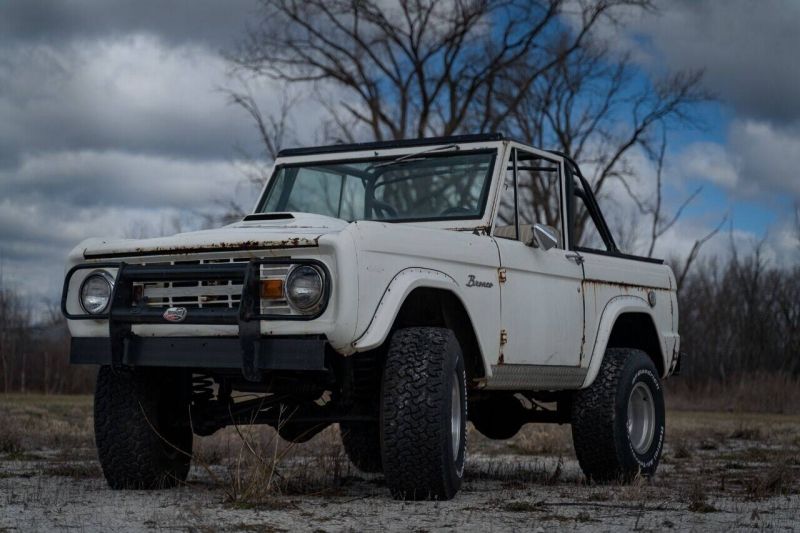
The lesson for anyone digging through a barn find or an estate sale Bronco is simple. Do not assume a rough, modified early truck is just a worn out utility vehicle. Check the frame for reinforcement work, look for mounting points that do not match a stock configuration, and ask around before writing off a truck's history entirely. Some of the desert racing icons still waiting to be rediscovered are probably sitting exactly there, mistaken for ordinary trucks by owners who never knew what they had.
Sources and notes
Related Reading
Have a
Ford Bronco
for Sale?
Reach thousands of serious classic car collectors across the US.
Sell It Here →
Selling a classic? Here's how: sell my classic car
Are You a Classic Car Dealer?
List your full inventory and connect with targeted classic car buyers.
Join as a Dealer →

About the author
Nora Beckett
Automotive features writer and photographer who tells the human stories behind the cars, from show fields to cross-country road trips.
Related Listings - Ford Bronco
Comments
Be the first to comment on this article.