
Walk into any Bronco club meet and pull up a chair, and eventually the ford bronco factory vs dealer options question comes up, usually started by somebody staring at a chrome bumper or a set of gauges wondering whether it came that way or got added down the road. It is not a small question. On these trucks, the line between what Ford built and what a dealer bolted on afterward gets blurry fast, and untangling it is half the fun of owning one.
Car Features
7 min read
Factory Bodies and Dealer Add-Ons, a Bronco Story
Sorting Ford's factory-ordered Bronco options from the accessories dealers bolted on afterward, and why the distinction matters to collectors today.
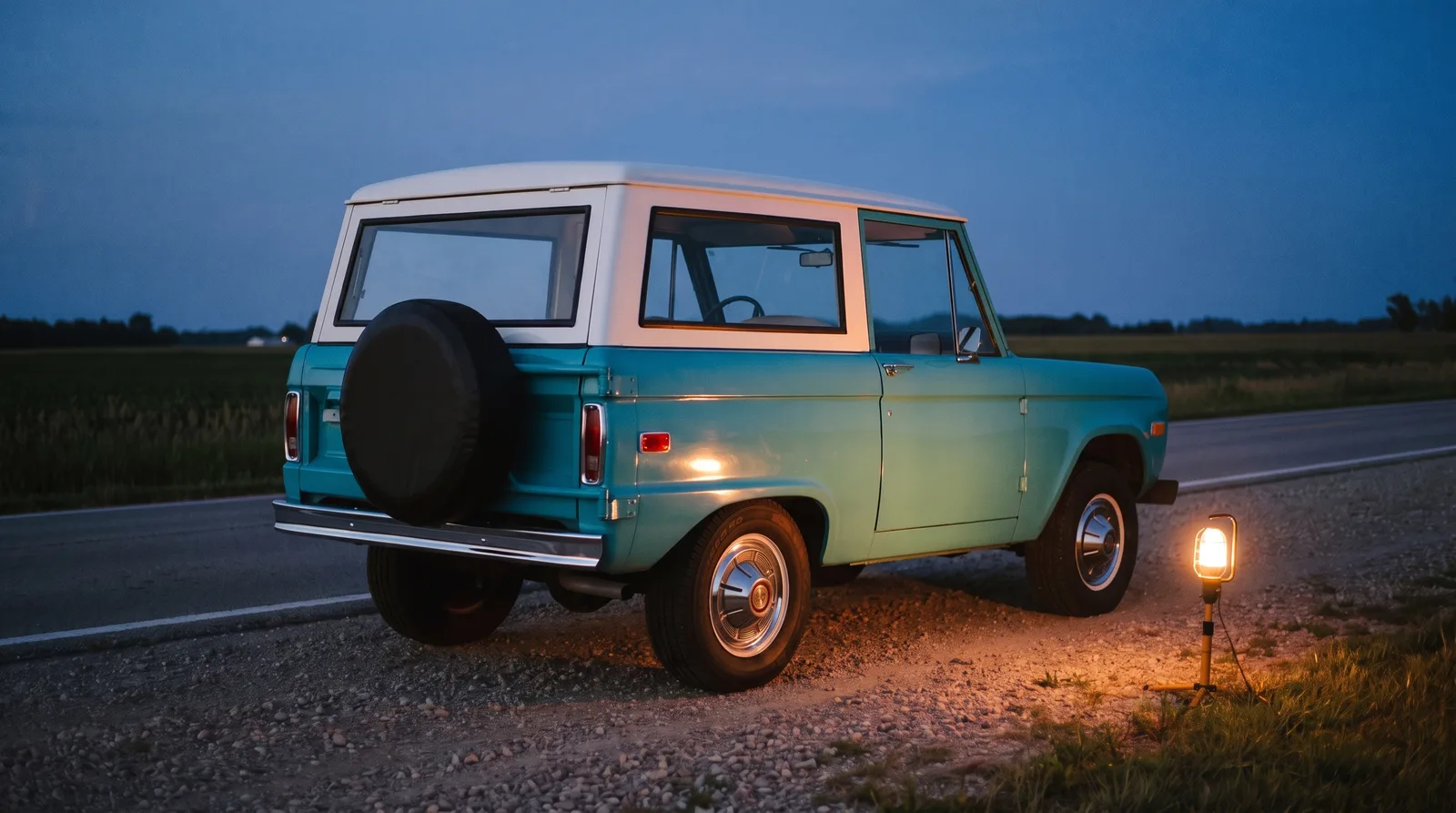
What actually left the factory
Ford's factory build sheet for a given Bronco covers the core stuff: engine choice, transmission, axle ratio, body style, and a handful of trim packages that changed by year. Special editions like the Bronco Sport package, introduced in 1967 and later offered as its own standalone model by 1970, bundled in factory upgrades like styled wheels, striping, and interior trim as an actual ordered option, documented on the build sheet and reflected in the VIN and door tag. Those factory packages are traceable. A knowledgeable buyer or appraiser can confirm them against Ford's own records with reasonable confidence.
What did not come from the factory, though, is a longer list than most casual buyers expect. Ford built a fairly basic truck at its core and left a lot of room for the dealer network to dress it up before it ever reached a customer.
The dealer accessory economy
Here is the part that surprises people who assume everything on an old truck either came from the factory or got added by some owner in 1994. Ford dealerships in the sixties, seventies, and eighties ran real accessory programs, selling and installing parts through Ford's own parts network that were never part of a factory order. Brush guards, tow packages, CB radio mounts, and aftermarket style wheels all moved through dealer parts counters as legitimate Ford accessorized upgrades, distinct from both factory options and true aftermarket parts bought from a speed shop.
That distinction matters because a dealer installed accessory still carries some pedigree. It went on the truck through Ford's own channel, even if it never touched the assembly line. Collectors and appraisers generally treat these differently than a random swap meet part bolted on decades later, even though neither shows up on the original factory build sheet.
Half cab trucks and their own layer of confusion
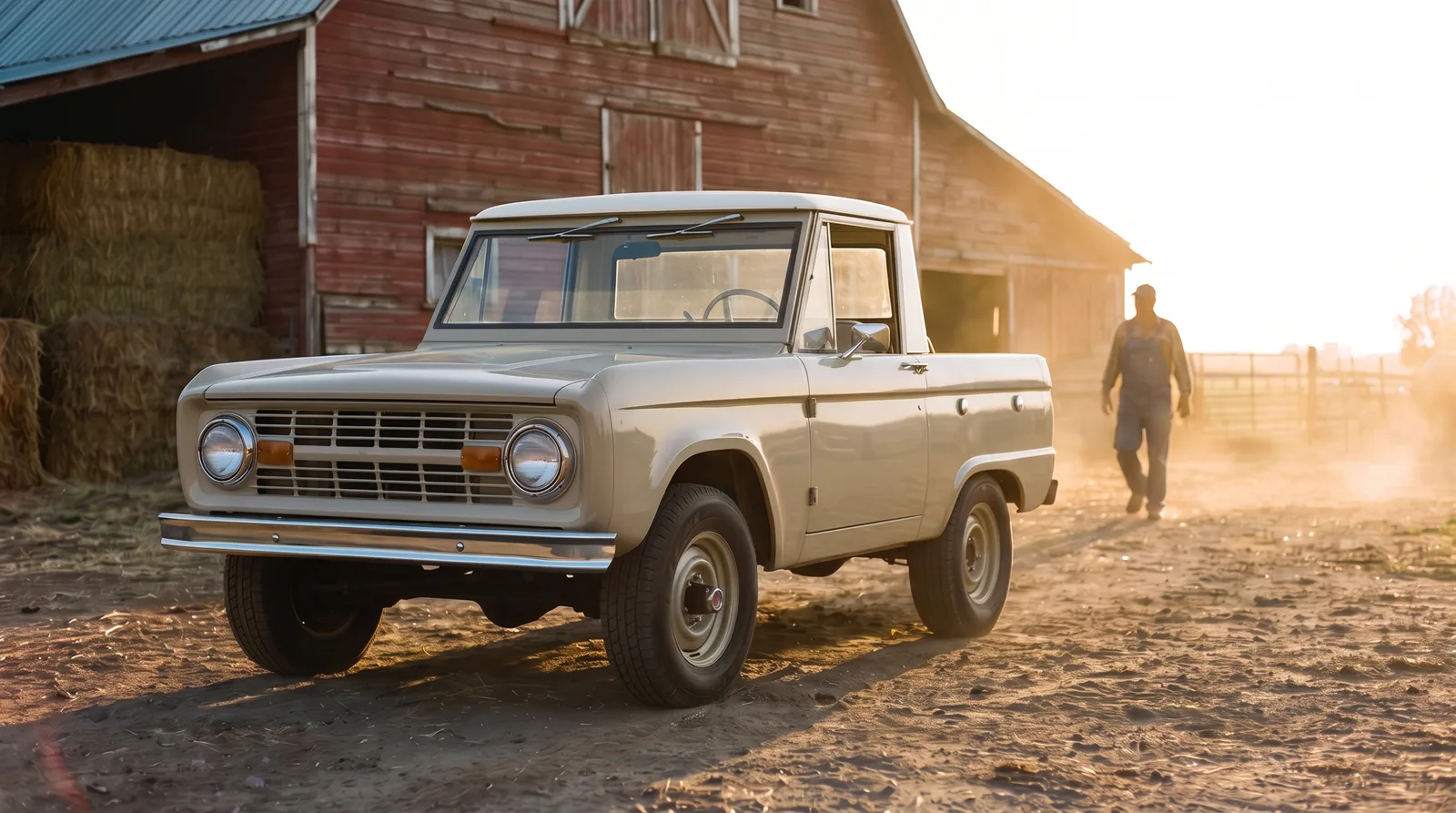
The half cab body style adds its own wrinkle to this conversation, since dealers frequently modified the open bed area with locally sourced covers, toolboxes, and racks depending on what the buyer needed the truck to do for work. A rancher ordering a half cab for fence work wanted different bed equipment than a contractor ordering the same body style for hauling tools, and dealers accommodated both without any of it touching Ford's factory paperwork. For the full picture of how the half cab and other body styles evolved alongside engine offerings, more on the ford bronco half cab covers that history in depth.
"I have seen grown men argue for twenty minutes over whether a set of running boards is factory or dealer add on, and neither one of them had actually pulled the parts book to check. Half the fun of this hobby is doing the homework nobody else bothers with."
- Patrick Walsh
Why this distinction matters at sale time
When a Bronco changes hands, the factory versus dealer question directly affects how the truck should be described and, honestly, what it is worth. A truck with genuinely rare factory options, a documented Bronco Sport package for instance, commands attention from collectors who care about originality above almost everything else. A truck loaded with period correct dealer accessories is a different kind of desirable, appealing to buyers who want the look and function of the era without needing every part to trace back to an actual factory order.
Problems show up when a seller, sometimes honestly mistaken and sometimes not, represents dealer installed parts as factory original. That is where build sheets, door tags, and VIN decoding earn their keep, giving a buyer a way to verify claims instead of taking a listing description on faith. If you want to see the fuller story of how this truck's history developed across generations, our complete history is the place to start.
Regional dealer differences worth knowing about
One wrinkle that trips up buyers researching from a single region is that dealer accessory programs were not uniform across the country. A Ford dealer in a farm heavy region of the Midwest stocked different accessory inventory than a dealer near a ski resort or a coastal town, because the buyers walking through each door needed different things from the same base truck. That means a snow plow mount sold through a Colorado dealer and a set of surf rack mounts sold through a California dealer can both be legitimate period Ford dealer accessories, even though neither one shows up in a national parts catalog with the same prominence.
This regional variation is part of why blanket rules about what is or is not correct on a given Bronco fall apart quickly. The honest answer to most factory versus dealer questions on these trucks is that it depends on where the truck was originally sold and what that region's typical buyer needed, which is exactly the kind of detail a generic price guide will never capture.
What this means for restoration decisions
Owners restoring a Bronco often hit a fork in the road once they realize a truck's accessory list is not purely factory. Some choose to restore strictly to the factory build sheet, removing anything not documented as an original order even if it has been on the truck for fifty years. Others take the more common approach of preserving the truck as it existed during its working life, dealer accessories and all, treating those additions as part of the truck's honest history rather than something to be erased.
Neither approach is wrong, but they lead to very different outcomes and very different budgets. Stripping a truck back to pure factory spec can mean removing genuinely useful, period correct equipment, while preserving everything as found can mean carrying forward accessories that were never particularly well built to begin with. Knowing which category each part falls into, factory, dealer, or later aftermarket, is the only way to make that decision with real information instead of guesswork.
Doing the homework pays off
None of this is about gatekeeping who gets to call their truck original. It is about understanding what you actually own, and being honest about it when the time comes to sell or simply brag at a show. A well documented dealer accessory is a legitimate piece of Bronco history in its own right, sold through Ford's own network to a buyer who wanted a specific truck for a specific job. If you are hunting for a Bronco with a story worth digging into, you can browse classic Broncos on the market and start asking these same questions before you buy rather than after.
Sources and notes
Related Reading
Have a
Ford Bronco
for Sale?
Reach thousands of serious classic car collectors across the US.
Sell It Here →
Selling a classic? Here's how: sell my classic car
Are You a Classic Car Dealer?
List your full inventory and connect with targeted classic car buyers.
Join as a Dealer →

About the author
Patrick Walsh
Automotive journalist covering classic car shows, events, and the enthusiast community across North America.
Related Listings - Ford Bronco
More in Car Features
Comments
Be the first to comment on this article.