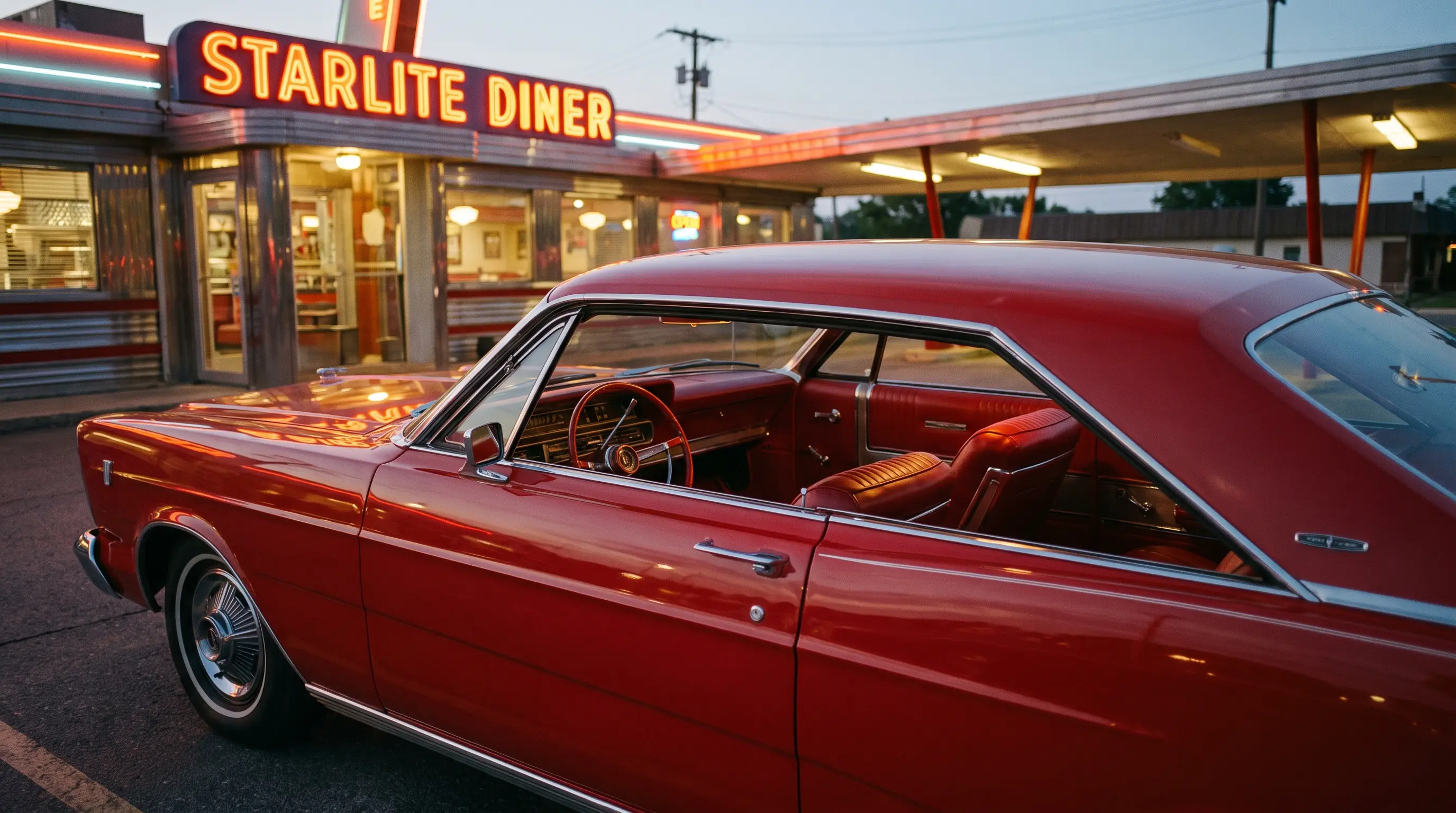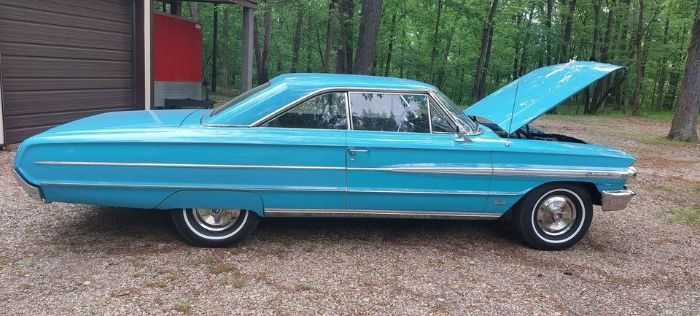
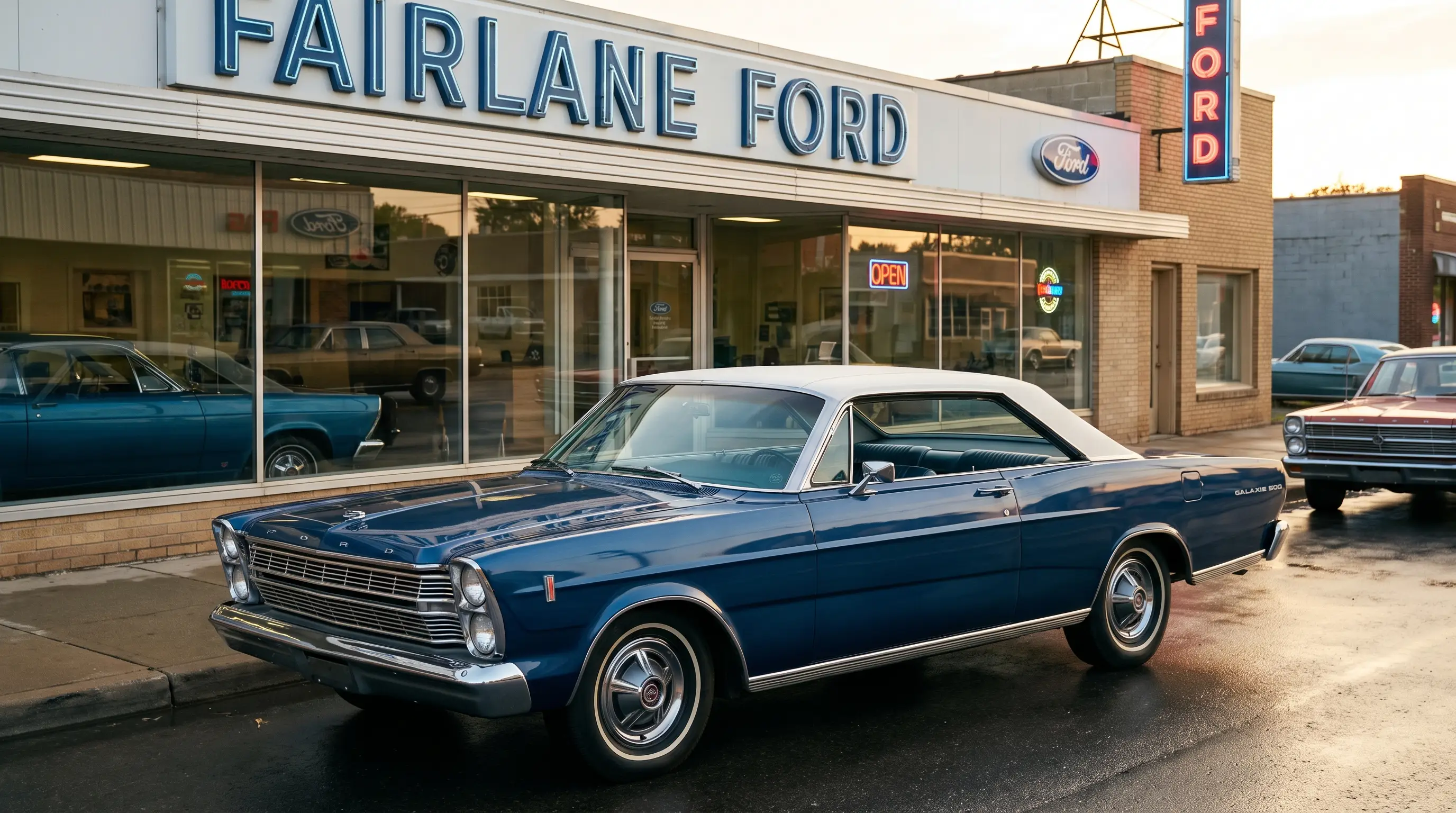
Two bucket seats and a console changed how a family sedan felt from the driver's seat, and that is the whole story behind ford galaxie 500 xl bucket seat culture in the early 1960s. Ford's Galaxie 500 XL package put individual seats where a bench used to sit, and that single swap reshaped how owners thought about their car, who they let sit up front, and what kind of driver they imagined themselves to be behind the wheel.
A bench seat had meant something specific
Before the XL package existed, a full-size Ford's front bench was built for practicality. Three adults could sit across it, a mother could slide over to keep a child close, and the whole cabin communicated family transportation first and everything else second. Bucket seats broke that arrangement on purpose. Two people up front, a console dividing the space between them, and suddenly the car read as a driver's machine rather than a people-mover, even though it still had a full back seat and a trunk that could swallow a family's luggage.
That shift mattered more than it sounds today, when bucket seats are standard in nearly everything. In the early sixties, a bucket seat interior was still novelty enough that dealers used it as a selling point in showroom conversations, and buyers who chose the XL package were making a small but visible statement about wanting their big Ford to feel sportier than their neighbor's plain Galaxie 500.
The console as a status marker
The center console tied the whole package together. On manual-transmission cars it carried the floor shifter, giving the driver a sportier hand motion instead of a column-mounted shift lever. On automatics it still separated the two seats and usually included storage, sometimes with a padded armrest lid. Either way, the console signaled that this was not a stripped-down fleet car. It was a Galaxie 500 someone had spent extra money dressing up, and other drivers noticed.
Interior designers at Ford leaned into that signal by keeping the console's finish consistent with the dash, often matching brightwork trim or wood-grain accents depending on the model year. Little details like a lockable console box or a shift pattern indicator inlaid into the console top became small bragging points for XL owners at car shows and cruise nights decades later, long after the cars stopped being daily transportation and started being weekend hobby pieces.
How owners actually used the space
In practice, families still bought XL cars, and parents figured out workarounds for the missing bench seat when they needed to carry a third person up front. Some owners treated the console as an inconvenience they tolerated for the styling. Others genuinely preferred the separation, especially on long highway trips where having a defined space kept a passenger's elbow out of the driver's shifting arm. The XL package proved that a full-size car did not have to choose between practicality and a sportier feel, and Ford sold enough of these interiors that the format stuck around for years afterward.
Younger buyers at the time, often the ones cross-shopping a new Galaxie 500 XL against something like an Impala SS, saw the bucket seats as the deciding factor over base trim. It made the car feel like theirs specifically, not a car handed down from a parent's taste in transportation. That emotional pull is easy to underestimate now, but period ads leaned on exactly that appeal, showing younger couples in sportier clothing posed next to XL-badged cars rather than the family-oriented imagery used for standard Galaxie 500 ads.
"Buckets and a console turned a family car into a personal one. That is a bigger deal than people give it credit for."
- Patrick Walsh
The rivals answered with their own version
Ford was not alone in figuring out that bucket seats sold cars. Chevrolet, Pontiac, and Plymouth all rolled out their own bucket seat and console packages for full-size models across the same stretch of years, each chasing the same buyer who wanted a personal-luxury feel without stepping down to a smaller car. What set the Galaxie 500 XL apart in period road tests was how the seats themselves were shaped. Ford's buckets held a driver in place through a highway sweeper without feeling like a lounge chair, a balance some competitors struggled to match in their first attempts at the format.
That competition pushed all the manufacturers to refine their bucket seat designs faster than they might have otherwise. Seat bolstering improved, console storage got more thoughtful, and by the middle of the decade nearly every full-size line from Detroit offered some flavor of this interior. The Galaxie 500 XL holds up well against that field specifically because Ford kept iterating on seat comfort rather than treating the buckets as a one-time styling gimmick bolted in and forgotten.
What it means for collectors today
Original bucket seat and console setups are a genuine value driver in today's market, and buyers should look closely at stitching patterns, seat frame shapes, and console material before assuming a car's interior is factory-correct. Reupholstered seats sometimes get the general look right while missing period-correct details that a knowledgeable inspector will catch immediately. The console especially is worth checking against year-specific reference photos, since Ford revised the shape and features more than once during the XL's run.
For the fuller picture of how the XL package came together as a whole, our complete history covers the trim line's arc across the decade. Anyone hunting for a car with this interior setup intact can start by browsing what is currently listed, since find a classic Galaxie turns up examples worth comparing against period photos before making an offer.
Values on original bucket-and-console interiors have crept up steadily as buyers realize how many cars lost that configuration over the years to worn-out upholstery replaced with whatever was on hand at the time. A seat set that still wears its factory pattern, on original springs, with a console that matches the shift type installed at the factory, is worth a real premium over a car with a generic bench-to-bucket conversion done later in life. That gap only grows as fewer correct sets survive in usable condition, which makes patience during the search worthwhile for anyone chasing an honest example rather than settling for the first XL-badged car that turns up. A patient buyer who cross-references trim tags, dealer invoices, and known production patterns for a given model year will usually spot an incorrect interior swap long before an offer is on the table, and that homework pays for itself many times over the life of ownership, especially once a car changes hands again and the next buyer starts asking the same questions.