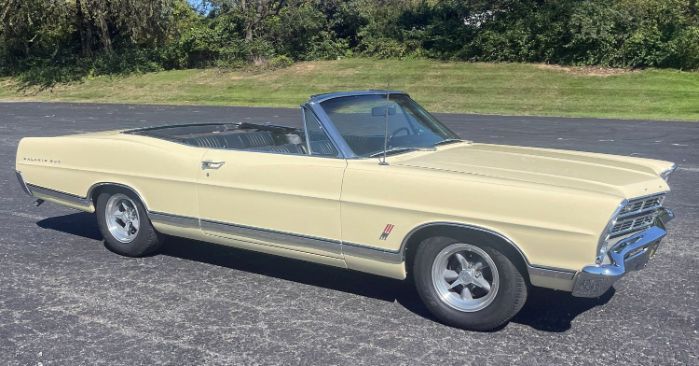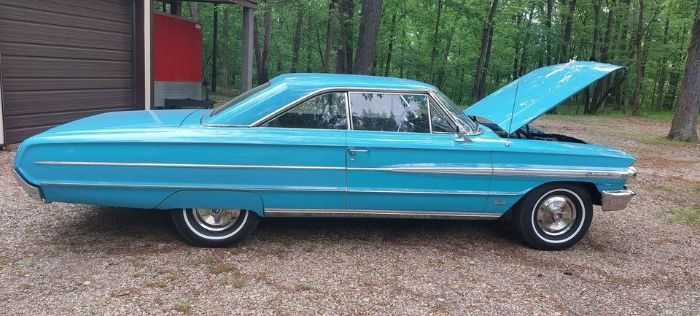
The first Ford Galaxie 500 XL I ever rode in belonged to a member of our chapter named Ray, a retired lineman who kept it under a bedsheet in a garage that smelled like motor oil and pipe tobacco. He would fire it up on Sunday mornings, drop it into that floor shifter, and grin like a kid the whole way to the diner. What I remember most is the bucket seats. In 1962 that was a small revolution, buckets and a console in a car big enough to haul a rowing team, and Ray understood exactly what he had. He used to say the XL was Ford admitting that grown-ups still wanted to have fun.
That is really the whole story of the Ford Galaxie 500 XL, and I have spent years collecting the paperwork to prove Ray right. Let me tell it the way our club tells it, through the cars and the people who kept them.
The XL badge and what it meant
The XL arrived partway through 1962 as a trim package sitting on top of the Galaxie 500, and it brought a specific idea to the full-size Ford: sport for the driver, not just space for the family. Where the standard Galaxie had a bench seat and a column shifter, the XL had bucket seats, a center console, a floor shifter, and dressier trim inside and out. It was aimed at the buyer who wanted the personal, sporting feel of a smaller car without giving up the presence of a big one.
The letters XL never stood for anything official that the factory would put in writing, which has not stopped decades of club members from arguing about it over coffee. What is documented is what the badge delivered: a more involving place to sit and a car that felt like it was built around the person behind the wheel. For the wider family history that led to this point, our our ford galaxie retrospective lays out the whole timeline.
Bucket seats in a very big car
It is easy to shrug at bucket seats now, but you have to picture the moment. In the early 1960s a full-size American car meant a wide bench you could slide across, and the XL broke that mold on purpose. Two individual front seats with a console between them said this car was about the driver first and the passengers second. Ray used to point at that console like it was a trophy, because to him it was the difference between transportation and driving.
The XL treatment worked because it was flexible. You could order the bucket-seat sport look with a comfortable cruising engine, or you could pair it with the biggest, meanest V8 on the order sheet. That range is exactly why the XL endured. A schoolteacher and a street racer could both check the same box and drive away happy, and both of them felt like the car had been built for them specifically. That is a neat trick, and the XL pulled it off for years.
The 427 R-code and the racing bloodline
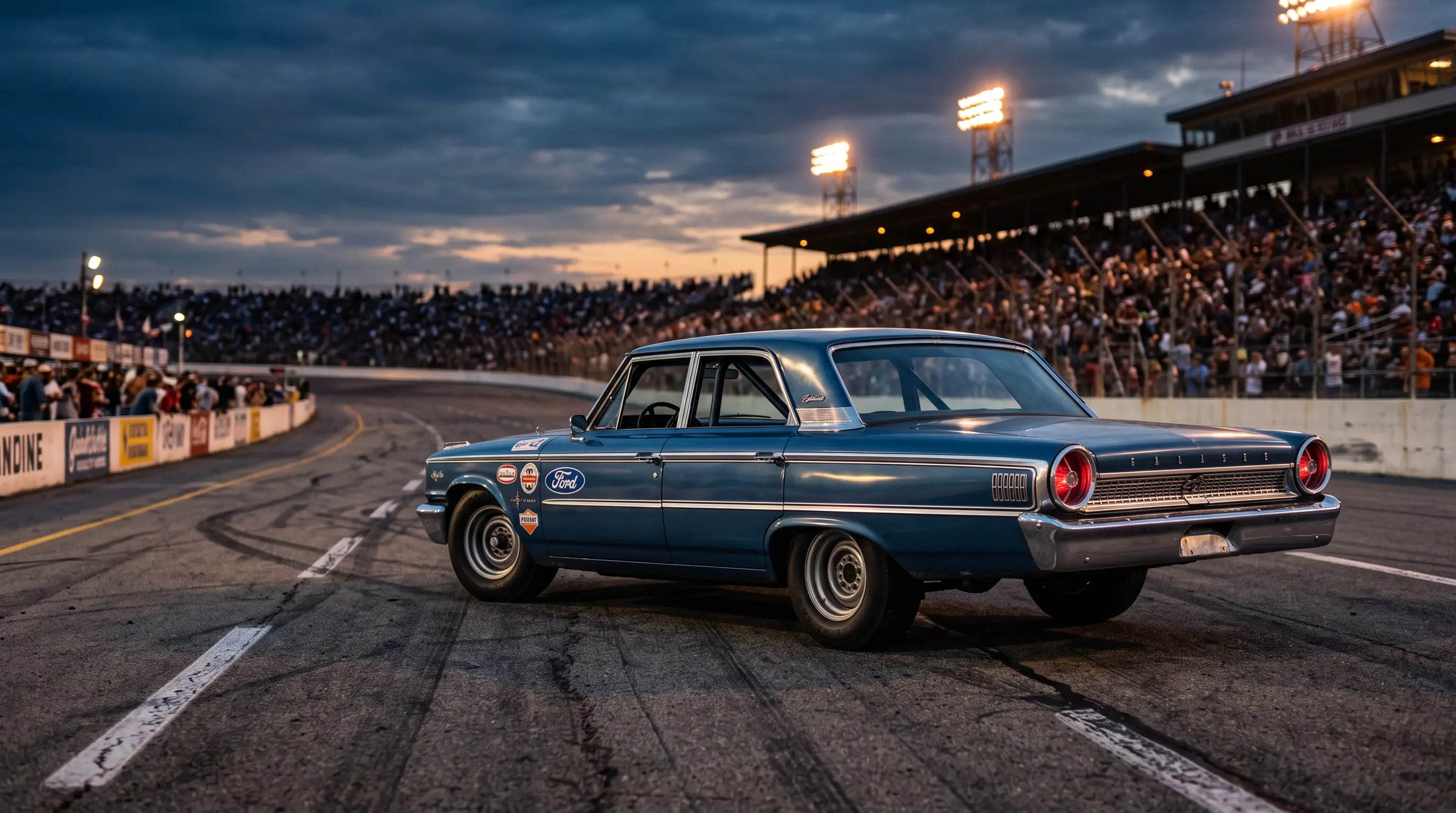
Now we get to the part the young guys at our meets always want to hear about. The XL is also the body that carried Ford's most serious full-size performance hardware, and the crown jewel is the 427. Ford introduced the 427 cubic inch FE V8 for 1963 to homologate it for stock car racing, and it came in two flavors on the street. The single four-barrel Q-code, rated at 410 horsepower, and the dual four-barrel R-code, rated at 425 horsepower, were the top of the mountain, with the R-code being the wild one built for people who were not entirely joking about going fast.
An XL with a 427 under the hood is a genuine link to the Total Performance era, the years when Ford was winning on the big NASCAR ovals and wanted the world to know a version of that engine could sit in your driveway. These cars were expensive when new and were never common, so a documented 427 XL is one of the more coveted full-size Fords of the decade. Most XLs were far milder, and that is fine, but the 427 is the reason the badge carries the weight it does with collectors. Our chapter has exactly one, and its owner keeps the build sheet in a fireproof box, which tells you everything about how the community treats these cars.
| Detail | Ford Galaxie 500 XL |
|---|---|
| Introduced | Midyear 1962, on the Galaxie 500 |
| Sport features | Bucket seats, console, floor shifter, special trim |
| Signature engine | 427 FE V8, Q-code (410 hp single 4-bbl) and R-code (425 hp dual quad) |
| Racing tie-in | Total Performance and NASCAR homologation |
| Body styles | Two-door hardtop and convertible favored |
| Related range-topper | 7-Litre model joined for 1966 |
The XL through the years
The XL was not a one-season wonder. After its 1962 debut it carried through the middle of the decade as Ford's personal-sport full-size car, evolving alongside the Galaxie itself. When Ford restyled the big cars, the XL restyled with them, keeping its buckets and console while the body around it changed with the times. For 1966 the range grew again with the 7-Litre, a big-engine flagship that ran in parallel with the XL and showed how far Ford wanted to push the full-size sporting idea.
By the end of the 1960s tastes were shifting toward the intermediates and the ponycars, and the appetite for a sporty full-size car cooled. The XL faded as the decade closed, but it had already made its point. For a stretch of years it proved that a large Ford could have a personality, and that is a legacy the badge still carries. Members who want to trace the standard car alongside the sport version can keep exploring the broader 500 story.
The community keeps the story alive
What I love about the XL is that its history lives in the people who own them. The build sheets, the dealer invoices, the old registration slips tucked in glove boxes, that is the documentation that turns a nice old car into a known one, and clubs are where all of it surfaces. Ray's car, the one that started me on this, turned out to have its original order paperwork stapled inside the owner's manual, and finding it was a bigger thrill for him than any trophy.
That community memory matters more than people realize. A lot of what we know about which XL options were rare, which engine combinations actually shipped, and how many survivors are left comes from members comparing notes over decades. The factory records tell part of the story, but the enthusiasts fill in the rest, one shared photograph and one dog-eared build sheet at a time. When Ray passed, his car went to a younger member who promised to keep the paperwork with it, and that is how the history survives.
The XL on screen and at the curb
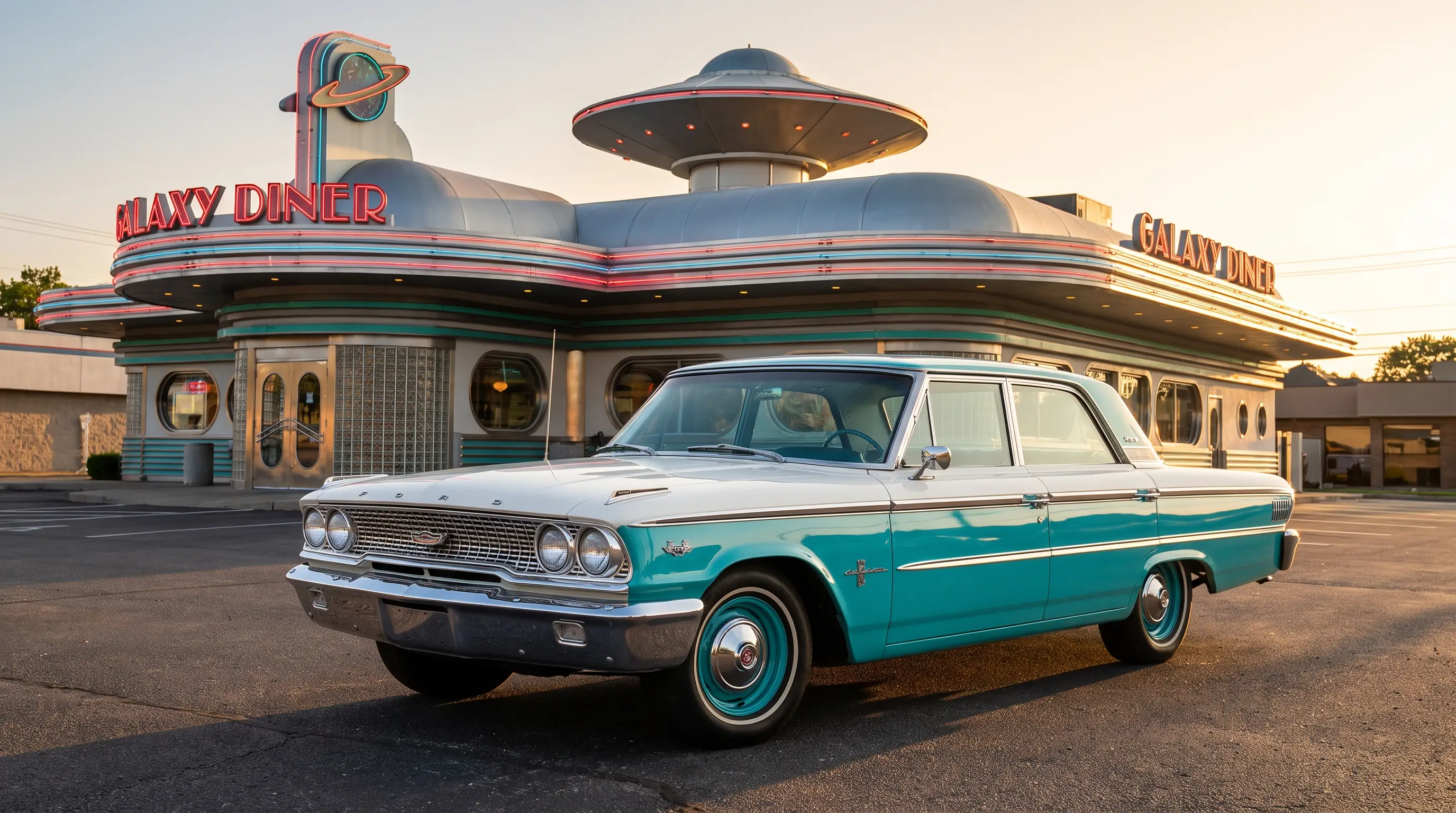
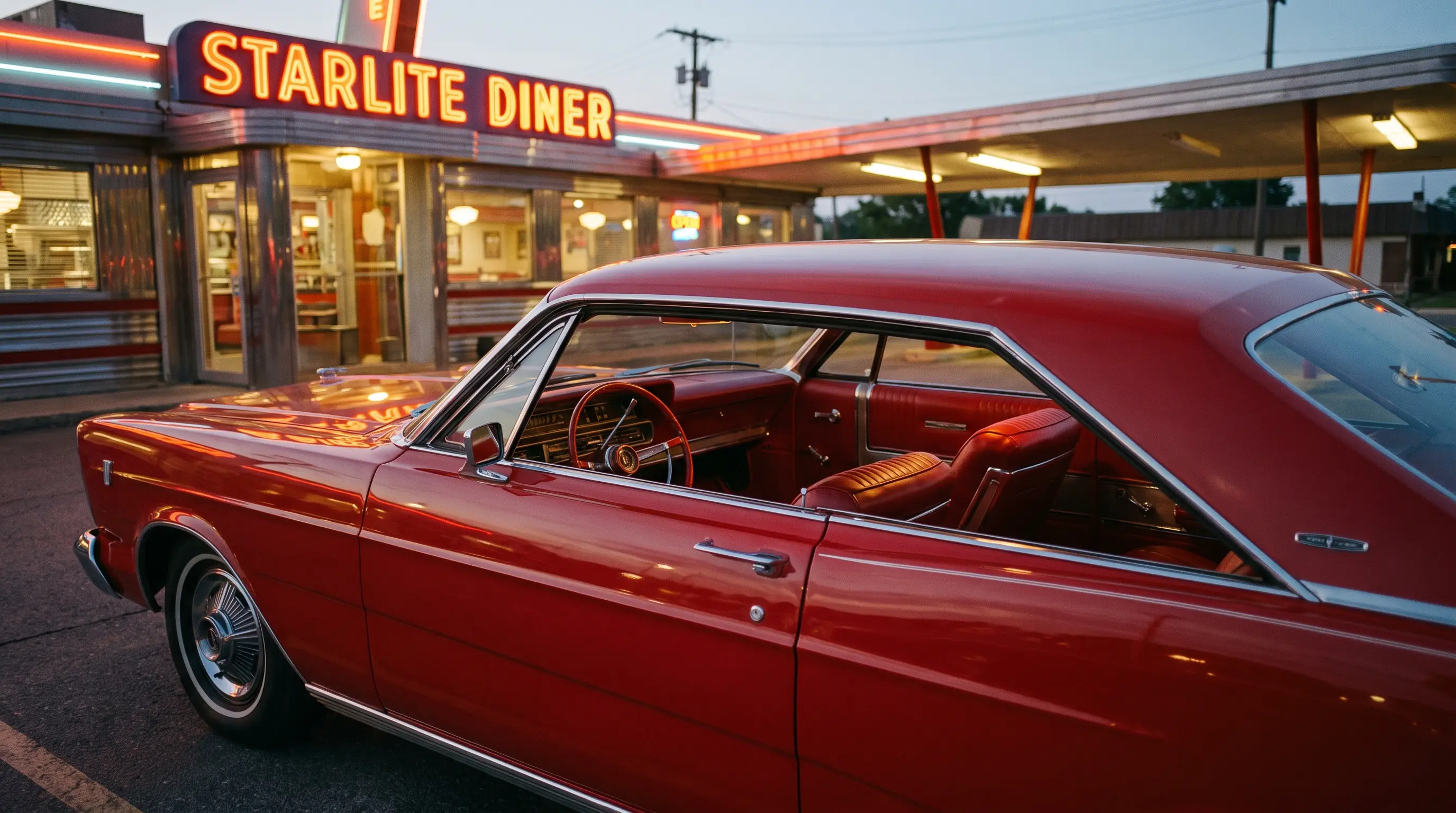
Part of why the XL still gets a crowd at our shows is that people half remember it from somewhere even when they cannot place it. Big Fords of this shape were everywhere in the 1960s, in driveways and parking lots and the background of every television show and movie of the era, so the XL reads as instantly familiar to folks who never knew the badge existed. When Ray parked his at the diner, older customers would wander over and tell him about the one their father drove, or the one a neighbor raced on a Friday night. The car pulled stories out of people, and it still does.
That familiarity is a big part of the appeal for a certain kind of buyer. An XL is not an exotic that needs explaining. It is a handsome, upright American car with buckets and a console, the sort of thing that looks right in front of a mid-century diner or a drive-in, and it carries a whole decade of memory with it. Our newer members often come to the XL not because they studied the engine codes but because the shape spoke to them, and then they stay for the history once they learn what the buckets and the badge actually meant. The car is a doorway, and plenty of good collectors walked through it.
Collectibility today
In today's market the Ford Galaxie 500 XL rewards the same thing our club has always valued: honesty on paper. A documented 427 car sits at the top and trades accordingly, because it combines the sport trim with the racing bloodline and the rarity to match. A clean XL with a milder engine is far more attainable and still gives you the buckets, the console, and the unmistakable look of Ford's full-size sport car, which for most buyers is the whole point.
My advice, and it is the same thing I told newcomers at every meet, is to chase the story as hard as you chase the car. An XL with its build sheet, honest sheetmetal, and an interior that has been cared for is worth more than a flashier car with no history behind it. Buy the one whose past you can actually trace, keep the paperwork with the car, and you become part of the chain that keeps these cars real. Anyone ready to begin the hunt can browse the classic Galaxie for sale listings and see what the survivors are asking.
"Ray always said the XL was Ford admitting grown-ups still wanted to have fun. Turns out the proof was stapled inside his owner's manual the whole time. In this hobby the paperwork is the punchline."
- Wayne Coburn
The Ford Galaxie 500 XL is proof that a big American car could have a soul, and the people who kept them are the reason we still know their stories. Ray would have liked knowing his old cruiser is still turning up at meets, buckets and all, doing exactly what Ford built it to do.