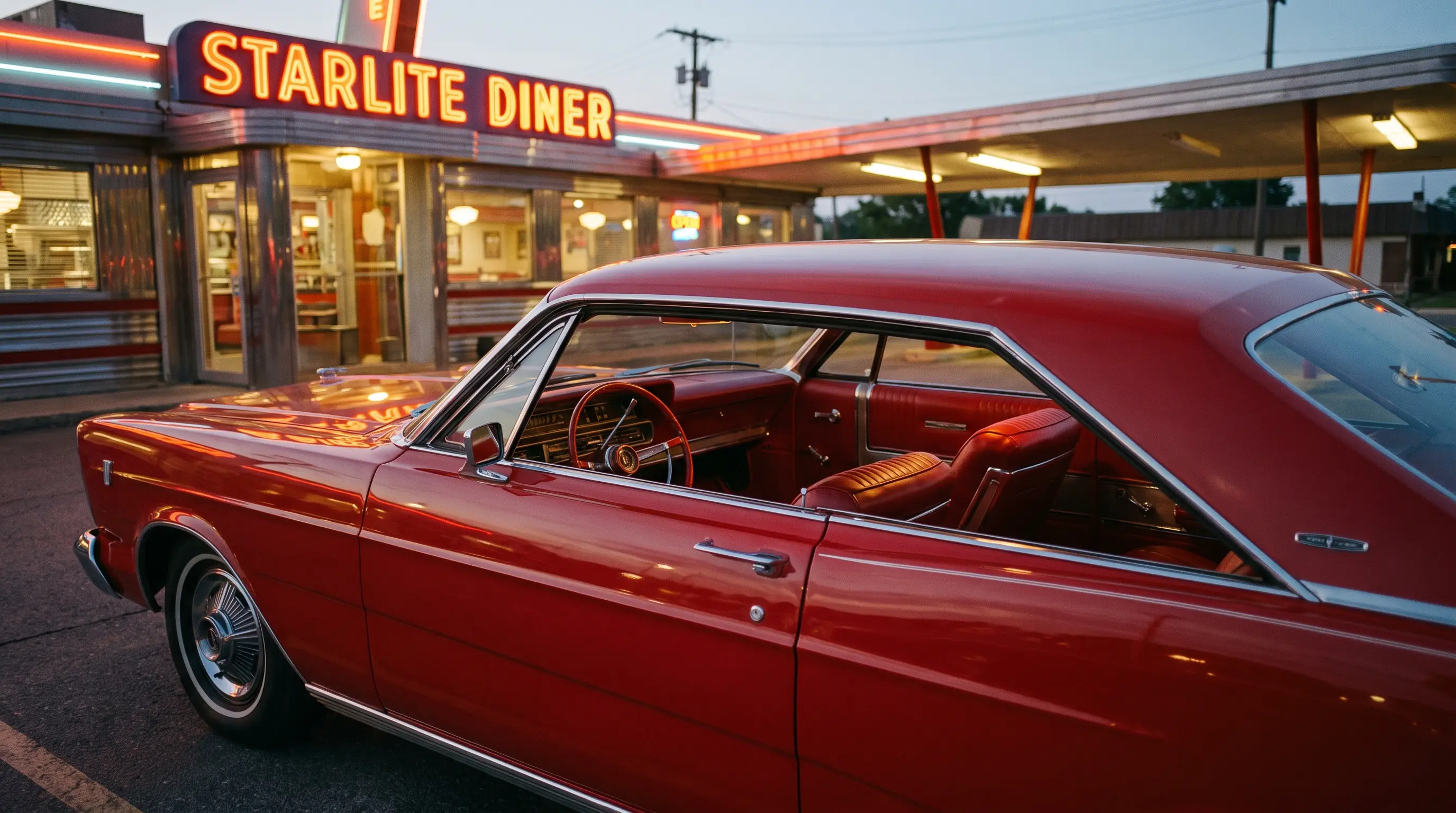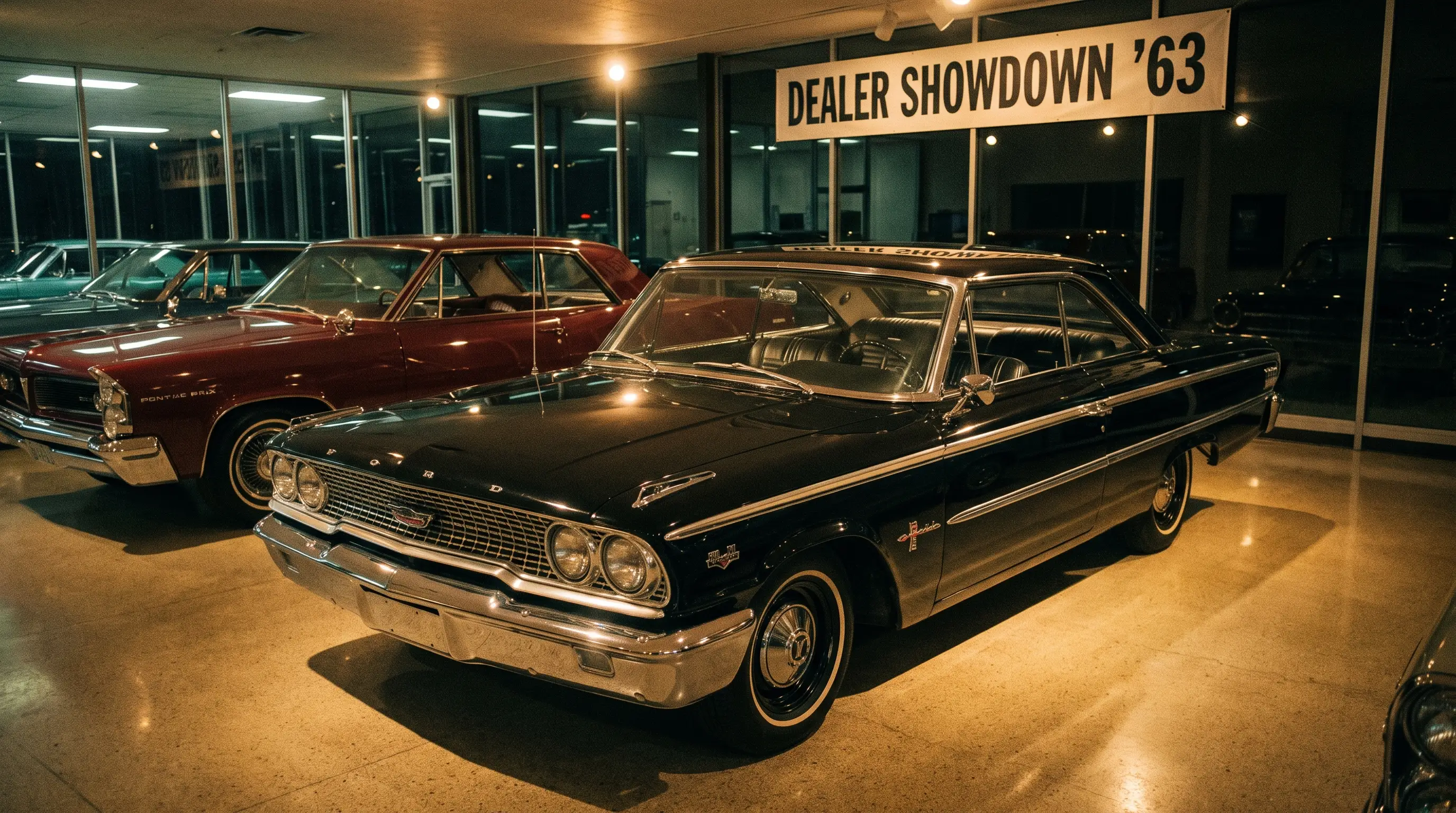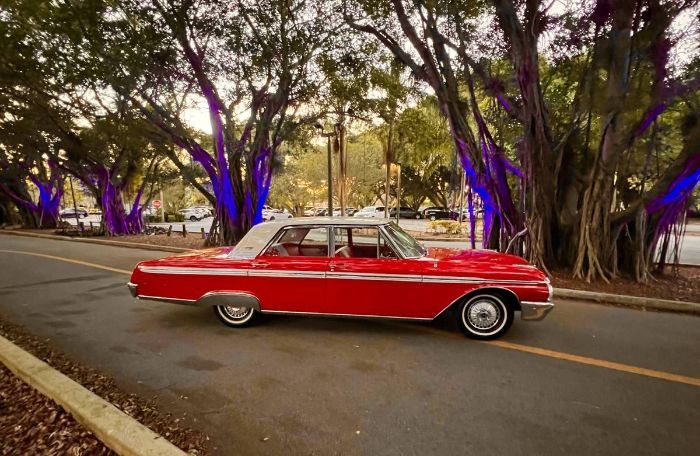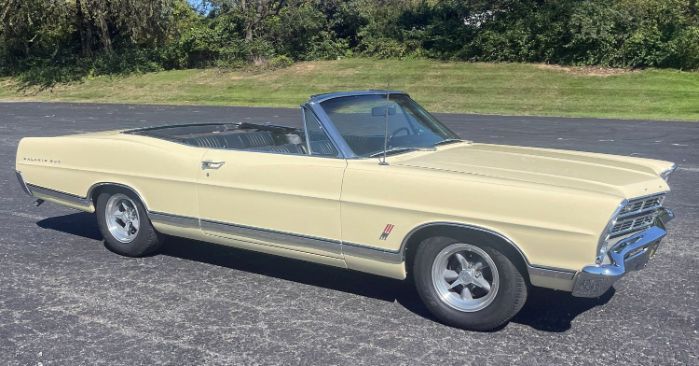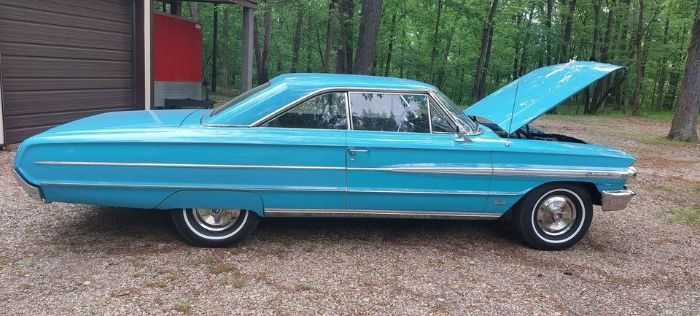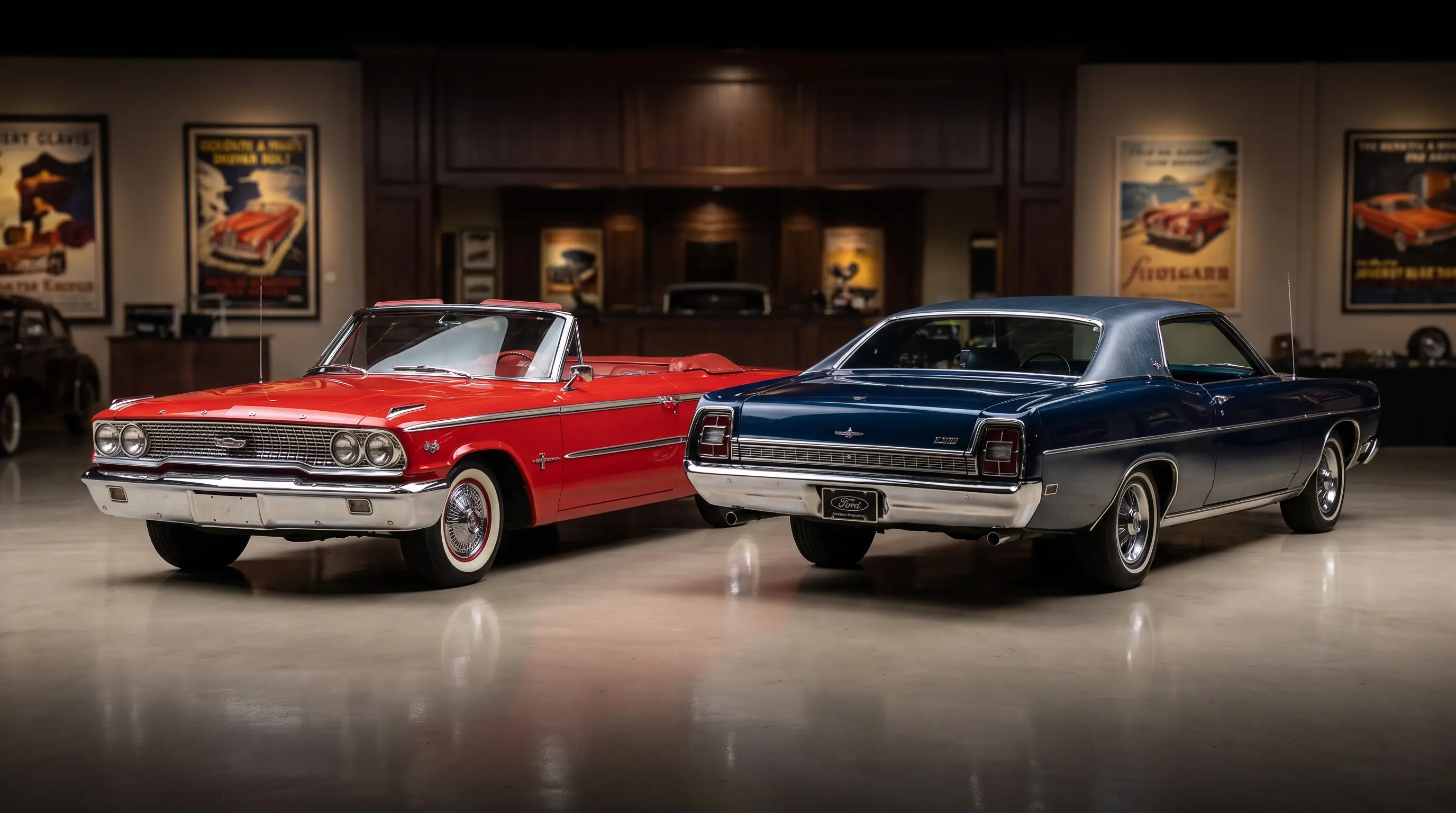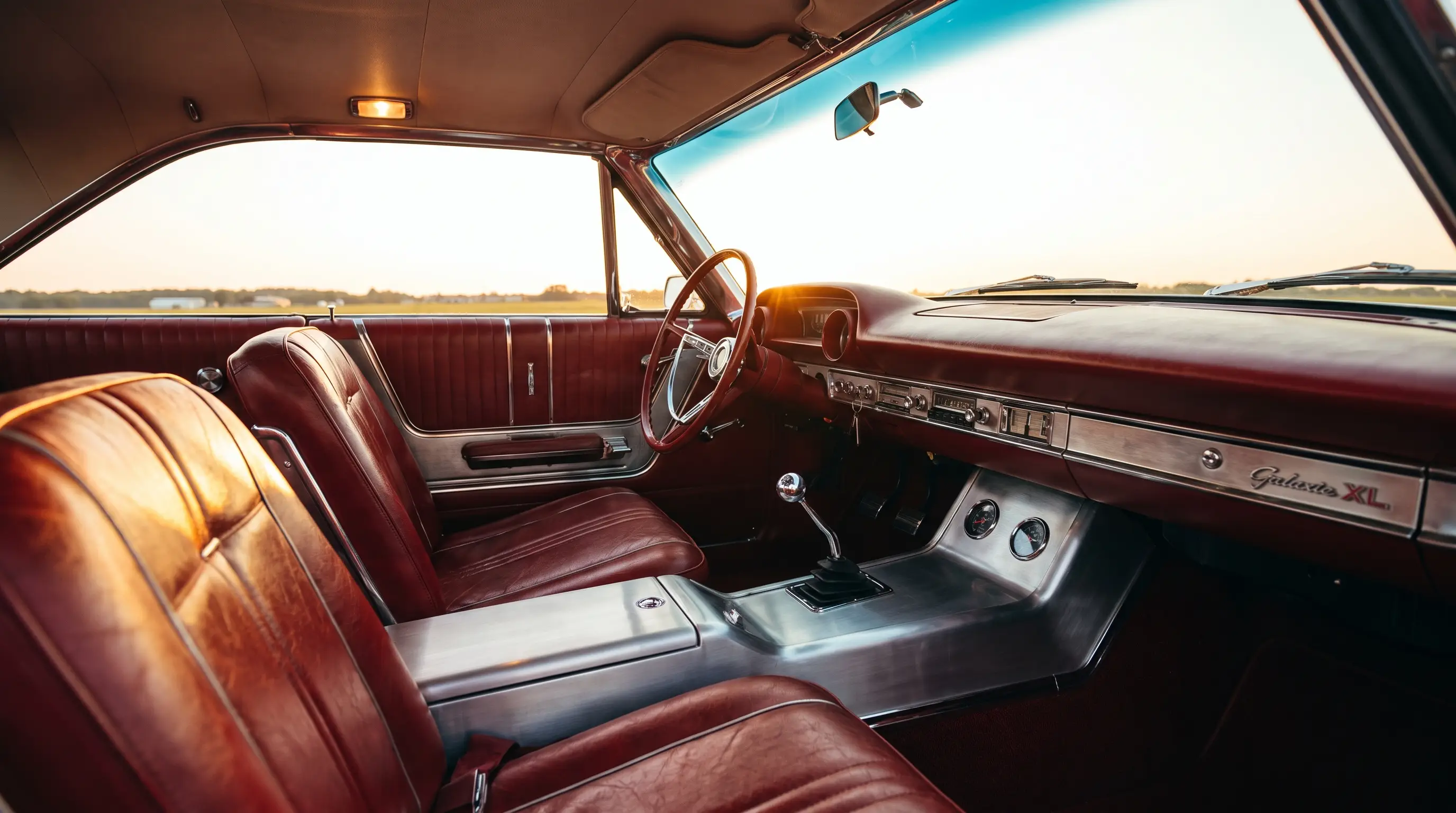
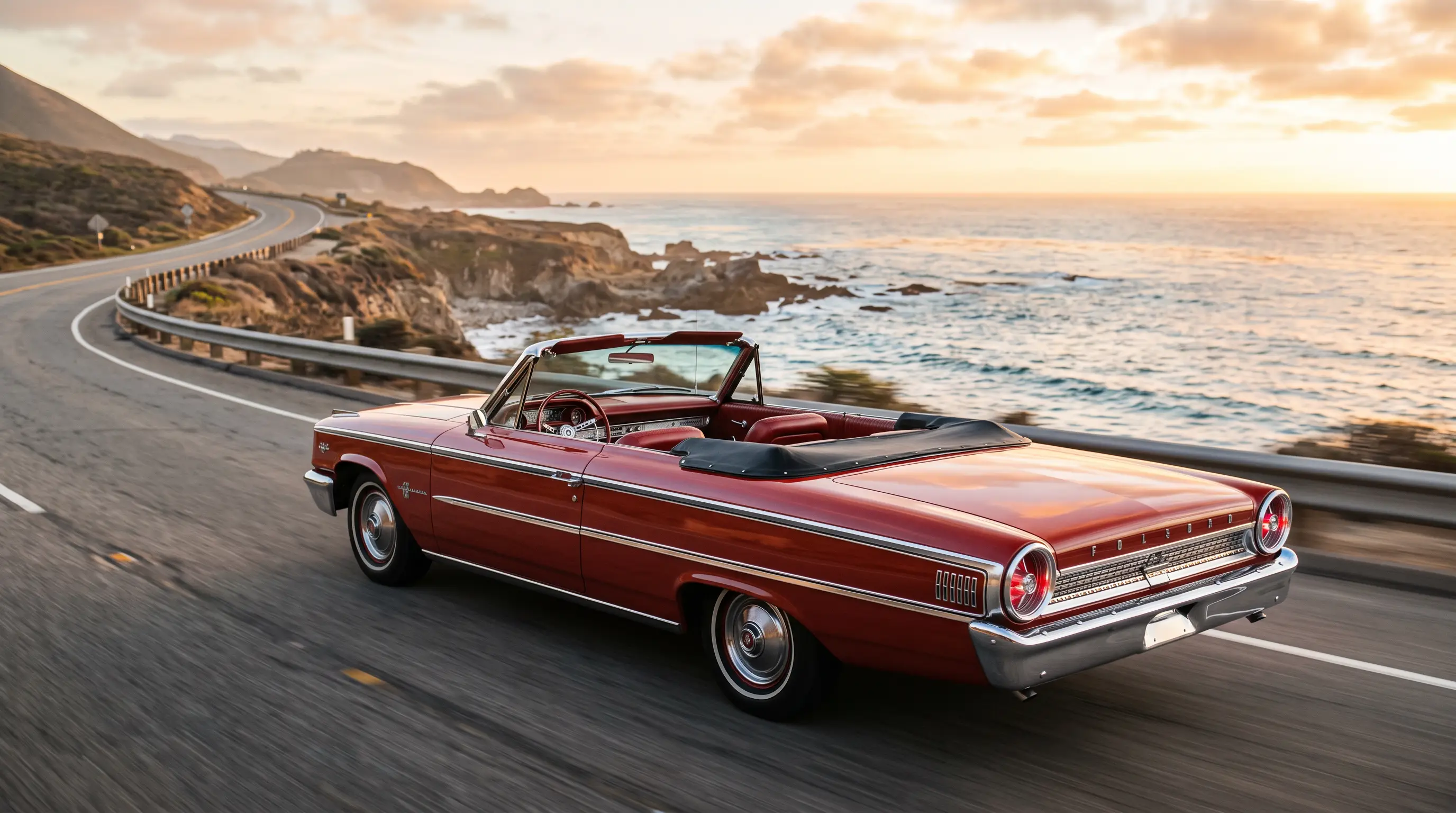
Drop the top on a Galaxie 500 XL and the whole car reads differently. The ford galaxie 500 xl convertible glamour angle isn't an exaggeration; Ford's designers understood exactly what a convertible body style did for the XL package's bucket seats and console, turning a comfort trim into something closer to a genuine personal-luxury statement, and buyers in the early and mid-1960s responded to that promise with real enthusiasm.
Why the convertible mattered more than the coupe
The XL package worked on hardtops too, and Ford sold plenty of them, but the convertible version carried a different weight in period marketing. Sunlight on chrome trim, the wind pulling through an open cabin, two bucket seats instead of a bench: every element of the XL formula found its ideal showcase in a body style with the roof folded down. Dealer photography from the era leaned on this constantly, showing XL convertibles parked at country clubs, beachfront hotels, and other settings meant to signal aspiration rather than practicality.
That marketing instinct wasn't wrong. A hardtop XL is a handsome car, but a convertible XL turns heads in a way the closed body style simply doesn't match. The bucket seats and console read as a driver's cockpit with nothing overhead to interrupt the effect, and that open-air presentation is exactly what made the convertible the image Ford chose to sell the whole package around.
What made these convertibles special mechanically
Building a convertible required real engineering investment beyond cutting the roof off a hardtop. Ford reinforced the frame and body structure to compensate for the lost rigidity a fixed roof normally provided, added a proper power-operated top mechanism, and dealt with the packaging challenge of stowing that folded top without eating into trunk space buyers expected from a full-size car. None of that came cheap, and convertible XL models carried a genuine price premium over their hardtop siblings as a result.
That extra engineering and cost meant Ford built convertibles in smaller numbers than hardtops across nearly every model year the XL package existed. Fewer built means fewer survived, and fewer survived in original, unmodified condition means today's collector market treats a genuine XL convertible as a meaningfully scarcer find than the equivalent hardtop, often commanding a real price gap at auction between the two body styles even when trim and engine specs otherwise match.
Restoring a convertible top mechanism to correct factory operation is its own specialized undertaking, distinct enough from general body and paint work that plenty of otherwise capable restoration shops send that portion of the job out to a specialist. Buyers evaluating a convertible should ask pointed questions about who did that specific work and when, since a poorly executed top restoration is one of the more common ways an otherwise beautiful convertible disappoints its new owner in the first few months of ownership.
How the glamour played out in period culture
Convertibles occupied a specific place in American car culture through the sixties that went beyond simple transportation. They photographed well in advertising, they suited the burgeoning drive-in and cruise culture of the era, and they signaled a certain kind of leisure-oriented prosperity that a closed sedan simply couldn't match no matter how well trimmed the interior. The XL convertible slotted into that cultural moment specifically, giving Ford buyers a way to participate in the same open-air, sport-luxury image that convertibles from other manufacturers were selling at the same time.
Owners of these cars at the time often treated them as a special-occasion vehicle rather than daily transportation, reserved for good weather and social outings rather than the daily commute a hardtop or sedan handled. That usage pattern, ironically, is part of why some surviving examples today are in better original condition than their harder-used hardtop counterparts; a car babied through its early ownership years tends to age better than one that saw daily service through a Midwestern winter.
"Put the top down on an XL and you understand instantly why Ford built the whole marketing campaign around this body style."
- Patrick Walsh
Colors that defined the look
Certain factory colors became almost synonymous with the convertible XL's image, the crisp whites and bright reds that photographed best against a folded black or white top and that dealer brochures reached for again and again. A white convertible XL with red bucket seat interior became something close to a visual shorthand for the whole package during its peak years, the exact combination advertising photographers gravitated toward when they wanted to sell the fantasy rather than just the specification sheet.
Darker colors existed too, and plenty of buyers ordered convertibles in deeper blues or greens that read as more understated on the road. But when collectors today talk about the quintessential XL convertible, they're usually picturing one of those bright, optimistic color combinations that dominated the period marketing, and cars in those colors, if genuinely factory-correct, tend to draw extra attention at shows even among a field of otherwise comparable convertibles.
What buyers should know before chasing one
Convertible-specific issues deserve real attention before any purchase, more attention than a hardtop XL demands from a shopper working through the same checklist. Frame and floor structure need careful inspection given the extra reinforcement these cars carried and how that reinforcement holds up after decades of exposure to weather and road salt. The top mechanism itself, along with its motor and hydraulic components where equipped, represents a meaningful chunk of what makes a convertible complete and correct, and replacement parts for these systems can be harder to source than for simpler hardtop components.
Anyone chasing the full scope of what the XL package offered across its run should read our ford galaxie 500 xl retrospective for the complete picture. The XL also came in a distinctive fastback body style worth knowing about, covered in a related story on that variant. Buyers ready to see what's currently on the market can browse Galaxies for sale now and start comparing convertible examples against the rest of the field.
Whatever color you end up chasing, treat a top-down photograph as the starting point for a purchase decision, not the finish line. The romance of a folded top and open sky sold plenty of these cars new, and it still sells plenty of them at auction today, but the same due diligence that applies to any hardtop XL applies doubly here given the added structural and mechanical complexity a convertible carries. Do the homework first, and the glamour will still be there waiting once the paperwork checks out, and it will mean a great deal more once you know it is genuine rather than assumed.