
People use "gasser" and "hot rod" like they mean the same thing. They don't. I've had a guy point at a nose-high '41 Willys and call it a hot rod, and I understand the mix-up, both cars came out of the same postwar garages with the same kind of guys wrenching on them. But the two were built to do different jobs, and once you understand the job, the differences stop being cosmetic and start making sense. A gasser was built to win a class at the drag strip on a Sunday. A hot rod was built to drive, to look mean on the street, and maybe run the occasional grudge race. Same roots, different intent.
Car Features
7 min read
Gasser vs Hot Rod
Same postwar garages, two different missions. How stance, axle, engine, and era separate a drag-race gasser from a street hot rod.
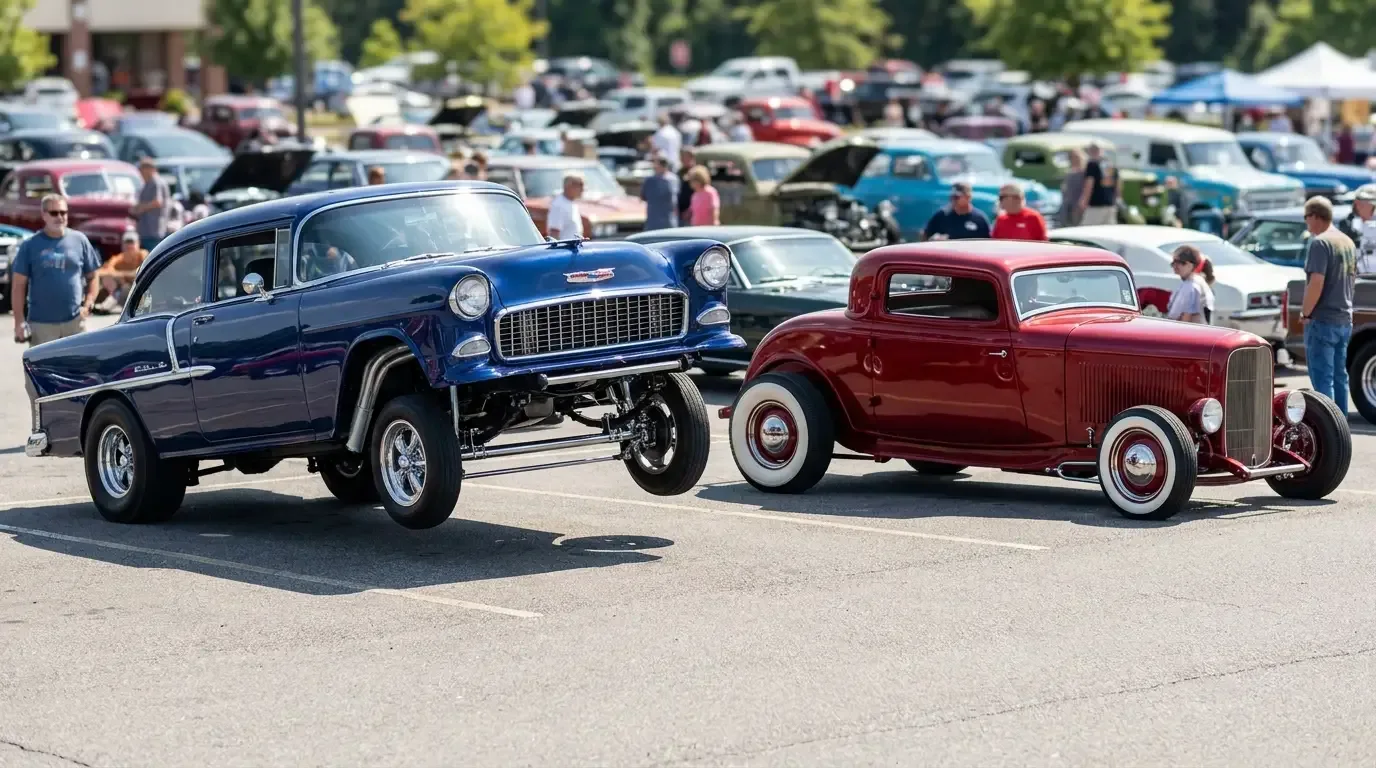
That difference in purpose is the whole story. If you already know what is a gasser, you know the stance, the axle, the stripped weight all came from a rulebook. The hot rod answered to no rulebook at all. That's why they look like cousins but behave like strangers.
Same postwar roots, two different missions
Both traditions start in the same place: young guys after World War II with access to cheap prewar Fords, war-surplus know-how, and a hunger to go faster than the car left the factory. The hot rod came first as a broad idea. Take a light early Ford, usually a Model A or a '32, strip the fenders and running boards, drop in a bigger flathead or later a small-block, and you've got something quick and loud that you drive everywhere.
The gasser is a narrower, later branch. It grew specifically out of organized drag racing in the 1950s, when the NHRA and AHRA wrote gas coupe and sedan classes. Those classes had weight breaks, engine rules, and a requirement that the car run pump gas instead of exotic fuel. Builders chasing a class win optimized for exactly those rules, and the gasser look is what optimization looked like. A hot rod wanted to be a good all-around car. A gasser wanted to be legal, light, and fast in one specific box on an entry form.
Stance: the tell you can read across a parking lot
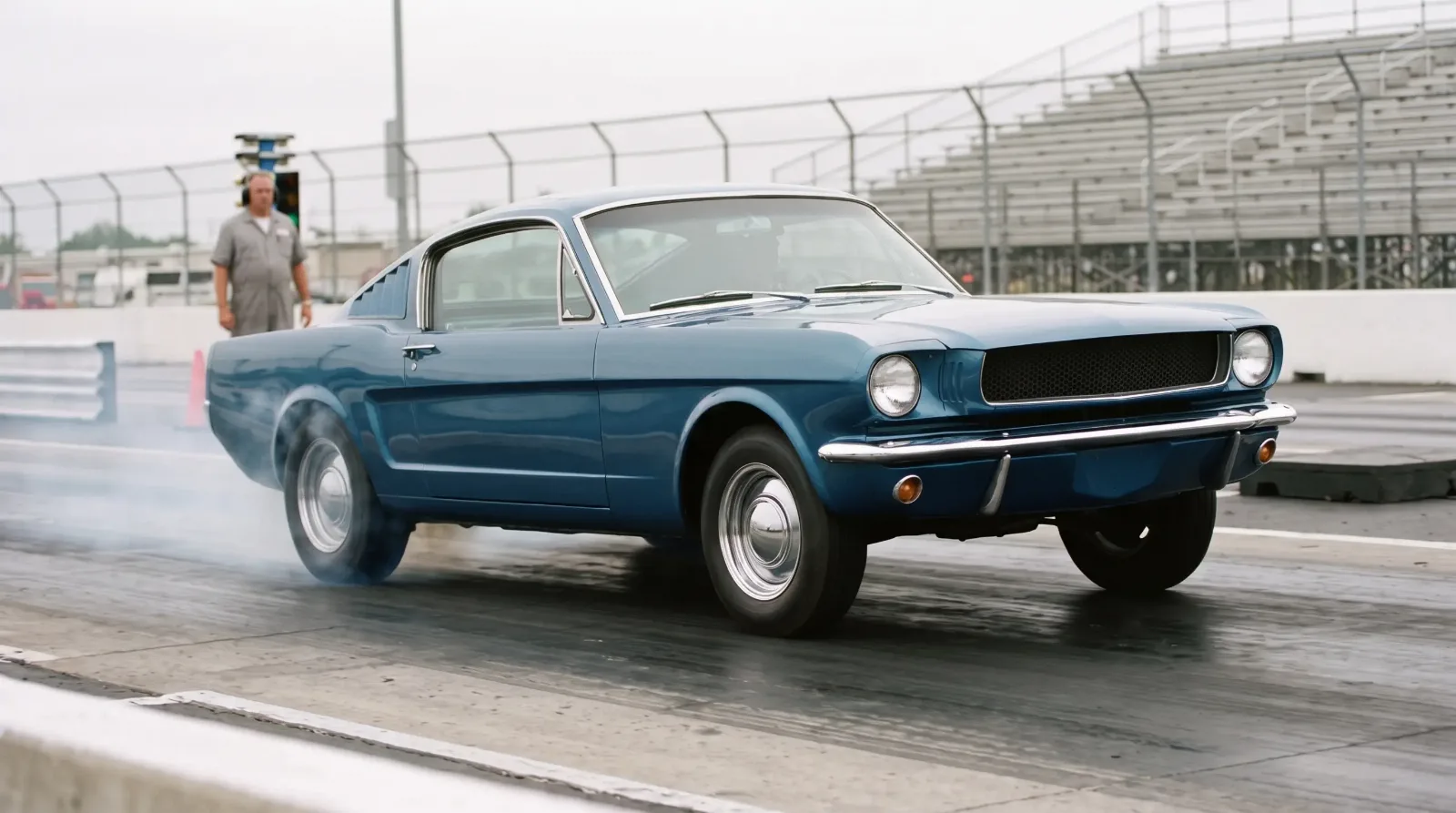
If you want to sort the two apart from fifty feet, look at how the car sits. A hot rod usually runs level or even a little nose-down, sitting low and planted. The whole point was a lean, road-hugging silhouette. Rake, if it had any, was mild and meant to look fast, not to change how the car launched.
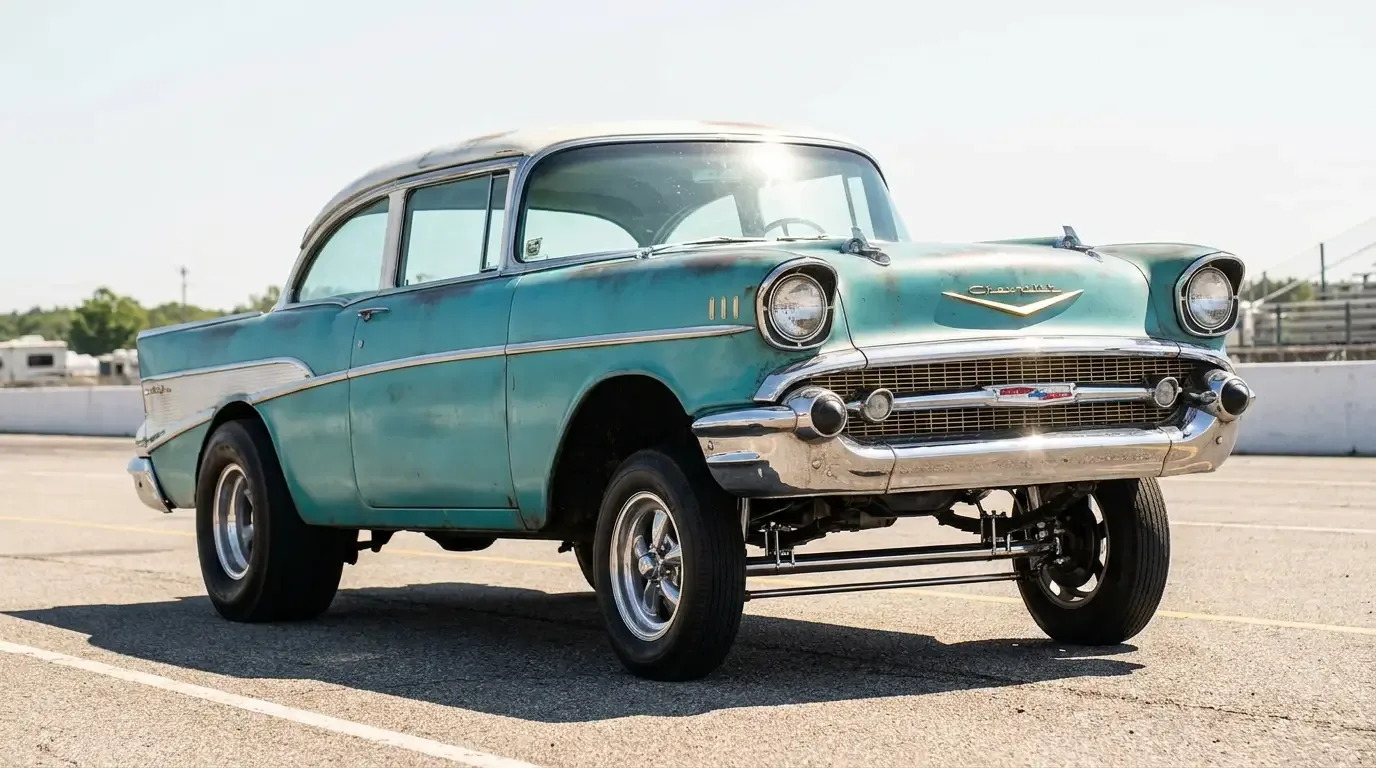
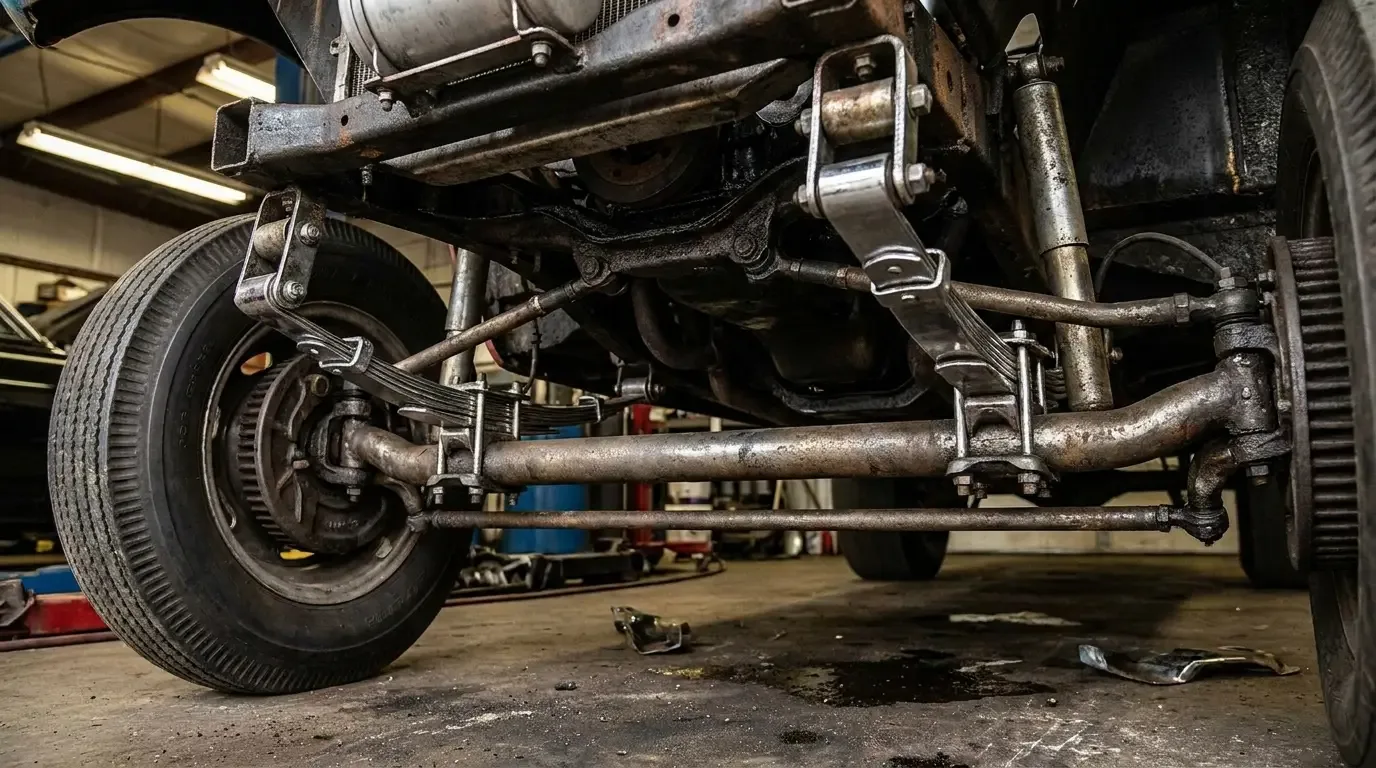
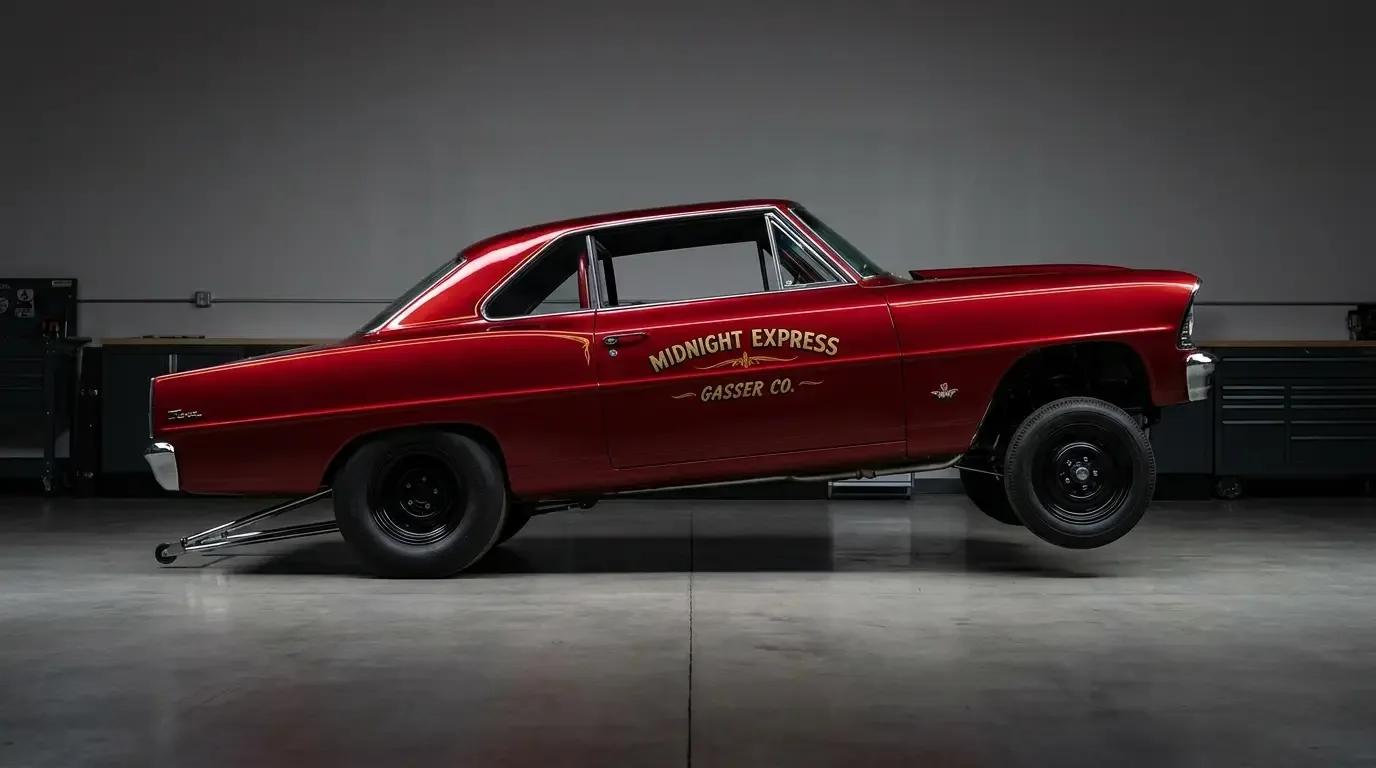
A gasser does the opposite. It sits nose-high, front end jacked up, sometimes to a degree that looks almost comical until you understand why. That stance came from swapping the independent front suspension for a straight axle, which raised the front, shifted weight rearward onto the driven wheels, and helped the car hook up off the line. I break down the mechanics in The Straight Axle That Defines a Gasser, but here's the short version: the hot rod's stance is styling, the gasser's stance is engineering. One was chosen because it looked good. The other was tolerated because it worked.
"I tell people the stance is the honest part of a gasser. A hot rod can fake attitude with a rake job. A real gasser sits nose-up because the axle put it there, and you can't fake that without doing the actual work underneath."
Ray Delgado
Under the skin: axle, engine, and weight
The suspension is the cleanest dividing line. Hot rods came in every flavor, dropped I-beam axles, independent front ends, later Mustang II setups, but the builder picked based on ride and looks. Gassers went almost universally to a straight tube or leaf-sprung solid front axle because it was light, simple, cheap to fix between rounds, and it produced the weight transfer the class racing rewarded.
Engines tell a similar story of intent. A hot rod engine had to idle in traffic, not overheat at a stoplight, and pull cleanly on the street. A gasser engine was tuned for one thing, a quarter mile at full throttle, so you saw wilder cams, higher compression, and superchargers or multiple carbs that would be miserable to daily-drive. Both might run a small-block Chevy, but they'd be built to different tempers.
| Trait | Gasser | Street hot rod |
|---|---|---|
| Primary purpose | Win an NHRA/AHRA gas class | Street driving, cruising, show |
| Front suspension | Straight solid axle | Dropped I-beam or independent |
| Stance | Nose-high rake | Level or nose-down, low |
| Engine tune | Race-tuned, blower/multi-carb common | Streetable, drivable idle |
| Weight priority | Stripped to a class minimum | Trimmed but livable |
| Peak era | Late 1950s to mid 1960s | 1940s onward, continuous |
Era and why the lines blurred
Timing matters. The hot rod is a continuous tradition that never really stopped, running from the late 1940s straight through today. The classic gasser has a tight window, roughly the late 1950s into the mid 1960s, before slicks, altered wheelbases, and funny cars made the straight-axle gasser obsolete as a winning race car. After that, the gasser survived as a style people love and rebuild, not as the front-running class car it once was. If you want the full arc, I walk through it step by step in the gasser story.
The blur happens because hot rodders borrowed the gasser look once it stopped being competitive. Plenty of "gassers" at shows today are really street cars wearing the nose-high stance because it reads tough. That's fine by me, a tribute done with respect beats a fake one done sloppy, but it's why the words got tangled. If you're shopping and want the real thing, know that the same confusion runs through the market, and you'll see both true period race cars and style tributes listed side by side among classic gassers for sale.
How to tell them apart, and where hot rods branch off
When somebody rolls a car in front of me and asks what it is, I run down a short checklist. Does it sit nose-high on a straight axle? Is the engine built to race, not to cruise? Was the weight stripped to chase a class minimum? Three yeses and you're looking at a gasser, or a faithful tribute to one. If the car is level, drivable, and built to enjoy on the road, it's a hot rod, and the hot rod world has its own family tree worth knowing. I'd send you to hot rod, street rod and rat rod compared to see how those branches split.
None of this makes one better than the other. They're two answers to the same postwar question of how to go faster, shaped by whether you were pointed at a street or a starting line. Once you see the purpose behind the parts, you stop mixing them up, and you start appreciating why each one looks exactly the way it does.
Sources and notes
- Period drag-racing press and NHRA/AHRA gas-class rulebooks from the 1950s and 1960s.
- Marque and engine reference works on early Ford hot rods and small-block builds.
- Club, registry, and vintage-race records documenting straight-axle gasser competition.
- Builder and restorer interviews on stance, suspension, and period-correct construction.
Related Reading
Have a
Classic Car
for Sale?
Reach thousands of serious classic car collectors across the US.
Sell It Here →
Are You a Classic Car Dealer?
List your full inventory and connect with targeted classic car buyers.
Join as a Dealer →

About the author
Ray Delgado
Metal fabricator and chassis builder who has spent 25 years turning flat sheet and mild steel into hot rods, gassers and restomod underpinnings.


Comments
Be the first to comment on this article.