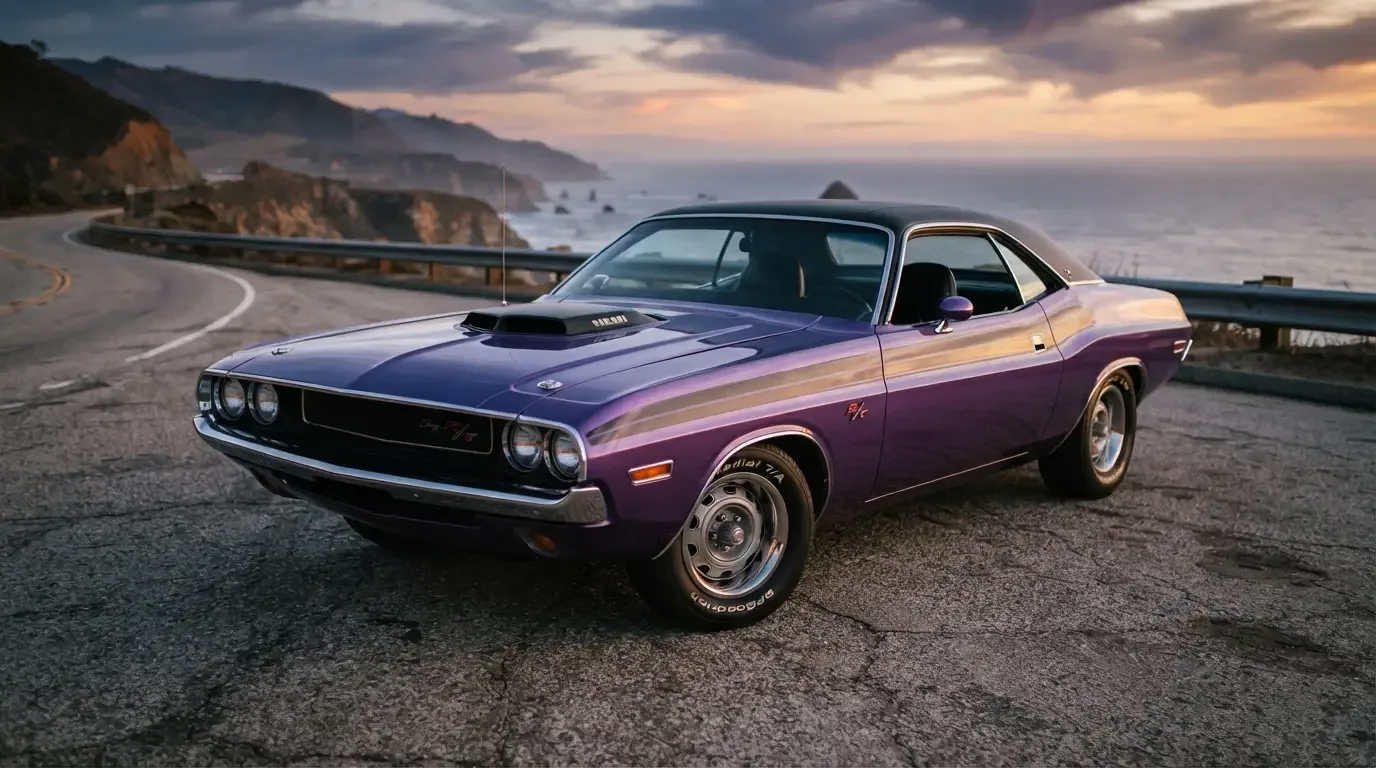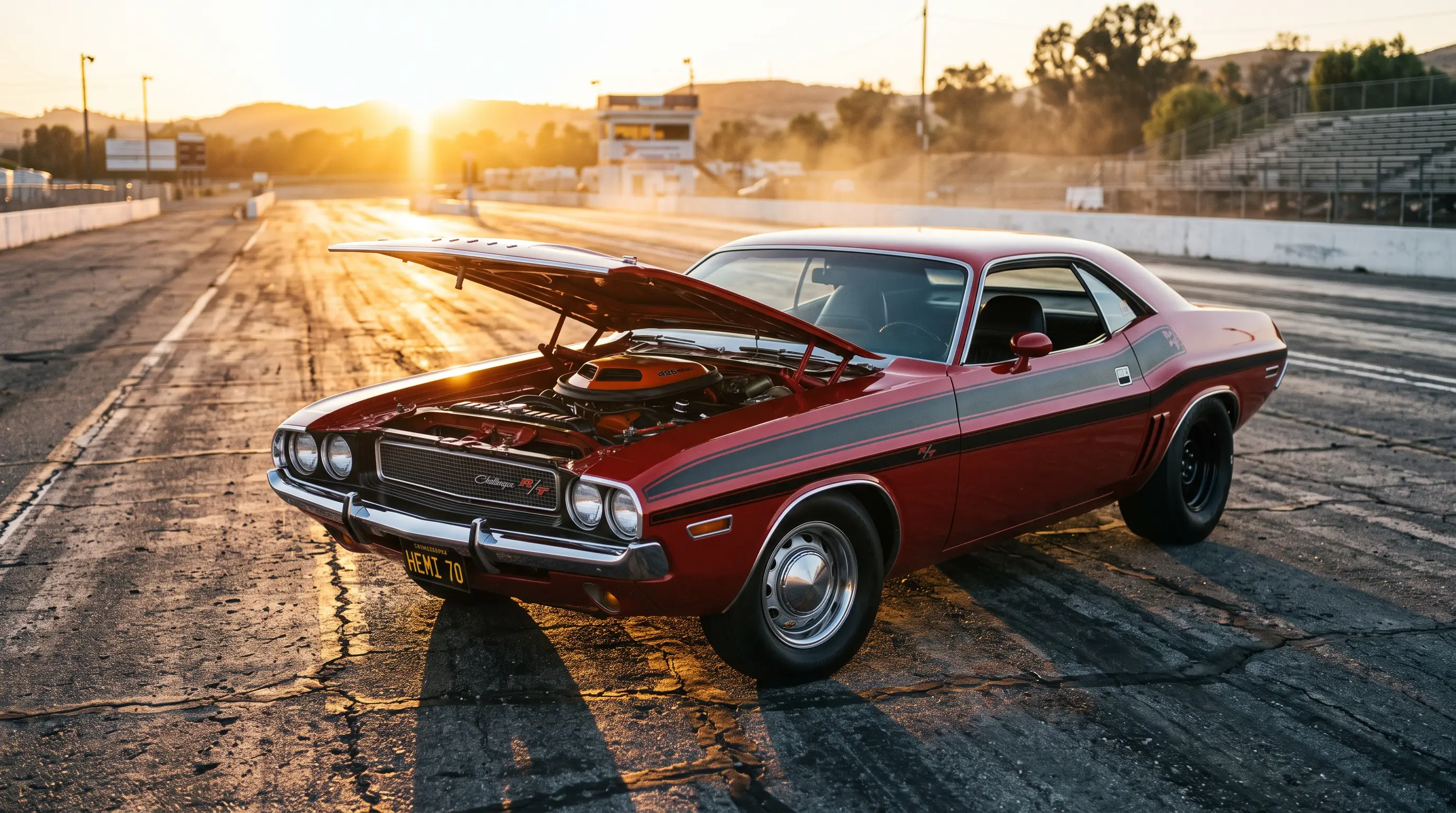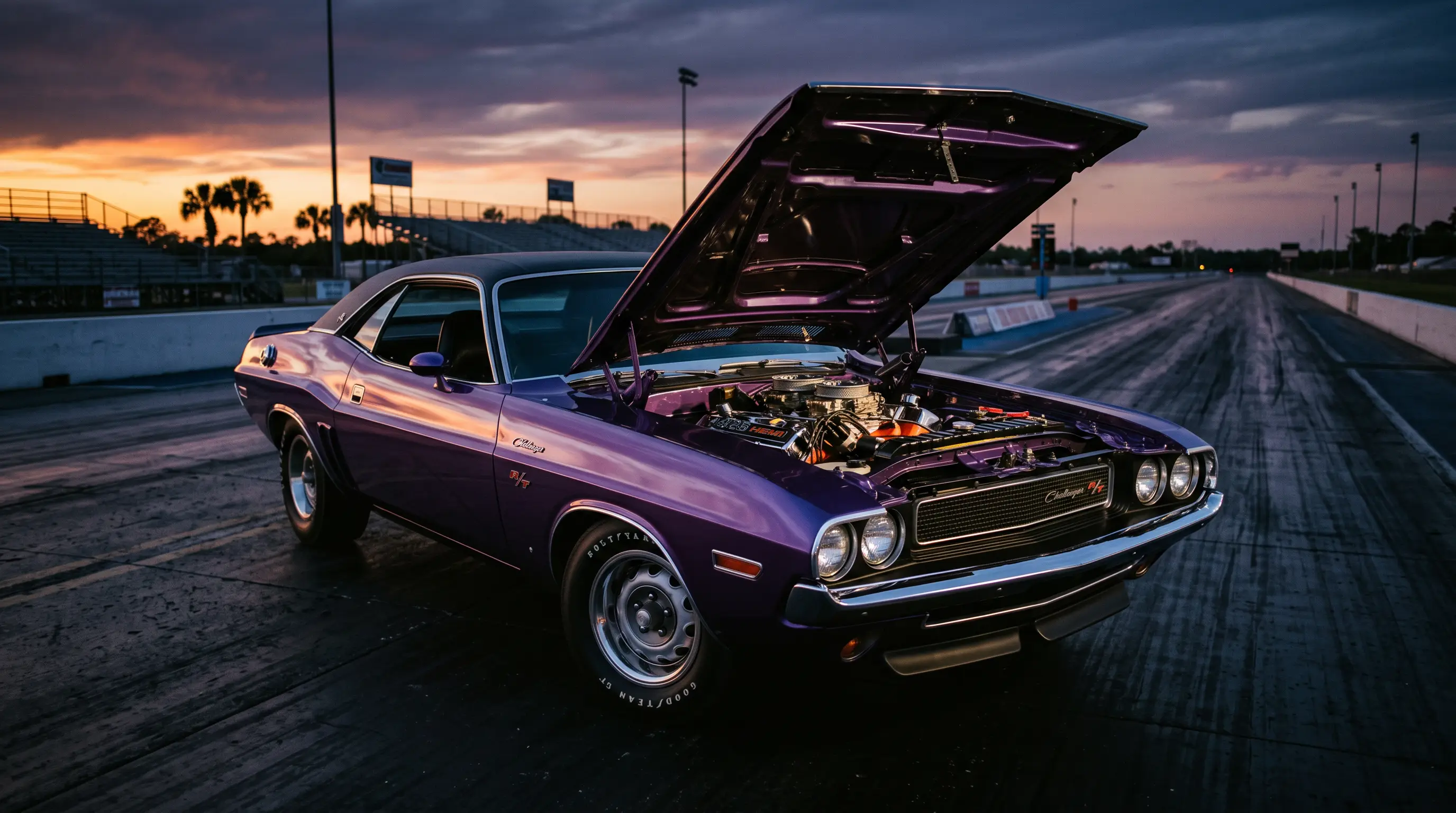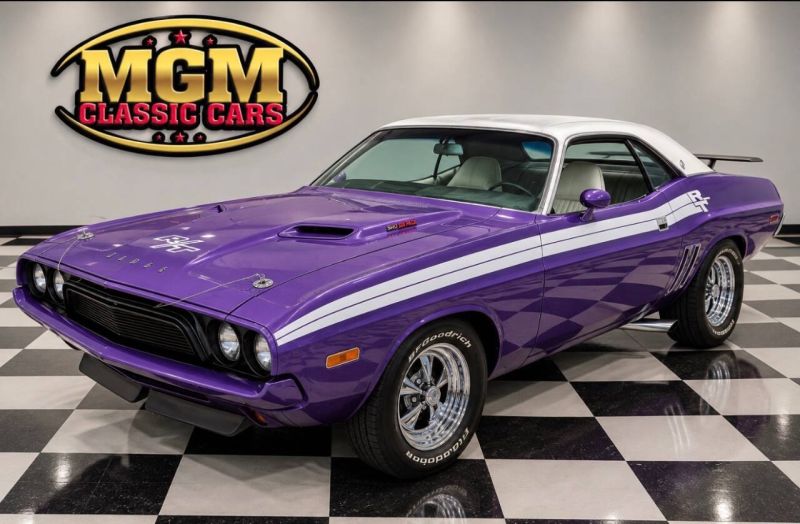
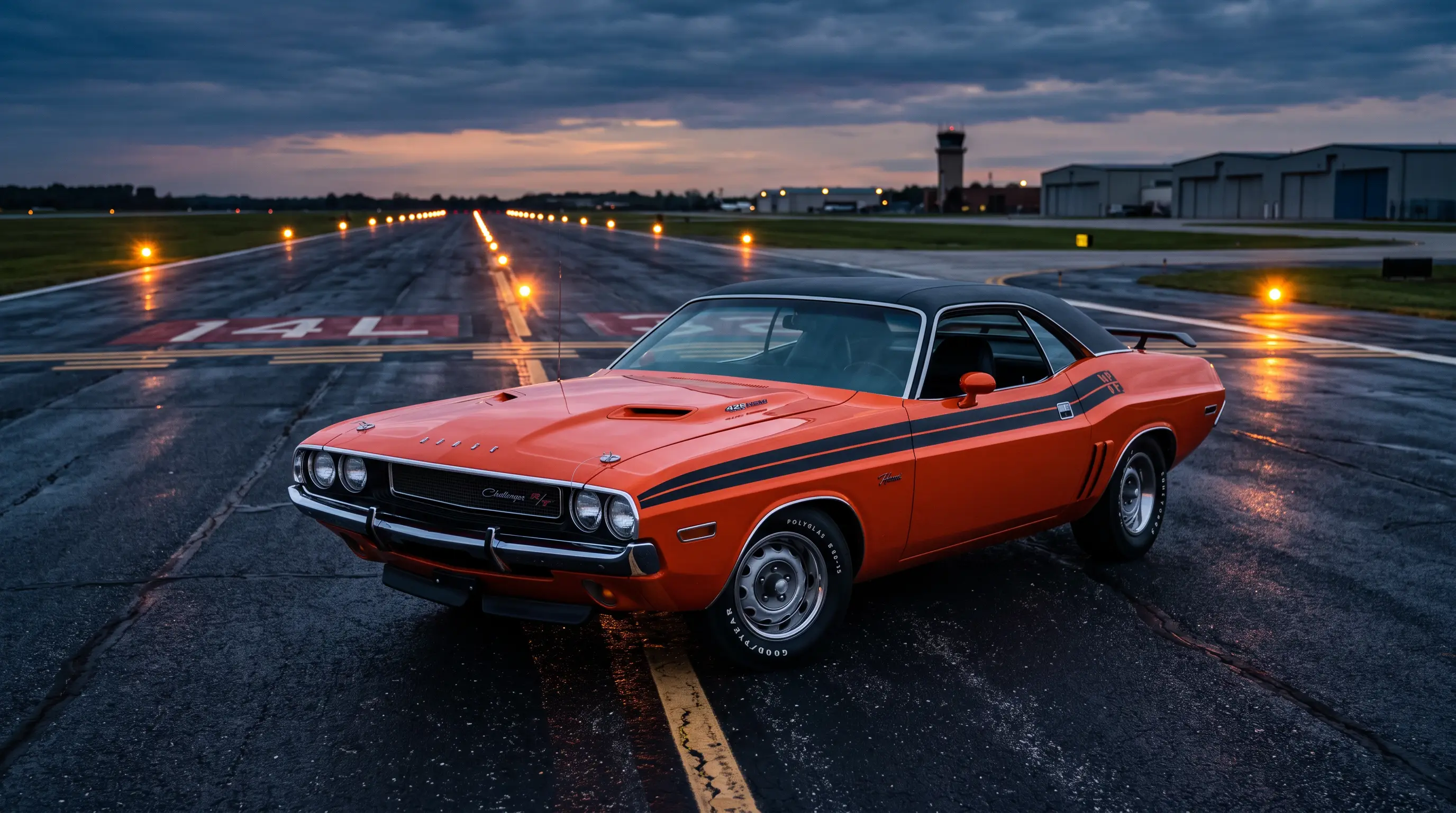
The 1971 Hemi Challenger is the last of its kind in the truest sense, the final model year Dodge offered the 426 Hemi in the Challenger before insurance costs and shifting priorities ended the pairing for good. From an engineering standpoint, it is also the most refined version of the combination, benefiting from a year of production experience while still carrying every bit of the original engine's uncompromising design.
What actually changed for 1971
Dodge gave the Challenger a mild facelift for 1971, most visibly a revised grille split into twin sections and new taillight treatment, along with reshuffled trim and color offerings. Underneath, the Hemi itself carried over largely unchanged from 1970, still rated at 425 horsepower with the same dual four barrel carburetor setup and cross ram intake manifold. The engineering story here is less about the engine evolving and more about the platform around it reaching its final form before the whole performance car segment began contracting.
What did change meaningfully was the ordering environment. By 1971, insurance surcharges on high performance engines had climbed sharply, and several states had begun tightening emissions requirements that would eventually force compression ratios down across the industry. Dodge dealers reported that fewer buyers were willing to absorb the insurance premium a genuine Hemi Challenger commanded, and that hesitation shows up directly in the production numbers.
The numbers that define this model year
Hemi Challenger production for 1971 dropped sharply from 1970 levels, with figures commonly cited around 71 Hemi Challengers built, all of them hardtops, a fraction of an already small 1970 total. The convertible option itself disappeared from the R/T lineup for 1971, so no factory 1971 Hemi convertible exists at all; any car presented as one is a later build, not an original.
That collapse in volume is the entire reason 1971 Hemi Challengers command a premium over otherwise similar 1970 cars in some transactions, despite the 1970 model technically being the introduction year for the pairing. Scarcity, in this specific case, outweighs the usual first year premium collectors apply to most model runs.
Why this specific year gets treated differently
Collectors and appraisers routinely separate 1971 Hemi Challengers from the broader Hemi Challenger conversation because the ending-of-an-era context changes how the car is read historically. A 1970 Hemi Challenger represents the peak of Chrysler's willingness to sell an uncompromising race engine to the public. A 1971 Hemi Challenger represents the last moment that willingness existed before external pressure, insurance costs, emissions rules, and a changing market, shut the door for good.
That distinction matters more to serious buyers than casual conversation suggests. A documented 1971 example carries a narrative weight that a 1970 car, however desirable, does not quite have, the sense of being present for the final chapter rather than the opening one.
"The engineering did not change much between 1970 and 1971, what changed was the world around the car, and that context is exactly what makes the 1971 Hemi Challenger a distinct case study rather than just a repeat of the prior year."
- Emily Chen
| Spec | 1971 Hemi Challenger |
|---|---|
| Engine | 426 Hemi, 425 hp factory rating |
| Approx. production | 71 units, hardtop only |
| Body styles offered | Hardtop only (no factory Hemi convertible in 1971) |
| Notable exterior change | Revised split grille, new taillights |
| Significance | Final model year for Hemi option in Challenger |
Identifying a genuine 1971 example
Because the surviving population is so small, verification matters more here than with almost any other Challenger variant. The fender tag carries the engine code, and a genuine 1971 Hemi car will show the correct broadcast sheet notation along with a matching numbers block. Given how many 1971 Challengers were built with the visually similar 383 or 440 engines and later modified to look like Hemi cars, buyers need documentation that traces the car back to its original selling dealer, not just a plausible looking engine bay.
Restoration shops and appraisers who specialize in this era generally recommend cross referencing any claimed 1971 Hemi Challenger against known registries before treating a seller's claim as settled fact. The financial gap between a genuine example and a well built clone is large enough that the extra verification step is never wasted effort, regardless of how convincing the paperwork looks at first glance.
Reading the 1971 story in context
None of this makes sense without the broader arc of how the Hemi ended up in the Challenger lineup at all. If you have not already, read the background on that pairing before treating the 1971 model as a standalone case, since the earlier chapters explain why insurance and emissions pressure hit this specific engine option so hard by the early 1970s.
For buyers interested in the tail end of this era specifically, the market for genuine 1971 Hemi Challengers remains thin enough that patience matters more than urgency. Anyone shopping seriously should compare current find a classic Challenger listings against verified production data before assuming any specific car is what a seller claims, given how small and well documented the surviving population actually is.
The 1971 Hemi Challenger deserves its reputation as a genuine last call, not because the engineering leaped forward in that final year, but because everything happening outside the factory made sure it would never happen again.
What the end of an era looked like on paper
It is worth remembering how fast the shift happened. In 1969, before the Challenger even existed as a nameplate, high compression engines with minimal emissions controls were simply the industry norm across every domestic manufacturer, not a special performance category. By the 1972 model year, just one year after Hemi production ended in the Challenger, compression ratios across the entire Chrysler lineup had dropped substantially to accommodate lower octane unleaded fuel and tightening federal emissions standards. The 1971 Hemi Challenger sat right at that inflection point, built under the old rules for one final year before the new ones took over completely.
That timing is part of why this specific model year reads almost like a preserved artifact of a regulatory environment that no longer existed a year later. Owners and appraisers who understand that context tend to treat a genuine 1971 Hemi Challenger less like a used car and more like a documented snapshot of the exact moment the muscle car era's original rules stopped applying, which is a very different kind of value proposition than horsepower alone could ever explain, and it is the reason this one model year keeps getting discussed on its own terms rather than folded quietly into the general Hemi Challenger story.