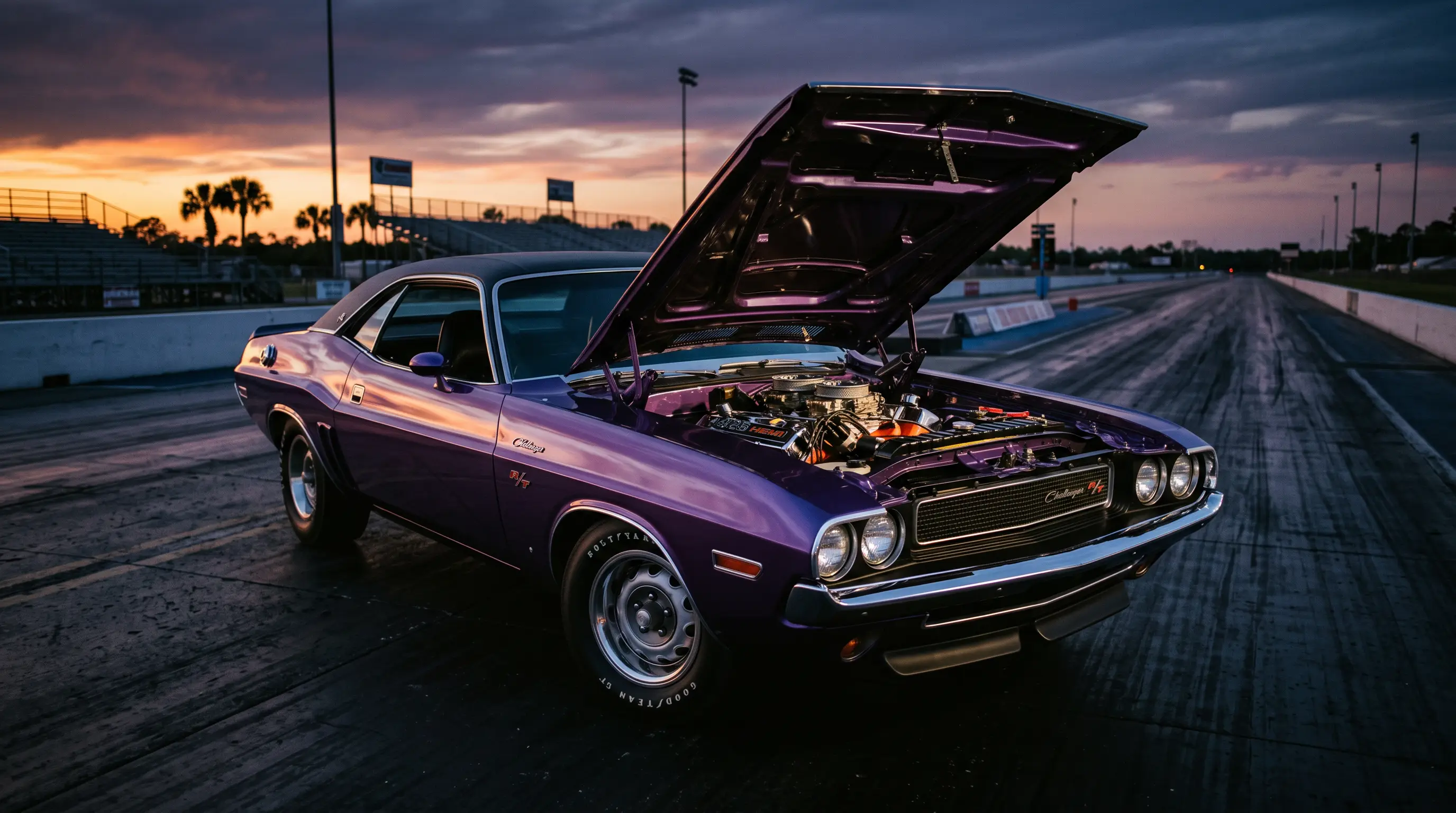
Call it the elephant motor and most people in the Dodge Challenger hobby know exactly what you mean. The 426 hemi legend did not build itself out of marketing copy. It built itself out of a very specific set of hard numbers, banned race results, and a production count small enough that nearly every surviving example is individually known. Here is how a single engine option turned into the most talked about power plant in Chrysler's history.
The size that earned the nickname
The elephant motor nickname came from the engine's sheer physical bulk. At close to 800 pounds fully dressed, the 426 Hemi weighed noticeably more than the wedge head big blocks it shared a lineup with, largely due to its massive cylinder heads and the extra machining needed for its hemispherical combustion chambers. Mechanics who worked on these engines in period did not need a spec sheet to know they were dealing with something different, they could feel it every time they had to lift one out of an engine bay.
That extra weight was not wasted mass. The larger heads allowed bigger valves and straighter port paths than a conventional wedge design could manage, which is the actual engineering reason the Hemi could breathe better at high RPM than nearly anything else Detroit built in that era. Size and performance were directly connected here, not just an unfortunate side effect of an old design.
The banned engine that had to go legit
NASCAR banned the original race version of the 426 Hemi in 1965 after it dominated competition so thoroughly that other manufacturers threatened to walk away from the series entirely. NASCAR's response, effective for 1966, was a rule that any engine competing had to be available in a production car buyers could actually purchase. Chrysler built the street Hemi specifically to satisfy that rule, and Dodge started offering it in the Challenger once that model launched for 1970.
That origin story is the foundation of the entire 426 hemi legend. This was not an engine designed from scratch to sell showroom cars. It was a race motor that got detuned just enough to survive daily traffic, and drivers who bought one were, in a very real sense, buying a slightly domesticated version of a banned competition engine.
What the production numbers actually say
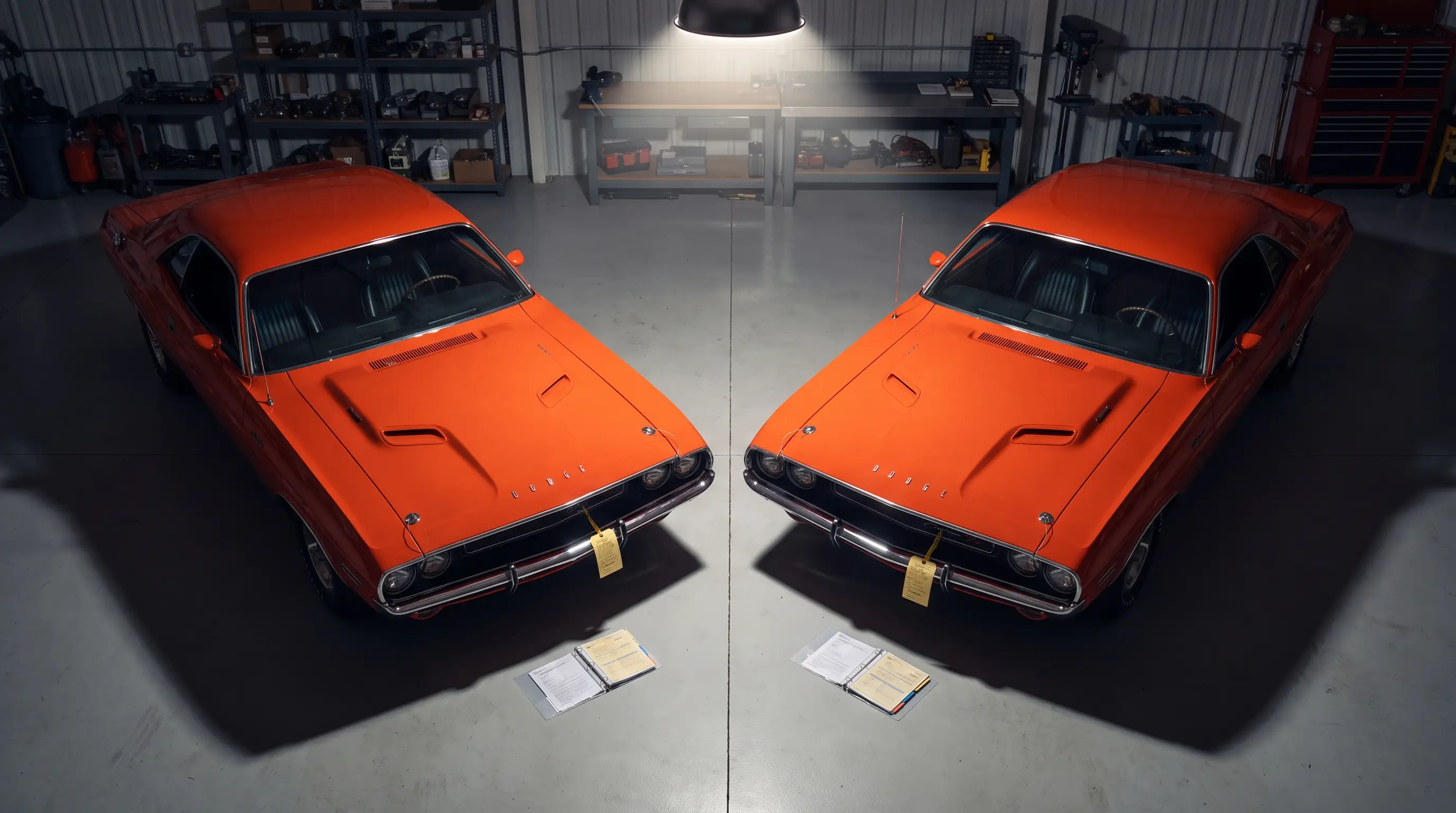
Legend needs scarcity to survive this long, and the Hemi Challenger delivered scarcity in spades. Roughly 427 Challengers left the factory with the Hemi option across the 1970 and 1971 model years combined (356 in 1970, 71 in 1971), a fraction of the tens of thousands of Challengers Dodge built in total during that stretch. Insurance premiums on high performance engines climbed so fast in the early 1970s that plenty of interested buyers simply could not afford to option the Hemi even if they wanted it, which is the practical reason the numbers stayed this low.
Small production numbers plus a genuinely banned racing pedigree is a combination almost no other production engine in American automotive history can claim simultaneously. That is the real, defensible foundation under the legend, not marketing, not nostalgia, actual documented history that holds up to scrutiny decades later.
"Strip away every bit of mystique and you are left with two facts that do all the work. It got banned from a racetrack for being too good, and Dodge built barely a few hundred of them for the street. Everything else is commentary."
- Dan Reeves
| Fact | Detail |
|---|---|
| Nickname origin | Elephant motor, from sheer physical bulk |
| NASCAR ban | 1965, forced production rule change for 1966 |
| Debut race result | Swept top three at 1964 Daytona 500 |
| Challenger Hemi production | Approx. 427 units, 1970 to 1971 |
| Factory rated output | 425 hp |
How the legend traveled beyond the racetrack
By the mid 1970s, the Hemi's reputation had already outgrown its actual sales numbers by a wide margin. Magazine writers who tested the engine in period wrote about it with a reverence usually reserved for exotic imports, not domestic muscle. That coverage mattered because it meant the Hemi's mythology was being built in real time, by people who had actually driven it, not retroactively invented decades later by nostalgia. When the muscle car market crashed hard in the mid 1970s under the weight of insurance costs and fuel prices, the Hemi's reputation survived largely intact because that documented, contemporaneous praise never went away.
That is a meaningful distinction from a lot of collector car mythology, where a car's reputation gets inflated well after the fact by people who never experienced it new. The 426 hemi legend was already fully formed while the engine was still in production, which is part of why it has proven so durable across five decades of ownership, restoration trends, and market cycles that killed off plenty of other performance nameplates from the same era.
Why the legend still holds up
Plenty of muscle car engines from this era had good stories. Few have a story this well documented, with a specific rule change tied to a specific dominant performance, followed by a specific small production run that current collectors can trace car by car. If you want the whole picture of how this engine ended up defining an entire segment of the collector market, the full retrospective covers the years and details this piece only has room to summarize.
The 426 hemi legend holds up under scrutiny because the numbers behind it are real and checkable, not inflated by decades of retelling. For anyone who wants to see what that legend costs to actually own today, there are shop classic Challenger listings carrying the same engine that once got a rule written specifically to stop it from winning so much.
That is the entire pitch, stripped of hype. A banned race engine, detuned just enough to satisfy a rulebook, sold in numbers small enough to make every survivor traceable by name. No amount of modern marketing could manufacture that combination twice, which is exactly why the 426 hemi legend keeps holding up under scrutiny instead of collapsing under it the way so many overhyped classic car stories eventually do once buyers start asking for actual receipts instead of just repeating what they heard at the last cruise night. Numbers do not lie, and in this case, they never had to.
Every generation of collector since 1970 has found its own reason to keep the 426 hemi legend alive, whether that is drag strip nostalgia from people old enough to remember the cars new, or younger buyers discovering the story through pop culture and deciding they want a piece of it too. The reasons for the interest have changed over fifty years. The underlying facts that started it have not, and that consistency is rarer in this hobby than most people realize until they go looking for it themselves.