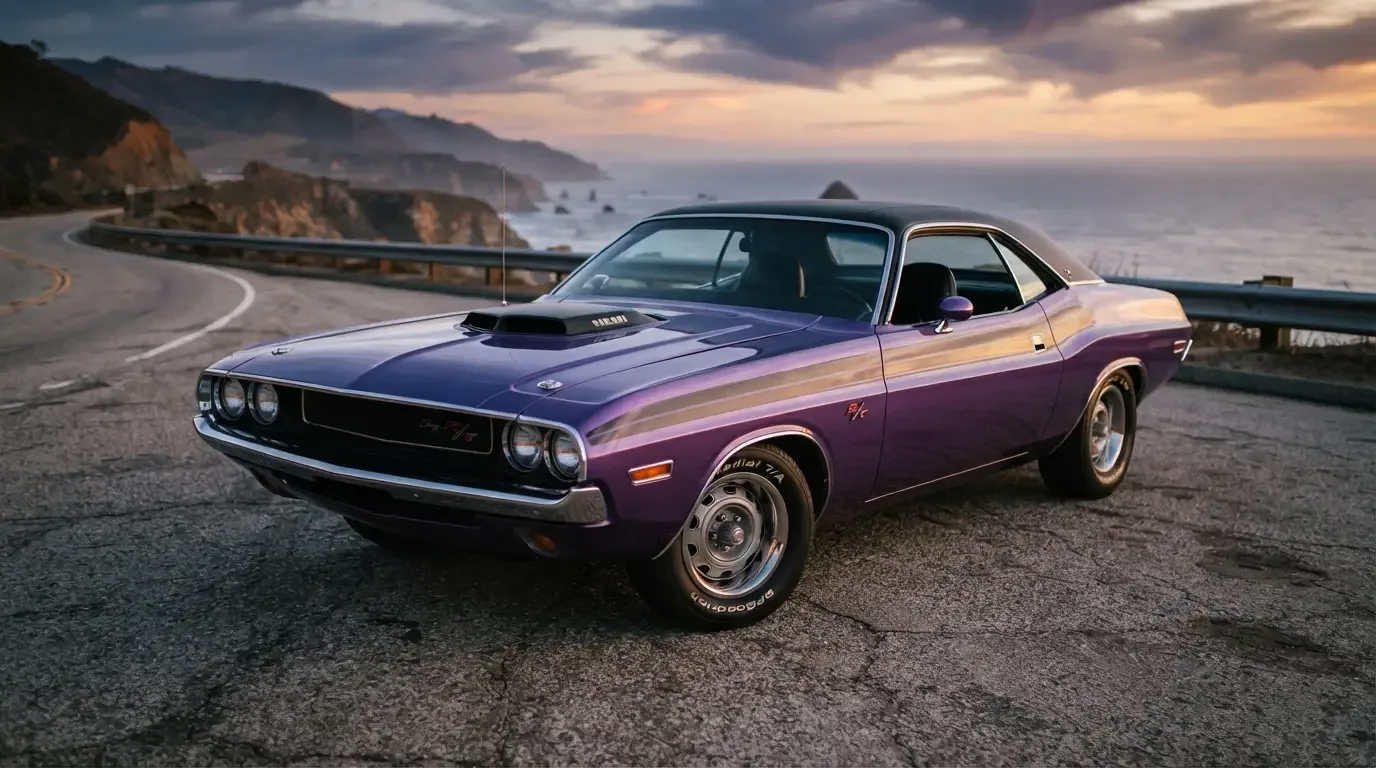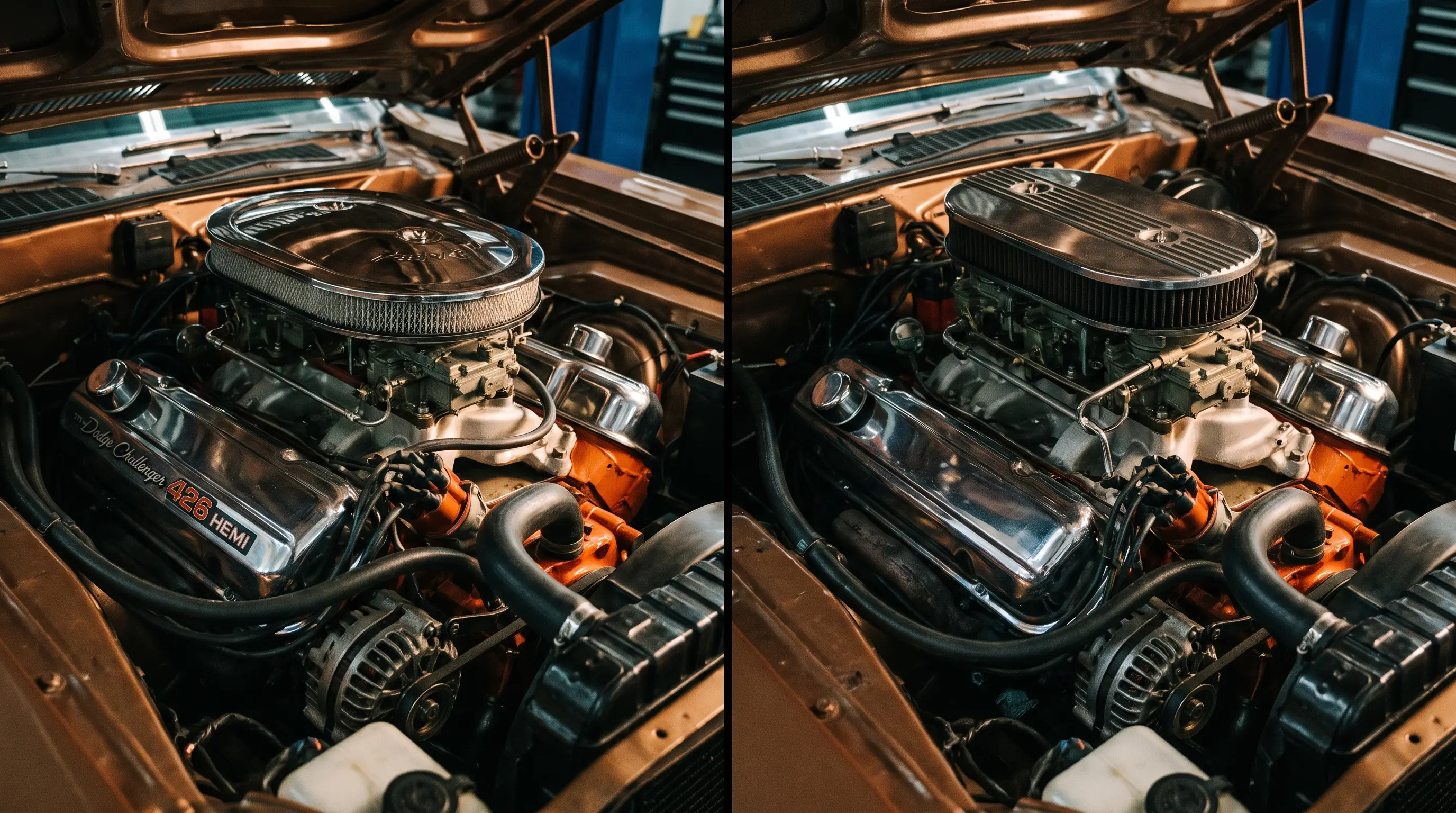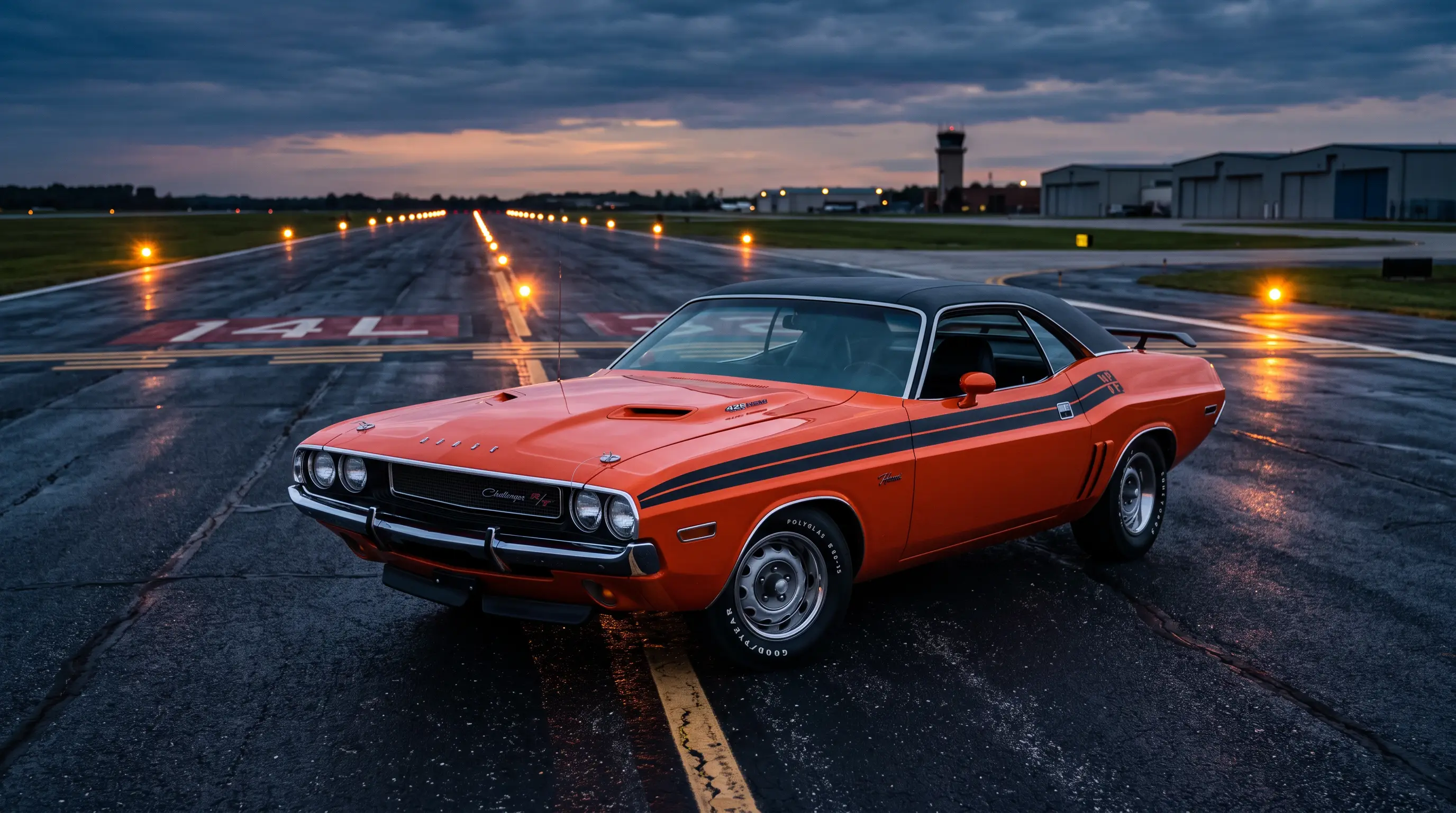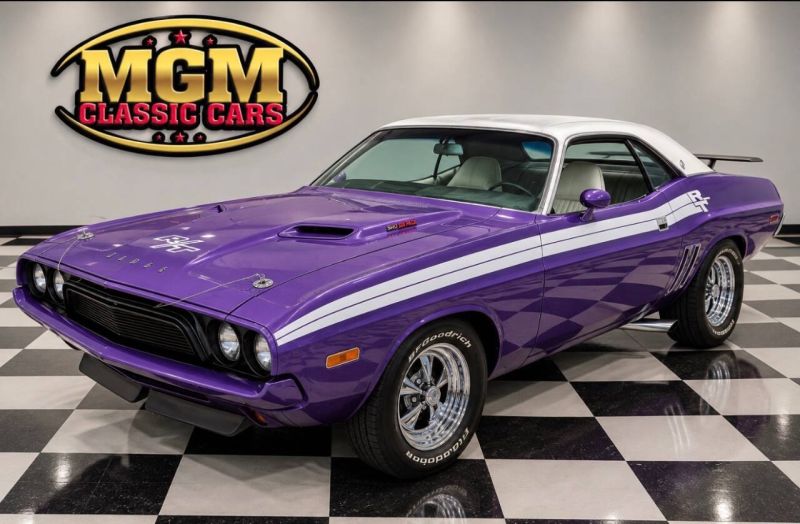
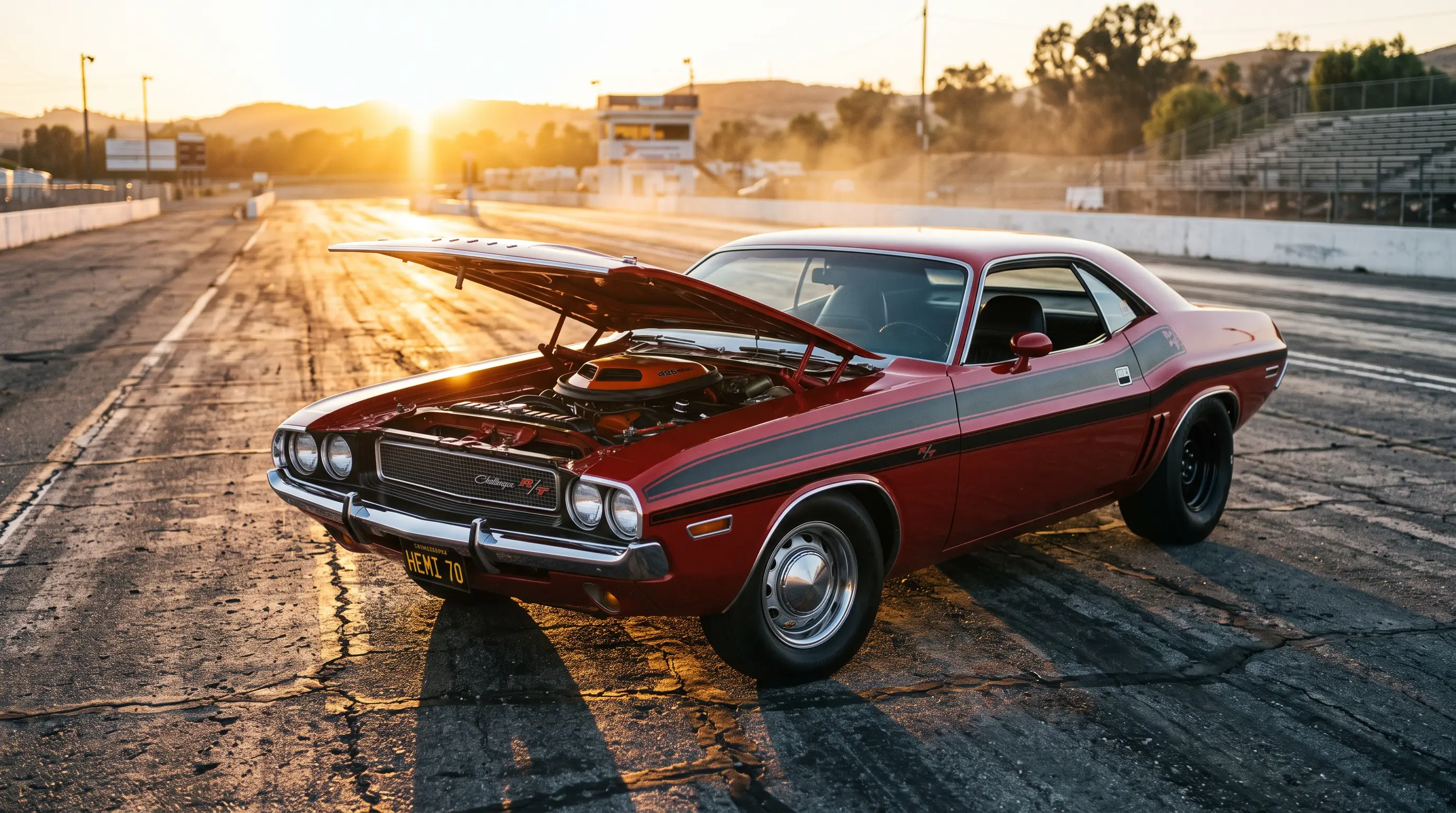
The 426 hemi street engine was a race motor that Chrysler agreed to sell to the public, and the Dodge Challenger was one of the last cars to get it before the option disappeared. 425 horsepower, factory rated, widely understood at the time to be a soft number. That is the short version. Here is the longer one, with the numbers that actually explain why this engine still stops conversations at car shows fifty five years later.
Born on the track, sold in a showroom
Chrysler built the original 426 Hemi for NASCAR and drag racing in the early 1960s. It dominated so completely that NASCAR banned it outright in 1965 unless it went into a production street car buyers could actually purchase. Chrysler's answer was the street Hemi, a detuned version of the race engine with a milder cam, a lower compression ratio, and a dual quad carburetor setup that could survive daily use instead of only quarter mile blasts. That compromise is the whole reason a Challenger buyer in 1970 could option a genuine race derived engine from a Dodge dealer.
The numbers on paper: 425 horsepower at 5000 RPM, 490 lb ft of torque at 4000 RPM, a 10.25 to 1 compression ratio, dual Carter AFB four barrel carburetors stacked on a cross ram intake. Real world output ran higher, most people who dyno tested these engines put actual crank horsepower closer to 450 or more, because Chrysler rated the Hemi conservatively to keep insurance underwriters and magazine editors from having a collective panic attack.
Quarter mile numbers back up the conservative rating theory. Period magazine tests of Hemi Challengers regularly turned in elapsed times in the low fourteen second range at close to a hundred miles an hour trap speed, numbers that would have required more than 425 real horsepower to achieve given the car's curb weight. Any Numbers Guy looking at the gap between the factory rating and the track results reaches the same conclusion, the 425 figure was a marketing number as much as an engineering one.
Why the tame version was still barely tame
Calling the street Hemi tamed is relative. It idled rough, ran hot in traffic, and needed a driver who understood carburetor tuning to keep both four barrels working in harmony. Compare that to a 440 Six Pack or a 383 Magnum, engines built from the ground up as street motors, and the Hemi's race origins showed constantly. It was not built to be easy. It was built to be fast, and Chrysler's engineers made just enough concessions to keep it street legal and marginally livable.
That is the trade every Hemi Challenger buyer accepted. You got the fastest engine Dodge sold, and you accepted a car that needed more attention than its stablemates. Owners who kept up with the maintenance schedule got a genuinely quick street car. Owners who did not got a car that ran rough, fouled plugs, and cost a fortune to keep tuned right.
The number that mattered most: how few got built
Only around 427 Challengers left the factory with the Hemi option across 1970 and 1971 combined (356 in 1970, just 71 in 1971), out of a total Challenger production run in the tens of thousands. That ratio is the entire reason values on these cars have separated so hard from every other Challenger variant. The engine itself explains the performance reputation. The production number explains the price tag. Neither one works alone to explain what these cars are worth today.
Insurance costs killed the option almost as fast as it arrived. By 1971, premiums on Hemi powered muscle cars had climbed so steeply that plenty of buyers who wanted the engine simply could not afford to insure it, and Chrysler discontinued the option after that model year. A race engine that survived a NASCAR ban could not survive an insurance actuary's spreadsheet, which says something about how short that era of unrestrained horsepower really was.
"Forget the mystique for a second and look at the number that actually matters. 427 cars across two model years. That is the entire population of factory Hemi Challengers, and every dollar of value in this market traces back to that one figure."
- Dan Reeves
| Spec | 426 Street Hemi |
|---|---|
| Factory rated horsepower | 425 hp at 5000 RPM |
| Carburetion | Dual Carter AFB four barrel |
| Intake | Cross ram aluminum intake |
| Years offered in Challenger | 1970 to 1971 |
| Approx. Challenger Hemi production | 427 units (1970-71) |
What made it hard to live with day to day
Beyond the tuning demands, the street Hemi ran hotter than a wedge engine in stop and go traffic because of how tightly its hemispherical chambers packed heat near the exhaust valves. Owners in warmer climates reported vapor lock and overheating on hot days in traffic, problems a 383 or 440 owner rarely dealt with to the same degree. None of that stopped buyers who wanted the fastest Challenger money could buy, but it explains why so many Hemi cars from this era show evidence of cooling system upgrades added by later owners trying to make the engine more tolerable for regular driving.
Where it fits in the bigger picture
Read our hemi challenger retrospective for the full arc of how this engine ended up in the Challenger lineup in the first place, and check out a related story covering the final model year before the option disappeared entirely. Both fill in context this piece does not have room for.
The bottom line on the 426 hemi street engine is simple. It was a race motor Chrysler agreed to sell reluctantly, built in numbers small enough to make every surviving example rare, and quick enough in period to justify every bit of its reputation. If you want to see what that reputation costs today, there are Challengers for sale now carrying the same engine that once got banned from a racetrack for being too good at its job.
Every number in this piece points back to the same conclusion. The street Hemi was never really tamed, it was managed just enough to stay street legal, and the small production count that resulted is why the market treats these engines as a different tier of collectible entirely, not just a faster option on an ordinary muscle car order form, and that distinction is exactly what a Numbers Guy is supposed to point out when everyone else is busy talking about the legend instead of the ledger.